The world record book is full of numbers that get erased every few years. Sprinters shave milliseconds off their times. Weightlifters add a kilogram to a clean-and-jerk. Swimmers knock fractions of a second off splits they set just months before. That churn is the nature of competitive achievement — each generation trains harder, eats better, and benefits from improved technology and sports science.
But some records are different. They sit in a category of their own, not because no one has tried to beat them, but because the circumstances that produced them were so singular, so tied to a specific moment in history or a specific combination of factors, that replication is effectively impossible. Some were set by people whose physical gifts were so extreme they represent genuine statistical outliers in human biology. Others were achieved under conditions — political, technological, cultural — that no longer exist and won't again. A few were the product of accidents or catastrophes that no one would wish to recreate.
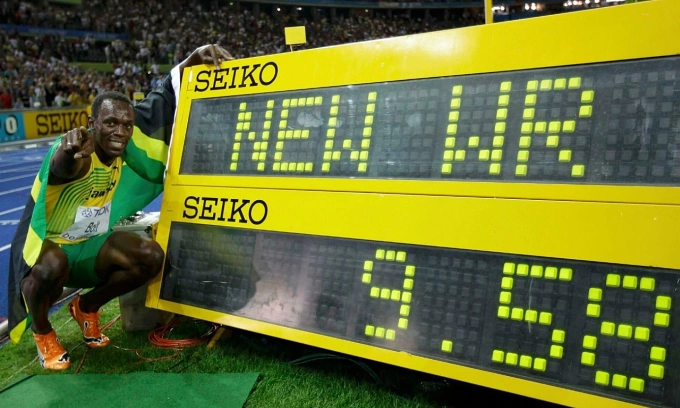
What makes a record truly unbreakable isn't just the size of the number. It's the structural impossibility of the attempt. Bob Beamon's 1968 long jump didn't just beat the world record — it beat it by so much that the measuring equipment at the venue couldn't accommodate the distance. Usain Bolt's 100-meter mark keeps standing not because no one is fast enough to approach it, but because the gap between his time and everyone else's has barely narrowed in nearly two decades of trying. The wreck of the RMS Titanic produced a death toll that reflects a set of maritime regulations, shipbuilding standards, and ocean-crossing habits that belong entirely to another era.