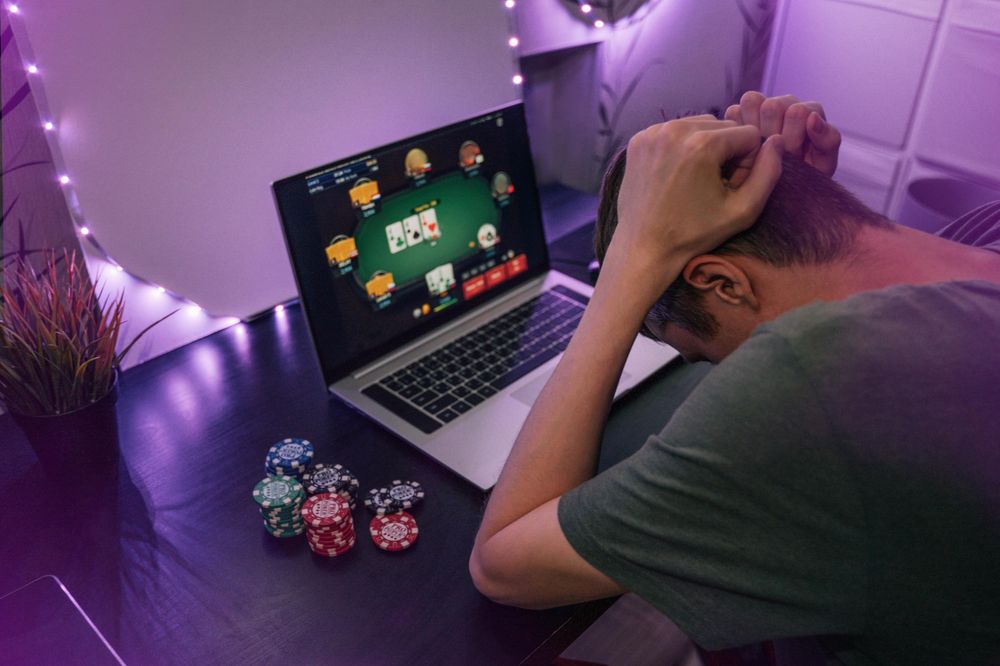
Gambling has been a feature of almost every recorded human civilisation. In the Roman Empire, people were allowed to bet on gladiator fights and chariot races. Henry VIII was a notorious – and reckless gambler – apparently squandering £1.5m in today’s money on everything from dice to cards to table games.Many of us will have memories of being allowed to put a quid on the Grand National, a dad or grandad “popping over the road” to place a bet. Until recently, gambling or placing a bet always had a distinctively adult character to it, evoking images of betting shops full of stern-faced men, bingo halls full of nans on a night out, or glitzy casinos strictly for 18-year-olds and over, whether in Las Vegas or Liverpool. But like many things, since the rise of smartphones and social media, the gambling industry has started to change. Gambling has become easier, and that has opened it up to a whole new market – much younger than it ever has been.In the old days, gambling required some degree of friction or barrier to entry: knowledge of or interest in what you were betting on, physically having to leave the house to get money and place a bet, and quite often, there was a social dynamic to it – you’d watch the horse race or football match in a pub, bar or betting shop, and you’d have to physically go to a place to gamble; a shop or a casino.Generation A and Gen Z youngsters now have an entire gambling industry available to them at their fingertips. There is little friction getting in their way of the “big prize”, which is more often than not as elusive as a desert mirage. While the licensed gambling industry frequently points to regulatory measures, including mandatory age verification and affordability and vulnerability checks to protect the most vulnerable, betting offers and enticements are everywhere. As Gen A and Gen Z spend so much time online, gambling creeps into their lives camouflaged by add-on games or additions to their favourite games, streaming services or platforms, which can in turn open doors into an unregulated and unlicensed gambling world where few controls are in place and normal rules don’t apply. A new book out this week by Dr Darragh McGee, a senior lecturer in the Department for Health and a member of the Centre for 21st Century Public Health, draws on more than a decade of research into how sport was captured by the gambling industry in the digital age. Imitation Games: How Gambling Hijacked Sport examines the global expansion of online sports gambling and its implications, particularly among younger people.Often young people are interacting with their sports through betting first and enjoyment second (Getty)There are the obvious gambling opportunities like football, racing and high-stakes fights, where young eyeballs are hammered with influencers, celebrities and athletes egging them on to get “involved with the action” and “be part of the gang”, and the language is critical in making young men in particular feel like placing a bet is just being one of the lads and a ballsy one at that (the use of the words “brave”, “winner” and “warrior” is everywhere and intentional in gambling ads aimed at young people).According to a report by the Gambling Commission, young people are more likely to be exposed to gambling-related advertisements online, and specifically via social media (49 per cent) or apps (47 per cent). Boys were more likely than girls to see advertisements related to gambling across various platforms, including video-sharing sites such as YouTube (53 per cent of boys, compared with 31 per cent of girls) and at sports events (57 per cent of boys, compared with 37 per cent of girls).The 2025 survey also explored the influence of social media personalities, finding that 31 per cent of young people who saw gambling-related content on social media (16 per cent of all respondents) reported that influencers had advertised gambling-related content to them.The frontal cortex, the part of the brain that assesses risk, doesn’t develop fully until you are 25. And this spongy frontal cortex is catastrophic – or extremely lucrative, depending on where you sit in the equation – in gambling and betting. The industry will be aware of the power influencers have over younger generations, and has used these parasocial relationships to make their products go nuclear.At break, we’d compare odds and online odds, some of my friends who are brilliant at maths got obsessed with probability stats and splitting bets. Some opened up crypto walletsCharlie, 19But as with most things that go nuclear, there tends to be a pretty spectacular fallout. Charlie, 19, started gambling when he was 15 via gambling apps. He easily bypassed age verification checks and got no pushback – he had a credit card from his parents that was supposed to be for emergencies – so he was in.He explains: “I first started placing bets on the big fights being pushed on Twitch. I had that thing of beginner’s luck and made some good money and started getting obsessed. To be honest, loads of us were obsessed and I went to a school where most people had money and credit cards.“At break, we’d compare odds and online odds, some of my friends who are brilliant at maths got obsessed with probability stats and splitting bets. Some opened up crypto wallets, which made it even easier, because then it feels like toy money. I’d say by Year 12, 90 per cent of my male friends were gambling to some degree or another. It just seemed like a big party, until I started losing and then losing even more.”Charlie ended up owing thousands and as soon as his parents realised, they swung into action. Furious, but also understanding in the only way parents can be, his dad (also a self-confessed gambler) cleared the debt and slowly Charlie is paying him back, but he points to how difficult it is to avoid temptation, because “you’re hammered with betting enticements every time you pick up your phone or play an online game”.Tom, 19, hasn’t been as lucky as Charlie. He inherited £3,000 from his grandfather when he passed away, something meant as a nest egg to buy a car or help towards a house deposit.Tom got introduced to the concept of gambling around the age of 11, when he started betting credits on shooter games or going into the in-game casino of Grand Theft Auto (which does have an 18 certificate that millions of gamers ignore). Gaming is a huge gateway to both the concept and the buzz of gambling, making a psychological link between spending money (for example, on loot boxes or Fifa packs) to win. Tom was hooked on the dopamine hit from the stakes of gambling, and together with some friends in Year 10 (aged 15), he opened a betting book where they’d place money on football matches and fights.Games like some in the Grand Theft Auto series help to normalise gambling with in-game casinos (AFP/Getty)He used the money he made to gamble more seriously, but it was joining the Telegram app that proved the most dangerous for him. Telegram is a lawless place where you can join unregulated casinos anonymously and access tens of thousands of games simultaneously. In less than three weeks, Tom blew his grandad’s £3,000 and he is now borrowing money to try and make it back.Speaking to him, the stress is evident, and he’s clearly in that devastating cycle of what gamblers call “chasing it”. He explains: “I know I can get it back with just one win, and I have to. Mum would be devastated if she found out I’ve lost the money from Grandad, but if I can get it back, I won’t gamble again – or not that money. I have borrowed some money, yeah. But once I’ve got the £3,000 back, I’ll probably give it a rest for a bit.”Matt Zarb-Cousin is the co-founder of Gamban, a support network created to help people overcome addiction to gambling. Gamban works by helping to block access and remove temptation to engage with any kind of gambling. After losing thousands in his teens to gambling on roulette, he also successfully campaigned for the maximum stake in fixed-odds betting terminals to be reduced from £100 to £2, which was enacted in 2019.Since then, he has watched in horror at how much easier and riskier it has become for young people to get addicted and how successful the industry has been at targeting Gen A and Gen Z. “It has become hyper-normalised to the extent there are now subcultures online that exist to glamorise reckless behaviour.“Affiliates, streamers and gambling influencer-led companies are feeding content creation around what has been described as ‘degen culture’ – which reframes destructive levels of gambling consumption into something aspirational. Young audiences are being desensitised to the harm that can arise from gambling.”Zarb-Cousin also points out the ubiquity of the gambling industry in sponsoring streamers, content creators and esports teams – all things with a predominantly young audience: “At one point, 48 of the top 50 teams that play competitive Counter-Strike [a popular first-person shooter game] were sponsored by gambling companies.”A new audienceHow successfully young people have been targeted by the gambling industry is reflected in the numbers. The Gambling Commission’s 2025 report shows that three in 10 (30 per cent) 11- to 17-year-olds had spent their own money on any gambling activity, with boys (34 per cent) more likely than girls (27 per cent). This represents an increase from 27 per cent in 2024, and is largely driven by a rise in unregulated gambling. The most recent Gambling Survey for Great Britain found 10 per cent of 18- to 24-year-olds who engage with gambling are now classified as problem gamblers.As one in five Gen Z adults is effectively teetotal, many parents of teens tell me their biggest concern now is that their children are going to get addicted to gambling. Anecdotally, I have heard of students gambling their student loans, and one undergraduate told me he watched his mate lose over £350 in a five-minute break during a bar shift.Friday night lights: an increasing number of young people are drifting into online habits in place of more social activities (PA)Young adults can now gamble continuously through phones, on gaming-style apps and sports betting platforms. Nights out in pubs or clubs, dating, sex and seeing friends are being replaced with online activities, online chat, AI friends, pornography and online gambling. And sometimes with deadly consequences.Ziggy, 21, lost his best friend, Saul, to suicide last year. It was only in the aftermath of his death that anyone realised how deep in debt Saul was to gambling (around £23,000) and how desperate his attempts to claw back money had become. Ziggy explains: “We all assumed he was on drugs. He was trying to borrow money all the time, selling pictures of himself on OnlyFans. He’d isolated himself from his mates, had become totally nocturnal and just never communicated except to ask to borrow money. I’ll never forgive myself for not doing more to help. I genuinely thought he was on hard drugs, because gambling is addictive and does as much damage to your head and body.”The industry itself speaks in robust terms, often citing its energy and resources and commitment to player safety and an ambition to prevent harm. Similarly, the government repeatedly trots out well-worn statements about protections put in place to protect young people, including blocking under-18s from gambling sites.The problem is that there are so many unregulated parts of the industry and so many ways to bypass age restrictions in the online world that the protections that have been put in place are often made obsolete for any teen with a phone and access to a bank account.Gambling is marketed as a way out for young people, whether that’s through crypto, betting or leveraged trading. It very quickly traps people in a cycle of loss chasing and debt, making an already difficult situation extremely desperateMatt Zarb-Cousin, co-founder of gambling support network GambanThe Advertising Standards Authority has recognised this is a growing problem and, from May 26, announced that it will be conducting active monitoring of app store listings, with targeted enforcement action where it identifies non-compliance. It will also be doing targeted compliance work on the use of under-25s in gambling advertising, influencer gambling marketing, both paid and organic, and advertising on emerging platforms such as livestreaming services.To many parents and teens who have grown up in the wild west of social media, this is too little too late. Tony Blair’s government passed the 2005 Gambling Act – coming into full force in 2007 – which liberalised gambling laws, expanded advertising rights, and created the framework for much of the online gambling we see today. At the time, critics warned a loosening of restrictions could increase gambling addiction and expose vulnerable people and young people to harm. Twenty years on, those warnings have come true, ushered along by the explosion in social media and smartphones. And it is having a terrible consequence for the so-called ‘lost generation’ of 18-24-year-olds who are now unemployed in record numbers.This picture is bleak and deeply concerning to Matt Zarb-Cousin, who is working on the frontline of the young gambling epidemic: “I think it is an industry preying on despondency and nihilism that is sadly plaguing a generation that has been let down by successive governments.“Gambling is marketed as a way out for young people, whether that’s through crypto, betting or leveraged trading. It very quickly traps people in a cycle of loss chasing and debt, making an already difficult situation extremely desperate. It’s sucking the life out of people unless the government acts and brings in heavy regulations.”Like Big Tech, the gambling industry is a powerful lobby. Once again it feels like a case of our children’s futures versus the fortunes of an industry cashing in on easy prey. Any measures to prohibit gambling advertising would certainly need a change in law, which would be a matter for the government and Parliament.This week the debate has focused on social media for the under-16s – the issue of gambling and its effect on young people is part of the social media puzzle. At the very least, it should be the next big conversation to be had.If you are experiencing feelings of distress, or are struggling to cope, you can speak to the Samaritans, in confidence, on 116 123 (UK and ROI), email jo@samaritans.org, or visit the Samaritans website to find details of your nearest branchIf you are based in the USA, and you or someone you know needs mental health assistance right now, call or text 988, or visit 988lifeline.org to access online chat from the 988 Suicide and Crisis Lifeline. This is a free, confidential crisis hotline that is available to everyone 24 hours a day, seven days a week. If you are in another country, you can go to www.befrienders.org to find a helpline near you
A lost generation is becoming addicted to online gambling – what parents should know
There is another crisis brewing for the cohort raised on smartphones that is hardly being addressed, but could be the most serious of them all. From crypto casinos to betting apps and online gaming, more teens and young adults than ever are falling into gambling addiction and from there, debt and despair, says Chloe Combi
2,507 words~11 min read