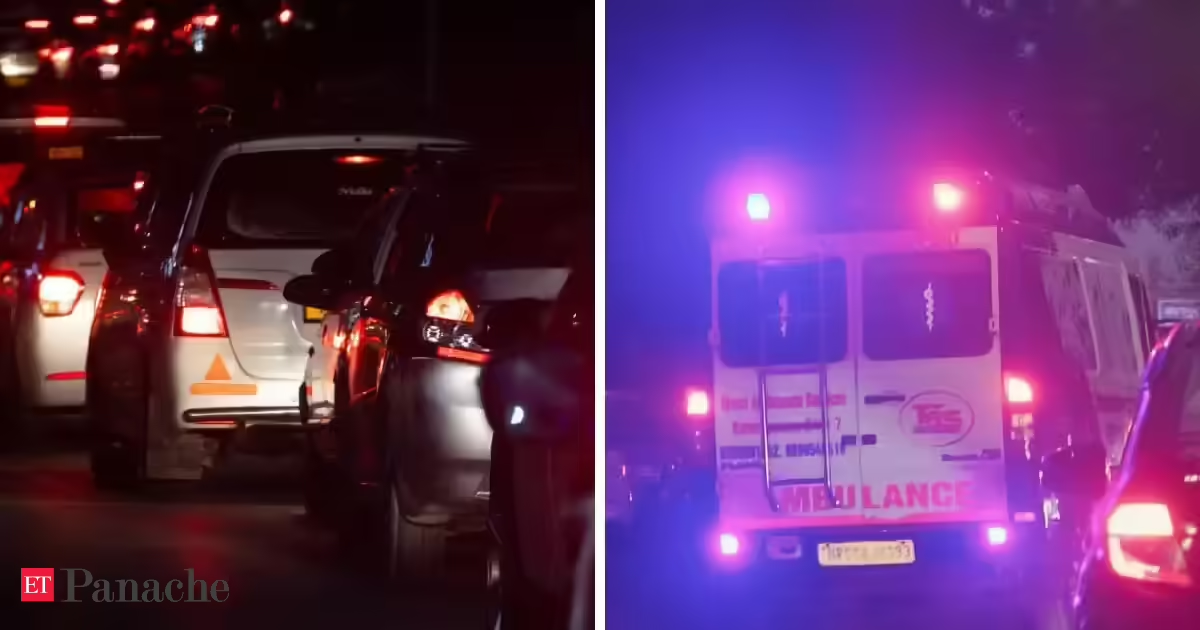
SynopsisAn Uber driver in Pune, with 11 years of ambulance experience, shared a profound idea with a US founder: make new drivers operate an ambulance for a week before getting a license. This experience, he argued, would instill a life-or-death urgency, fostering greater road discipline and awareness than any standard test.Listen to this article in summarized formatCab driver's solution to Indian traffic problem was simple, and came from his 11 years of experience of driving an ambulance. (Istock- Representative images)Some conversations start as small talk and end up changing the way you think about everyday life. A 4 am Uber ride in Pune became exactly that kind of moment for a US-based founder. What began as a quiet, half-asleep drive through empty roads soon turned into an unexpected discussion on India’s traffic chaos. But it wasn’t a complaint or a rant. It was a solution proposed by an Uber driver with years of experience behind the wheel of an ambulance, and it left the founder completely stunned.US-based founder recently shared his experience of being in Pune and taking an Uber ride early in the morning. He described the scene as quiet and almost surreal. The roads were empty, the city still half asleep, and the ride felt like one of those slow moments where random conversations naturally begin just to stay awake.According to him, the driver suddenly brought up India’s traffic problem and said it had a “very simple solution.” At first, the founder admitted he almost laughed it off. He mentioned that many people casually offer opinions on traffic, and it often feels like the same recycled ideas. But then the driver revealed something unexpected.He said he had driven an ambulance for 11 years. That changed the tone of the conversation instantly.From casual chatter, the ride shifted into something far more serious. The driver then shared his idea. He suggested that before giving anyone a driving license, people should be made to drive an ambulance for one week. Not sit inside one. Actually drive it. He explained what that would really mean. The siren is constantly screaming. A patient struggling to breathe in the back. Family members panicking beside them. Every traffic signal feels like a countdown to something critical. In that scenario, traffic is no longer an inconvenience. It becomes something far more urgent. He also described what he had witnessed during his 11 years of ambulance driving. He spoke about people refusing to give way even when an ambulance was behind them. Cars blocking junctions without hesitation. Vehicles stopping “just for 2 minutes” in the worst possible spots. And even situations where drivers tried to overtake an ambulance just to save a few seconds.According to the founder’s account, these experiences shaped the driver's view of everyday road behaviour. Then came the line that shifted the entire mood of the ride. He said, “When you drive your own car, traffic is an inconvenience. When you drive an ambulance, traffic is life or death.” That one sentence left the Uber ride in silence.The founder described it as one of those moments where a simple idea suddenly feels heavier than expected. It reframes something ordinary into something deeply emotional. The driver’s perspective was not about blaming people or calling out bad habits in an aggressive way. Instead, it came from years of seeing how small decisions on the road can have serious consequences when time is critical.He suggested that a week of driving an ambulance could teach more about discipline and road awareness than a standard driving test ever does. The idea stayed with the founder long after the ride ended. As he reflected on it, he admitted that it did not even sound like a bad idea anymore. The thought of making new drivers experience urgency from the perspective of emergency response made him reconsider how people learn road responsibility in the first place.What made the experience even more striking was its simplicity. There were no statistics or formal arguments, just one lived experience shared in the middle of a sleepy Uber ride at 4 am in Pune. The founder summed it up by saying that one of the smartest things he heard that month came from a sleep-deprived conversation with a driver on an otherwise empty road.Internet reactsInternet users reacted strongly to the Pune Uber story, sharing varied perspectives on the idea. One user suggested that every individual should be made to serve in the Defence services for at least three years before starting their careers, saying it could transform society.Another user called it a “powerful yet humbling take,” adding that such conversations remind people to keep travelling and learning from real experiences, even comparing it to a story where survival changes outcomes more than strength. One comment highlighted how traffic is usually seen as an inconvenience, but rarely as someone else’s emergency, calling the shift in perspective deeply meaningful.Read More News on...morelessRead More News on...moreless
‘Make everyone drive an ambulance first’: Pune cab driver’s idea leaves US founder stunned
An Uber driver in Pune, with 11 years of ambulance experience, shared a profound idea with a US founder: make new drivers operate an ambulance for a week before getting a license. This experience, he argued, would instill a life-or-death urgency, fostering greater road discipline and awareness than any standard test.
818 words~4 min read