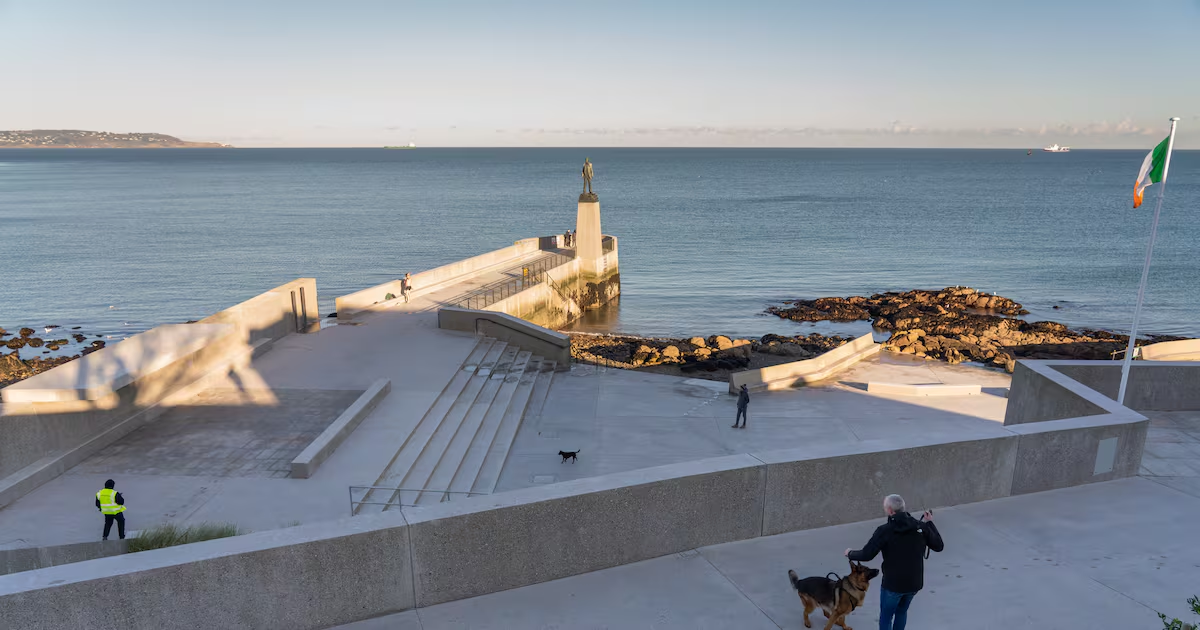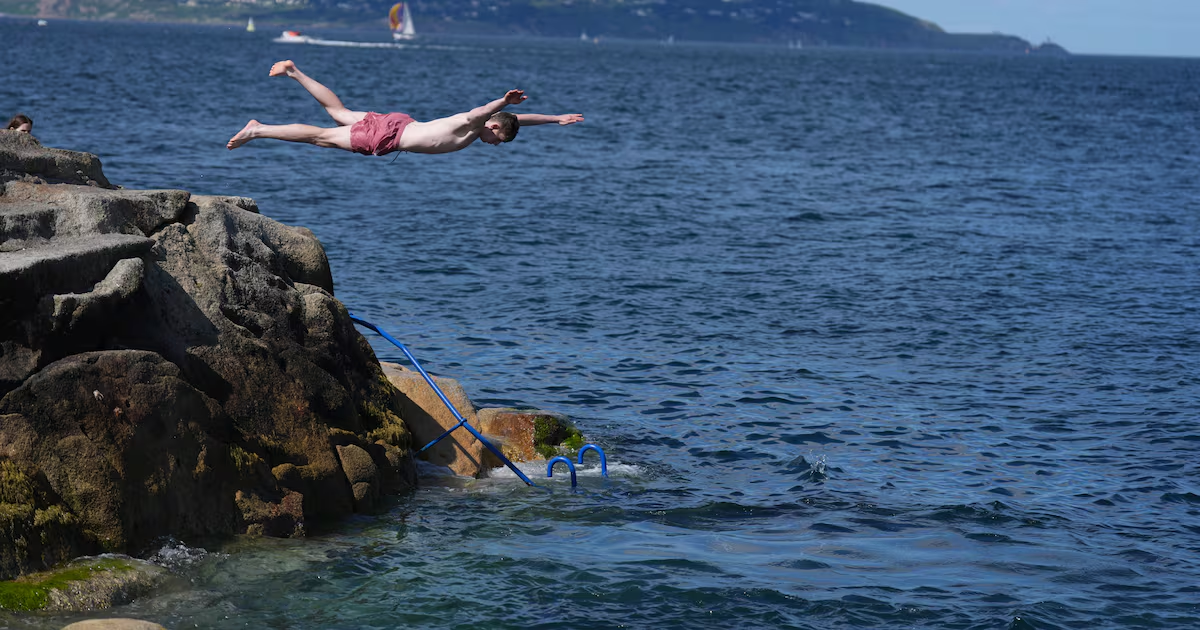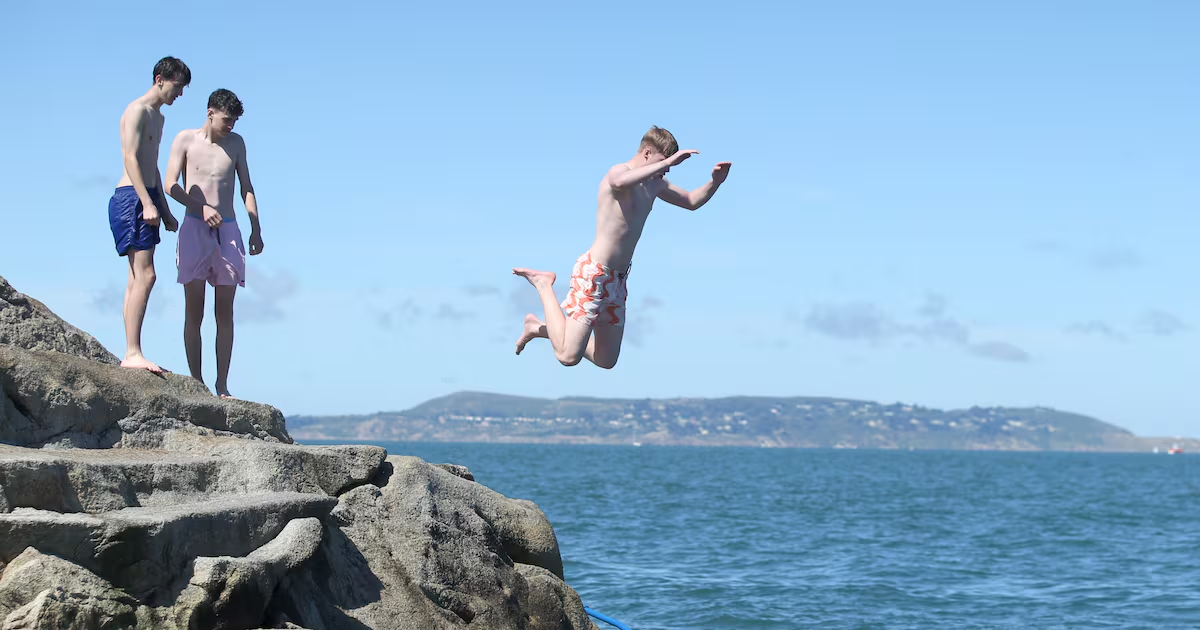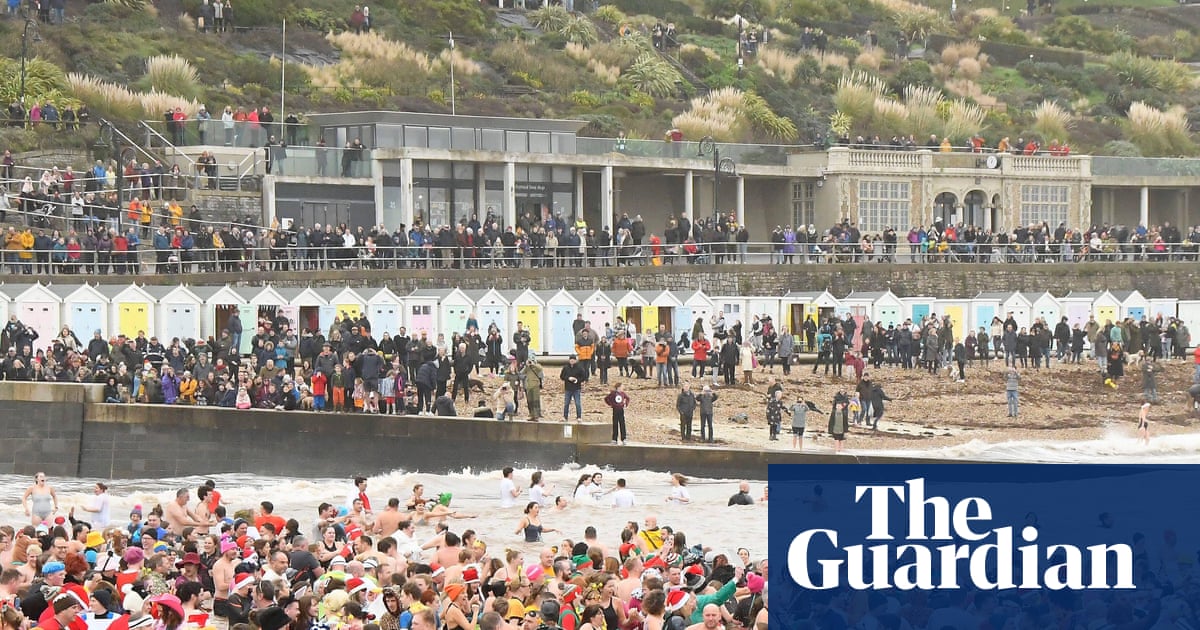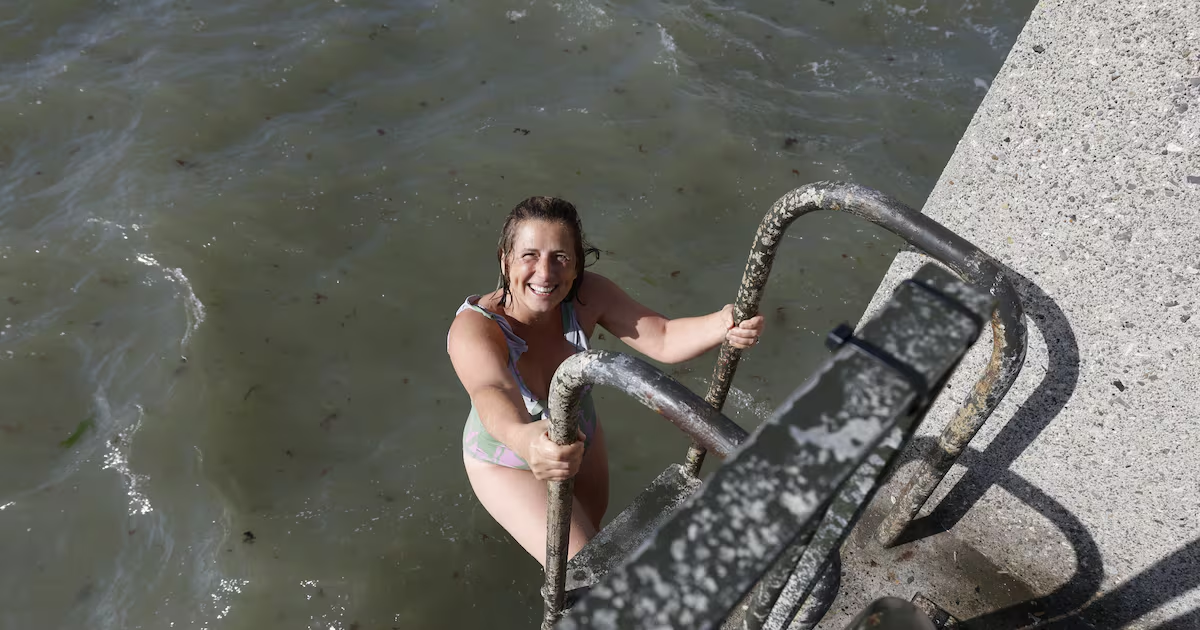
At 83, with two bouts of cancer behind him, not much fazes Gary Hill. He arrives early on a blustery morning when high tide and easterly winds are slapping the waves into the walls at Dún Laoghaire Baths, spraying those who stand too close to the edge. Within minutes, Hill is down the steps, into the sea and bobbing merrily in waters still chilly despite the May sunshine. Does it worry him that the bathing area has been rated ‘poor’ by the Environmental Protection Agency (EPA) with the consequence that the advice is not to swim there? “I’m more concerned about what the waves are doing,” he says as another hits the wall and a fountain of spray rains down. “I just make sure I don’t drink the water and I wash off afterwards. I’ll be okay then.” 'I’m more concerned about what the waves are doing,' said Gary Hill when asked the EPA's 'poor' rating at Dún Laoghaire Baths. Photograph: Nick Bradshaw He gestures to the freshwater showers Dún Laoghaire-Rathdown County Council has installed on the sheltered jetty, built during the refurbishment of the baths. Having spent €18 million on the work and registered the baths as an officially designated bathing area for the first time in 2025 – triggering a water-quality testing regime specified by EU law and overseen by the EPA – it was a blow when the test results published earlier this month produced a ‘poor’ outcome. The council stressed the tests referenced were carried out last summer and that testing before and since had shown consistently good results. Nevertheless, notices must be in place at the baths from Monday, June 1st – the start of the official bathing season – informing bathers of the poor rating and that it comes with advice not to swim. The baths will also carry notices with the more recent and ongoing weekly test results which have been very good.“I find it confusing,” said Carol Metchette, who is in her 50s and began sea swimming regularly eight years ago. “If there’s a big sign saying do not swim then I would take note of it but the council says it’s okay to swim.” Carol Metchette and her dog Harvey at Dún Laoghaire Baths on Thursday. Photograph: Nick Bradshaw It is hard not to be confused by the testing, rating and notification system in place for bathing waters. Under the EU Bathing Water Directive, officially designated bathing areas must be tested during the official bathing season, with the results determining the rating for the next season. The default season is June 1st to September 15th, during which just four samples must be tested.Dún Laoghaire Baths had two bad samples last season which left the area with the ‘poor’ rating and no-swim advisory for this season. Imposing bathing restrictions for a season based on results from a previous season sounds illogical, but the idea is to identify systemic problems causing poor water quality and encourage authorities to address them. An overloaded sewage outfall pipe might cause difficulties for a few days in a bathing season but there will be little incentive to fix it if it has no knock-on effect for the following season. Dún Laoghaire-Rathdown County Council issued public statements after the ‘poor’ rating saying testing in the 2023 and 2024 seasons and in the months since last season showed the baths were fine for swimming. But the EPA says those tests were not conducted in line with the directive. “Newly identified bathing waters must have at least 16 qualifying samples [four per year],” the EPA said. “A site must first be formally identified under the regulations for its samples to count. “The samples analysed by Dún Laoghaire-Rathdown in 2023 and 2024 were not collected as per the Bathing Water Regulations, no sample calendar was scheduled and submitted to the EPA, and the EPA had no oversight of the sample collection and analysis. These samples are inadmissible.” The recent good results promoted by the council as reason to have confidence in the water quality do not count either as they were taken outside the official bathing season. Two years ago, under pressure from year-round swimmers for local authorities to test regularly outside of June to September, the Government introduced the Bathing Water Quality (Amendment) Regulations. These require local authorities to notify the EPA by March 24th each year which bathing areas they want officially identified and what official testing season they want to apply. Not one local authority has sought to extend the season at any of the country’s 154 designated bathing areas. Gerry Jones of SOS Dublin Bay, a campaign group pushing for better water quality and more rigorous monitoring, is not surprised. “They don’t want to extend the bathing season because they’ll have to test in months when it rains more and they’ll get more poor results,” he said. The Environmental Protection Agency and Dún Laoghaire-Rathdown County Council have given differing messages on the water quality at Dún Laoghaire Baths, Dublin. Photograph: Nick Bradshaw Heavy rain often causes temporarily poor water quality as run-off from farmland, streets and stormwater overflows carries waste, dirt and bacteria into the sea.“If the local authorities do their own testing outside the official system, they can publicise the results when they’re good, and if they’re bad, they don’t affect their official ranking,” Jones says. Whether or not that’s the motivation, an ongoing EU review of the Bathing Water Directive found the regulations do create challenges for local authorities, with lack of resources for extended season testing a common complaint. The review reported the directive was “largely fit for purpose” but added “there is a scope for further improving its functioning”. Donna Cooney, a Green Party councillor in Dublin City and long-time sea swimmer, agreed the system needed improving.“Some councils are reluctant to even have a bathing area officially designated because if they bring it under the official testing, it will probably fail,” she said. “They don’t want to have to tell people, ‘sorry, you can’t swim there’. And, to be fair, a lot of swimmers don’t want to hear that either.”Cooney said there was also frustration over the slowness of test results. “Swimming restrictions are put in place for a few days after rain and there may be no need because the test results eventually come back clear. “But then if they come back showing a problem, you have a restriction for another three or four days, when the contamination has probably already cleared.” Technologies are being developed for real-time testing and fast results, but they are not widely in use yet. “Testing doesn’t sort the underlying problem, which is that our water quality needs to be better,” Cooney added. Gerry Jones agrees. “No matter how good our testing becomes, we also need better wastewater infrastructure,” he said. “Clonshaugh (the wastewater treatment plant planned for north Dublin) should have been built 15 years ago.” Back at Dún Laoghaire Baths, Pat Byrden (51) said he has never been sick from swimming – as far as he knows – and the poor rating won’t deter him. “I’m sure I’ve done worse things for my health than swimming in the sea. So I’m not really concerned.” Annette Lawlor (56) felt similar. “I’ll just keep my mouth closed,” she said with a laugh. That’s a common refrain among sea swimmers, but it is near impossible as they generally hit the waters smiling. Gary Hill emerges smiling too. “I don’t know whether it’s because I swim, or because my wife makes me a nice breakfast when I swim, or because of the fresh air, but I know I feel better when I swim.”
‘I’ll just keep my mouth closed’: Sea swimmers left confused by water-quality ratings
Conflicting results about safety of Dún Laoghaire Baths sends mixed messages to the public
1,274 words~6 min read