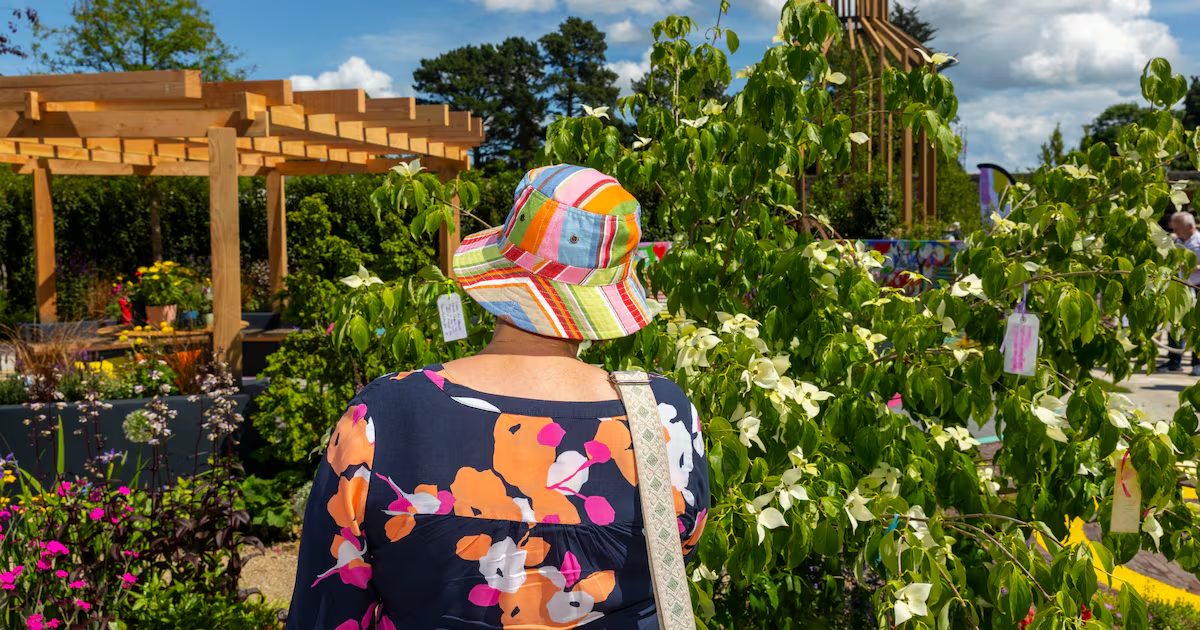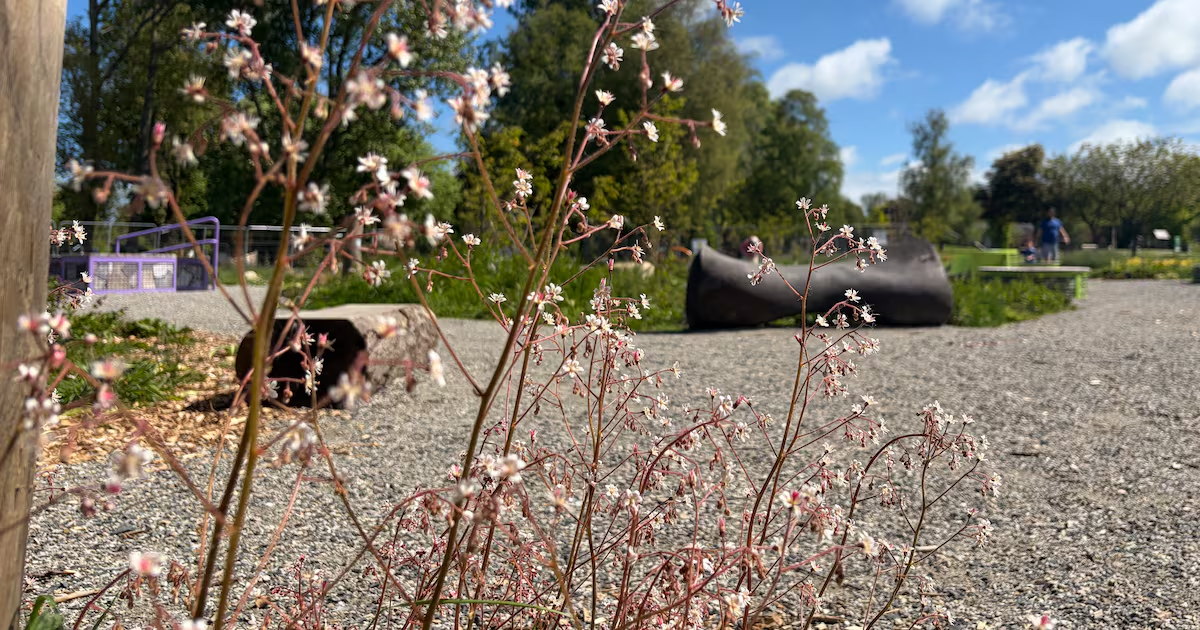
Finding new homes for plants, trees and other elements of show gardens at Bloom has gained momentum in the last few yearsElements of Sarah Cotterill's Into the Forest show garden at Bloom 2025 that have now been incorporated into the Ballina Sensory Park in Co Mayo Sat May 30 2026 - 06:00 • 5 MIN READShow gardens are extravagant affairs driven by a passion for perfect planting to impress the throngs of people who frequent gardening festivals. But have you ever considered what happens to the gardens when the festival is over?The Evolution of Land Plants garden in the courtyard of the O’Brien Centre for Science at University College Dublin (UCD) was the first show garden at Bloom to be successfully rebuilt following its exhibition at the annual gardening festival in Dublin’s Phoenix Park in 2016.“Show gardens are very artificial so that they can look beautiful. When you rebuild one, it will never have the same wow factor of a show garden but it is still beautiful,” says Prof Paul McCabe from the School of Biology and Environmental Science at UCD.He first developed the concept for the Evolution of Land Plants garden as an outdoor classroom when he realised the interest from his first-year undergraduate class flagged as he explained the physiology and biochemistry of plants following more exciting lectures on bats and dolphins. “I had to work harder to get their attention and we needed a bunch of plants all together to explain the evolution of plants,” he explains.When exhibited at Bloom, the UCD show garden was a hit. And the students’ grades improved when they could see the real-life representation of how plants evolved from living in water to growing on land, the emergence of seeds and colourful flowers to attract pollinating insects. “The garden is now also used by students from horticulture and landscape architecture and some people just go there to sit and have their lunch,” says McCabe.Finding new homes for plants, trees and structural elements of show gardens at Bloom has gained momentum in the last few years as garden designers cut costs and embrace repurposing with more gusto.“Historically only the ‘nice’ bits were reused afterwards but now garden designers are planning from the beginning how each element of the garden will be repurposed rather than it being an afterthought,” says Kerrie Gardiner, manager of the show gardens at Bloom.She says that some garden designers reuse trees stored in nurseries over the winter while others donate elements of their show gardens to charities afterwards. The Evolution of Land Plants garden in the courtyard of the O’Brien Centre for Science at University College Dublin The Marie Keating Foundation has been donating different components of its show garden to cancer support centres for the last six years or so. “We plan it ahead. Sometimes we are approached by a cancer support centre and then we deliver the plants and shrubs for patient volunteer groups to look after,” says Liz Yeates, chief executive of the Marie Keating Foundation.The 2026 Marie Keating Foundation show garden, Empowering At Every Step, has been designed by Robert Moore. “It’s about making healthy lifestyle choices to reduce your risk of getting cancer and the importance of taking action if anything is amiss,” says Yeates. The garden will be donated to the Cois Nore cancer support centre in Co Kilkenny. The foundation’s Sunsmart Garden was created for Bloom in 2018 and then replanted in Solas Cancer Support Centre in Waterford. Green spaces in cancer support centres “can be healing spaces that give people the opportunity to sit and reflect with others on a similar journey”, adds Yeates.Marie Keating Foundation SunSmart garden at Bloom 2018 was replanted in the Solas Cancer Support Centre in Waterford. Photograph: Shane O'Neill/Son photographic Sarah Cotterill won the Cultivating Talent initiative at Bloom in 2025. Sponsored by Westland Horticulture with a focus on biodiversity, the initiative mentors new designers to create their first show garden. Her Into the Forest garden with mosses, ferns, birch trees and oak saplings was based on native Atlantic woodlands. “It allowed people see the beauty in the wild landscape and find a moment of calm and quiet in their busy lives,” says Cotterill, who is assistant professor in civil engineering at UCD.Cotterill’s garden has since found a new home in the sensory park in Ballina, Co Mayo. “My garden is in a shadier part of the park away from the play equipment. The idea of the sensory park is to create different spaces for engagement, reflection and decompression,” says Cotterill. She says that as the garden is made up mostly of perennial and native plants, it is low maintenance and its reuse reduced the costs of planting in the garden. “The sensory garden is a beautiful asset and a great facility for the town,” she adds.Cotterill does, however, acknowledge there is a logistical challenge in successfully moving elements of show gardens to new spots. “I took it apart and it was transported to Mayo and temporarily stored in a town depot for a while and then planted up by volunteers to my design,” she says .Meanwhile, back at Bloom, Gardiner says show garden designers need to carefully consider where their garden will go afterwards. “It’s important to think about if the location can handle big trees and if there is enough space and that volunteers can look after the plants,” she says. Fingal County Council‘s parks division know all about the logistical challenges of designing show gardens for reuse. “We design everything to be repurposed and we also source salvaged materials in our depots which have come from demolition sites,” says Kevin Halpenny, the council’s senior parks and landscape officer.Breathing Space, which won a gold medal at Bloom 2023 for Fingal County Council, was adapted for reuse at the new Meakstown Community Garden in Lanesborough Park, Dublin 15 For example, Breathing Space, which won a gold medal at Bloom 2023 for Fingal County Council, was adapted for reuse at the new Meakstown Community Garden in Lanesborough Park in Dublin 15. “We also used the hedges, flowering shrubs and herbaceous materials from that show garden very quickly afterwards in a pocket park on Drogheda Street in Balbriggan,” says Halpenny.He explains that the local authority uses Bloom as a way to demonstrate good practice. “We promote the health benefits of green spaces, the importance of pollinators, sustainable urban drainage and green infrastructure planning.” Such demonstration gardens also allow people to appreciate the council’s work in publicly-owned residential spaces. The 2026 Fingal Community Garden at Bloom will be relocated to the Knocksedan community garden in Swords. “We will do the capital works of moving it and the community group will manage and maintain the garden afterwards to grow vegetables and fruit,” says Halpenny. He says such local authority community gardens are different from allotments as they must include public access. “It’s also about pushing out antisocial behaviours with pro-social behaviours of growing food.”IN THIS SECTION
What happens to Bloom’s show gardens when the festival is over?
Finding new homes for plants, trees and other elements of show gardens at Bloom has gained momentum in the last few years
1,157 words~5 min read