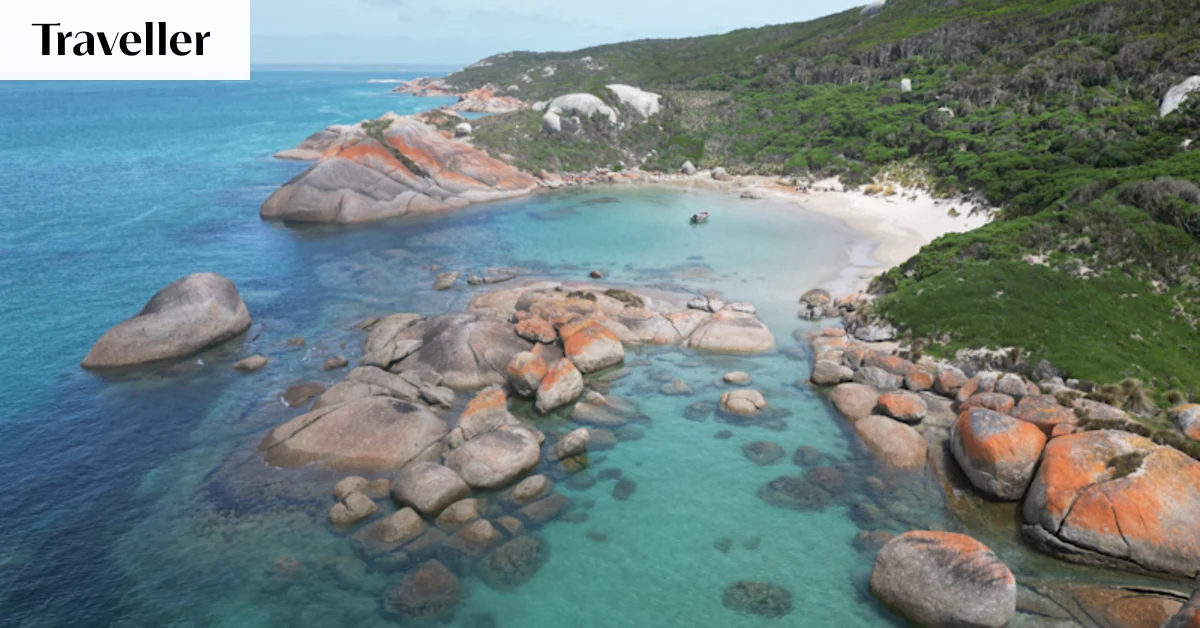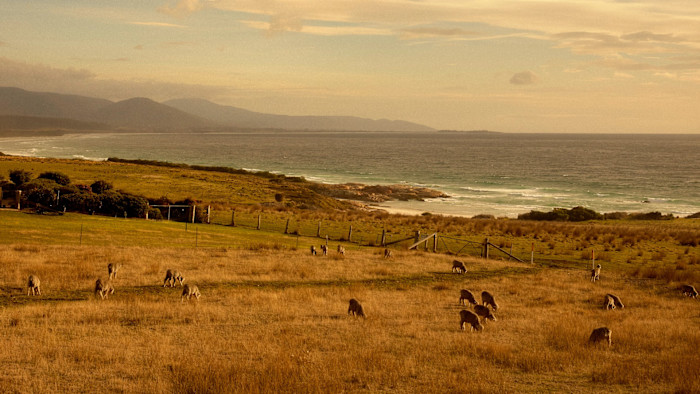
Isolation is Tasmania’s superpower. Australia’s only island state sits 150 miles off the southernmost tip of the mainland, separated by the infamous Bass Strait, with its treacherous Roaring Forties winds and tricksy shallows. Europeans nonetheless reached Tasmania before they did many other parts of Terra Australis Incognita: Abel Janszoon Tasman, the first to make landfall in 1642, originally christened the island Van Diemen’s Land, after the Dutch East Indies’ governor-general. The British showed up at the end of the 18th century, eventually populating it with enough convicts to declare it a penal colony – neatly seeing off the French, who’d been acquisitively charting its eastern coastline.
With ideal climatic conditions – never too cold and, crucially, never too hot – the emergence of a local viticulture was inevitable. Tasmania has one of the continent’s oldest vineyards: Captain William Bligh was the first to plant a few cuttings in 1788, when HMS Bounty anchored briefly off tiny Bruny Island, and by 1826 a Tasmanian had produced Australia’s first sparkling vintage.
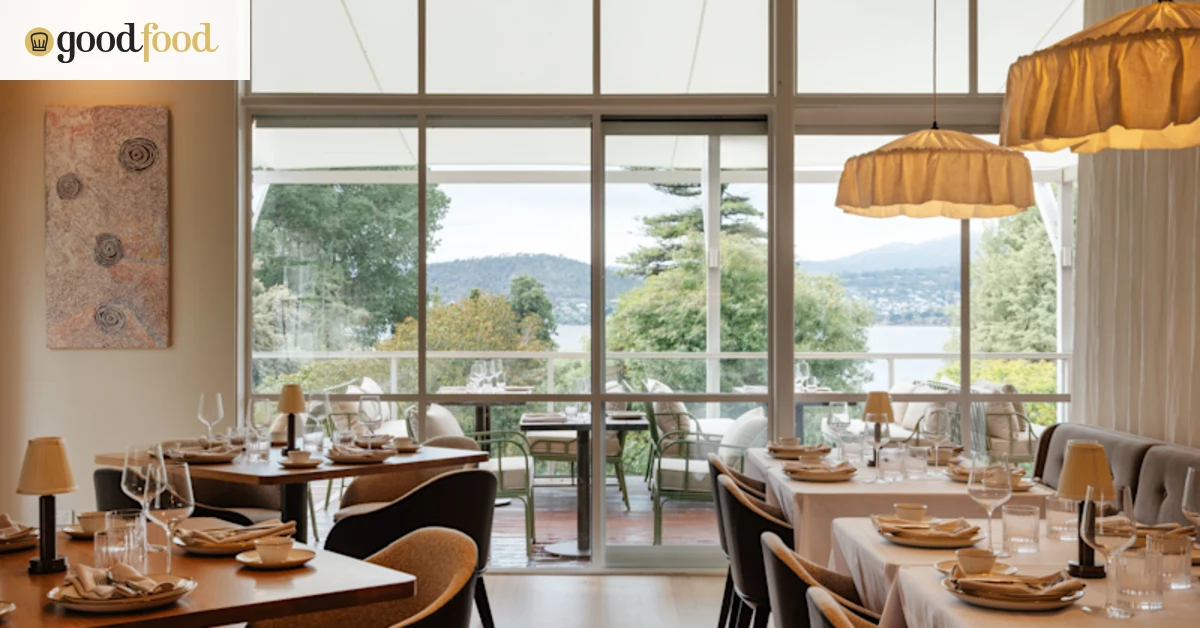
The view onto the River Tamar at Stillwater in Launceston, Tasmania © Sean Fennessy
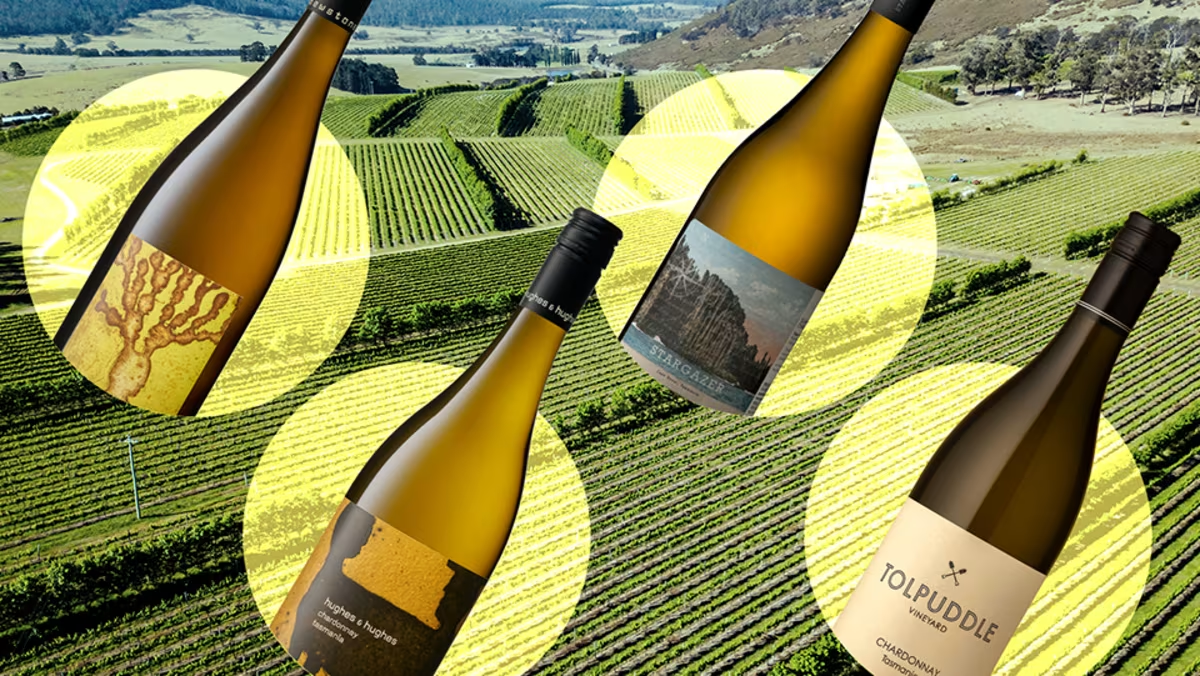
Today, premium sparkling is Tasmania’s lodestar wine, the Pinot Noir and Chardonnay grapes from which it is made accompanied by the usual cool-climate constellation of Sauvignon Blanc, Riesling and Pinot Gris. From the 1990s onwards, quality vintages have attracted the interest of some of the biggest players in the Australian industry, and a few internationals. But isolation can skew a person protectionist: many of Tasmania’s second- and third-generation family wineries have staunchly rebuffed buyout overtures; and increasing external interest in scooping up extant vineyards, or land on which to plant new ones, has sometimes engendered David-Goliath tensions.