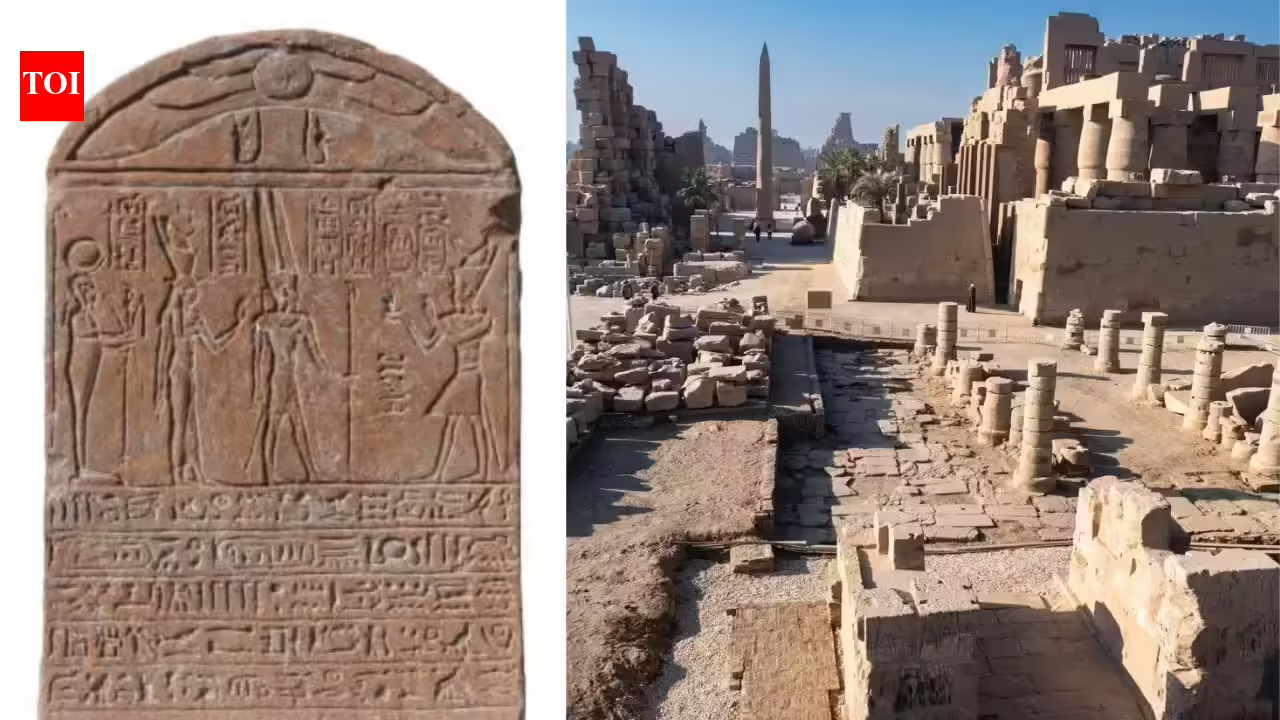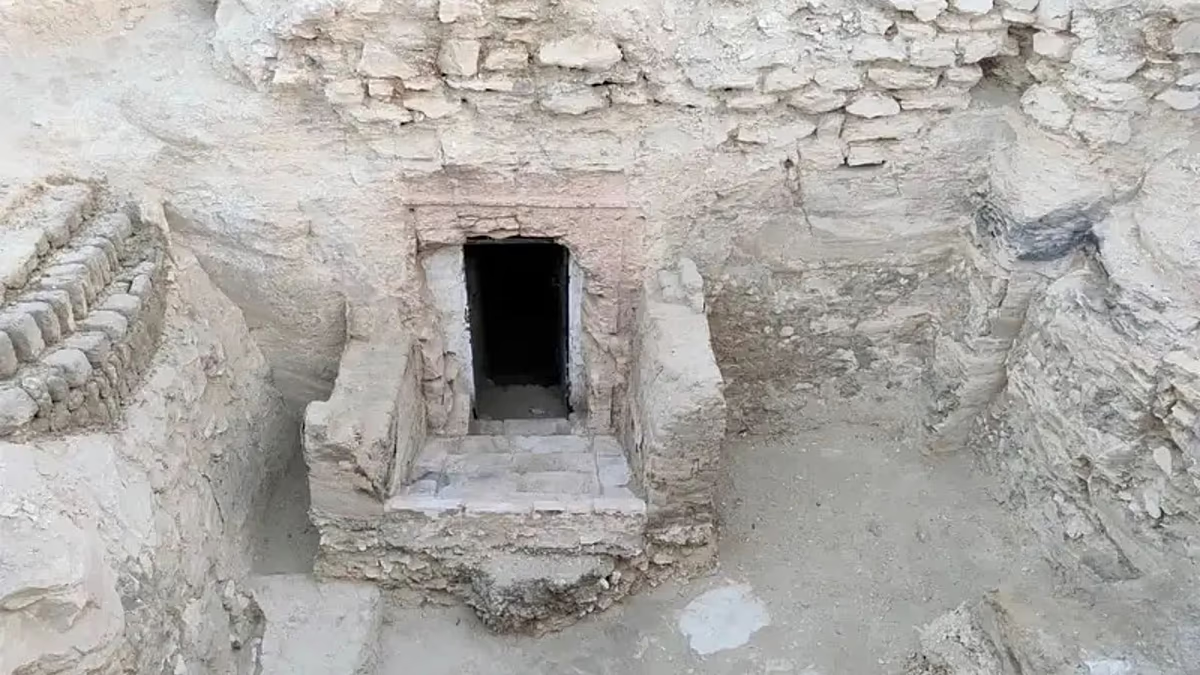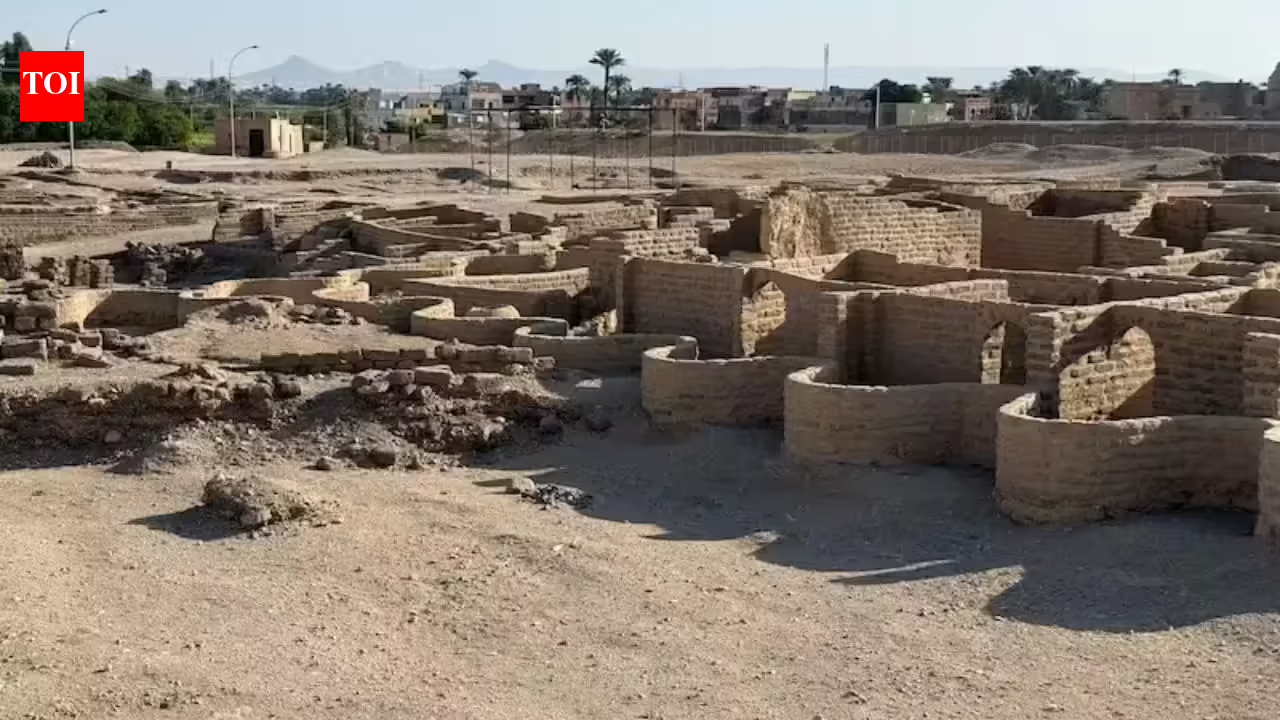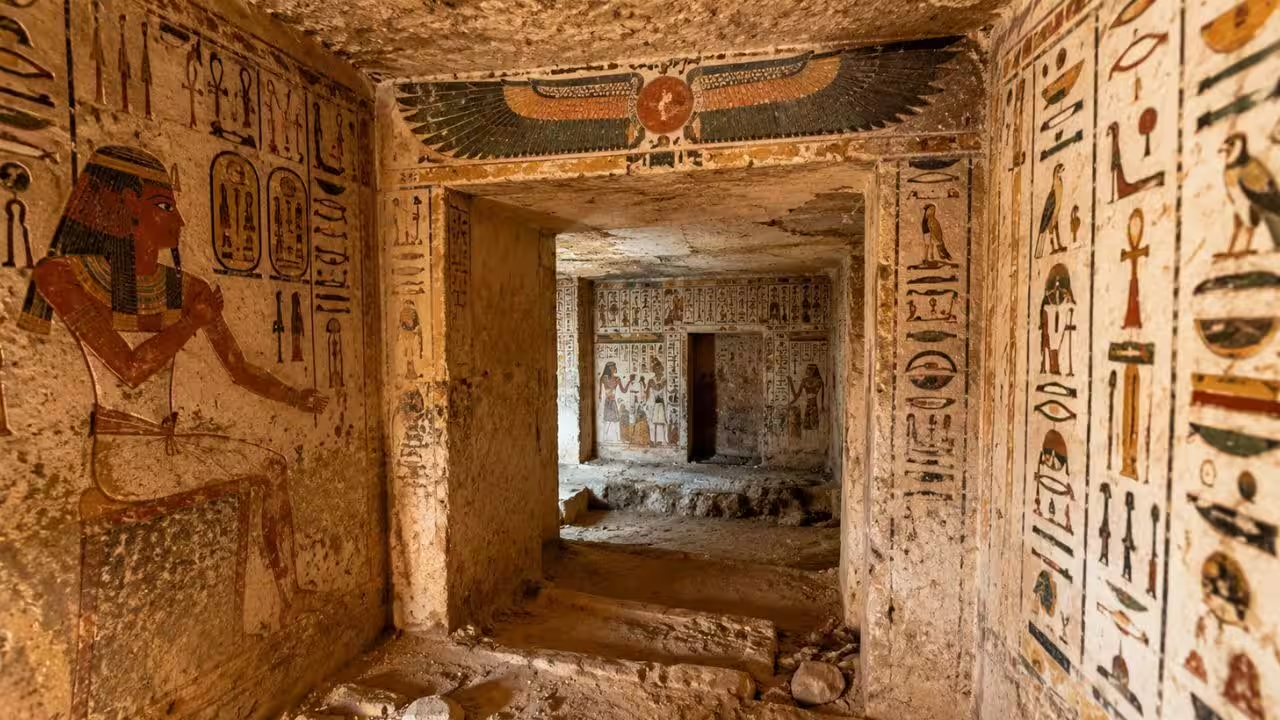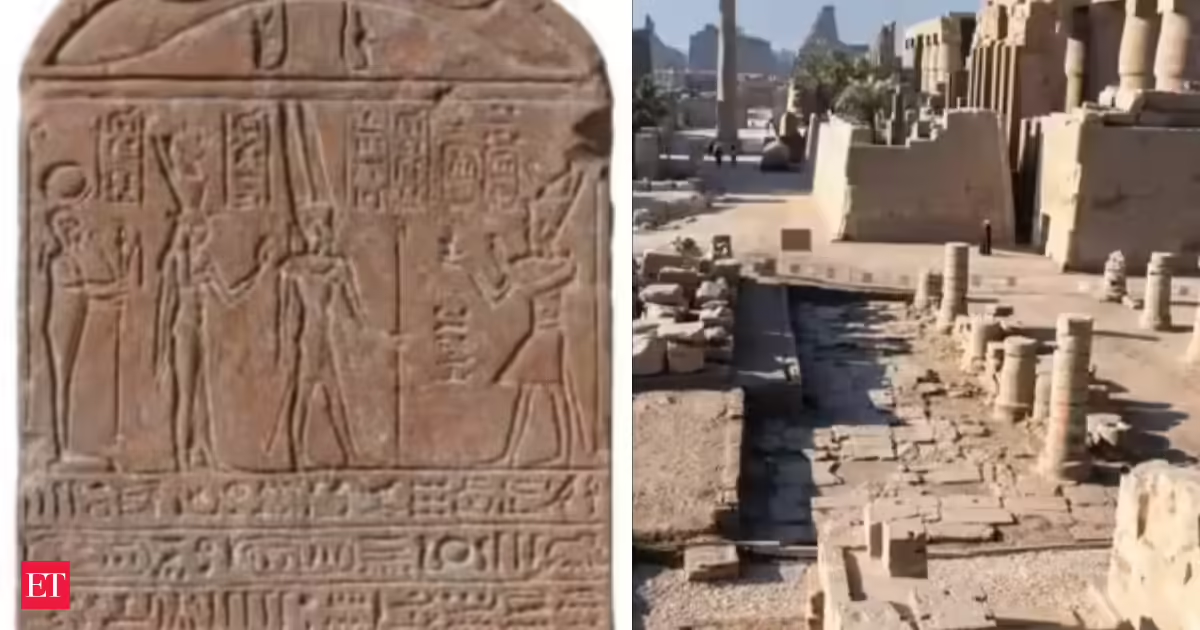
Ancient Egypt continues to surprise historians with layers of history buried beneath its most iconic monuments. At the Karnak Temple complex in Luxor, ongoing restoration work has uncovered a remarkable 2,000-year-old stone slab that appears to show a Roman emperor depicted as an Egyptian pharaoh. As cited in a TOI report, the discovery adds a new layer to the long and complex history of how sacred Egyptian spaces were reused, reinterpreted, and reshaped over centuries.Karnak Temple Restoration Uncovers Hidden Architectural LayersThe discovery was made during a careful restoration project near the northern gate associated with Pharaoh Ramses III of the 20th Dynasty. This section of the Karnak Temple complex had suffered significant damage over time, with collapsed blocks, vegetation growth, and partially exposed foundations that made the original structure difficult to interpret.Between 2022 and 2025, an Egyptian-French archaeological mission working at the site began dismantling and documenting the gate stone by stone. Instead of reconstructing the structure based on assumptions, researchers followed a scientific process of recording, cleaning, and reassembling each block to preserve historical accuracy.During this work, archaeologists identified reused stone blocks embedded within the gate structure. Some of these stones date back to earlier reigns, including decorative elements linked to Amenhotep III, suggesting that materials from older monuments were repurposed in later constructions.Layers of History Beneath the Northern Wall of KarnakAs excavation extended beyond the gate, attention turned to the northern wall of the Temple of Amun-Ra. Here, researchers found evidence of multiple construction phases spanning different eras of Egyptian and Mediterranean history.The masonry appears to reflect continuous rebuilding activity from the New Kingdom period through to later Greek and Roman occupation. This suggests that the temple complex was not a static religious site, but a living structure that evolved alongside shifting political powers.A paved road was also uncovered in the area, previously recorded in early surveys but never fully understood in context. This ancient route appears to have connected the Ramses III gate with an inner courtyard, indicating that temple movement and access were more organised than earlier interpretations suggested.Additional mudbrick remains found nearby point to later reuse of the area during antiquity, reinforcing the idea that Karnak remained active and repurposed long after its original construction.The 2,000-Year-Old Stone Showing a Roman Emperor as a PharaohOne of the most significant discoveries from the site is a sandstone stela measuring approximately 60 by 40 centimetres. According to Egypt’s Ministry of Tourism and Antiquities, the stone is associated with Roman Emperor Tiberius and was found within a later archaeological layer near the northern gate.What makes the artefact extraordinary is its imagery. The carving shows Emperor Tiberius depicted in traditional Egyptian pharaonic form, standing before the Theban triad of Amun-Ra, Mut, and Khonsu. Instead of presenting him as a Roman ruler, the artwork integrates him into the Egyptian religious system, portraying him as a legitimate participant in temple rituals.Such depictions were not uncommon during Roman rule in Egypt. Emperors were often represented in pharaonic style within temple settings to align imperial authority with local religious traditions. The stela also includes hieroglyphic inscriptions that reference temple restoration work, suggesting it may have served a commemorative or ceremonial purpose.What the Discovery Reveals About Roman EgyptThe presence of this stela inside the Karnak Temple complex highlights how Roman power adapted to existing Egyptian belief systems rather than replacing them. Instead of imposing entirely new religious imagery, Roman rulers were often incorporated into traditional frameworks, allowing continuity of worship while reinforcing political legitimacy.This blending of identities shows how deeply rooted Egyptian religious traditions remained even under foreign rule. Temples like Karnak continued to function as evolving sacred spaces, where architecture, symbolism, and political messaging overlapped across centuries.Karnak Temple as a Living Historical ArchiveThe latest discoveries reinforce the idea that Karnak is not just an ancient monument, but a layered historical archive built over thousands of years. Each phase of construction, destruction, and restoration has left traces that continue to reshape understanding of Egypt’s past.From reused stones of earlier dynasties to Roman-era inscriptions, the site reflects a continuous cycle of transformation. The uncovering of the Tiberius stela adds yet another layer to this evolving story, showing how ancient civilizations repeatedly redefined sacred space while preserving links to what came before.As excavation and restoration continue, Karnak Temple is expected to reveal even more insights into how Egypt’s religious and political worlds intertwined across millennia.Inputs from TOI
Roman emperor hidden as Egyptian Pharaoh found in Karnak Temple: 2,000-year-old stone discovery in Luxor shocks archaeologists
Karnak Temple in Luxor has yielded a remarkable 2,000-year-old stone slab showing Roman Emperor Tiberius depicted as an Egyptian pharaoh. The discovery adds a new layer to the temples long history and highlights how sacred Egyptian spaces were reused and reinterpreted over centuries. Ongoing restoration work continues to uncover fascinating insights into Egypts past.
730 words~3 min read