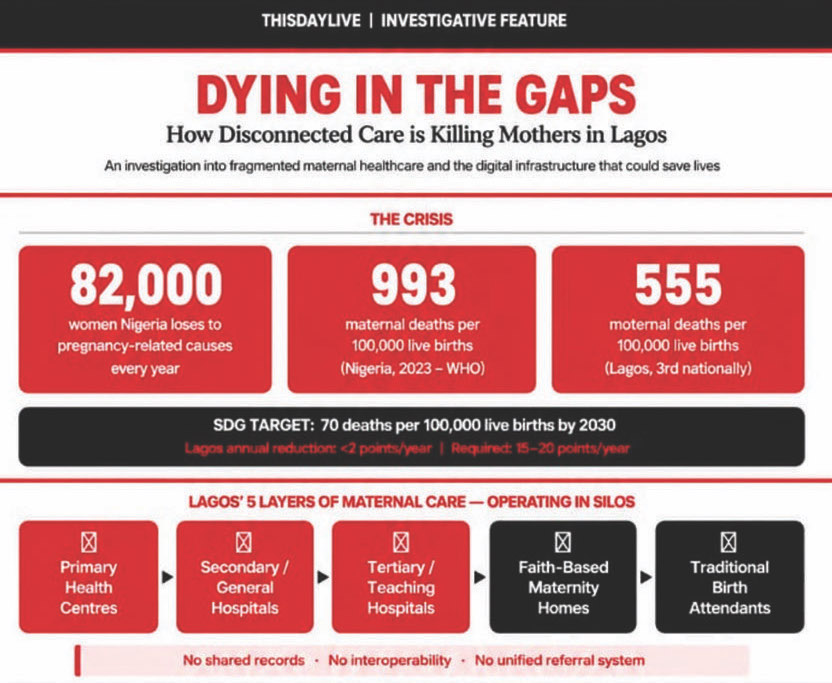
Despite sustained interventions, maternal mortality remains high in Lagos, driven partly by pregnant women switching hospitals during pregnancy, which disrupts continuity of care. Omolabake Fasogbon reports on how Digital Public Infrastructure—through shared digital identity, interoperable health records, and a connected referral system—could help close deadly gaps in maternal healthcare
In September 2025, a viral case surfaced online involving an unidentified woman in Abuja who lost her pregnancy after delays caused by obtaining a referral letter from the facility where she registered for antenatal care, finding a N28,000 deposit and being transferred between hospitals, all while in labour.
This journey took time she did not have. By the time the delay resolved itself, her twins were dead. The case went viral on TikTok, as shared by a user identified as Ondeku Joy and cited by Nigeria Health Watch. In the comments, hundreds of women said they recognised the system. They had navigated it themselves.
Earlier that same year, another widely reported case involved late Kemi Folajimi, who died from pregnancy complications at a hospital where she was not registered for antenatal care. Kemi, it was learnt, had registered with a local midwife in her community, where her medical records and history remained.