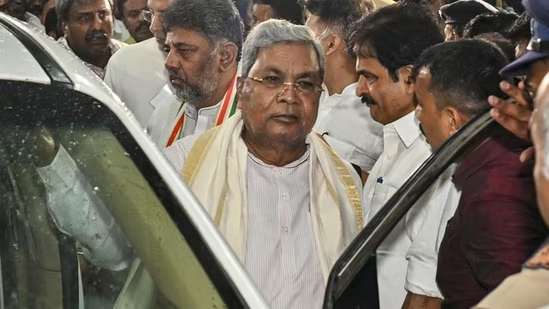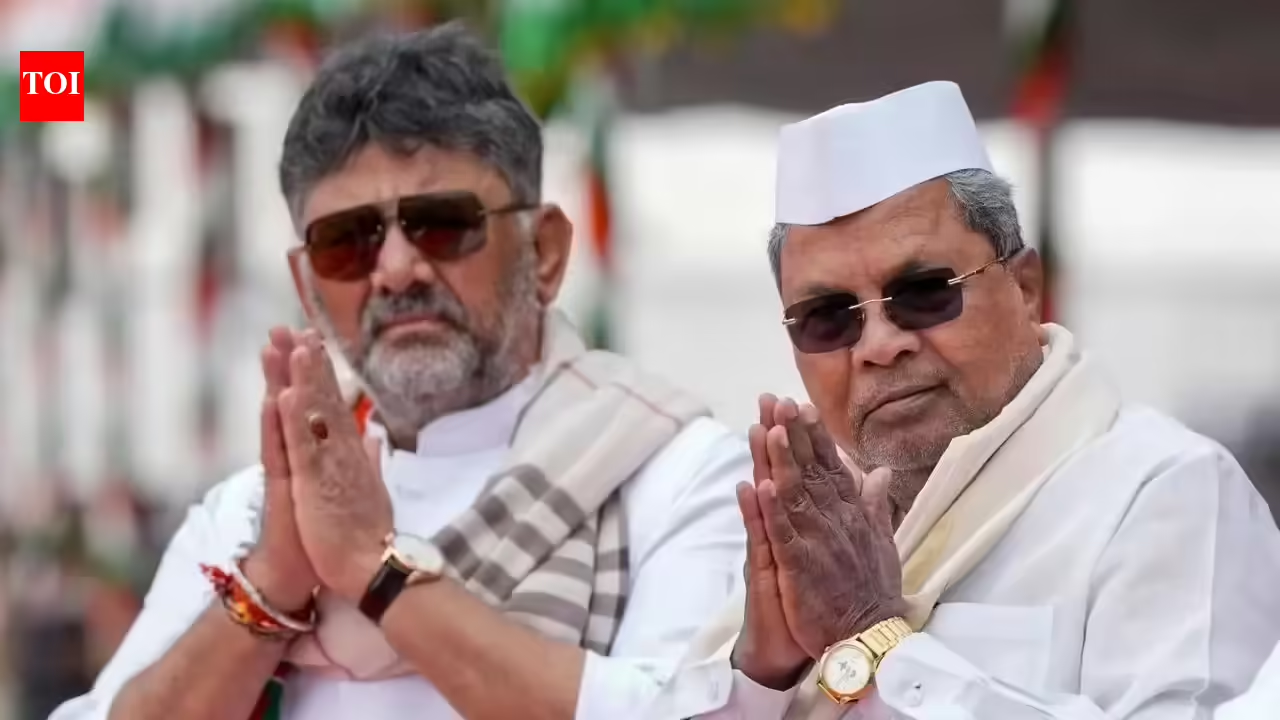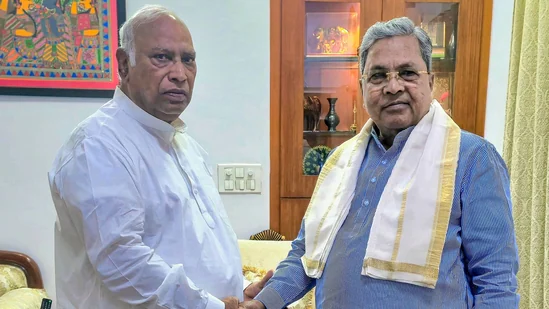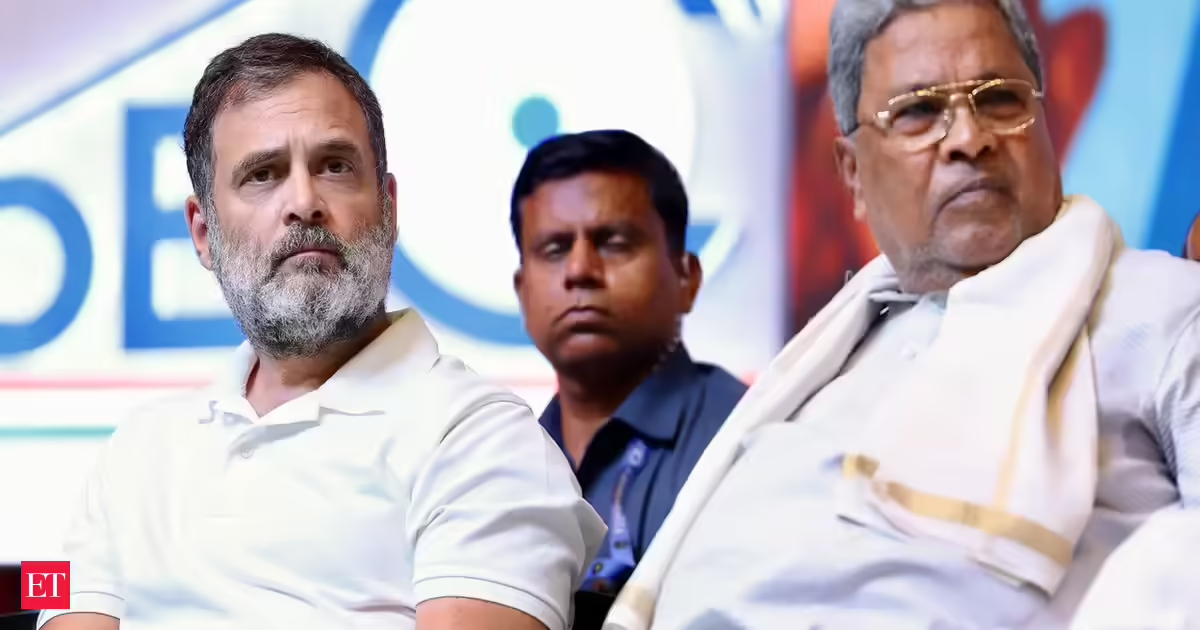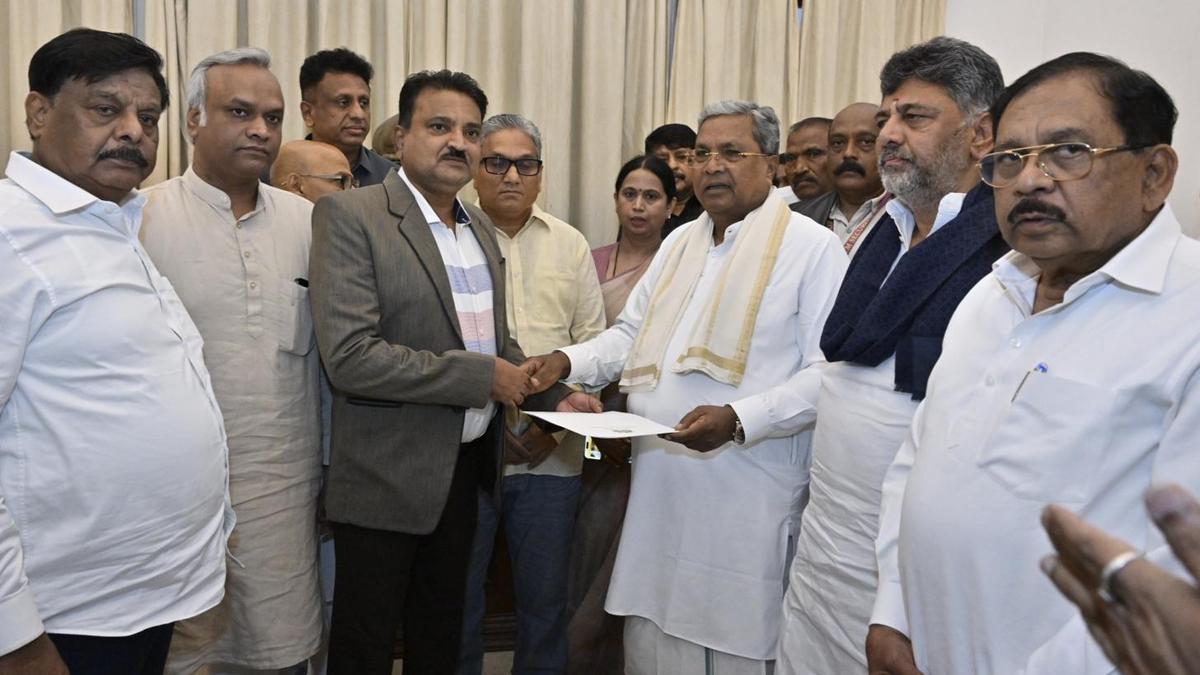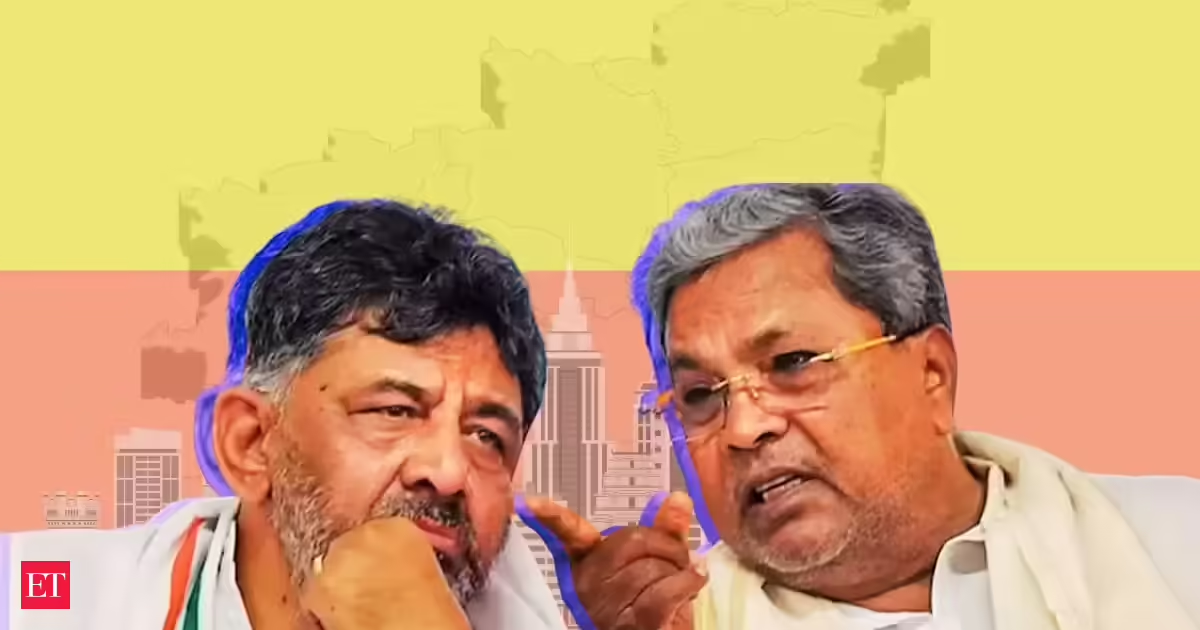
BENGALURU Karnataka’s political history offers a recurring warning for parties attempting to replace powerful regional leaders before the end of a term: the administrative transition may be immediate, but the electoral consequences often unfold slowly.Congress Legislature Party to meet today to elect new leaderThat history now hangs over Congress as Siddaramaiah exits the chief minister’s office and DK Shivakumar prepares to take charge under a long discussed power sharing arrangement.Inside the Congress, the transition is being viewed through the prism of two earlier political moments that altered Karnataka’s electoral landscape far beyond the change of leadership itself. The first was the removal of Veerendra Patil in 1990. The second was B S Yediyurappa’s resignation as chief minister in 2021.In both cases, the departing leaders represented far more than an administrative authority. They embodied political access, caste assertion and regional influence for communities that had attached themselves closely to those leaders over decades.Congress leaders privately acknowledge that the Veerendra Patil episode became one of the defining turning points in the party’s decline among Lingayat voters. Patil, a senior Lingayat figure with deep roots in north Karnataka, was removed during a period of instability in a manner many Lingayats considered humiliating. What followed was not an immediate collapse but a gradual migration of political loyalty that allowed the BJP to expand steadily across Lingayat dominated regions.The BJP later confronted its own version of that dilemma after Yediyurappa stepped down in 2021. Yediyurappa was not merely the party’s chief minister but the central figure behind the BJP’s southern expansion and its strongest Lingayat face in Karnataka. Though the transition was handled more carefully, dissatisfaction surfaced within sections of the Lingayat community and among Yediyurappa loyalists. By the 2023 Assembly election, Congress had improved its position across several Lingayat influenced constituencies where the BJP had previously retained a strong hold.For Congress, the Siddaramaiah transition carries different social equations but similar political sensitivities.Unlike Patil or Yediyurappa, Siddaramaiah’s influence is not tied primarily to a single dominant caste bloc. His political identity has been constructed around the AHINDA coalition comprising minorities, backward classes and Dalits, alongside welfare beneficiaries and sections of rural OBC communities.That wider social spread partly explains why the current transition is being watched with unusual caution inside the party. The concern is not confined to who occupies the chief minister’s office, but whether Congress can transfer authority without creating the impression that the coalition assembled under Siddaramaiah is being displaced or weakened.Political commentator A Narayana argued that the present transition differs significantly from earlier Karnataka leadership struggles because it emerged through negotiation rather than abrupt removal.“Unlike the previous exits of chief ministers midterm, this was a willing exit. It was known that there would be an exit and, in all fairness, compared to other power transfers in the state, this was very dignified. Even when compared to similar power struggles in Congress like Madhya Pradesh and Rajasthan, both D K Shivakumar and Siddaramaiah behaved in a mature and courteous manner,” he said.That distinction appears central to Congress’s strategy. Public messaging from both camps has largely avoided confrontation, with emphasis placed instead on continuity, coordination and collective leadership.Yet unease remains within sections of the AHINDA ecosystem.Independent Legislative Council member Lakhan Jarkiholi openly compared Siddaramaiah’s exit with the Veerendra Patil episode, arguing that Congress risks unsettling communities that see Siddaramaiah as their principal political representative.“Earlier, the Congress suffered greatly when Veerendra Patil was removed from the chief minister’s chair, as the Lingayats moved away from the Congress and started leaning towards the BJP. This is more likely in the case of Siddaramaiah as he is not just the leader of a single community but a bunch of communities under the AHINDA umbrella. By asking such a leader to step down, I think the Congress high command has put its hand in a beehive,” he said.Jarkiholi also suggested that resistance could emerge within the legislature if the transition is mishandled. “A lot of legislators may not support the Congress high command’s move and the government may fall,” he told reporters in Gokak on Thursday.Narayana, however, argued that the AHINDA bloc itself is not politically uniform and that Congress may retain substantial support among Dalits and minorities even after Siddaramaiah’s exit.“The Dalits and minorities in AHINDA are more of a Congress vote bank than a Siddaramaiah support group. Within the OBCs, Siddaramaiah’s biggest support has been the Kuruba community. It was expected that in the 2028 election, when Siddaramaiah exits, they would stop being an en bloc vote bank for the Congress. In fact, it presents an opportunity for Congress to bring non Kuruba and non Ediga OBC groups back to the party,” he said.The larger uncertainty may lie not in the transfer itself, but in Siddaramaiah’s political role after leaving office.Journalist and political analyst Sugata Srinivasaraju said Siddaramaiah has historically remained politically engaged only when he has direct stakes in power structures. Drawing from decades of observing Siddaramaiah’s political career, Srinivasaraju said previous periods outside office had often altered governing equations within the state. “When out of power, he has often acted as a disruptor. The 2018 coalition government is an example. He was accused of being a force behind the coalition eventually falling apart,” he said.
Congress Legislature Party to meet today to elect new leader
Karnataka's Congress faces challenges as Siddaramaiah exits the chief minister role; historical transitions raise concerns over community loyalty and political stability. | India News
871 words~4 min read