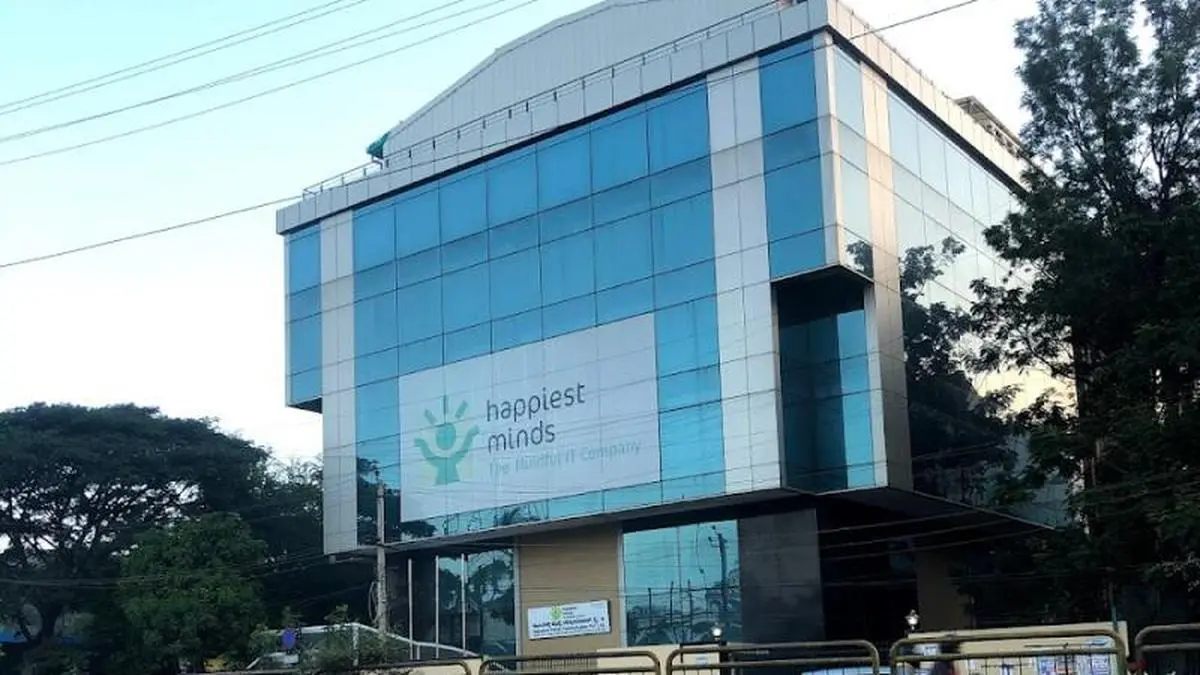
Happiest Minds reported a 79.9% surge in its net profit for the fourth quarter of FY26 at Rs 61.17 crore, helped by revenue growth, high margins and better utilisation amid increased adoption of AI-led services. Sequentially, the profit grew by 51.8%.The Bengaluru-based small-tier IT services firm posted Rs 604-crore revenue for the March quarter, rising 10.9% year-on-year and by 2.8% sequentially. The topline grew 6.4% YoY in constant currency terms.For the full fiscal, Happiest Minds reported revenue of Rs 2,315 crore, up 12.3% year-on-year. In constant currency terms, the annual revenue growth was 9.2%, slightly short of the 10% guidance.Operating margin for the fourth quarter stood at 17.5%, remaining steady compared to the same period a year ago.“We had some challenges last year as certain customers looked like they showed some weakness, but now they are coming out of it,” Venkatraman Narayanan, managing director of Happiest Minds, told ET in a post-earnings interaction. “Many of them are moving into industry-agnostic platforms and repeatable solutions. Six or seven of them are already at play… These are getting us new customers and inroads into existing ones.”The company has guided an annual revenue growth of 12.7% for FY27, with an ‘aspirational goal’ of 15%. Narayanan said its pipeline increased 27% and included multi-quarter and multi-year deals, giving it confidence in the FY27 outlook.Happiest Minds added 10 clients in the March quarter, taking the total to 306 for the year.Its generative AI business segment (GBS) more than doubled in revenue, growing 120% year-over-year, followed by 18.5% growth in the infrastructure management and security services (IMSS) segment, propping up its topline growth.Budgets required for AI transformation are higher than what customers can spend. Yet, “clients are looking at productivity enhancements from AI tools and using those savings to fund AI projects,” said Joseph Anantharaju, co-chairman and CEO of Happiest Minds.“There is also more pressure on optimising and automating the run side of the business so budgets can be freed up,” he added.The firm does not report AI revenue separately, insisting that AI is incorporated across verticals and segments, aiding market share and margin expansion.“We are not shy about evangelising AI adoption and showing customers the benefits across development, testing and customer support. This is allowing us, in some cases, to capture revenue from internal teams or other partners,” Anantharaju added.Among geographies, the United States remained its largest contributing region, responsible for 58.2% of the quarter’s revenue, even as it contracted marginally quarter-on-quarter, while Europe’s share increased to 8.3%, from 7.2% in the previous three-month period.Among verticals, banking, financial services and insurance’s contribution to the revenue stood at 26.8%, up from 26% in the previous quarter, while edutech expanded significantly, to 16.3% of the revenue from 14.9% in Q3.Employee headcount stood at 6,497 at the end of March, down from 6,632 a year earlier. Attrition for the trailing 12 months was 17%, while utilisation improved to 81.4% from 77.4% a year ago.On hiring, Anantharaju said the company plans to add 750-1,000 employees in the next couple of years, with most hiring expected at the lateral level as the company scales AI and digital engineering projects. Fresher hiring is expected to be muted as the company focuses on improving its utilisation rates.
Happiest Minds’ Q4 net profit jumps 80% amid AI adoption - The Economic Times
Happiest Minds reported a significant 79.9% surge in net profit for Q4 FY26, reaching Rs 61.17 crore, driven by revenue growth and increased adoption of AI-led services. The IT firm's revenue grew 10.9% year-on-year to Rs 604 crore, with its generative AI business more than doubling. The company anticipates continued growth in FY27, projecting 12.7% revenue increase.
535 words~2 min read