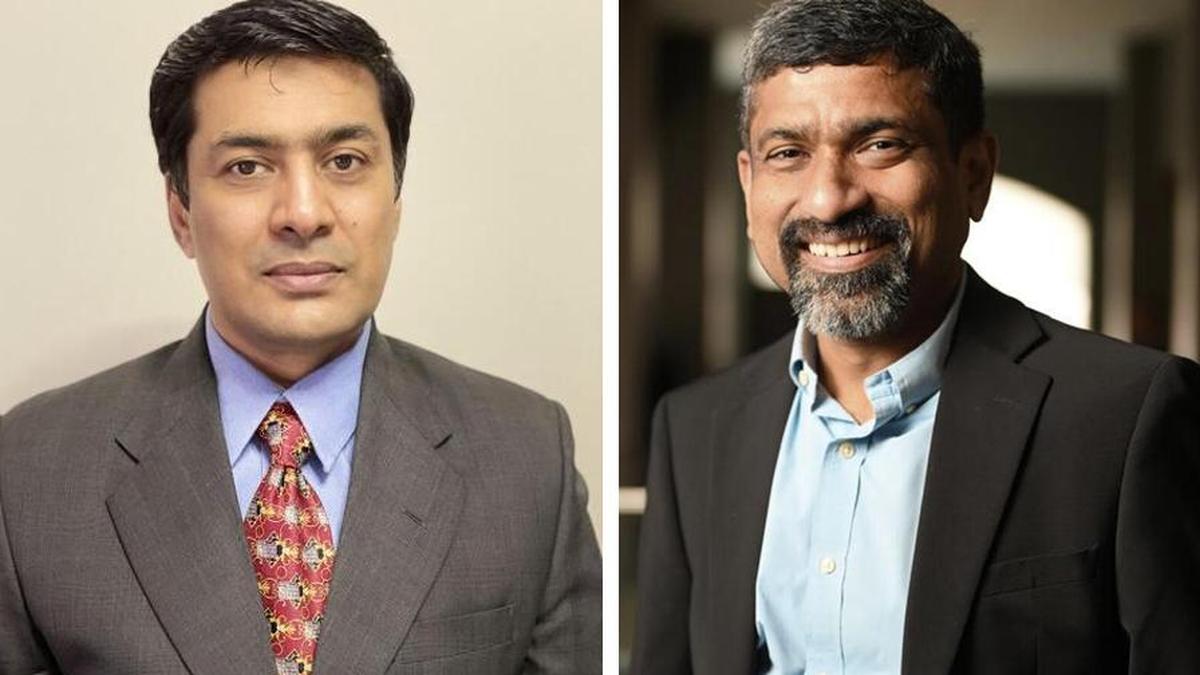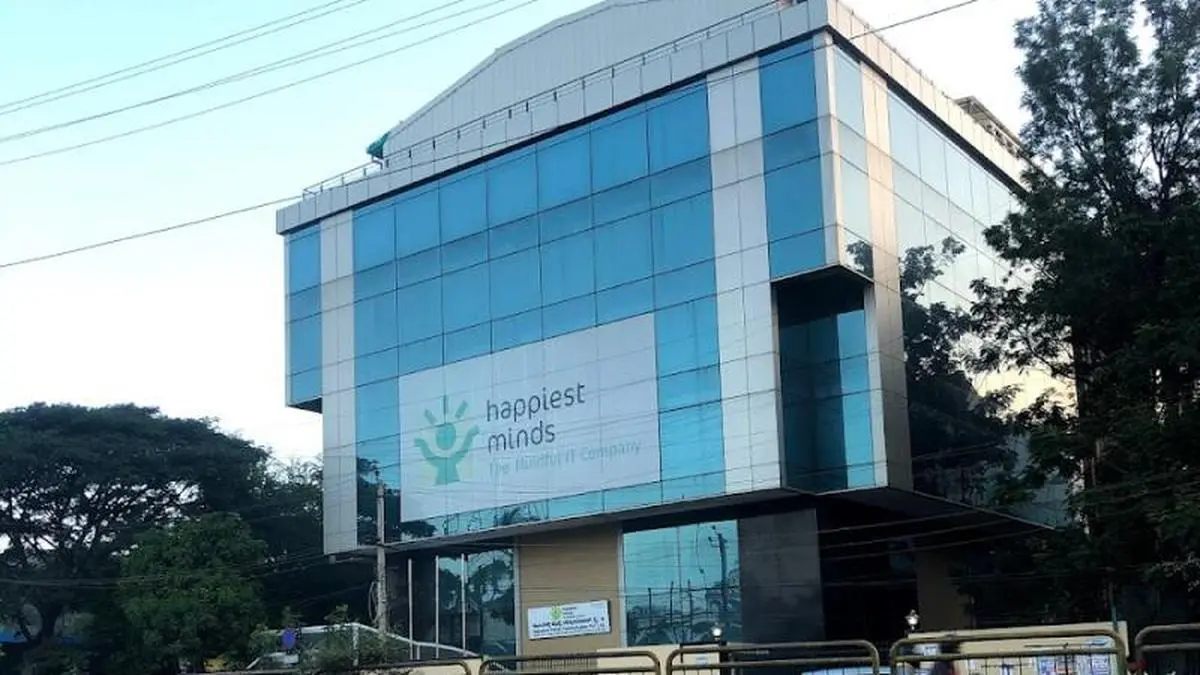
Happiest Minds reported Q4 FY26 total income of ₹621.7 crore, up 3.1 per cent QoQ and 9 per cent YoY. Meanwhile, PAT rose sharply to ₹61.2 crore, up 51.8 per cent QoQ and 79.9 per cent YoY. Adjusted PAT stood at ₹71.4 crore, up 2.1 per cent QoQ and 21.3 per cent YoY. For the full year FY26, revenue stood at ₹2,315.1 crore, up 12.3 per cent YoY, while PAT increased 15.1 per cent YoY to ₹212.6 crore.Joseph Anantharaju, Co-Chairman & CEO, and Venkatraman Narayanan, Managing Director, spoke about the company’s AI strategy, sectoral outlook, and growth expectations for FY27.What are some key takeaways from the Q4FY26 performance?VN: For the year, we have shown dollar growth of about 9.2 per cent compared to our guidance of 10 per cent. Our operating margin level was 17.5 per cent. It was a good year and a good foundation for the next year. We have guided 12.5 per cent growth for the next year and are well-positioned to achieve it.Next year’s growth will be the basis for aspirational growth of about 15 per cent the year after. Some have observed that 12.5 per cent growth appears somewhat higher than the industry. While large companies in the industry do face scale-related challenges, several mid-sized firms in the $1–2 billion range are growing at over 15 per cent. There is no reason why we should not be able to achieve similar growth.What proportion of FY26 growth came from existing customers versus new client additions?VN: Repeat business is about 93 per cent. That’s how we track existing clients. As of the halfway point, our run rate for the year was $19 million. The definition of “new” differs from a sales perspective and a reporting perspective. From a sales standpoint, a salesperson retains ownership of a new customer for 18 months. However, for reporting purposes, customers added outside the rolling 12-month period accounted for about 7 per cent.JA: The total number of customers or logos increased by around 51 during the year.Could you share a breakdown of revenues coming from AI-linked projects?VN: About 18 months ago, when we started GBS, we were asked why we were separately disclosing those revenues. But we believed that if we did not report it separately, it would get diluted among several other metrics. So we created GBS as a separate business unit even before the broader AI wave accelerated. Today, it contributes 3.3 per cent of our revenues, and everything it does is AI-led, since it was established as an AI innovation centre.At the same time, over the last 18 months, AI has become embedded across almost everything we do. AI is now part of software development, and 6–7 of our repeatable solutions across PDES and IMSS are AI-enabled, or AI-driven offerings created either directly by GBS or with its contribution. We will come out with a number for contributions from AI-led services. It’s only a matter of the next quarter or a few months. We have already started collating that number, which is substantial.Another important point is that many people assess AI revenues based on contract structures such as time-and-materials (TNM) or fixed-price (FP) models. However, AI-led work should be evaluated through an outcome-based lens. There is often confusion between pricing structures and contract models. Even if a large share of business is AI-led, the contract model may still formally remain TNM or FP. But AI engagements themselves are increasingly outcome-based, because clients are not going to pay merely for effort or presence.Do you currently have any meaningful exposure or footprint in the GCC region? Have geopolitical tensions in the GCC affected client decision-making or discretionary tech spending in any way?VN: We’re seeing a large deal coming from the region, which contributes almost $13-14 million.JA: The specific deal is close to $8 million, and it would strengthen the relationship and give other opportunities. We have 2-3 large customers in that region, and we’re seeing a continued uptick in demand. In fact, we are doubling down on the region and taking a localization approach where we train the locals and make it more hybrid rather than transplanting people from India or hiring Indians there. I feel quite bullish about the region.We haven’t seen any impact in terms of discretionary spending. But if the conflict drags on for too long, at some point, it may be the straw that breaks the camel’s back. We’re hoping there’s a resolution in the near future, following which we can continue with the AI-led spend that will sustain the market.Could you provide a sector-wise outlook and highlight some of the key headwinds and tailwinds across industries?JA: Our performance reflects what is happening in the market to an extent. Our BFSI story continues to resonate well, with some large customers across banking and insurance doing well. We believe our positioning remains strong, and platforms such as Arttha and Insurance in a Box are helping drive momentum. We have already signed a few customers for Insurance in a Box and are seeing a healthy prospect pipeline. Our bet on PureSoftware is also beginning to pay off.Healthcare is another segment that performed well, and we expect that momentum to continue. We recorded 13% year-on-year growth in the segment. There was a small blip in Q4 because one program with a large pharma customer came to an end, and there was also a one-time licence component in the base. Otherwise, healthcare remains an area that will continue to deliver growth.In EdTech, we saw growth in Q4, and with the adoption of GenAI and our Eduweave platform, we believe we can reverse the year-on-year decline. Another area witnessing strong GenAI adoption is retail and CPG, where we are seeing healthy traction and 18% year-on-year growth. We also have some strong client logos in the segment that we can further capitalise on.Could you shed some light on your outlook for FY27?JA: In terms of revenue, we feel comfortable with a 12.5 per cent growth based on our pipeline. Some of the strategic initiatives we started implementing last year should start paying dividends. Given the whole AI-first strategy, we feel quite comfortable with the revenue guidance.From a margin perspective, the goal is to sustain the current operating margin of 17.5% and see if we can get an uptick to operate between 17.5 and 18.5%. As some of the investments over the last two years start paying off, we should get there.
Happiest Minds sees strong FY27 pipeline, confident of 12.5% annual revenue growth
Happiest Minds anticipates a strong FY27 with a 12.5% revenue growth, driven by strategic initiatives and an AI-led approach.
1,068 words~5 min read