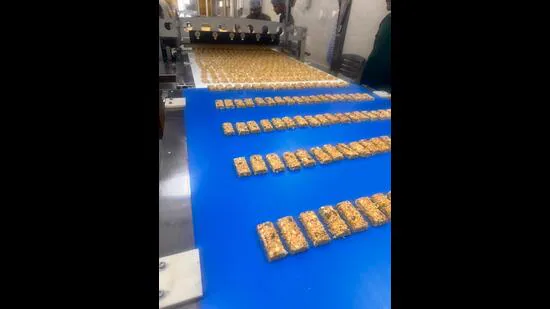
In Pune’s fast-growing startup ecosystem, innovation is no longer limited to software and technology companies. Increasingly, entrepreneurs are building businesses focused on health, nutrition, and packaged foods for India’s rapidly evolving consumers.Preeti Deshmukh, 40, who completed her Master’s in Nutrition from Pune University in 2007, entered the food business in 2016 along with her spouse Amitesh. (HT)Behind many of these emerging food brands lies a lesser-known but critical layer of support, research, product development, manufacturing, packaging, and shelf-life engineering. This is where Food Nest, a Pune-based startup founded by Preeti and Amitesh Deshmukh, has carved a niche for itself by helping food entrepreneurs turn kitchen ideas into scalable commercial products.When consumers pick up an energy bar, a packet of nachos, or a protein cookie, they usually check two things: the expiry date and the ingredient list. Then comes the real test: taste. If the product tastes good, it finds its way back into the shopping cart.But behind that simple act of opening a packet lies a far more complex world involving formulation, machinery, production systems, packaging, shelf-life testing, and manufacturing precision. Food Nest operates quietly behind the scenes, helping brands navigate that journey.The beginningPreeti Deshmukh, 40, who completed her Master’s in Nutrition from Pune University in 2007, entered the food business in 2016 along with her spouse Amitesh, an electronics engineer with prior experience in the franchise food sector.The couple initially supplied fresh meals to corporates and health-conscious consumers. “Customers would often ask us a simple question,” recalls Preeti. “What healthy food can we carry while travelling?”That question led to experimentation with portable healthy snacks, particularly millet-based bars made in small batches at home. Around the same time, a packaged healthy food company organised a competition focused on millet-based products.“I participated with my millet bars and won,” says Preeti.That became the turning point.“I approached the company and asked whether they would be interested in my energy bars. They said yes. More importantly, they helped me understand the packaged food business and what it takes to move from a home kitchen to factory-scale production. There is a 180-degree difference.”The company placed an order for 20,000 bars, prompting the Deshmukhs to set up a small manufacturing unit in Bavdhan, Pune.“We invested in machinery for manufacturing and packaging and got ready to produce the order,” says Amitesh. “But then Covid arrived in 2020, and everything came to a standstill.”Rather than let the products go to waste, Preeti distributed the bars to healthcare workers during the pandemic. But the experience also triggered a larger realisation.That insight came at the right time. India was witnessing a surge in food entrepreneurship, with founders launching protein bars, healthy snacks, millet products, cookies, and functional foods aimed at health-conscious consumers.But many struggled to scale.“A recipe that works in a home kitchen often fails commercially,” says Preeti. “A protein bar made by hand may completely change in texture when produced in tons. Products must survive rolling, cutting, packaging, transportation, and storage without compromising quality or taste. That is where most startups struggle.”“Founders usually come with a vision for their product,” she adds. “But taking that idea from a kitchen recipe to a commercially viable product requires deep technical expertise. Food Nest was created to bridge that gap.”From home kitchens to commercial shelvesToday, Food Nest functions as an end-to-end product development and manufacturing partner for emerging food brands. Its focus areas include protein and nutrition bars, cookies, nutritional premixes, and nachos. The company now works with more than 25 brands and has helped develop over 50 products.The process begins with understanding the founder’s vision.Food Nest then translates these ideas into commercially manufacturable products.“We don’t just ask whether something tastes good,” says Amitesh. “We ask whether it can survive manufacturing, maintain shelf life, retain nutrition, and still make financial sense.”The science behind scaling foodOne of the biggest misconceptions in food entrepreneurship, says Preeti, is that scaling simply means producing larger quantities of the same recipe.A recipe prepared manually behaves very differently when processed through industrial machinery. Moisture levels, texture, fat content, and even flavour release can change significantly at scale. A handmade protein bar may not require additional fats, but industrial extrusion or sheeting processes can alter its texture completely. Packaging and storage conditions impact shelf stability, while machinery settings vary drastically between 10-kg and one-ton batches.Food Nest helps founders navigate these technical transitions. The company works with multiple manufacturing processes, including moulding, rolling, sheeting, extrusion, and commercial blending.Its 16-member team includes nutritionists and food technologists who handle product R&D, nutritional analysis, shelf-life testing, commercial viability studies, and manufacturing SOPs.“Our goal is simple: to create products that taste the same on day one and at the end of their shelf life,” Preeti states.Building productsFood Nest positions itself as a one-stop solution for food startups. The company begins with product development and nutritional analysis while evaluating ingredient functionality, shelf life, cost structures, pricing feasibility, texture retention, and nutritional goals.Once the concept is viable, prototypes are created with a strong focus on healthier formulations that avoid palm oil, artificial binders, and excess refined sugars. Natural alternatives are tested wherever possible.The next stage involves packaging development, preservative selection, stability testing, and production planning before the company finally moves into manufacturing ready-to-sell products.Minimum order quantities are determined based on machine capacity, product type, founder requirements, and projected sales.“We help brands decide practical production volumes,” says Deshmukh. “Some founders can sell 100 kilograms quickly, while others need smaller runs initially.”Over time, Food Nest expanded into cookies, nachos, protein snacks, and export manufacturing.The money storyThe company’s financial journey has been relatively straightforward. Preeti initially took a bank loan of ₹25 lakh to set up the first manufacturing unit.“Within a year, we repaid the loan,” she says. “Since then, we have expanded entirely through internal accruals. We are debt-free.”Scaling with purposeFood Nest is now preparing for its next phase of growth.“In the next three months, we will move into a 20,000-square-foot facility to meet rising demand and larger production volumes,” says Preeti.While the company initially focused on startups, it is increasingly working with established food brands with revenues between ₹100 crore and ₹500 crore. Exports are also becoming a major focus area.Food Nest was recently selected among 30 women-led startups under an NITI Aayog initiative in collaboration with the Women Entrepreneurship Platform to support export-oriented businesses.“All 25 brands we currently manufacture are based on recipes we developed,” says Deshmukh.The bigger visionFood Nest is not trying to become another consumer-facing food brand. Instead, its ambition is to become part of the infrastructure backbone supporting India’s next generation of food entrepreneurs.As India’s healthy food and packaged snack market continues to grow, the demand for reliable manufacturing, R&D, and product development support is expected to rise sharply. Food Nest believes the future belongs not only to brands, but also to the companies that enable those brands to succeed.About the foundersPreeti Deshmukh brings over two decades of experience in nutrition and has also completed an entrepreneurship programme at IIM Bangalore. Amitesh oversees the company’s operational and technical functions.India’s food revolution is no longer confined to large FMCG companies. The next wave of innovation is emerging from smaller founders building healthier, smarter, and more specialised products.As Preeti puts it: “Innovation alone is not enough. Behind every successful food brand lies an ecosystem of R&D, manufacturing, packaging, and process engineering that consumers rarely see.”
Powering India’s healthy snack boom
A Pune-based startup is quietly helping India’s new-age food brands scale from homemade recipes to commercially successful products
1,220 words~6 min read