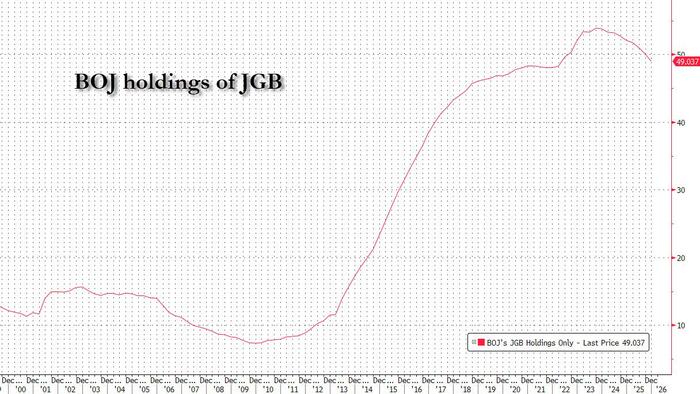
With Japanese bond yields recently hitting record highs and bond market volatility soaring, overnight Reuters floated a trial balloon that Japan's central bank may pause the unwinding of its massive debt holdings next fiscal year, which would give Prime Minister Sanae Takaichi some relief amid growing investor concerns about her growing spending plans.A pause would mark a turning point in the Bank of Japan's quantitative tightening plan - started in 2024 as part of Governor Kazuo Ueda's efforts to unwind a decade-long, massive stimulus which everyone said would result in failure. Well, there it is. The next step, of course, is more QE.According to Reuters, which is well known for being the mouthpiece of BOJ insiders, at its June 15-16 meeting, the Japanese central bank will review its bond taper plan running through March next year and lay out a new plan for fiscal 2027. With no change expected to the existing taper plan, markets are focusing on whether the BOJ would keep reducing its monthly bond purchases in fiscal 2027 or maintain the current pace.While there is no consensus yet within the BOJ on the final decision, a pause in taper is increasingly seen as the preferred option with uncertainty over the Iran war keeping bond markets jittery, said two sources familiar with the deliberations."Markets remain volatile, so there's no need to rush," one of them said on the BOJ's taper, adding that many market players appeared to favor maintaining the current pace of buying. Ironically, the market volatility is precisely the reason to rush. Political considerations may also push the BOJ to pause as rising bond yields threaten to confine Takaichi's spending plans. "What the administration wants to avoid most is rises in bond yields," said one of the sources. Of course, if the intention is to avoid bond yields from surging, it's far too late.Japan's 20Y bond yield rises as high as 3.511%, highest since 1996 as global interest rates go vertical pic.twitter.com/Rc1gKjfGyo
Japan Prepares To End Quantitative Tightening Amid Bond Market Turmoil
"We've seen a pretty fast rise in bond yields, which makes it hard for investors to buy bonds. The finance ministry may be getting worried too,"
326 words~1 min read