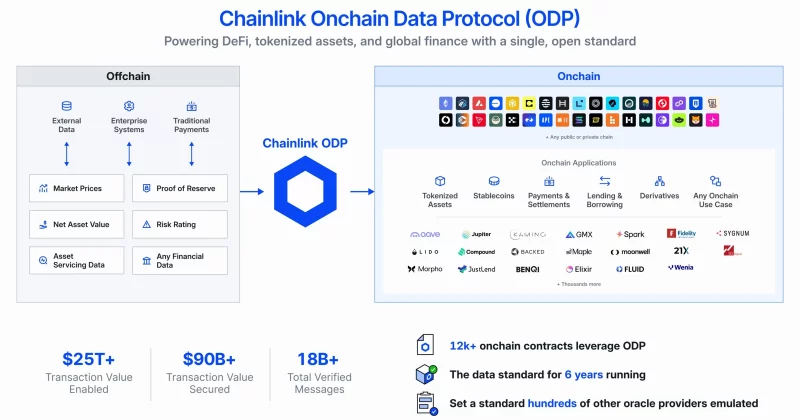
The Bank of England just published a report that reads like a love letter to oracle networks, and Chainlink is the main character.
The DLT Innovation Challenge 2025 Final Report, published on May 12 by the Bank of England and the BIS Innovation Hub London Centre, examines how distributed ledger technology could reshape wholesale payments and settlement. Among the most significant takeaways: oracles, the middleware that feeds real-world data into blockchain systems, are not just helpful. They’re foundational.
What the report actually found
The challenge selected nine firms to stress-test DLT’s potential in core financial infrastructure. Chainlink and Aave Labs were among the participants, alongside Ava Labs, Circle, Hedera, HSBC, and Digital Asset with KPMG.
The report zeroed in on four key themes: settlement finality, scalability, network control, and interoperability. The report highlights the heavy reliance on oracles and middleware for connecting DLT systems to external data sources and legacy financial plumbing. The Bank of England didn’t just note that oracles are useful. It flagged the shared trust assumptions that come with relying on them, raising governance questions around data integrity and who runs the oracle infrastructure.