Circle isn’t content just being the company behind the world’s second-largest stablecoin. It wants to build the financial plumbing for a future where AI agents buy, sell, and settle transactions without waiting for a human to click “approve.”
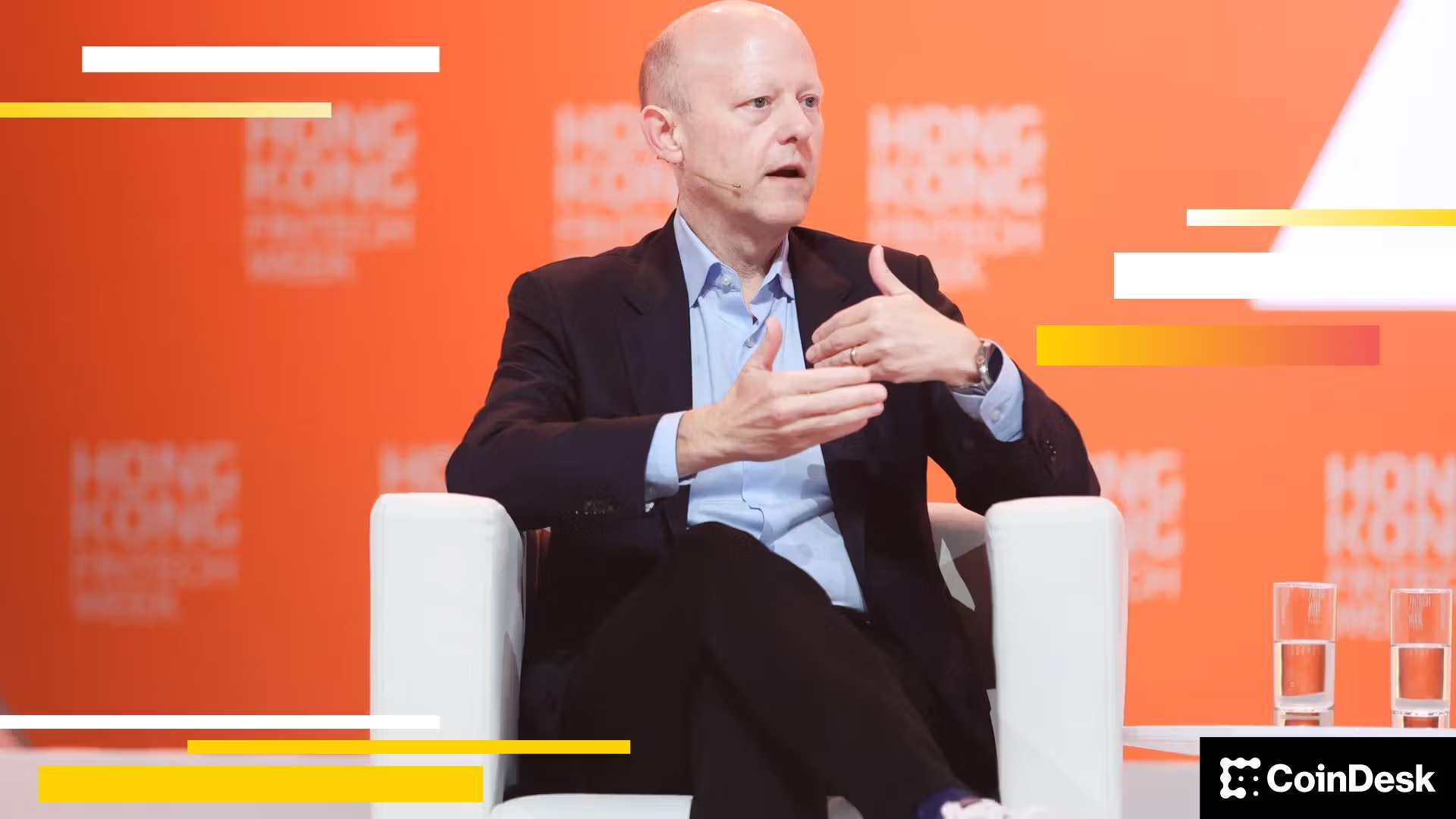
That’s the pitch behind Arc, Circle’s enterprise-grade Layer-1 blockchain designed to serve as what the company calls the “Economic OS for the internet.” CEO Jeremy Allaire has framed Arc as essential infrastructure for an agentic economy, one where autonomous software agents need programmable, real-time payment rails to function at scale.
What Arc actually does
The design priorities tell you everything about the intended user base: sub-second transaction finality, stablecoin-denominated gas fees starting with USDC, and embedded logic for policy enforcement and agent coordination.
Through what Circle calls “Nanopayments,” transaction fees can drop as low as $0.000001. For high-frequency, low-value machine-to-machine payments, those economics are essentially the difference between viable and not viable.