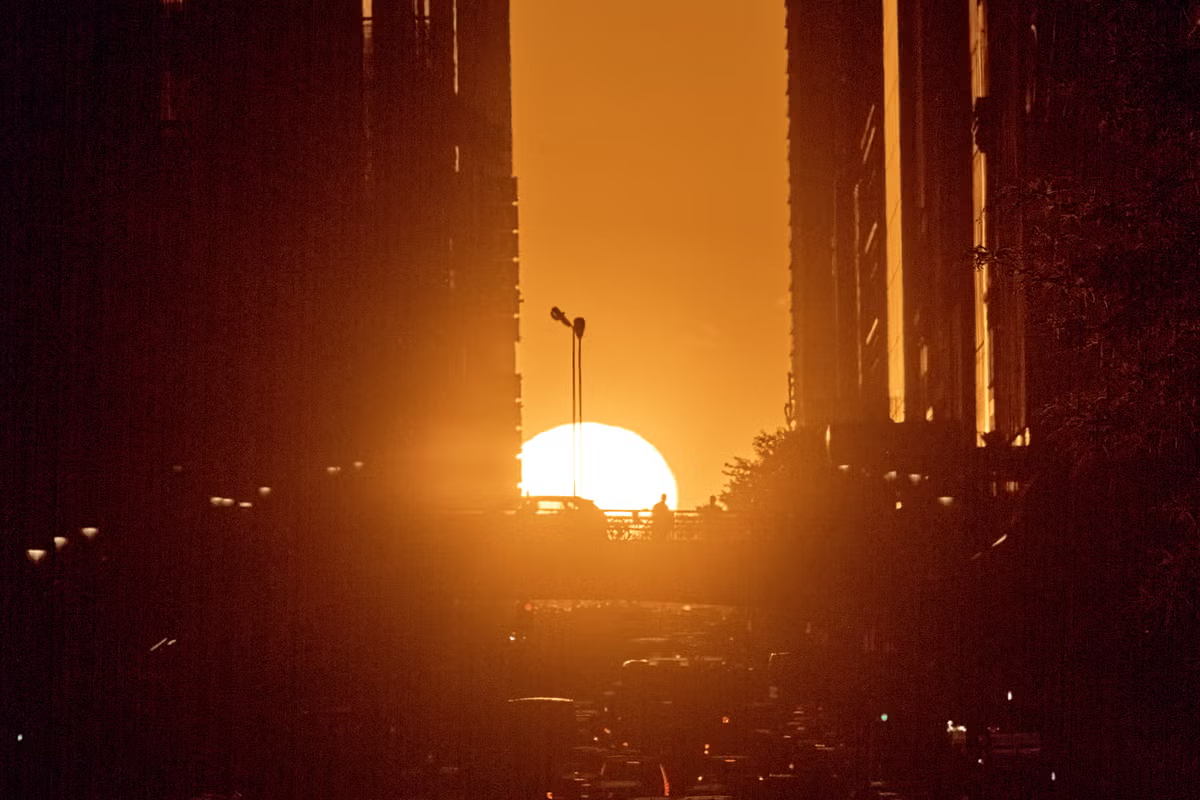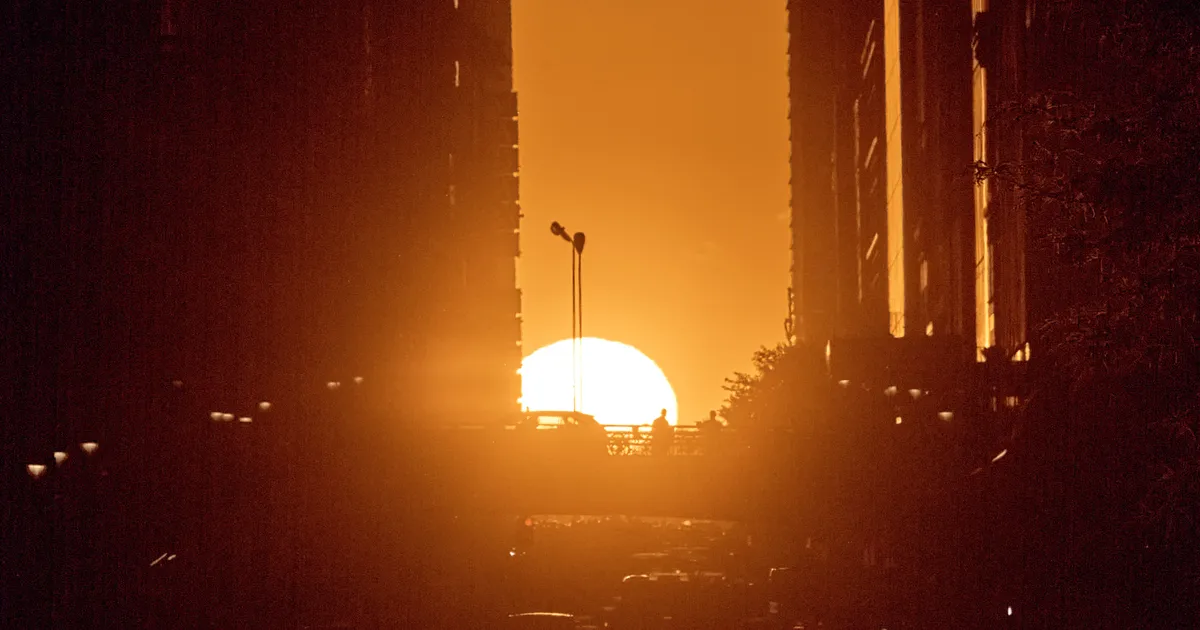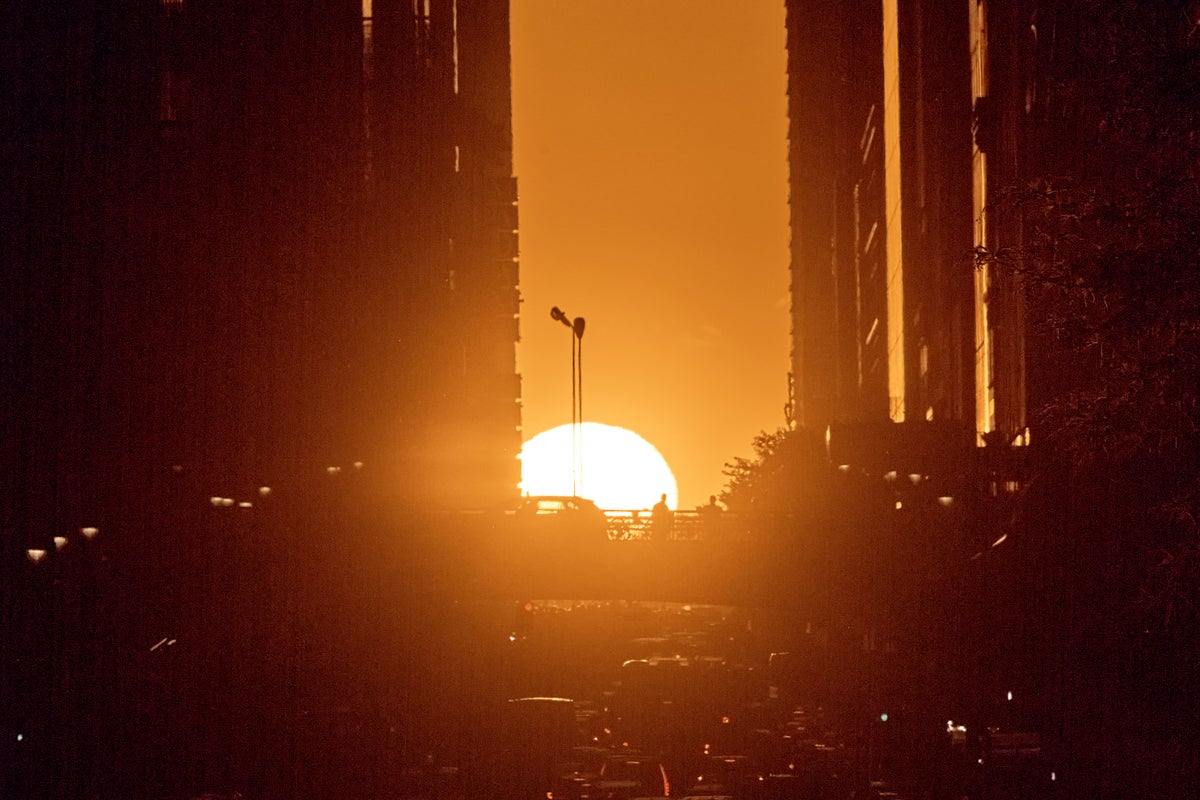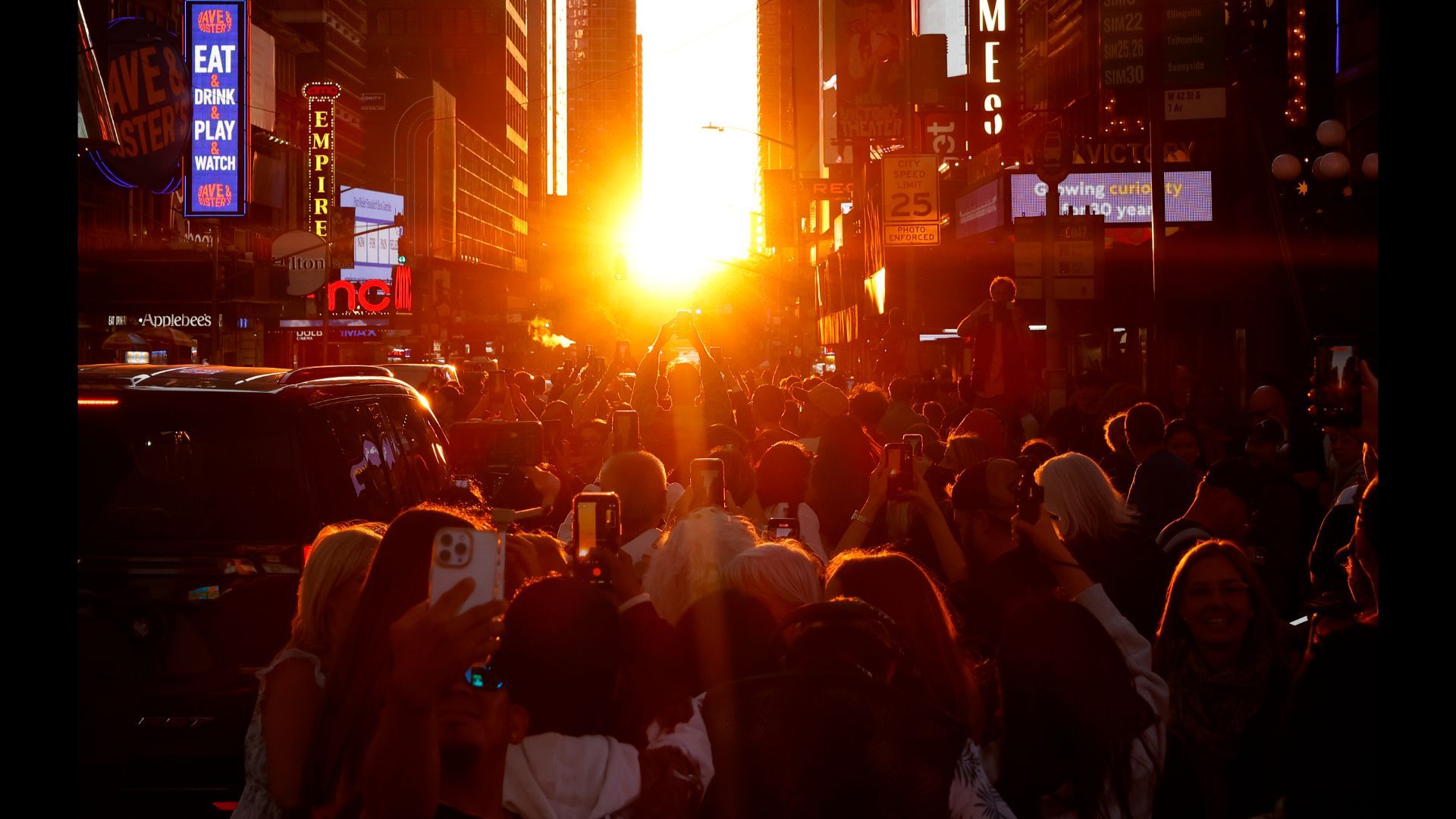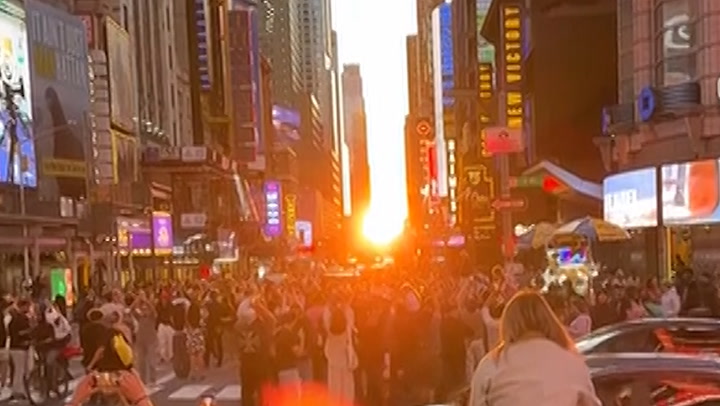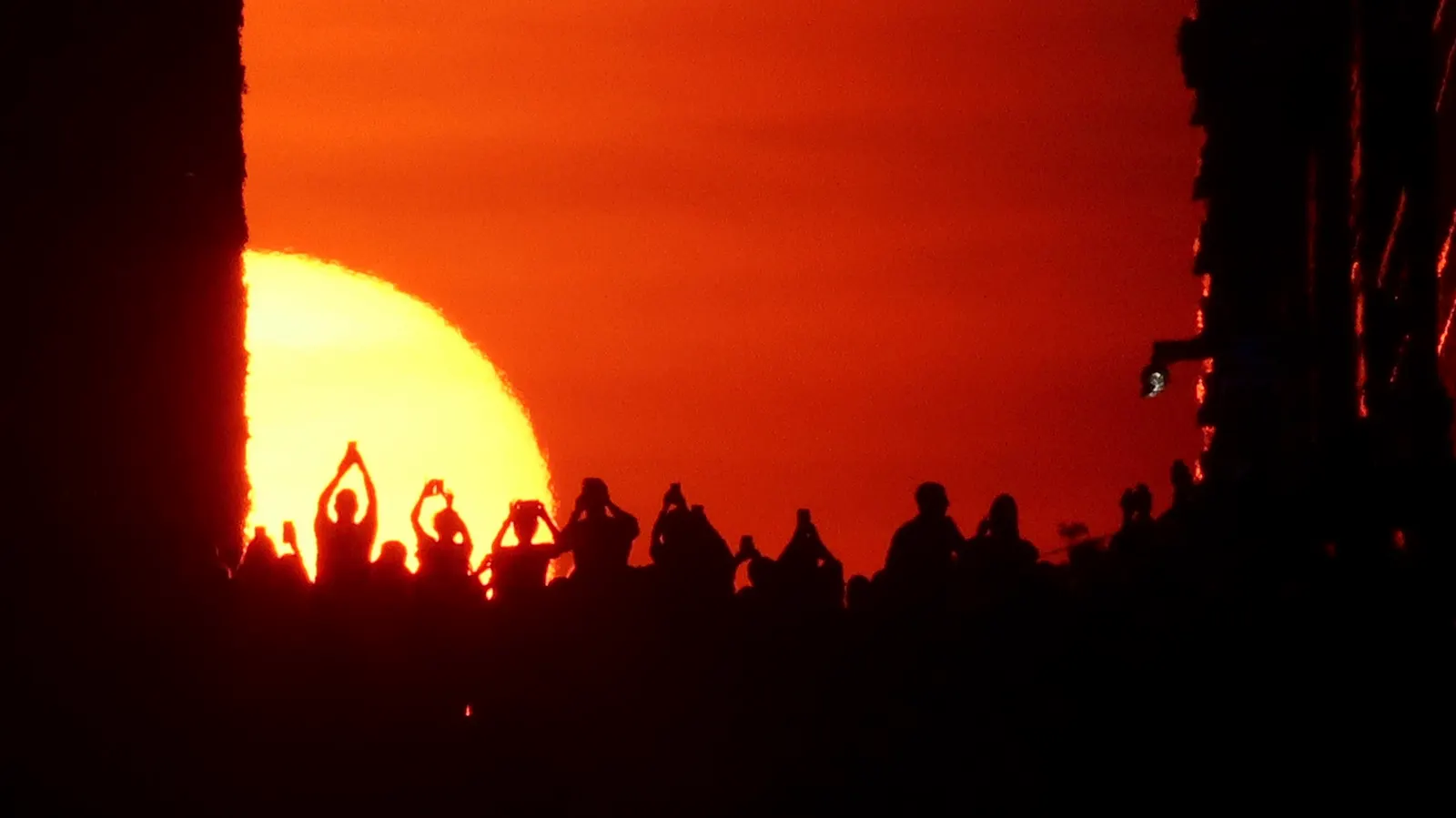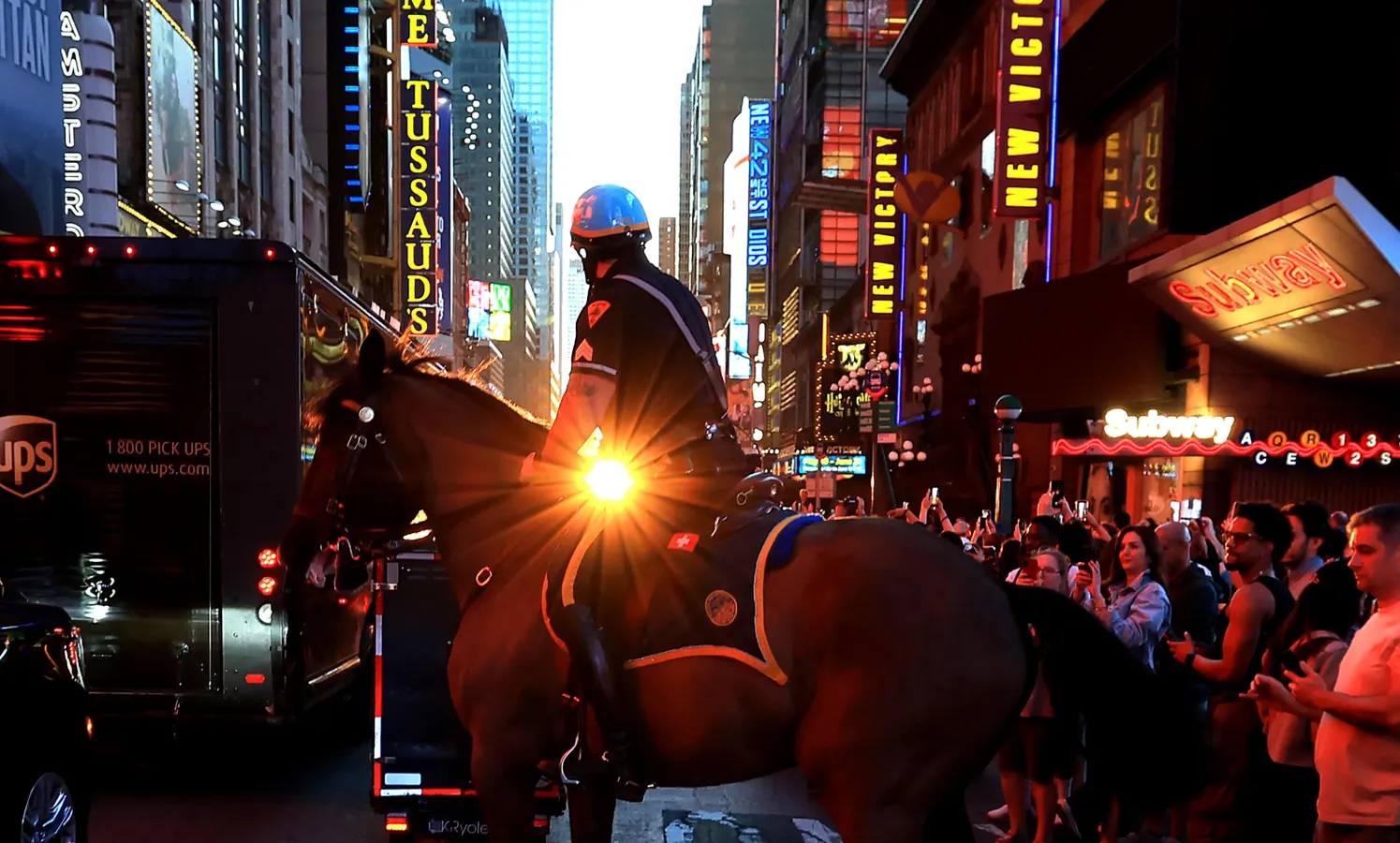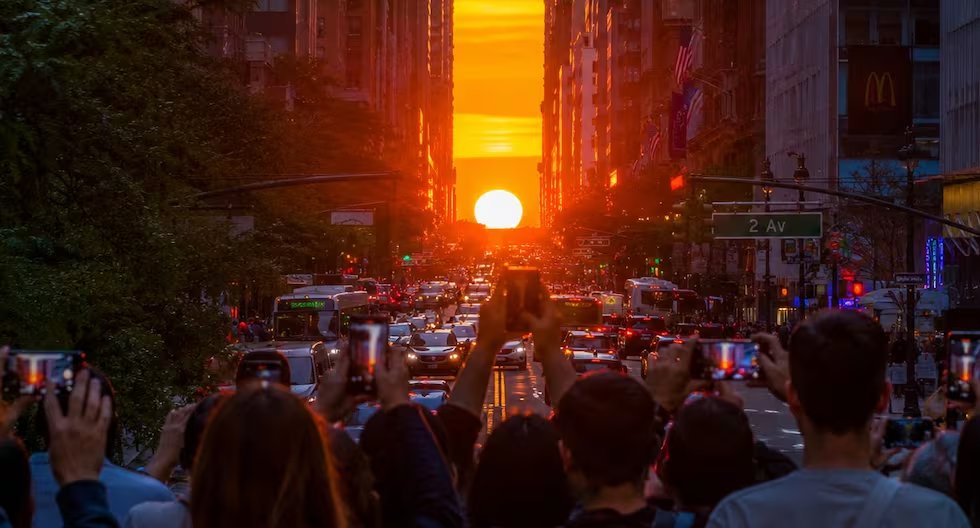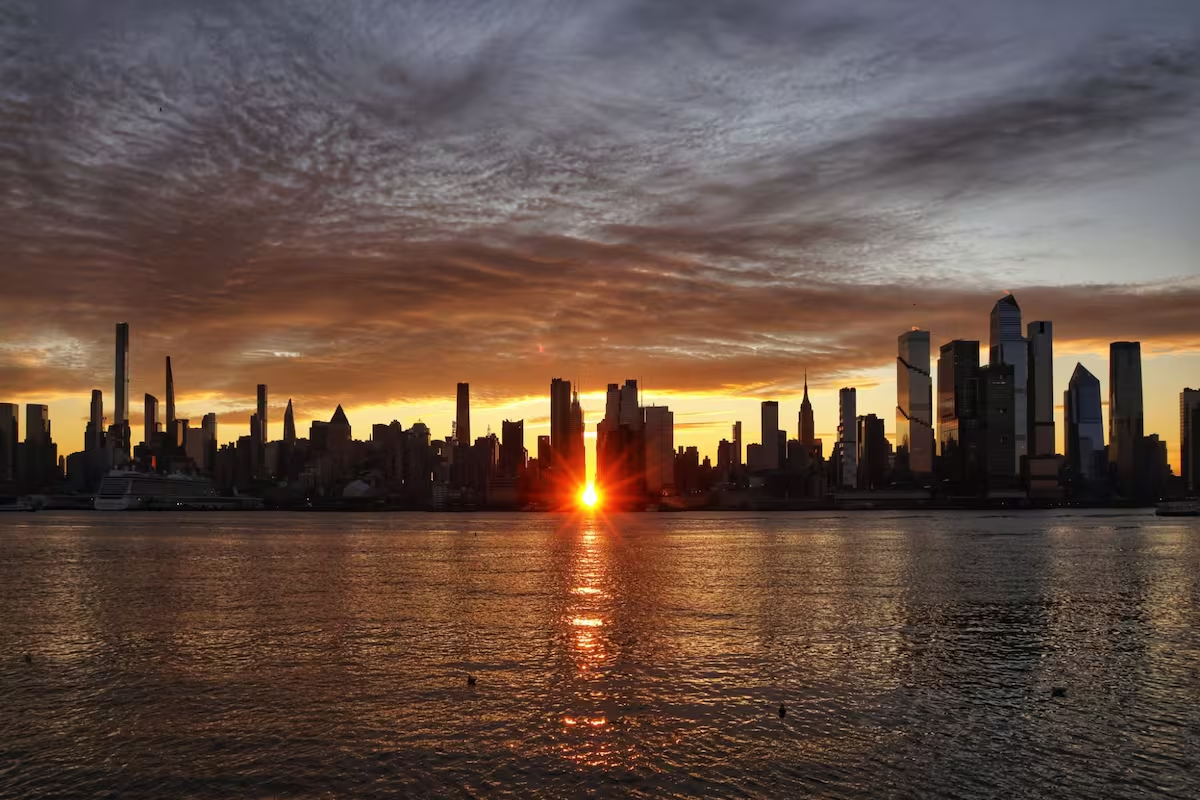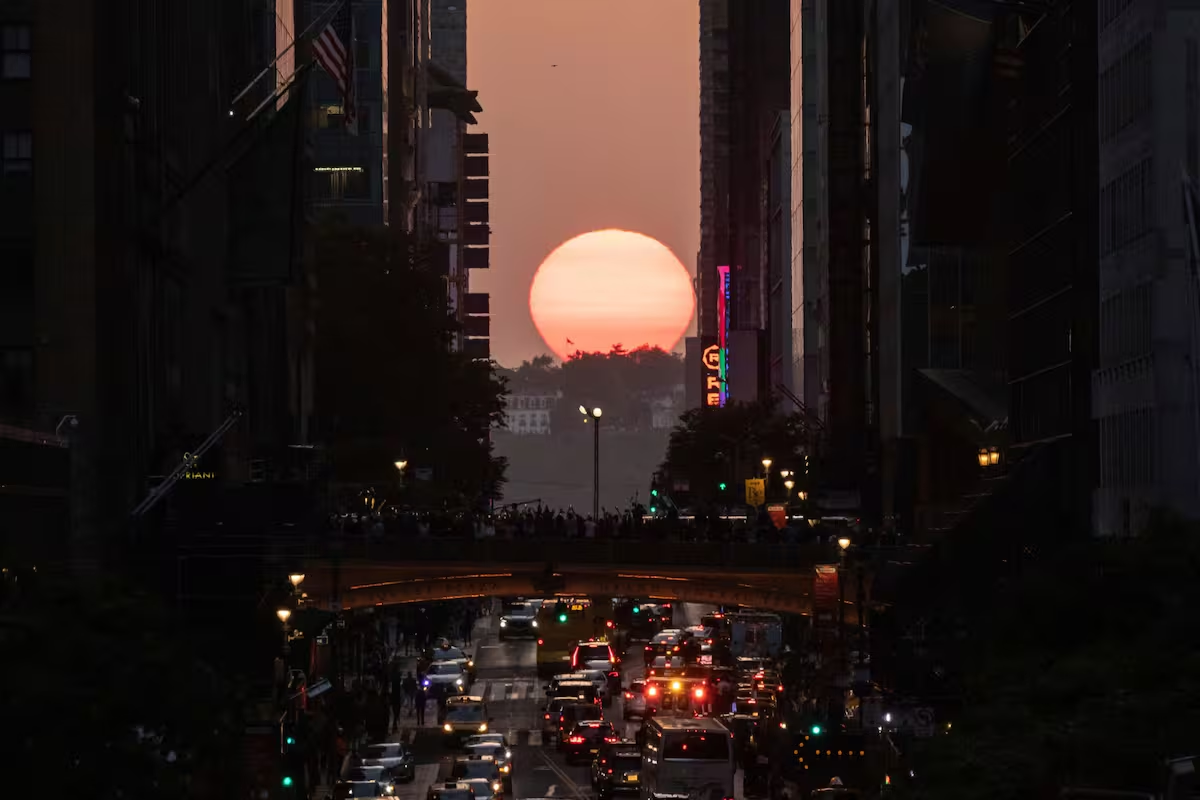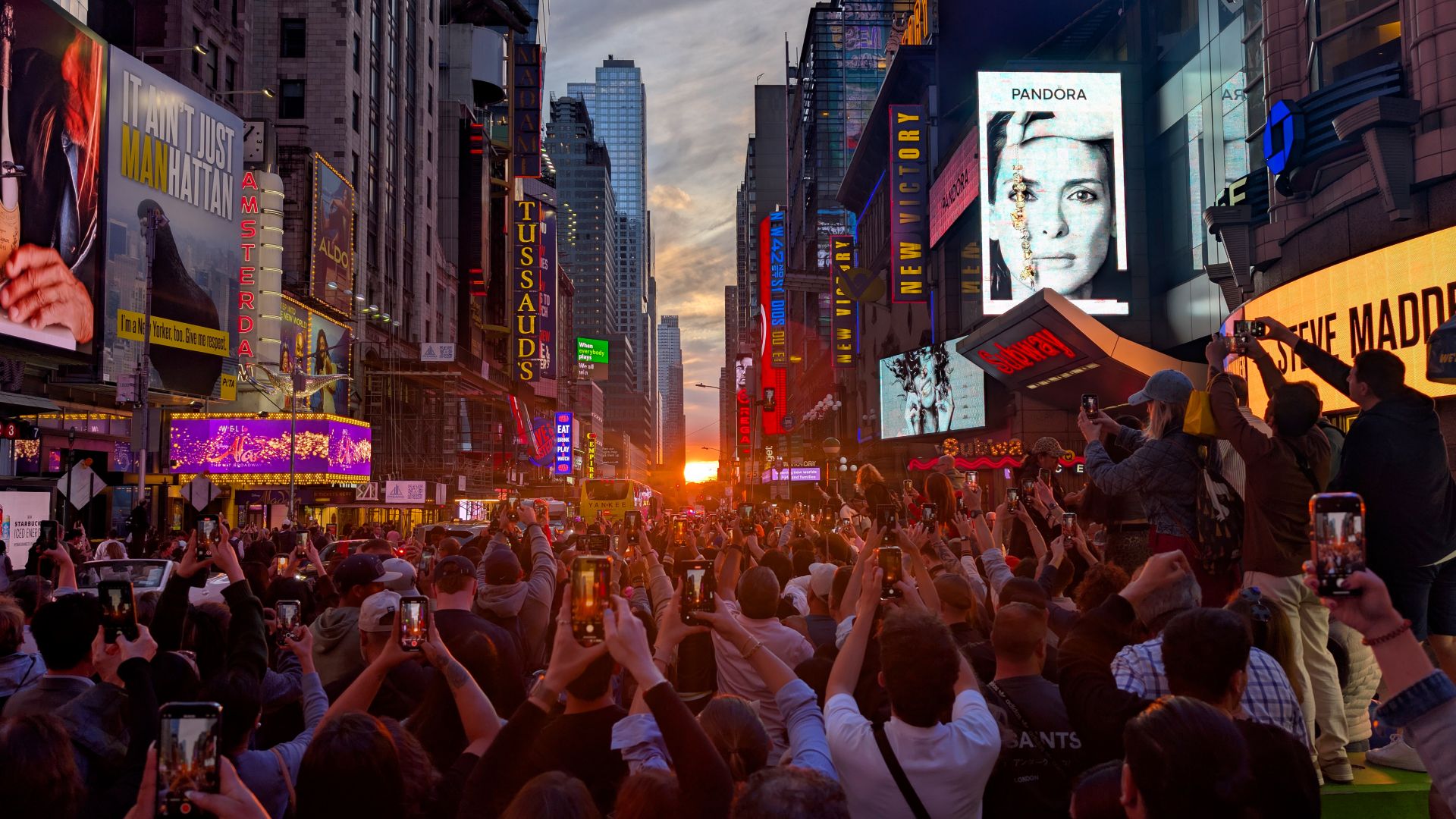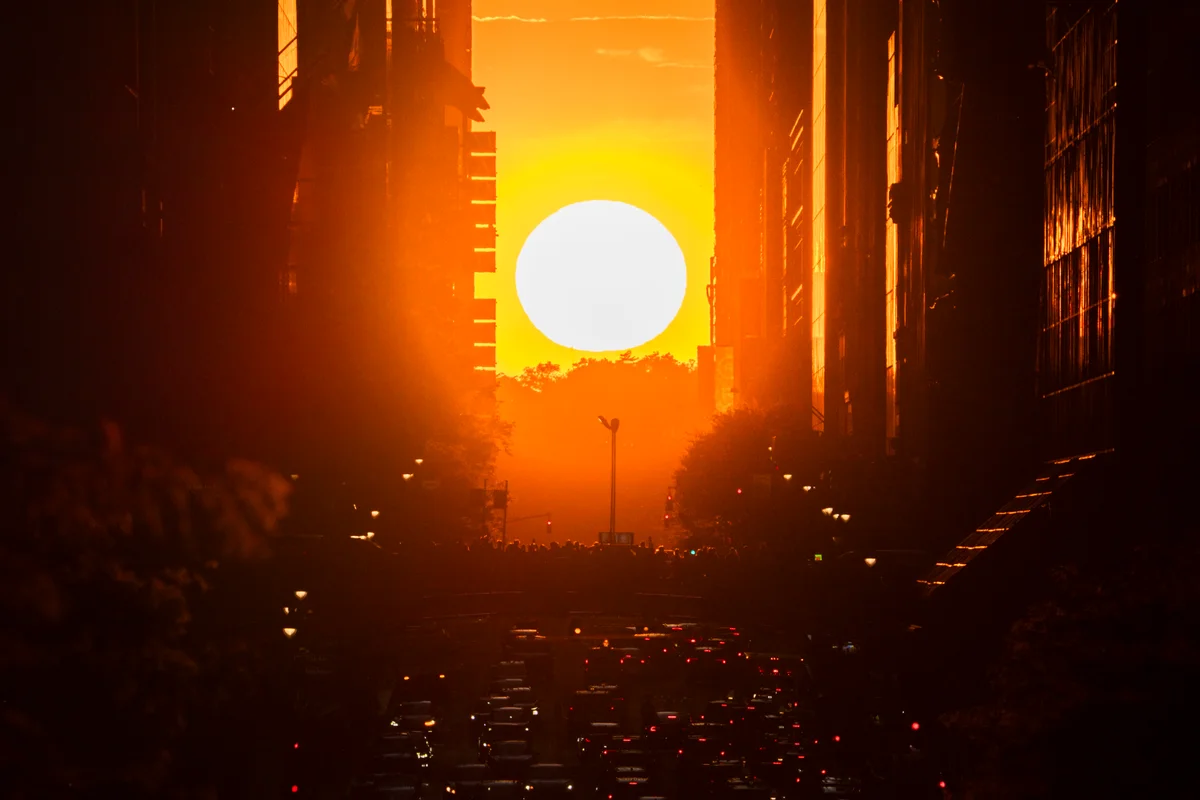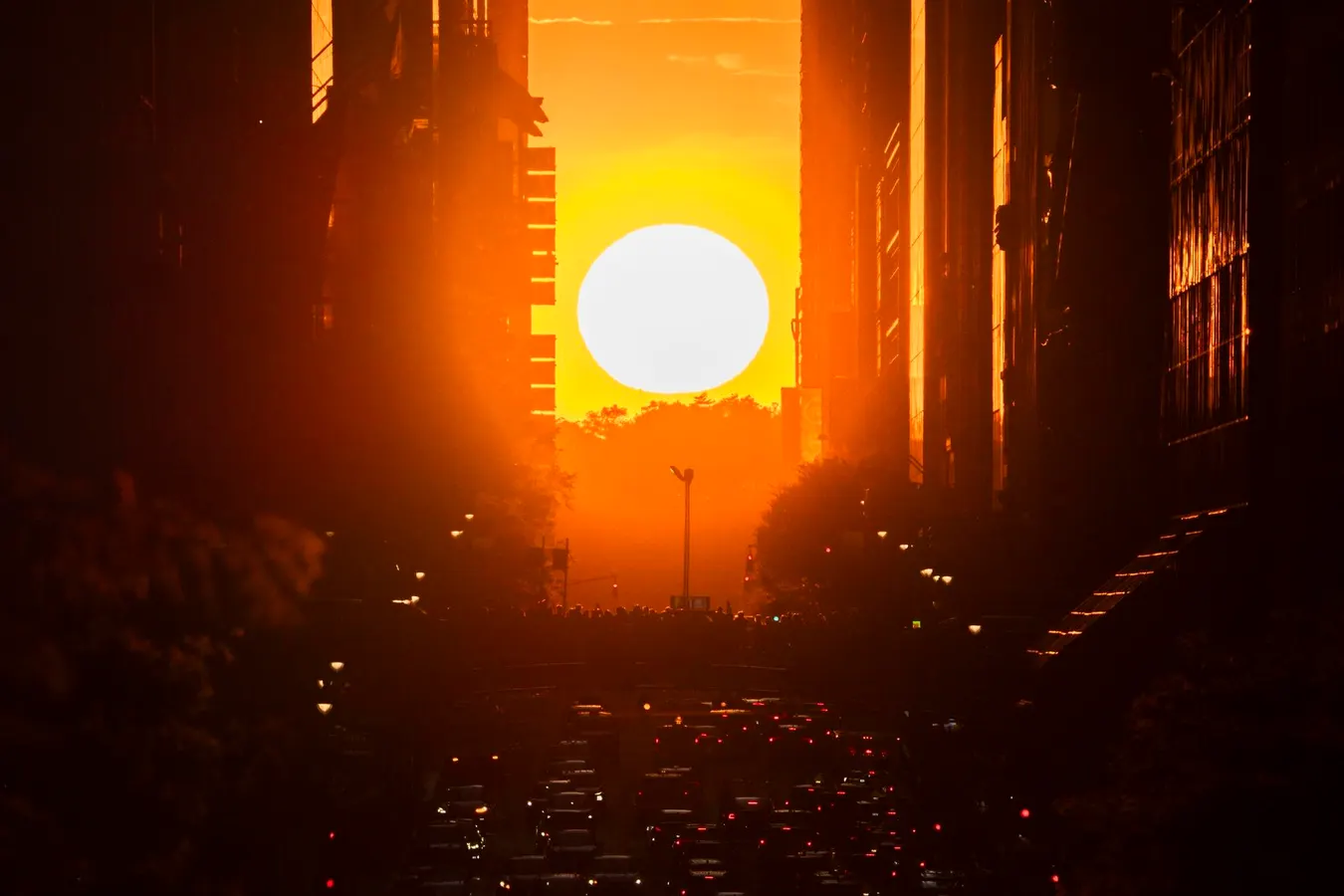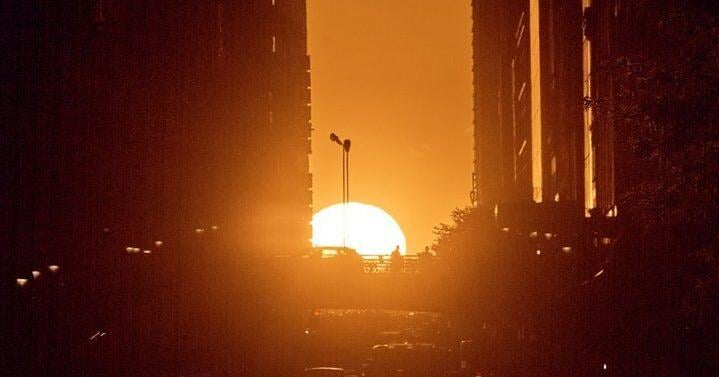
NEW YORK (AP) — New York City residents and visitors look up at the sky to experience a phenomenon twice a year known as Manhattanhenge.The setting sun was framed by a canyon of skyscrapers Thursday as it sunk below the horizon, perfectly aligned with the Manhattan street grid.The dramatic spectacle was just the first of the year. A fuller version of the setting sun is expected to be seen between New York’s famed skyscrapers on Friday. The phenomenon then repeats on July 11 and 12.
Manhattanhenge happens about three weeks before and after the summer solstice.Over the years, it has become a must-see event, bringing photographers and others out onto the city sidewalks on spring and summer evenings.Some background on the uniquely New York experience:Where does the name Manhattanhenge come from?Astrophysicist Neil deGrasse Tyson coined the term in a 1997 article in the magazine “Natural History.” Tyson, the director of the Hayden Planetarium at New York’s American Museum of Natural History, said he was inspired by a visit to Stonehenge as a teenager.The future host of TV shows such as PBS’ “Nova ScienceNow” was part of an expedition led by Gerald Hawkins, the scientist who first theorized that Stonehenge’s mysterious megaliths were an ancient astronomical observatory.It struck Tyson, a native New Yorker, that the setting sun framed by Manhattan’s high-rises could be compared to the sun’s rays striking the center of the Stonehenge circle on the solstice.Unlike the Neolithic Stonehenge builders, the planners who laid out Manhattan did not mean to channel the sun. It just worked out that way.When is Manhattanhenge?Manhattanhenge does not take place on the summer solstice itself, which is June 21 this year. Instead, it happens about three weeks before and after the solstice. That’s when the sun aligns itself perfectly with the Manhattan grid’s east-west streets.