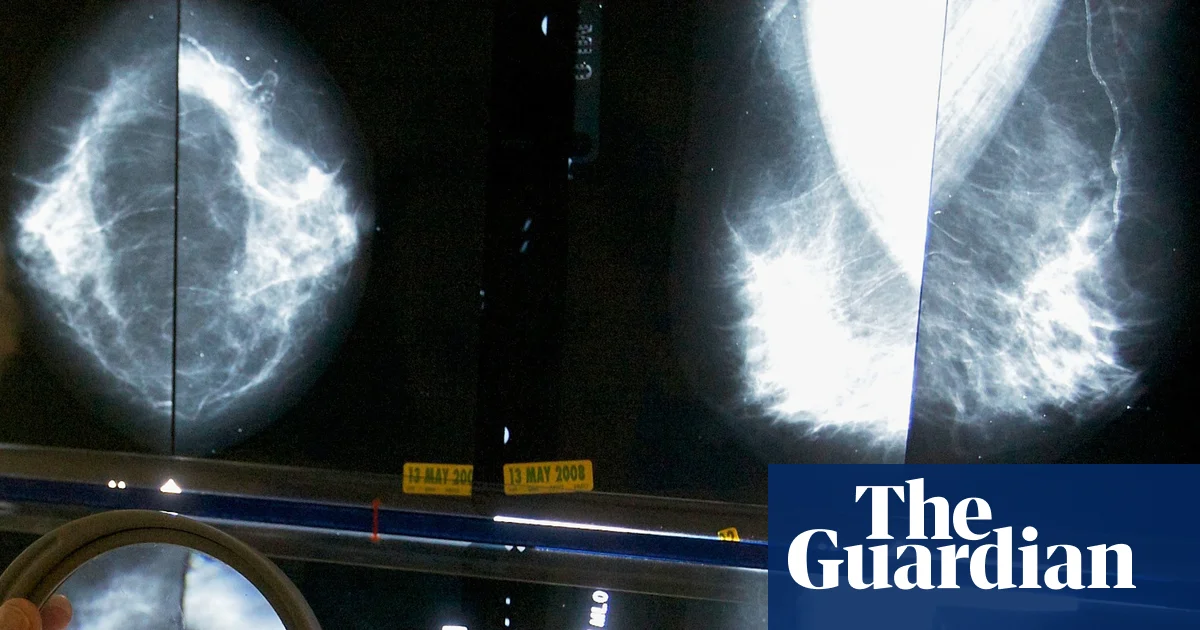
Millions of women with breast cancer could be spared chemotherapy with a groundbreaking genomic test, according to the results of a trial that could transform healthcare guidelines worldwide.Treatment for breast cancer, the world’s most prevalent form of the disease, involves surgery to remove tumours. Chemotherapy is then usually recommended when doctors believe there is a risk the disease will return.But chemotherapy’s toxic side-effects, which can include hair loss, rashes, nausea, insomnia and fatigue, are physically and emotionally gruelling for patients. Some women may face life-changing consequences such as infertility, cognitive impairment or early menopause.For decades, there has been little choice for patients. Now scientists have developed a genomic test that can spot who needs chemotherapy and who doesn’t. The breakthrough enables doctors to determine which patients can safely skip it, paving the way for a new era of personalised medicine.Results from an international trial of the test suggest millions of women could safely avoid chemotherapy, sparing them side-effects without increasing the risk of their cancer returning. The findings will be presented at the world’s largest cancer conference, the American Society of Clinical Oncology’s annual meeting, in Chicago on Saturday.The Optima trial, led by University College London, followed more than 4,000 patients with newly diagnosed breast cancer in the UK, Norway, Sweden, Australia, New Zealand and Thailand. It found that those with a low score on the genomic test could be treated safely with hormone therapy alone.One woman who took part in the trial told the Guardian that being able to skip chemotherapy felt “like Christmas”. Nine years after being diagnosed, taking the test and skipping chemotherapy, she is healthy and enjoying a full and active life.Prof Rob Stein, the trial’s chief investigator and a professor of breast oncology at UCL, said: “Optima addresses a longstanding challenge in breast cancer care: identifying who truly benefits from chemotherapy and who does not. Our findings show that many patients can safely avoid chemotherapy without compromising their outcomes.“These results mark an important and significant step toward more personalised treatment. The trial has successfully used tumour biology to guide decisions rather than relying solely on traditional clinical features.“For patients, this means many may be spared the physical and emotional burden of chemotherapy and its potential long-term side-effects. For health systems, it represents a more efficient and evidence-based use of resources.”The Prosigna test, made by the global diagnostics company Veracyte, analyses the activity of 50 genes in tumour tissue. It determines the molecular subtype and provides a score revealing the risk of breast cancer returning in the next decade, helping doctors decide if chemotherapy is worthwhile or not.The randomised trial involved 4,429 patients aged 40 or above with hormone-positive breast cancer. This is the most common form of breast cancer, accounting for up to 80% of breast cancer cases globally.Participants were assigned to one of two treatment groups. In the standard treatment group, patients received chemotherapy followed by hormone therapy. In the second group, patients had their tumours analysed with the genomic test.Those with a high score received chemotherapy and hormone therapy. Those with a low score were treated with hormone therapy alone. Radiotherapy and other treatments were given as usual to both groups.In the second group, results showed outcomes were extremely similar whether chemotherapy was given or not. Five years after treatment, 95% of those who had chemotherapy and hormone therapy were alive and free from breast cancer recurrence, while 94% of those who skipped chemotherapy were also alive and recurrence-free.The results suggest that for those with low test scores, chemotherapy offered little or no additional benefit, meaning patients could safely avoid it and its side-effects.Some men also took part in the study – which received funding from the National Institute for Health and Care Research (NIHR), Veracyte and cancer charities – but there were too few to draw firm conclusions for this group.Prof Iain MacPherson, a co-chief investigator and professor of breast oncology at the University of Glasgow, said: “Optima provides robust, practice‑changing evidence that we can safely reduce the use of chemotherapy for many patients with hormone‑sensitive breast cancer.“These findings represent a major step forward in delivering more personalised, precise care, ensuring that treatment decisions are driven by what will genuinely improve outcomes for patients, while avoiding unnecessary toxicity. The potential impact for both patients and health services is substantial.”
Groundbreaking genomic test could spare millions of breast cancer patients chemotherapy
Trial suggests patients with a low test score could be treated with hormone therapy alone with near-identical outcomes
717 words~3 min read