The Problem: Your Team Has Questions, Your Data Has Answers, and SQL Sits in Between
In 2026, most companies still funnel every analytical question through one or two people who know SQL. A marketing manager wants to know which campaign drove the most qualified leads last quarter. An operations lead needs to see which fulfillment region is running behind. Both wait two days for a dashboard update or a ticket response. The bottleneck is not the database. It is the translation layer between a business question and a query.
Gartner's research on AI-powered analytics (The Future of Analytics: AI-Powered Insights Without Code) confirms what most operations leads already feel: natural language interfaces are actively reducing the barrier to entry for business intelligence, letting non-technical users derive insights without writing a single line of SQL. The architecture I am going to describe here is a practical implementation of that shift.
What the System Actually Does
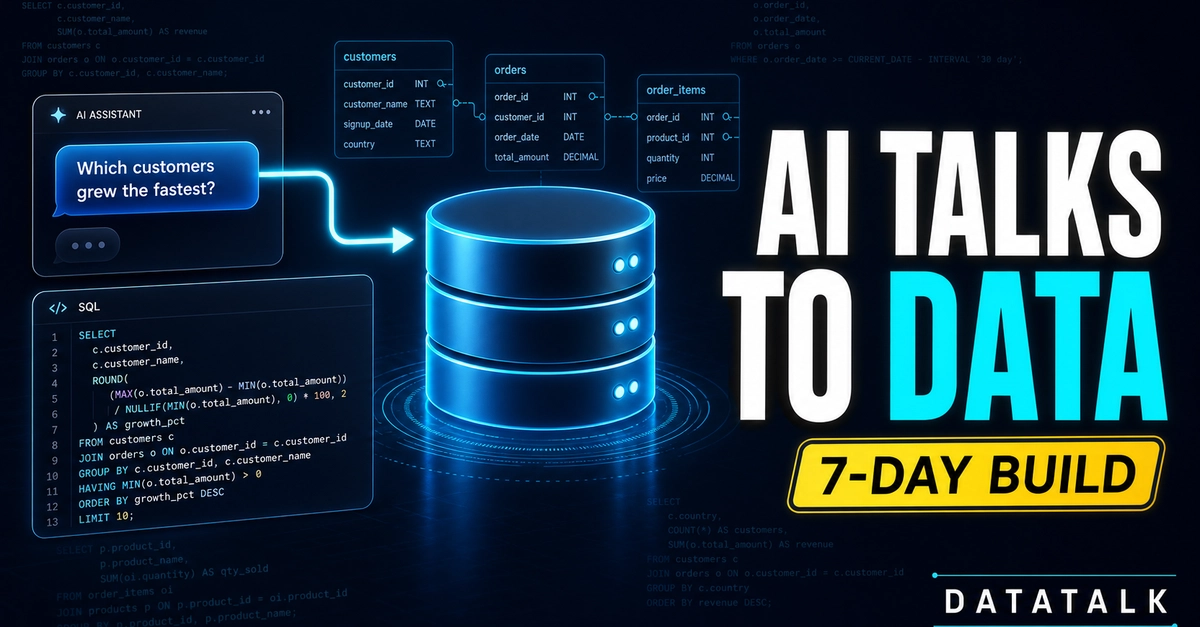
The core idea is straightforward. A user types a question in plain English. A reasoning model interprets that question, generates a valid SQL query against a local DuckDB instance, executes it, and returns a formatted answer. The user never sees the query. They just see the result.