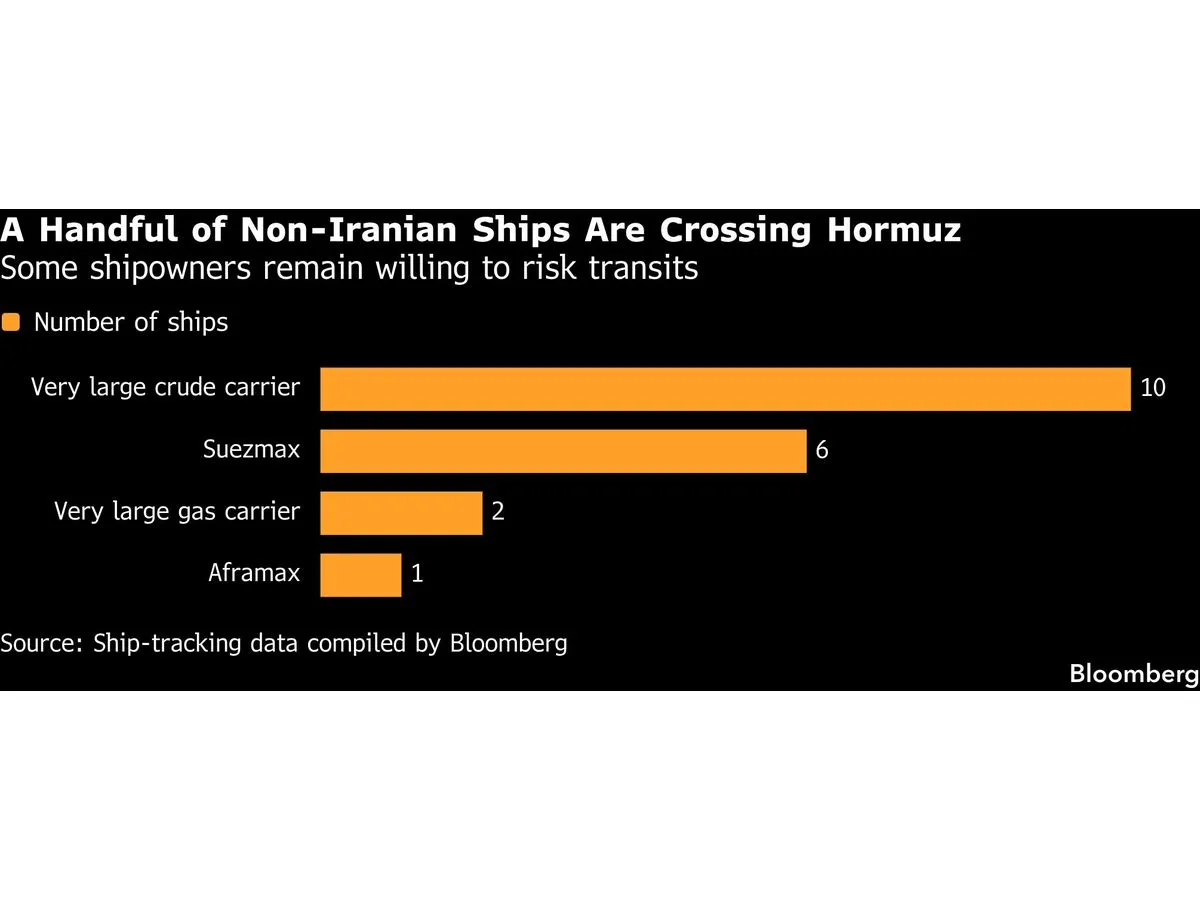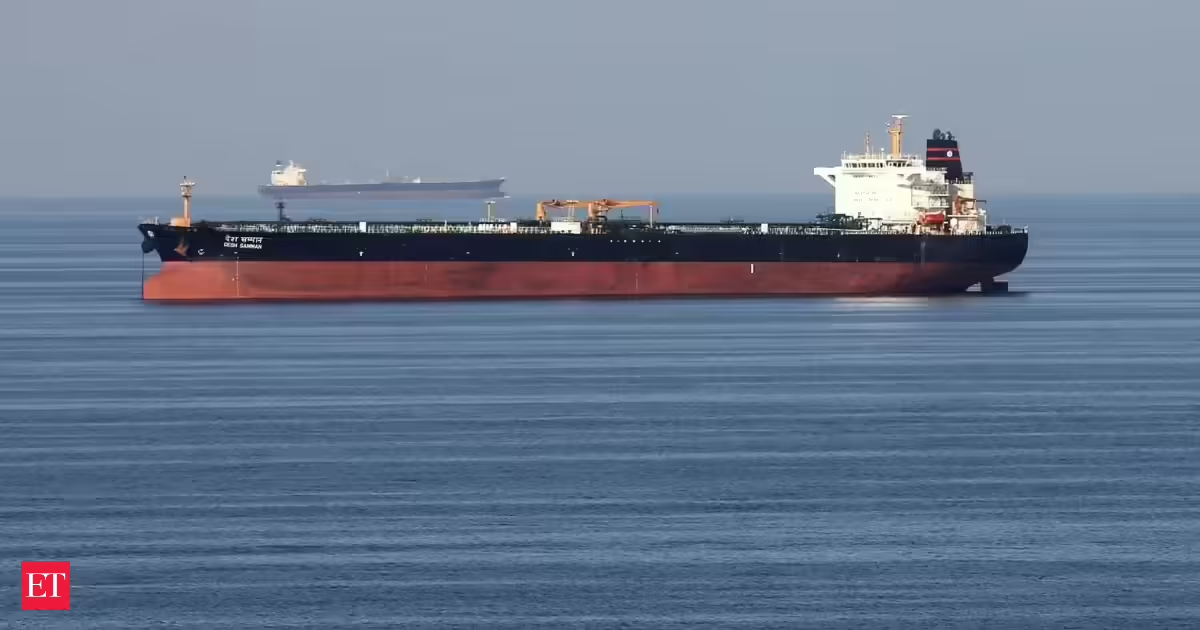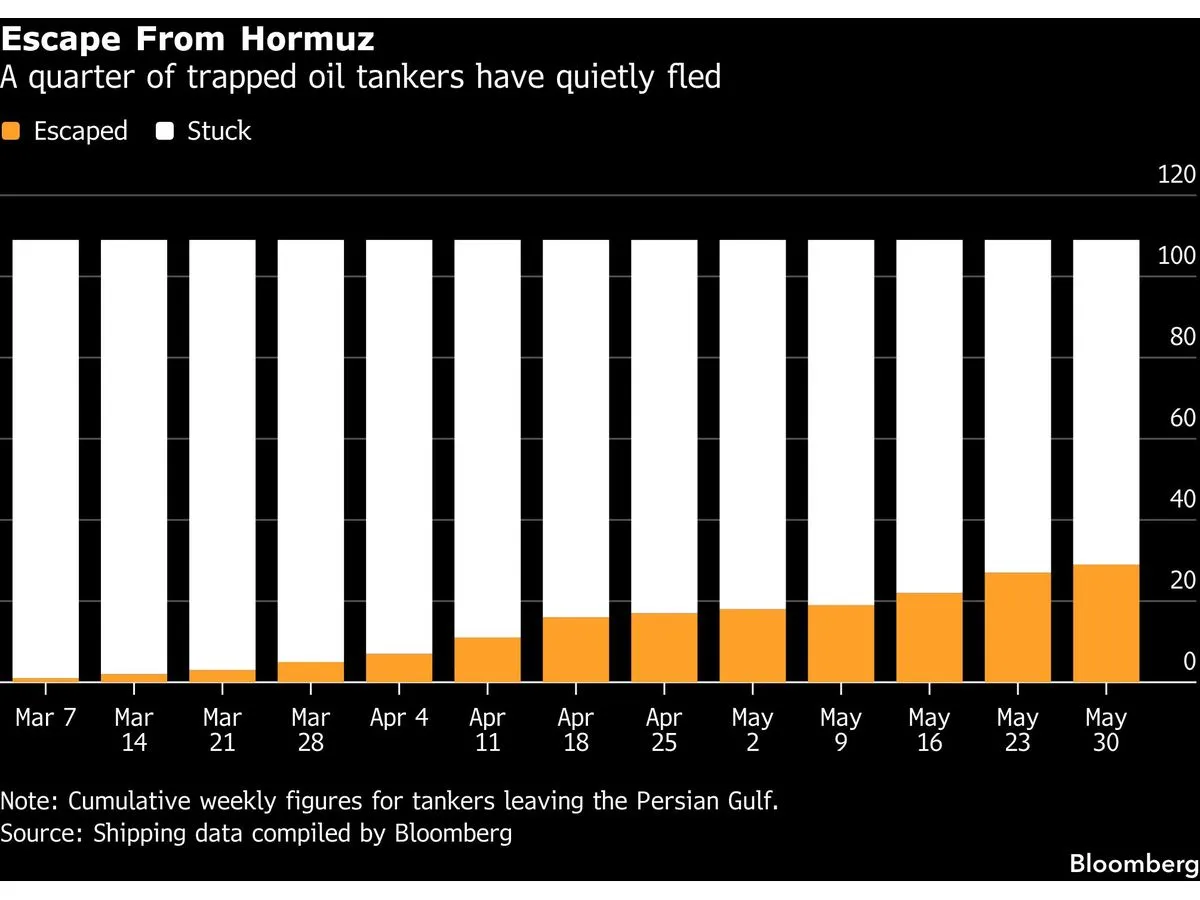
Skip to Content News Archives Economy Energy Oil & Gas Renewables Electric Vehicles Mining Commodities Agriculture Real Estate Mortgages Mortgage Rates Finance Banking Insurance Fintech Cryptocurrency Work Wealth Smart Money Wealth Management Investor Personal Finance Family Finance Retirement Taxes High Net Worth FP Comment Executive Women Puzzmo Newsletters Financial Times Business Essentials More Innovation Information Technology FP500 Podcasts Small Business Lives Told Tails Told Shopping Financial Post Store Obituaries Place a Notice Advertising Advertising With Us Advertising Solutions Postmedia Ad Manager Sponsorship Requests Classifieds Place a Classifieds ad Working Profile Settings My Subscriptions Saved Articles My Offers Newsletters Customer Service FAQ News Economy Energy Mining Real Estate Finance Work Wealth Investor FP Comment Executive Women Puzzmo Newsletters Financial Times Business Essentials HomePMN BusinessQuarter of Big Oil Tankers Trapped by Iran War Have EscapedRoughly one-quarter of the non-Iranian large oil tankers trapped inside the Persian Gulf at the outbreak of the Iran war have managed to slip out in a slow, stealthy trickle.Author of the article:Last updated 22 minutes ago You can save this article by registering for free here. Or sign-in if you have an account.htt)yson49rdty}h(b8f48tr_media_dl_1.png Shipping data compiled by Bloomb(Bloomberg) — Roughly one-quarter of the non-Iranian large oil tankers trapped inside the Persian Gulf at the outbreak of the Iran war have managed to slip out in a slow, stealthy trickle.Subscribe now to read the latest news in your city and across Canada.Exclusive articles from Barbara Shecter, Joe O'Connor, Gabriel Friedman, and others.Daily content from Financial Times, the world's leading global business publication.Unlimited online access to read articles from Financial Post, National Post and 15 news sites across Canada with one account.National Post ePaper, an electronic replica of the print edition to view on any device, share and comment on.Daily puzzles, including the New York Times Crossword.Subscribe now to read the latest news in your city and across Canada.Exclusive articles from Barbara Shecter, Joe O'Connor, Gabriel Friedman and others.Daily content from Financial Times, the world's leading global business publication.Unlimited online access to read articles from Financial Post, National Post and 15 news sites across Canada with one account.National Post ePaper, an electronic replica of the print edition to view on any device, share and comment on.Daily puzzles, including the New York Times Crossword.Create an account or sign in to continue with your reading experience.Access articles from across Canada with one account.Share your thoughts and join the conversation in the comments.Enjoy additional articles per month.Get email updates from your favourite authors.Create an account or sign in to continue with your reading experience.Access articles from across Canada with one accountShare your thoughts and join the conversation in the commentsEnjoy additional articles per monthGet email updates from your favourite authorsSign In or Create an AccountorTwenty-nine of the 109 bigger vessels, those capable of hauling 700,000 barrels or more, which were stranded when the Strait of Hormuz was effectively shuttered after the conflict erupted on Feb. 28 have now crossed the chokepoint, shipping data compiled by Bloomberg show. While that flow is a fraction of the crude and oil products still locked inside the Gulf, the cargoes have been snapped up by a global market in which inventory buffers are shrinking at a record pace. And with many ships switching off instruments that broadcast their positions, the real number may well be higher. Get the latest headlines, breaking news and columns.By signing up you consent to receive the above newsletter from Postmedia Network Inc.A welcome email is on its way. If you don't see it, please check your junk folder.The next issue of Top Stories will soon be in your inbox.We encountered an issue signing you up. Please try againFaced with the sporadic hostilities of the three-month conflict, the ships have had to resort to unconventional maneuvers to make the passage. Some have made the crossing under the cover of darkness as they strive to avoid the threat of rockets launched from shore. In some cases, the governments of countries taking the cargoes have been forced to lobby for the privilege.Iran-linked ships have been excluded from the calculation, as these had free passage through Hormuz until mid-April. Most did not broadcast position signals in the Gulf even before the latest conflict erupted, complicating the tracking of Iranian flows.Oil traders have been fixated on ships’ attempts to pass through the strait since its closure triggered the biggest energy-supply disruption in history and sent prices for vital fuels soaring. Control over the corridor is central to tortuous negotiations between the US and Iran aimed at ending the conflict.Chevron Corp. Chief Executive Officer Mike Wirth said Friday that the company currently has six vessels in the Gulf that are under charter. It will be the ship owner who decides whether or not to move through the strait, Wirth said. TotalEnergies SE CEO Patrick Pouyanne said that — once it can extract the eight tankers it has stuck in the Gulf — the company will wait to see “if peace is sustainable” before sending any back. With ships having to proceed so cautiously, the flow of oil they’ve transported has been modest, equating to about 520,000 barrels a day — a fraction of crude and products still shuttered inside the Gulf. It’s also eclipsed by flows through the alternative pipelines being used by Saudi Arabia and the United Arab Emirates to divert exports away from the strait.But in addition to providing badly needed supplies to a global market nervously watching the break-neck depletion of inventories, the successful transits also free up a portion of the global fleet that can return to the Gulf and collect cargoes once a peace agreement is struck. “In the very near term, with inventory draws and demand erosion, the fact that so many have made it out is contributing to the downside on price,” said Naveen Das, senior crude oil analyst at analytics firm Kpler Ltd. “However, if this status quo continues and inventories globally continue drawing to low levels, the amount of vessels stuck starts becoming more alarming and could be viewed as a real problem again.” Most vessels made the transit by “going dark” — switching off the Automatic Identification System used to communicate their position — with many having done so at the start of the war. Widespread interference with these signals has only clouded the picture further.As a result, the tally of ships that made it out could be under-reported. Of those tankers yet to escape, almost 20% haven’t transmitted signals on their locations so far this month. Alternative RoutesHormuz was declared closed by Tehran in the immediate aftermath of joint US-Israeli strikes on the country at the end of February. While Iran was initially able to continue oil exports, Washington retaliated with its own blockade on the Islamic Republic’s shipments in mid-April.The crossings are only a fraction of the typical Hormuz transits before the war, which accounted for about a fifth of the world’s oil supply. Iran has sought to establish a virtual “toll booth” for ships crossing the strait, demanding fees of as much as $2 million for a single transit along its shore at the northern side of the waterway, between the country’s Larak and Qeshm islands. It’s not clear how successful Tehran has been in making shipowners pay up. Other Gulf nations like Saudi Arabia and the United Arab Emirates considered the procedures presented by their regional rival — which has attacked their territories during their conflict — as untenable. An alternative route was possible to the south, close to Oman. Some vessels attempted a journey through the strait, only to later abort it.The category of ships most closely watched is composed of so-called very large crude carriers — which can haul 2 million barrels of oil — and Suezmaxes, which can transport about half that volume, as well as slightly smaller Aframaxes.Whether traffic picks up will depend on the diplomatic process. The US and Iran have reached a preliminary deal to extend a ceasefire by 60 days and discuss the future of Tehran’s nuclear program, a person with knowledge of the matter said, buoying hopes for a resolution to a conflict that has killed thousands and roiled the global economy.—With assistance from Prejula Prem, Weilun Soon and Francois de Beaupuy.(Updates with Total comments in seventh paragraph; Kpler in 10th.) Join the Conversation This website uses cookies to personalize your content (including ads), and allows us to analyze our traffic. Read more about cookies here. By continuing to use our site, you agree to our Terms of Use and Privacy Policy.
Quarter of Big Oil Tankers Trapped by Iran War Have Escaped
Roughly one-quarter of the non-Iranian large oil tankers trapped inside the Persian Gulf at the outbreak of the Iran war have managed to slip out in a slow, stealth…
TL;DRAI
29 of 109 large tankers trapped in the Gulf since Feb. 28 have escaped Hormuz, carrying ~520k bbl/day. Inventories depleting at record pace and Chevron/TotalEnergies still holding vessels inside keep supply disruption and fuel-cost risk unresolved.
1,417 words~6 min read