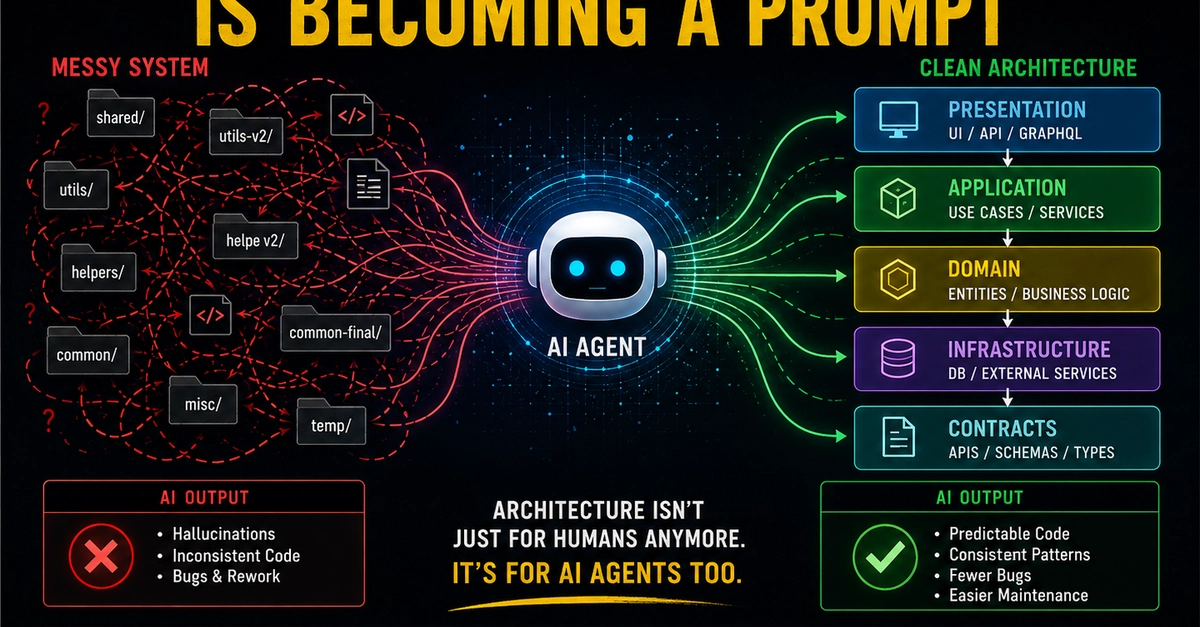
Most project knowledge wants to be findable. A smaller, more important subset has to be binding. Executable architectural intent is the name for that subset — the slice of architectural knowledge that has been promoted out of documentation and into the layer where it can actually constrain what an AI agent does.
Teams writing for AI coding agents accumulate project knowledge fast: ADRs, PRDs, design notes, AGENTS.md files, NotebookLM corpora, Cursor rules, repo-native wikis. Almost all of it is useful, and almost all of it is reference material. It tells the agent what the system is.
A different question sits behind that body of work: which parts of this knowledge are not optional? Which decisions, if the agent ignored them, would make the result wrong even if it ran, passed tests, and looked locally plausible?
That subset has to live somewhere else. It is no longer documentation. It is executable architectural intent.
The operational definition