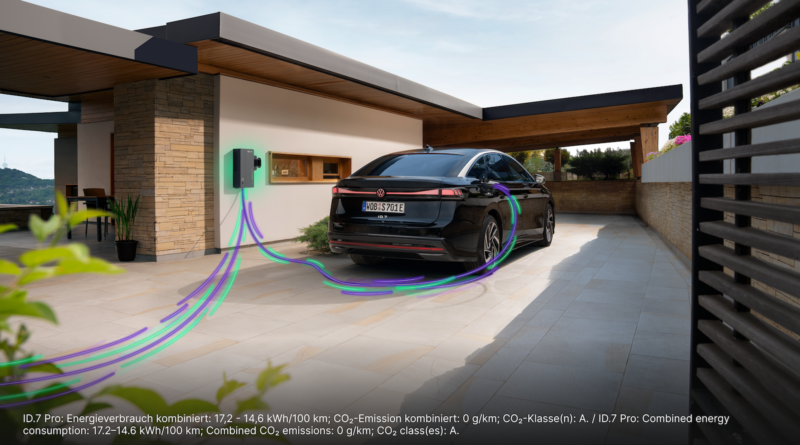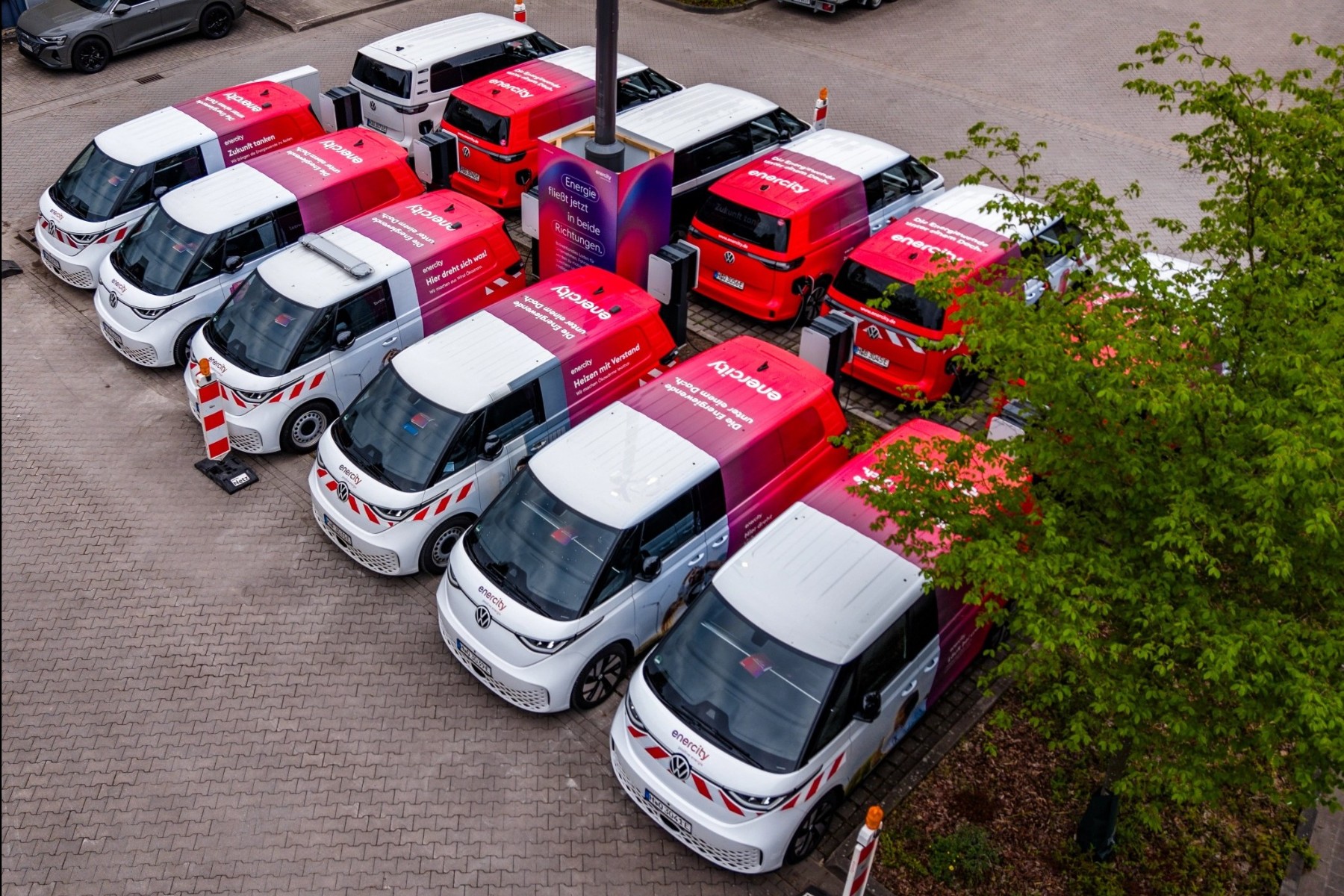
Enercity has supplied electricity from several bidirectionally connected electric vehicles into the public grid in Hanover and traded it on the electricity exchange. The achievement marks a milestone in the joint pilot project with Volkswagen Commercial Vehicles. For the first time, a vehicle fleet operating in a real-world B2B environment has functioned as a virtual storage system within the energy market. The project even generated revenue.Image: enercity/Philipp SonnackFor the trial, Enercity deployed twelve VW ID. Buzz vehicles from its own company fleet. The company connected the vehicles through twelve bidirectional-capable charging points in an aggregated setup. Together, the cluster reached a technical aggregation capacity of 0.132 MW. However, Enercity traded only 0.1 MW, which the company considers the minimum threshold for participation in the energy market.In theory, ten vehicles with 11 kW charging capacity each would have been sufficient. However, Enercity intentionally included additional vehicles, as fleet vehicles may need to leave at short notice during daily operations. The company designed the field test to reflect real-world conditions as closely as possible.The trial took place between 8 and 10 May and lasted 53 hours. Enercity ended the operation at midnight on Sunday to ensure the vehicles would be sufficiently charged by Monday morning. According to the company, the test period could otherwise have continued for around six additional hours. During the trial window, Enercity carried out a total of 145 trading transactions on the energy exchange.Despite technical limitations affecting the exchange connection on Saturday morning, the company generated a low three-figure revenue amount through trading. When asked by electrive, Enercity did not disclose whether the revenue was closer to €150 or €300.Vehicle fleet as a stationary storage systemTechnically, Enercity treated the vehicle fleet as a stationary energy storage system. Energy was absorbed when prices were low and fed back into the grid when prices were high. The vehicles responded automatically to price signals from the continuous intraday market. The goal was to demonstrate that a bidirectionally connected fleet can be algorithmically managed in real-world operation using the same logic as a conventional storage system—not just in simulations.For Aurélie Alemany, Chairwoman of the Board of Enercity AG, the conclusion is clear: “Flexibility is a key component of the energy transition, and we see that we can increasingly unlock it through bidirectional charging. The milestone we have now achieved shows the potential inherent in linking mobility and energy systems. Commercial electric fleets can prospectively provide flexibility precisely when the energy system needs it. This contributes to grid stability and the integration of renewable energies while opening up new economic opportunities for our business customers.”For Enercity, the fleet-based model is therefore a key element of the project. The energy provider operates 75 VW ID. Buzz vehicles within its own fleet, enabling the company to address one of the main challenges associated with many V2G projects. The vehicles were already available, regularly parked at company premises and predictably accessible, particularly during nights and weekends.According to Enercity, this combination makes B2B fleets especially suitable for bidirectional charging. Compared to privately owned vehicles, companies can manage vehicle availability, charging infrastructure and operating conditions far more effectively.Test phase followed four months of shadow tradingThe project started last year. In September, Enercity established the technical foundation and initially connected a single vehicle to a virtual power plant for testing purposes. The company implemented the control system pragmatically, using components such as Shelly devices and without calibration law-compliant metering for billing.During a four-month shadow trading phase, Enercity tested data flows, communication processes and system stability. The company then expanded the setup to twelve charging points and moved operations to a site capable of aggregating the minimum capacity required for real energy trading.The current milestone thus marks the transition from simulation to real-world energy exchange operations. The vehicles had to be orchestrated with varying states of charge and controlled simultaneously. According to Enercity, the test demonstrated that the technical integration of vehicles, charging infrastructure, software control, virtual power plants, and energy exchange trading fundamentally works.However, Enercity does not yet regard the business model as fully clarified. Although the project demonstrated that revenue generation through energy trading is possible, the regulatory treatment of mobile storage systems remains unresolved. For the energy provider, one of the central questions is whether electricity temporarily stored in vehicle batteries can be treated in the same way as energy stored in stationary systems, particularly with regard to grid fees, levies, charges and the prevention of double taxation.To enable this, operators must clearly distinguish between electricity actually consumed for driving and electricity that is only temporarily stored before being fed back into the grid.Regulatory questions remainIn this context, Enercity refers to ongoing regulatory assessments by the German Federal Network Agency (Bundesnetzagentur) and the broader debate surrounding the future structure of grid fees. According to the company, scaling the model will require more than isolated solutions developed by individual providers within their own grid areas. Instead, Germany will need a nationwide and standardised framework to enable the economically viable and administratively reliable use of mobile storage systems in customer fleets.Enercity expects an interim solution to emerge by the end of 2028. The company then anticipates that all bidirectionally charging storage systems, whether mobile or stationary, will be integrated into the new grid fee system under the AgNes framework.Looking ahead, Enercity intends to build a regular service offering for fleet customers based on the findings from the trial. The company sees its future role extending beyond traditional energy supply towards aggregation and flexibility services. From Enercity’s perspective, managing numerous small mobile storage units resembles operating a highly decentralised virtual power plant.The company expects the monitoring, aggregation and market-based control of many decentralised assets to become a new business segment in the future.However, wider deployment still depends on regulatory certainty. According to Enercity, the company would activate the system permanently once the outstanding framework conditions have been clarified. The primary operating windows would be periods when normal fleet operations remain unaffected, particularly during nights and weekends.The company states that the algorithm could automatically start energy trading whenever a sufficient number of charging points are occupied simultaneously by available vehicles.
Germany: Enercity successfully sells electricity from EV batteries on the power market - electrive.com
Enercity has supplied electricity from several bidirectionally connected electric vehicles into the public grid in Hanover and traded it on the electricity
1,019 words~5 min read