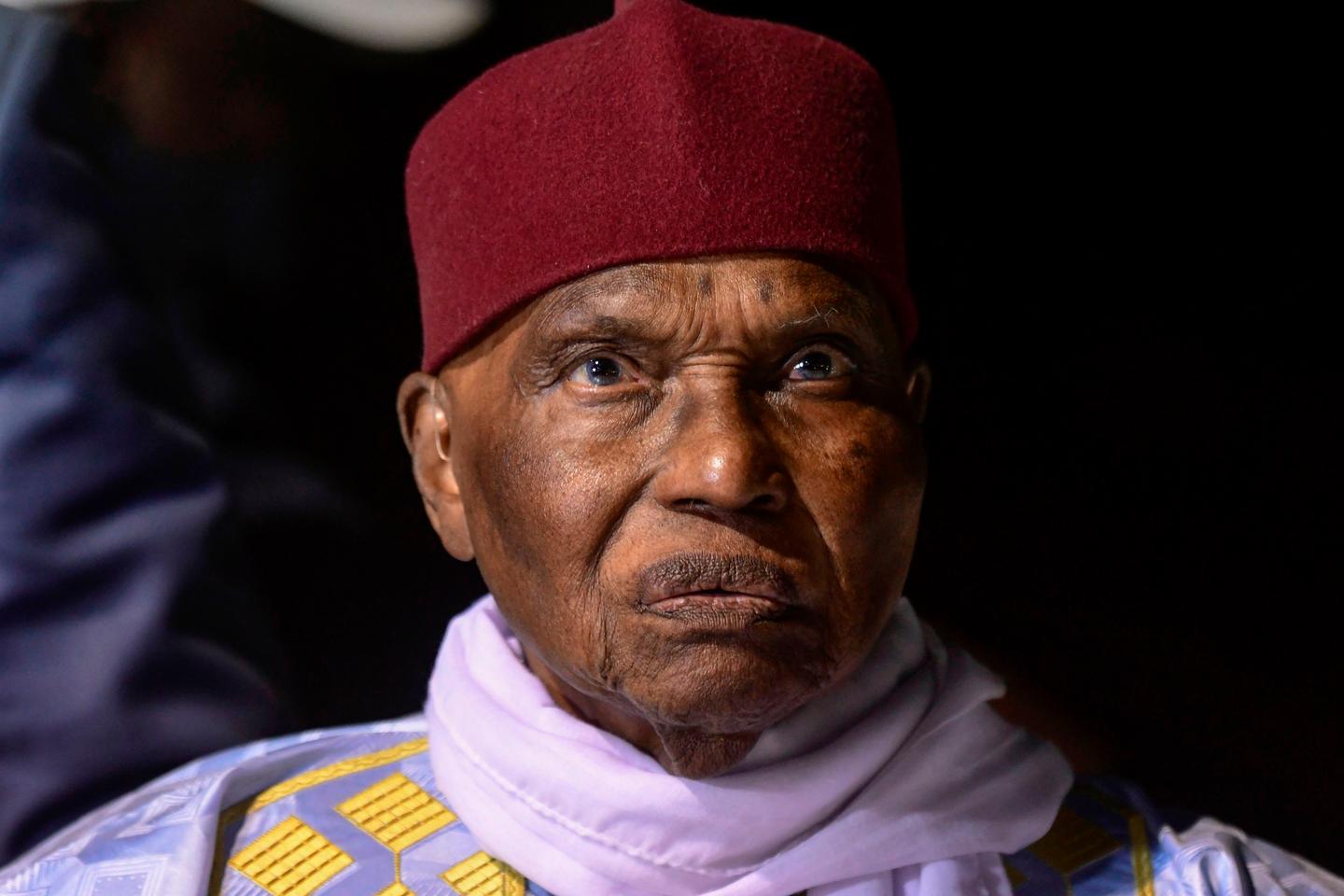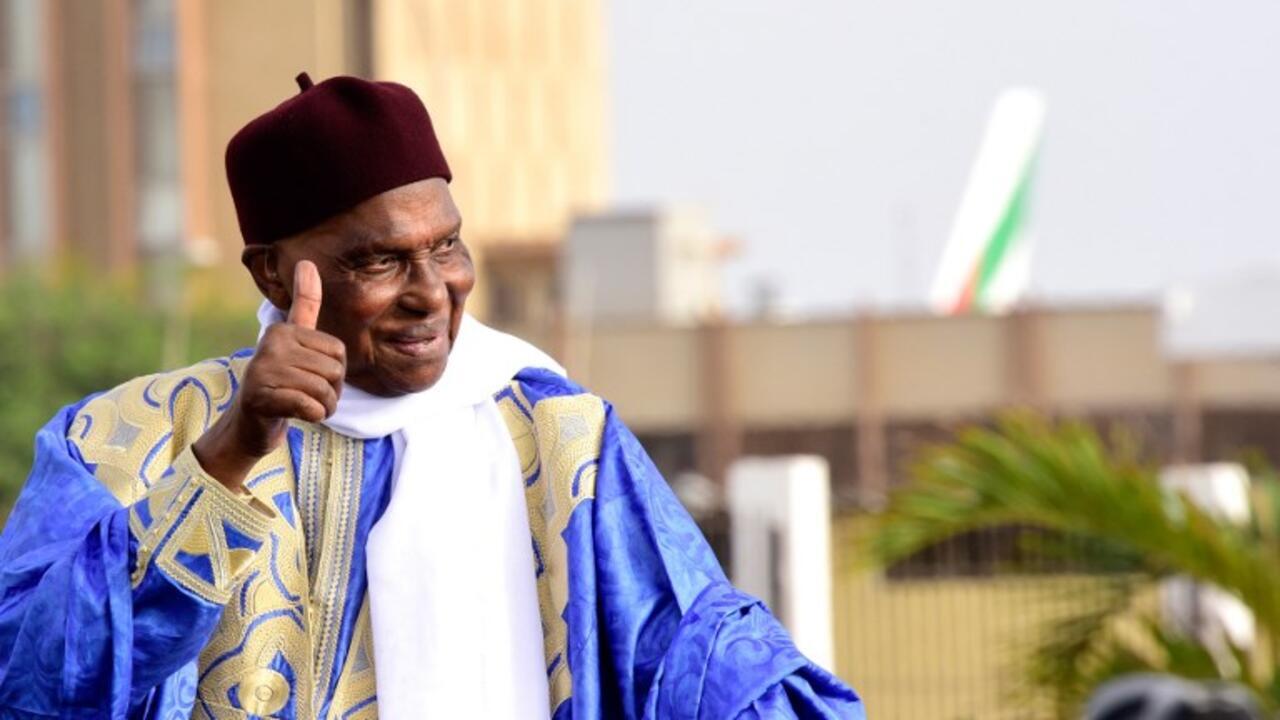
As Senegal’s former president Abdoulaye Wade turns 100 on Friday, RFI looks back on the life of a man whose century has spanned opposition, imprisonment, triumph and everything in between.
Officially Abdoulaye Wade was born in Saint-Louis on 29 May 1926, the son of a wealthy merchant from Kébémer in the north of Senegal. His father had also been a tirailleur, a colonial rifleman who fought for the French army. But historians remain divided on whether or not that was his true date of birth. The politician could be evasive when questioned about his exact age, leading some to suspect him of misrepresenting his years in order to prolong his career. Pressed by French weekly magazine Jeune Afrique in 2014, he replied: “I’m 87. But let’s say I’m 90 – so what? I’m in good health. My father died at 101. He fought in the Great War. My grandmother lived to 121. Longevity runs in my family. But I’m a Muslim, and I know I could go at any moment.” Political awakening After studying at French colonial schools in Senegal, Wade won a scholarship to the prestigious Lycée Condorcet in Paris, where he got his baccalauréat in 1950. He went on to study mathematics, physics, law, economics and literature, earning degrees from the Sorbonne in Paris and other French universities. In Besançon, where he trained as a lawyer, he began a relationship with fellow student Viviane Vert. They would go on to marry and have two children, Karim and Sindiély. As a young lawyer, Wade became politically active. In Paris he joined the national bureau of the Federation of Black African Students in France, a training ground for future leaders including Alpha Condé, Ibrahim Boubacar Keïta, Bob Akitani and Laurent Gbagbo. The Paris movement that planted the seeds of Algerian independence, a century on An anti-colonialist, Wade joined a collective defending members of Algeria's FLN independence movement in Paris. In Dakar, appointed as a defence lawyer for the courts of French West Africa in May 1958, two years before Senegal's independence, he quickly gained a reputation as a formidable courtroom orator. In December 1962, the new republic faced a political crisis: President Léopold Senghor arrested Prime Minister Mamadou Dia and accused him of attempting a coup d’état. When Dia was tried for treason, Wade was one of his defence lawyers. But despite Wade’s efforts, Dia received a life sentence in May 1963. Over half a century later, Wade told Jeune Afrique he had been “deeply unhappy” at his failure to prevent what he considered an “unjust and excessively harsh” conviction. Manoeuvre in Mogadishu By 1973, Senghor had ruled Senegal unchallenged for 11 years under the one-party system of the Senegalese Progressive Union (UPS). Wade and four others drafted the “Manifesto of the 200”, a series of proposals for better governance that avoided criticising the government directly. When Senghor pardoned former prime minister Dia in March 1974, Wade saw his chance. That June, as Senghor attended an Organisation of African Unity summit in Somalia, Wade secured an invitation to Mogadishu as an expert on monetary policy. Taking advantage of easier access to Senghor away from the presidential palace in Dakar, Wade – with the help of Moustapha Niasse, Senghor’s chief of staff, and future prime minister under Wade – managed to meet the president at his hotel. Wade asked Senghor for permission to form a new party – not in opposition, but “of contribution”. Senghor agreed, and Wade founded the Senegalese Democratic Party (PDS), which soon became a rallying point for young people frustrated by the lack of change. In the February 1978 legislative elections, the PDS won 17 out of 100 seats, and Wade became a member of parliament. In the December 1978 presidential election, he ran against Senghor and secured nearly 18 percent of the vote. He lost, but a long journey had begun.