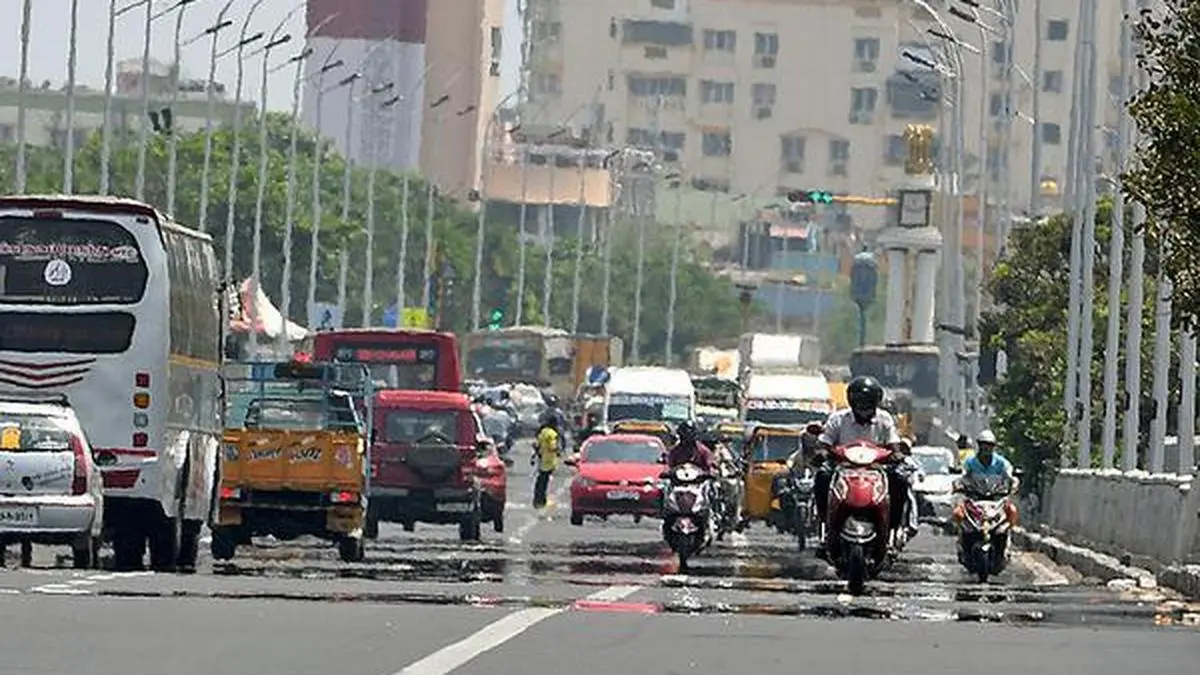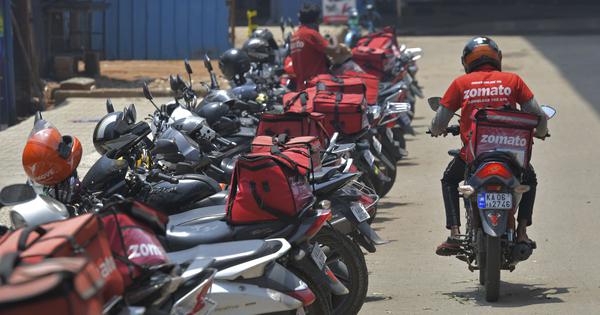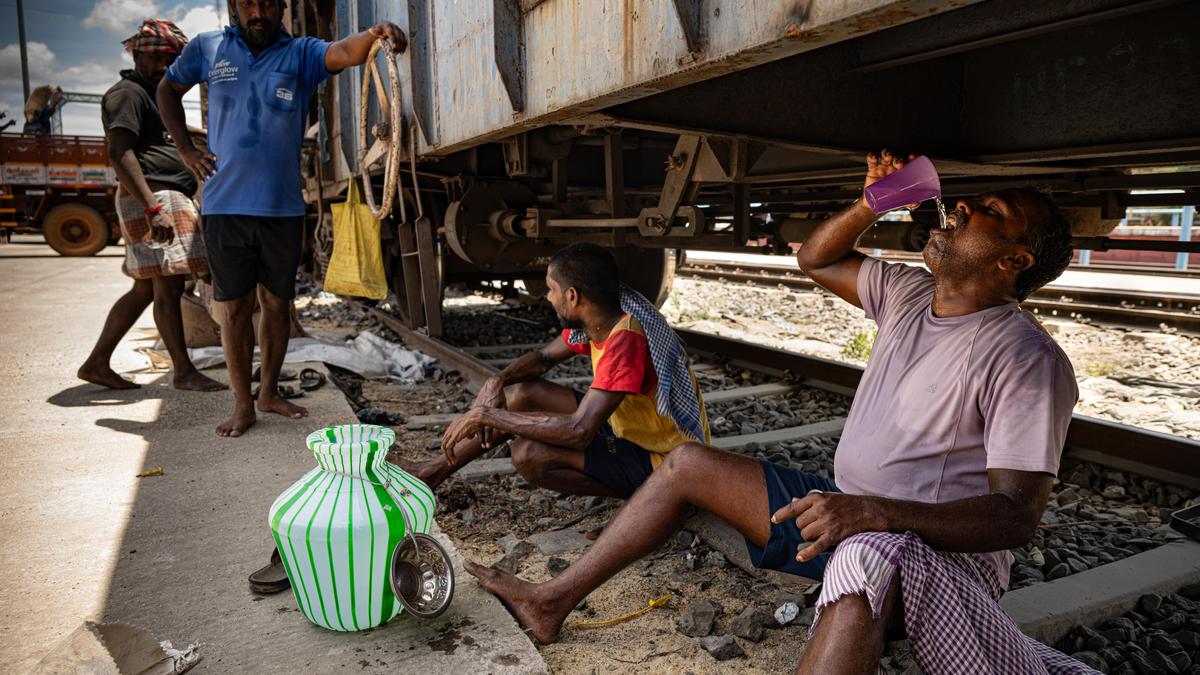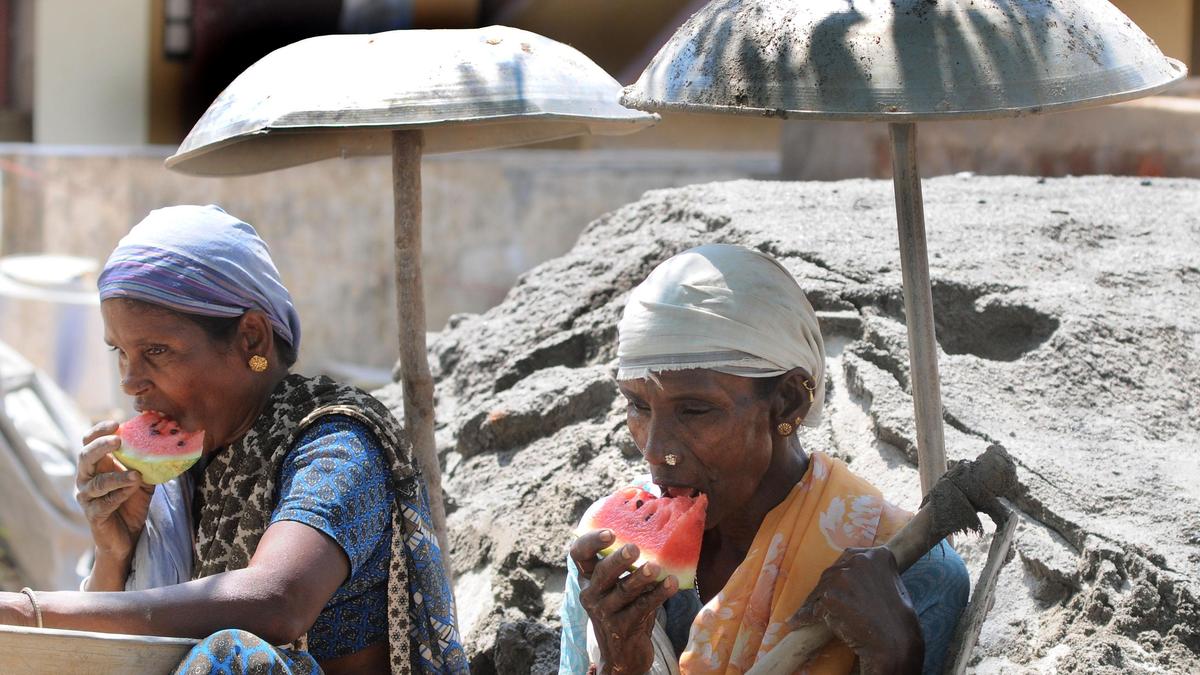
Image used for representation
| Photo Credit: M. Vedhan
Outdoor workers exposed to high heat in Tamil Nadu were 45% more likely to report productivity losses than those working in relatively cooler conditions, according to a study that examined the impact of rising temperatures on workers in agriculture, construction, brick kilns, salt pans, and stone quarries. The study, published in Scientific Reports, was conducted by Vidhya Venugopal, P.K. Latha, and Rekha Shanmugam of the Department of Environmental Health Engineering, Faculty of Public Health, Sri Ramachandra Institute of Higher Education and Research, Chennai. The researchers assessed heat exposure and productivity among workers employed in agriculture, construction, brick kilns, salt pans, and stone quarries between 2021 and 2023.The study, which assessed 1,560 workers across 11 districts in the State, also found that nearly one in three workers reported productivity losses during summer, compared to 17% during winter.Heat stressUsing the Wet Bulb Globe Temperature (WBGT), a widely used measure of heat stress, the researchers found that workplace heat levels frequently exceeded recommended safety limits. Average WBGT during summer was 29.9°C, reaching up to 35°C at some sites. About 88% of workers surveyed during summer were exposed to heat levels above threshold limits, compared to 42.5% during winter. The study found that workers exposed to high heat were 1.4 times more likely to report productivity losses than those working in relatively cooler conditions. Workers engaged in heavy manual labour were 1.5 times more likely to experience productivity declines. Nearly 61% of workers who reported productivity losses did so during the summer season, compared to 39% during winter. Many said they were unable to meet daily work targets, took longer to complete tasks, or missed work because of heat-related illness, exhaustion, and fatigue. About three-fourths of affected workers reported needing more time than usual to complete their daily workload. Researchers also documented widespread heat-related health problems. More than 90% of workers reported symptoms such as excessive sweating, thirst, fatigue, cramps, headaches, and nausea. Workers experiencing heat-related symptoms were more than three times as likely to report productivity losses.The study noted that districts such as Ariyalur, Chennai, and Salem recorded some of the highest heat stress levels. Heat exposure above recommended limits was nearly ten times more likely during summer than winter.Strained workforceThe researchers warned that rising temperatures driven by climate change could further reduce labour capacity and earnings among informal workers, who form a substantial share of the workforce. Around 15% of workers reported losing wages because of heat-related absenteeism during summer.The study called for measures such as shaded rest areas, access to cool drinking water, scheduled breaks during peak heat hours, heat-awareness training, and stronger labour protections to safeguard outdoor workers from increasing heat stress. Published - May 29, 2026 05:44 pm IST