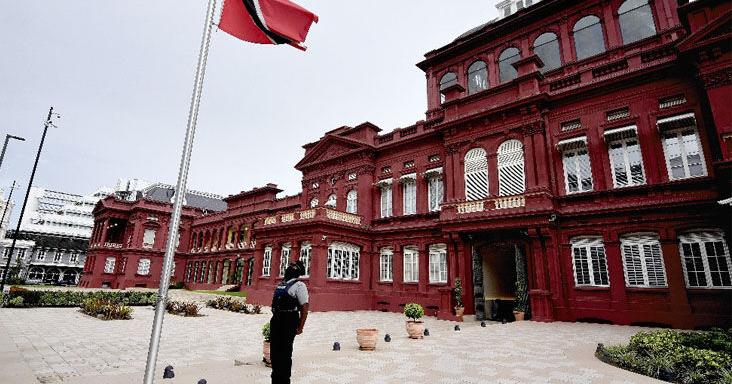
No-protest zones have been established, effectively preventing public demonstrations within 500 metres of 15 key State institutions, including the Red House, the airports in Trinidad and Tobago, the Ministry of Finance, the Director of Public Prosecutions’ office, as well as all police stations across Trinidad and Tobago.The rules come under a new Emergency Powers Order signed by Police Commissioner Allister Guevarro on Wednesday, May 27.
Central Bank
Piarco International Airport
Police Headquarters
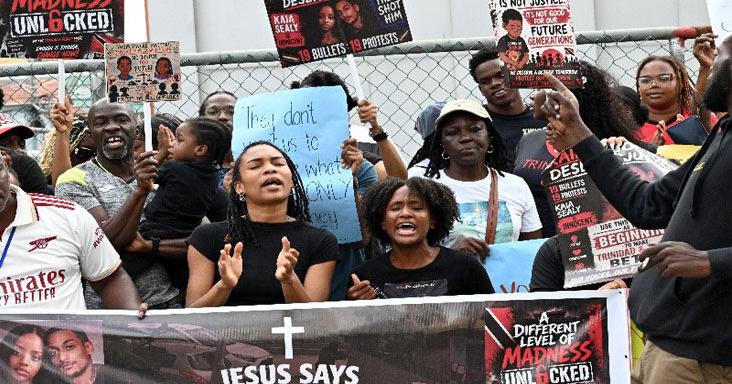
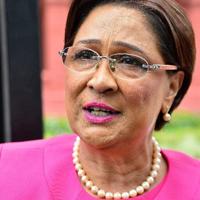
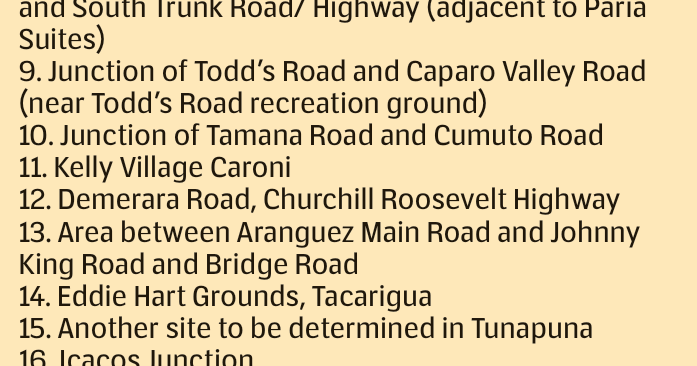
The Order was signed the same day supporters of Kaia Sealy held a protest outside the Office of the DPP in Port of Spain until they were moved by the police.Sealy was shot in St Augustine during a police-involved incident after a chase on January 20, which also resulted in the fatal shooting of her common-law husband, Joshua Samaroo.Three people, including protest organiser Allysa Phillip, were arrested during the protest Wednesday.The Trinidad and Tobago Police Service (TTPS) on Tuesday said no permission was granted for the protest, and warned that any unauthorised gathering during the sate of emergency (SoE) would be treated as a breach of emergency regulations.The protest formed part of the ongoing “19 Bullets, 19 Protests” campaign being led by supporters of Sealy.Prime Minister Kamla Persad-Bissessar on Wednesday criticised the protesters, accusing them of attempting to provoke the police and engage in publicity-seeking.The 15 no-protest zonesThe Emergency Powers (Prohibition of Public Protests and Demonstrations) Order, 2026, prohibits persons participating in a public protest or demonstration from being at, or within 500 metres of, the following locations:1. Parliament of Trinidad and TobagoParliamentary Complex (Cabildo Building), St Vincent Street, Port of Spain2. Office of the President3. Office of the Prime Minister4. Diplomatic Centre5. Office of the Attorney General6. Ministry of Finance7. Ministry of Defence8. Ministry of Homeland Security9. Trinidad and Tobago Police Service headquarters and all police stations in Trinidad and Tobago10. Trinidad and Tobago Prison Service headquarters and all prisons and detention centres in Trinidad and Tobago11. Trinidad and Tobago Defence Force headquarters and all army bases and barracks in Trinidad and Tobago12. Office of the Director of Public Prosecutions13. Piarco International Airport14. ANR Robinson International Airport15. Port Authority of Trinidad and TobagoUnder the Order, protesters must remain more than 500 metres away from any of these locations while participating in a public protest or demonstration.The creation of specific prohibition zones for public protests and demonstrations within 500 metres of critical State institutions and security locations during the state of emergency is a new measure.Earlier SoE regulations focused more broadly on public order, curfews, detention powers and police authority, but did not contain such an extensive standalone schedule identifying protected Government and security sites for protest restrictions.The SoE took effect on March 3, 2026, and Parliament approved a three-month extension on March 13, 2026.It is expected to end in June 2026 unless the Government moves to extend it again before then.The Prime Minister has already signalled that she will extend the SoE for another three months if the National Security Council so recommends.The move by the Police Commissioner was criticised yesterday by attorney and temporary PNM Senator Larry Lalla, SC.In a social media post, he argued that the Order banning all forms of protest action at certain locations, including outside Parliament, was not a proportionate exercise of the Commissioner’s powers under the Emergency Regulations, given the limited reasons for which the SoE was declared—namely, to address gang violence.Lalla stated: “There seems to be no legitimate reason to prohibit peaceful protests and even one-man peaceful protests as he has done, bearing in mind the specific constitutional rights which our citizens enjoy such as the freedom of thought and expression and the freedom to express political views.”However, president of the Criminal Bar Association Israel Khan, SC, told the Express the Order signed by Police Commissioner was justified.“I think it was a sagacious decision in order to have, more or less during the limited state of emergency, peace and quiet and prevent people from disturbing these areas and causing confusion.“If those who believe that there is an overreach, all they have to do is go to court and ask for a declaration. Democracy is at work,” he said.Khan said he supported peaceful protests, the right to criticise, freedom of expression, and freedom of the press.However, he said it cannot be that a few people take it upon themselves to disrupt the peaceful existence of the country.“I think these people like themselves, they want the publicity they are getting. Because what will happen eventually, a court of law will decide. If it is a prima facie case, a sufficient case to go to trial, then the judge and jury will decide,” he said.He emphasised that because Kaia Sealy had charges against her, it did not mean she was guilty of an offence.That determination will be made by the court, he stated.