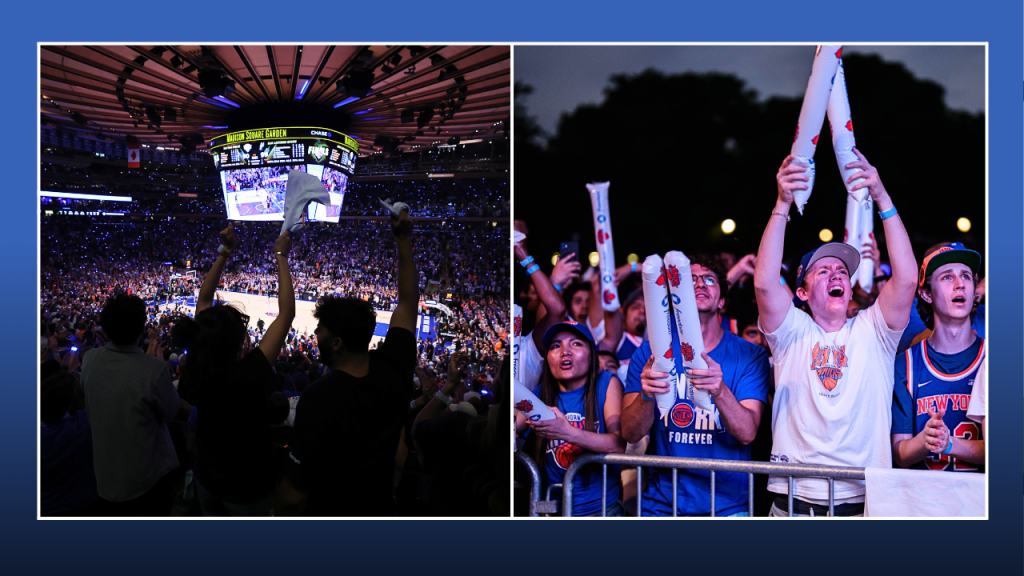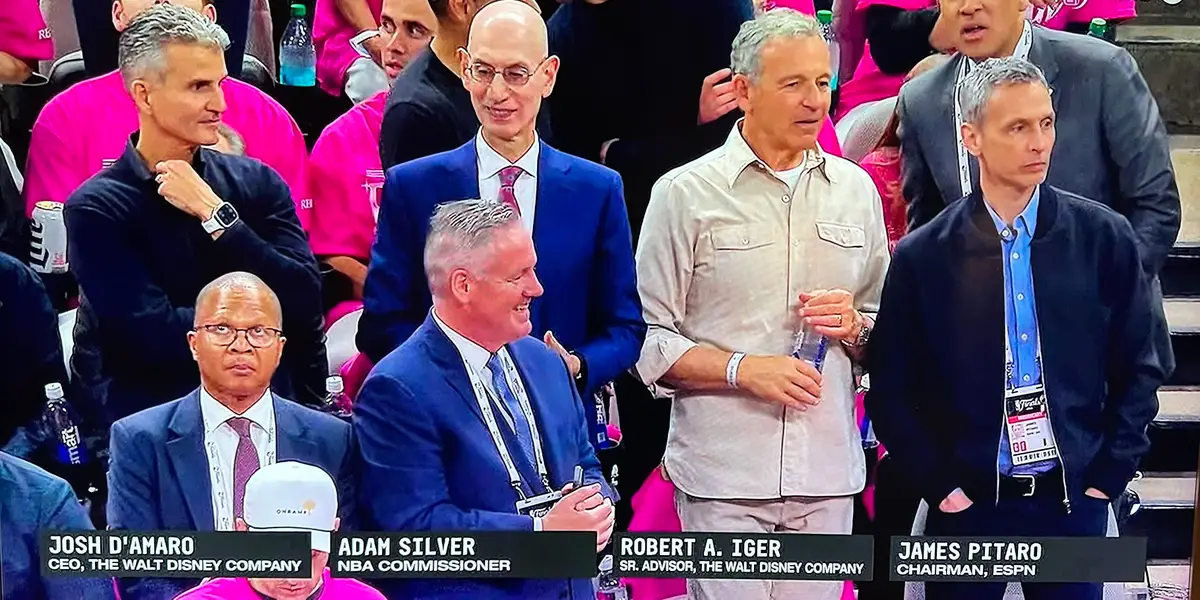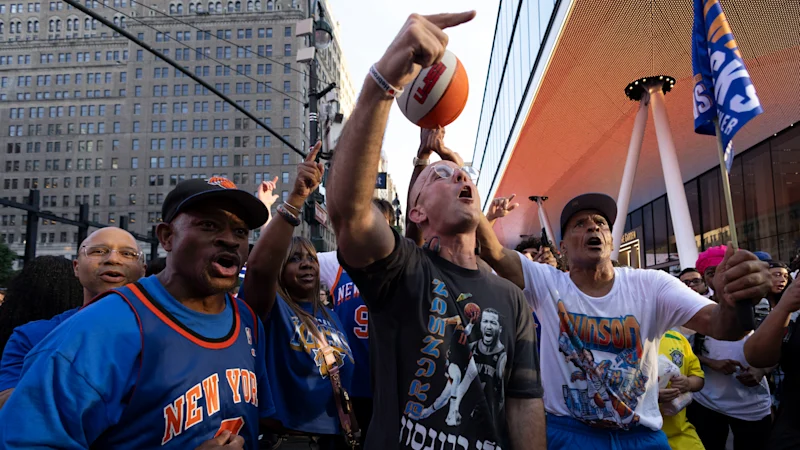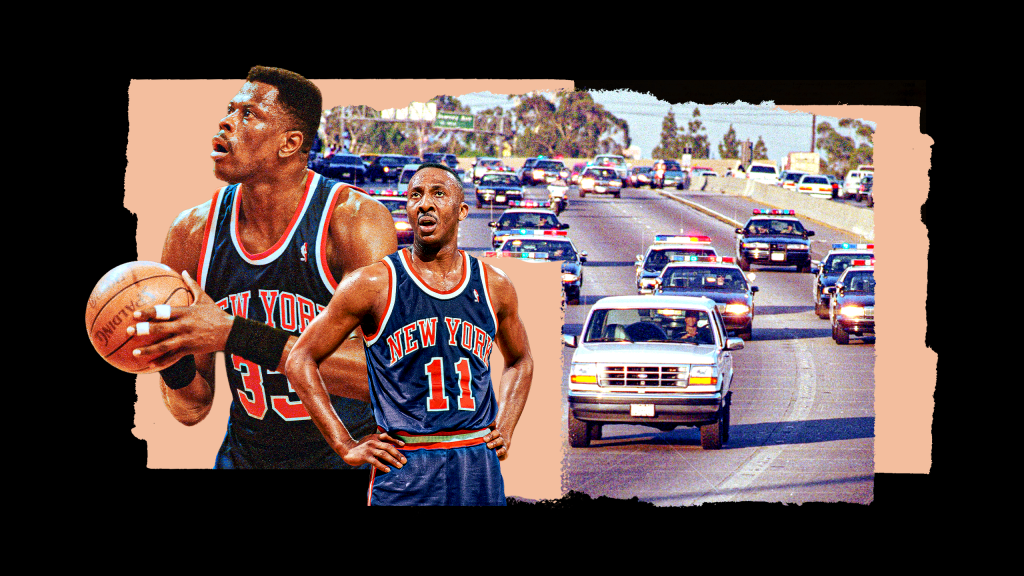
The first indication that this will not be your typical NBA Finals broadcast arrives with 6:39 left to go in the second quarter. As Knicks forward Anthony Mason earns a charge via cannonballing his way through Rockets short-timer Chris Jent, NBC suddenly throws 18 blocks north to Tom Brokaw at the Nightly News desk.“We are looking at live pictures of Interstate 5 in Los Angeles,” Brokaw intones in his inimitable cadence as a chopper crew relays footage of a 1993 Ford Bronco chugging down the freeway. “We believe that that that white vehicle, which is being trailed by a phalanx of California Highway Patrol cars and helicopters, belongs to Al Cowlings, who disappeared with O.J. Simpson earlier today.”Although nobody can anticipate how radically the media space is about to transform in the coming years, in retrospect this will be remembered as a gone-away world. But as the hypnotic “chase” unfolds, audiences have yet to migrate, fragment and disperse like so many atomized particles. The internet is here, sort of, but it has yet to push its snout into the corners of everyday life. Streaming is something that only swift-moving bodies of water get up to. Cable is in its ascendancy, but network television is still king. And televised sports remains subservient to the news and entertainment divisions.You know who O.J. Simpson is, because pretty much everyone on June 17, 1994, knows who O.J. Simpson is. Brokaw speaks briefly about some of the day’s earlier peculiarities before eavesdropping on a CHiPs radio transmission. Then it’s back to the Garden, where just 42 seconds of gametime have elapsed. Rockets 33, Knicks 34.The basketball resumes as if nothing out of the ordinary is happening in Southern California, although NBC’s broadcast and cable rivals are all but steeped in the dynamics of what would come to be known as the “White Bronco Chase.” As Dick Ebersol would later recount in his memoir From Saturday Night to Sunday Night, the other major TV news outlets had ditched their regularly scheduled programming to follow the low-speed convoy. Seated in the second row alongside NBA commish David Stern, Ebersol can see from the monitor stationed by his feet that the nation’s focus is now clearly on the Simpson drama.Ebersol is all but begging the higher-ups at 30 Rock to stick with the Knicks. “Stay with us!” he pleads, reasoning that viewers who “wanted to see what was going on [in LA] could flip over” to one of the other channels. “We were the only place they could see the basketball game,” is how Ebersol will later justify his failed interventions. “It’s antiquated to think about it now, considering that a channel like MSNBC could give our news folks an outlet. But it didn’t exist back then. NBC was the only place for NBC News.”At the half, Bob Costas throws to Brokaw, who—no stranger to hyperbole—now characterizes the goings-on out West as a “modern tragedy of Shakespearean proportions.” A canned interview with Pat Riley resets the dial to “Normalcy” and then the familiar strains of Roundball Rock kick in.NBC continues to hop back and forth from the Mecca of Basketball to the LAPD’s pokey pursuit of one of the most admired figures in U.S. sports history. (Simpson, who is slumped in the back seat of the vehicle with a Smith & Wesson .357 Magnum revolver aimed at his head, also happens to be an NBC Sports employee, serving as an analyst on the NFL Live! pregame show.) The first six breaks in the action are relatively brief, with each consuming fewer than five minutes of real-world time.The seventh, and final, jump to LA coincides with the Bronco pulling up to Simpson’s Brentwood home. The NBC News crew regains the upper hand with 3:54 to go in the third quarter and the Knicks up 59-53. When the feed cuts back to MSG, it’s New York 72, Houston 71. There are six-and-a-half minutes left in the game. Twenty-five minutes of actual time have elapsed.As a thought exercise, try to imagine what sort of cataclysm it would take for ABC News to gobble up a huge chunk of the fourth quarter of the looming Thunder/Spurs-Knicks series. A Michael Jordan-staged coup d’état might do the trick, and while the logistics of such an unlikely turn of events probably aren’t worth gaming out, it’s safe to say that David Muir would have a hard time finding someone to eat lunch with the next day if the news division were to break in on New York’s first “real” Finals trip in 32 years. (The five-game misadventure in 1999 doesn’t count, as it came on the heels of a lockout-stunted regular season.)Back to the fiasco. Because the internet is still largely the domain of science types—an MIT study estimates that at the time of the Game 5 broadcast, the World Wide Web was home to all of 2,738 publicly accessible websites, up from the year-ago tally of 130—NBC has nowhere else to dish the rock. MSNBC won’t launch for another two years. And to say that this is a story with legs is to traffic in an almost farcical variety of understatement; as Nielsen will later estimate, 95 million people will have watched the Bronco chase when all is said and done. A few months earlier, NBC’s coverage of Super Bowl XXVIII would average 90 million viewers.Simpson worked the Bills’ sideline during that game, with Will McDonough holding down the fort in Cowboys’ territory. For obvious reasons, this would prove to be Simpson’s final sportscast, although NBC didn’t formally cut ties with the accused killer until two months after the Bronco chase.
Knicks’ NBA Finals Trip Recalls the O.J.-Driven Media World of 1994
In 1994, the NBA Finals were disrupted by one of the most surreal media spectacles in American history: the O.J. Simpson Bronco car chase in LA.
1,707 words~8 min read