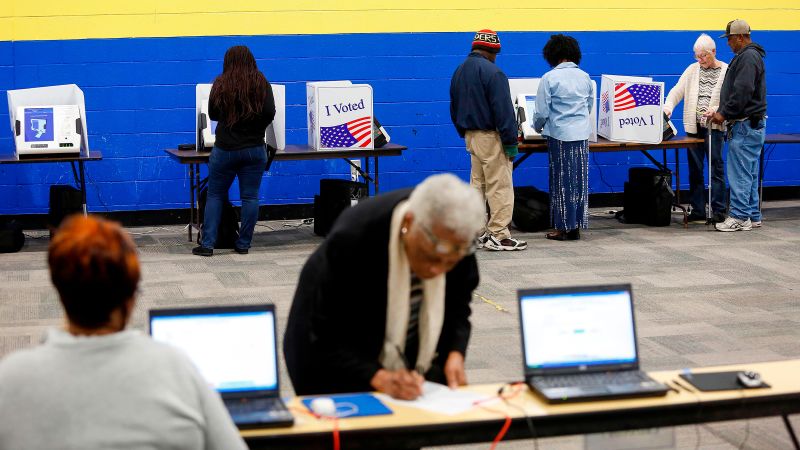
Democrats are debating whether to reorder their presidential primary calendar. The decision will shape who gains early momentum in the 2028 race.Show Caption
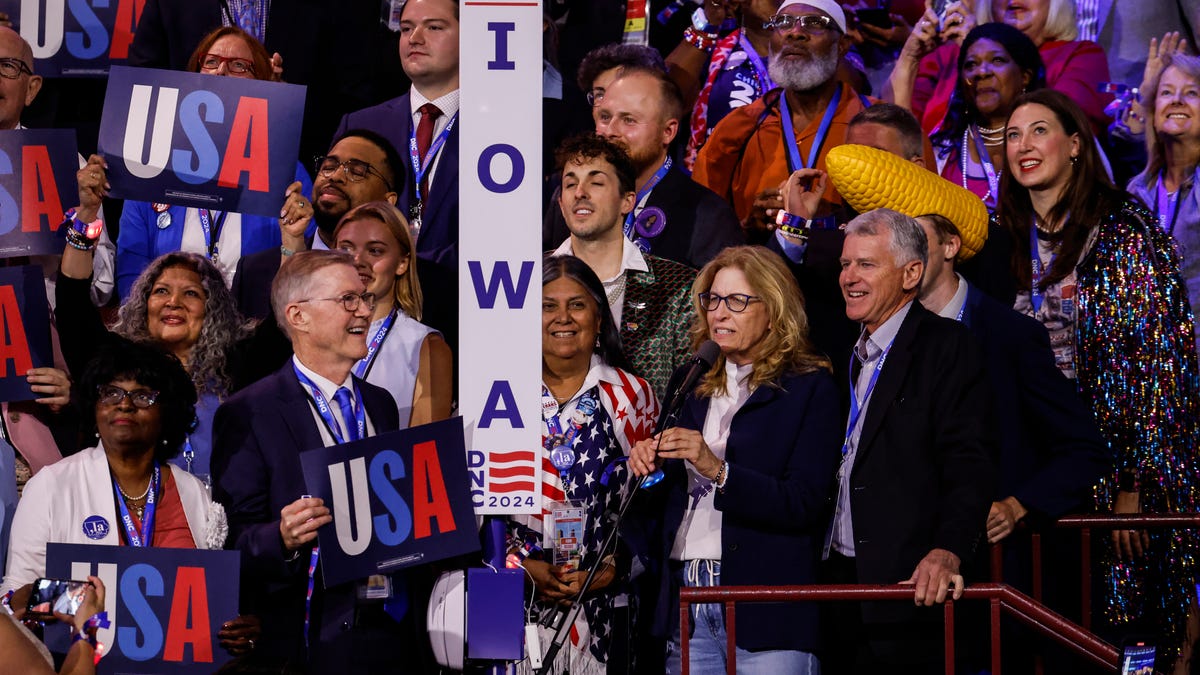
WASHINGTON – Democrats are facing a familiar dilemma as they brace for a bruising 2028 presidential primary: Which states’ voters should have the first say in picking the party’s nominee?New Hampshire has history and tradition on its side. It has held the first-in-the-nation primary for more than a century, immediately after Iowa's caucuses. But neither state is as racially, politically or geographically diverse as Democrats want for the contests at the front of their primary calendar. And they don’t necessarily help the party win swing states that will determine the outcome of the general election.Delaware says it has more to offer. But some of the Democrats tasked with making the decision worry that the state is too closely associated with favorite son and former President Joe Biden. His decision to quit the race and anoint former Vice President Kamala Harris as his successor two years ago remains a sore subject within the Democratic Party after her loss to Donald Trump.Deciding which states get to hold their nominating contests first, and in what order, during what’s known as the early window — the primaries taking place before Super Tuesday— is one of the trickiest decisions facing national Democrats this year. The choice could have far-reaching consequences for a political party wrestling with its identity and looking to recapture the White House after suffering two election losses over the last decade to President Trump. Democrats on the panel say they hope to make a decision by August so they can vote on the slate at the next Democratic National Committee meeting. In 2022, they squabbled about the order until after the midterms. Biden ultimately dictated the voting order to members, ousting Iowa, downgrading New Hampshire, promoting Nevada and adding Michigan and Georgia to the first bunch. He chose South Carolina to lead off.Now, with Biden out of the picture, the southern state that gave him his first primary victory in 2020 is on the chopping block as Democrats look for a do-over.“Things are different when you have the White House,” said Leah Daughtry, a member of Democrats’ rule-making panel and the chair of its 2008 and 2016 conventions. “When you don’t have the White House, it’s a different decision-making process.”Who goes first? Will it be South Carolina?At least one state from the South will be among the group that votes first.South Carolina faces an uphill climb to retain the top spot and risks being tossed altogether.The state is diverse: Nearly 28% of its residents are Black, 8% are Hispanic and 2% are Asian. But it hasn’t sent a Democrat to the White House since Jimmy Carter in 1976, and Trump won South Carolina in an 18-point blowout against Harris in 2024.North Carolina, conversely, elected Barack Obama in 2008. Five of its last six governors have been Democrats. And it has comparable demographics. A higher percentage of its population are Asian or Hispanic.State party chair Anderson Clayton said North Carolina can also help with rural voters.“It’s no secret to anybody that we’ve not been engaging in these communities, and to me, one of the biggest ways that we can put a priority on them again is investing in a state that, again, besides Texas, has the second largest rural population,” Clayton said her pitch to members of the DNC’s rules and bylaws committee during a May 28 meeting in Washington, D.C.Georgia ascendant? Or will a new state represent the South?Georgia is also fighting for a slot in the early window. It meets Democrats’ diversity standard and helped swing the 2020 election to Biden.But committee members indicated during their questioning of state party chair Charlie Bailey that they were worried about Georgia’s ability to fulfill other requirements.Most pressing was that after Biden selected Georgia to join the bloc in 2022, Democrats couldn't persuade Republican Secretary of State Brad Raffensperger to allow them to hold their primary earlier.Bailey hinted at keeping South Carolina in the early window, in case Georgia runs into the same problem this time around. “I think it might be time for two southern states,” Bailey told the panel.Tennessee and Virginia are also seeking waivers to hold their primaries early. Neither are swing states, and Tennessee would have to pass legislation to change its primary date. Republicans have a super-majority there, putting the state in a similar situation as Georgia.In a presentation to the committee, former Virginia Gov. Terry McAuliffe, also a former DNC chair, argued the state has “everything” that Democrats are looking for, including protections for women seeking abortions and easy access to absentee ballots.But South Carolina is refusing to go quietly.In a May 28 letter to the DNC, the chairs of five southern Democratic parties urged the committee to keep South Carolina at the front of the line. They raised the U.S. Supreme Court's April ruling that gutted parts of the Voting Rights Act , that prohibited racial discrimination in drawing congressional maps.“The fight for voting rights is no longer just a courtroom battle, it is an electoral one. And it begins in South Carolina,” Democrats wrote.Go back to New Hampshire? Replace it with Delaware?One of the thorniest issues facing Democrats is what to do about New Hampshire. New Hampshire's state law requires it to hold the first presidential primary in the country.After the Biden-backed calendar bumped New Hampshire from the top spot, it broke the DNC’s rules in 2024 and went first anyway. And it suffered no long-term consequences.This year, Democrats are considering kicking New Hampshire out of the early window and replacing it with Delaware, which is more diverse and shares a media market with must-win Pennsylvania. A problem for Delaware: It isn’t particularly competitive. Delaware has voted for the Democratic Party’s presidential nominee in every election for the past 50 years.“It’s a safe bet that whoever Delaware votes for is going to be the eventual nominee,” vice chair Coby Owens said in his pitch.New Hampshire's Democratic leaders maintain that their state, with its rich history of retail politics, is best equipped to vet presidential candidates.“Our argument is not that we should pick the nominee, our argument is that we should be vetting the nominee, so that they are better prepared for the states that follow,” Sen. Maggie Hassan told the panel.The state was one of several that passed out gift bags to attendees that highlighted local business. Theirs included popcorn, a New Hampshire-shaped cookie and maple syrup.Will Nevada be displaced by New Mexico?New Mexico is seeking to unseat Nevada in the early window – and it brought in a heavy hitter to help make its case: Gov. Michelle Lujan Grisham, the only Hispanic governor in the country.It argued that its population of young, Hispanic, rural and Native American voters are critical to the Democratic coalition. The state also pointed to its down-ballot bench, and the number of women, and women of color, it has elected to its legislature.“We can’t lose anyone. We should be winning by stunning margins, given the shape of this country, and the issues that we’re all battling every single day,” Lujan Grisham said on May 28. “Straight up. It should be no contest, but it is.”New Mexico would have to change its law to hold its primary earlier, but state representatives said they had support for the change from Democratic candidates.But displacing Nevada, which has had a spot in the early window since 2008, will be difficult, especially after Democrats changed the state law in 2021 to ditch its caucuses. Nevada has a majority-minority population – 31% of its residents are Hispanic, 11% are Black and 10% are Asian. And it has a strong union presence.Latino voters shifted toward Trump in 2024. Now, they are moving away from him, former Congressional Black Caucus chair Steven Horsford argued in the state’s pitch.“Nevada is the only battleground state that can truly help Democrats craft an economic-affirmative message strong enough to win them back, not just in Nevada, but all across the country,” Horsford said.Did the 'uncommitted' protest hurt Michigan’s chances?Michigan previously represented the Midwest in the early window, and the swing state whose voters helped tank Harris is pushing to stay at the front. “I want to be clear that that is a request, not a demand,” state party chair Curtis Hertel said in his presentation.The state has a large Black population, a strong labor movement and pitched itself as “the framework of America.”But lingering over the presentation was the 2024 revolt of more than 100,000 Democrats who marked themselves as “uncommitted” in the Michigan primary in protest of Biden’s handling of the Israel-Hamas war. “I understand what happened in 2024,” Hertel said in response. “I think we’ve got people working together again.”Illinois is also requesting a waiver from the committee to hold its primary early.It highlighted the strength of its labor movement; its urban, suburban and rural communities; and its role in electing the nation’s first Black president.“Illinois is where President Obama built a movement that reached across communities, expanded the electorate and gave millions of people hope in the future of this country,” state party chair Lisa Hernandez said.Can Iowa make a comeback?Biden’s calendar booted Iowa from the early window, and Democrats on the rules panel have indicated they aren’t inclined to let the state back in. Iowa's caucuses do not allow for the kind of voter participation that national Democrats say they’d like to see. And nearly 90% of Iowa’s residents are white.Iowa is proposing to allow absentee voting by mail ahead of its in-person caucus to address panel members’ concerns. Democrats there have also simplified the caucus night process. Almost as importantly, the state that’s known for its delays in delivering election-night tallies pledged to hire outside help, so it can release its results in full on the same night.Former Iowa party chair Scott Brennan argued in his pitch that Republicans in his state are guaranteed to hold their contest first no matter what, putting Democratic candidates across the state at a broad disadvantage.Iowa law requires that it hold a caucus before any similar contest in the process, he told the panel.“We’re here to work in good faith with ya’ll,” Brennan said. “We would like to comply with whatever the committee does. But the bottom line is that, ultimately, Iowans will decide.”