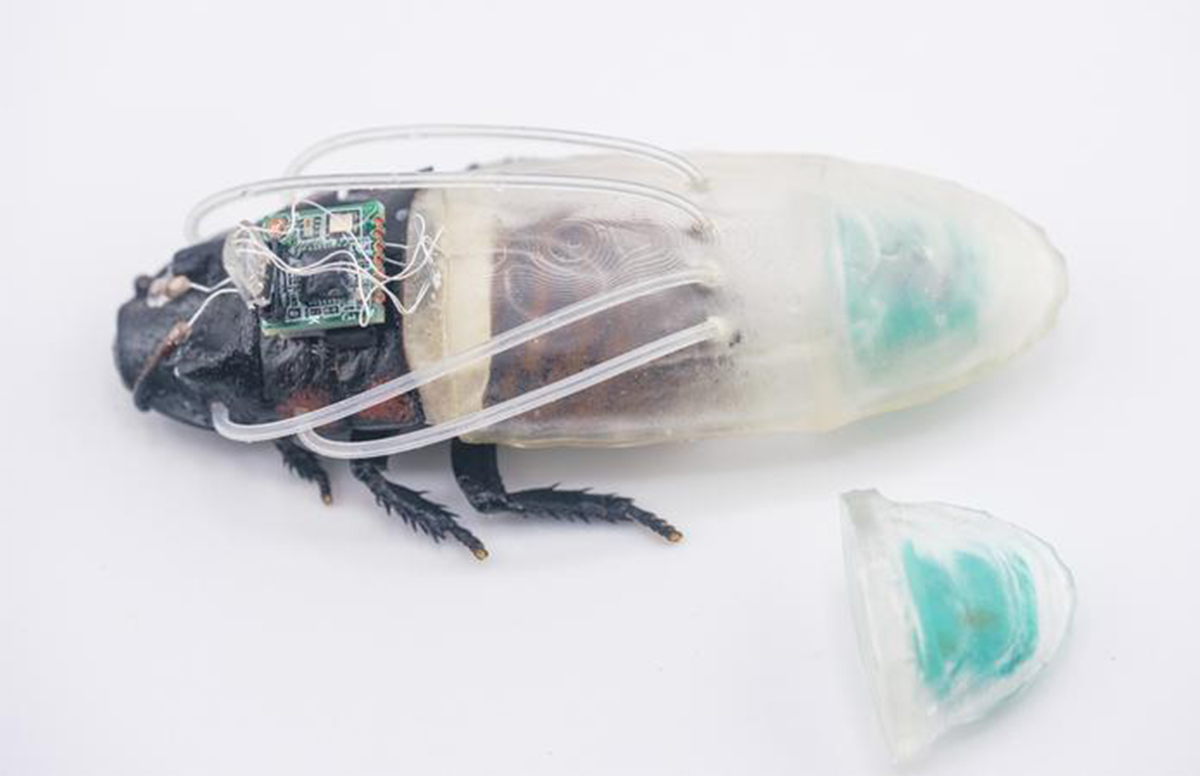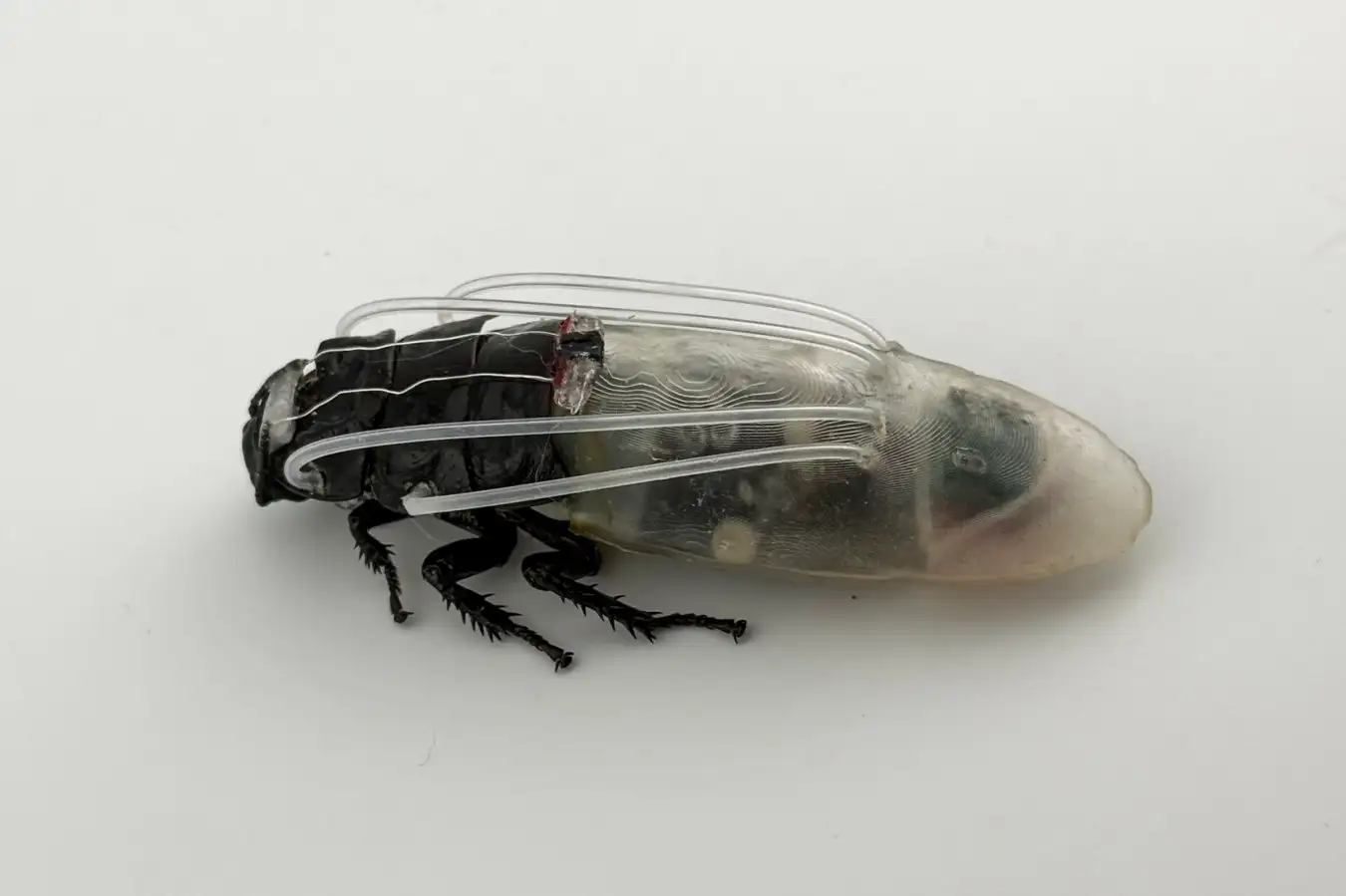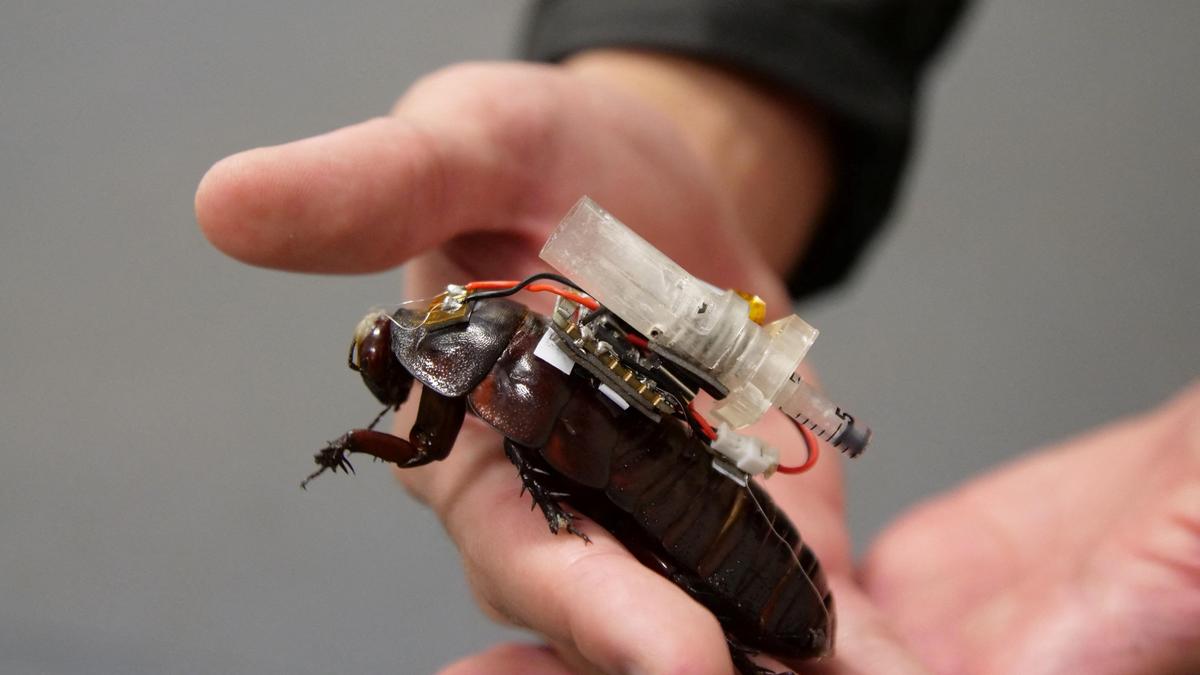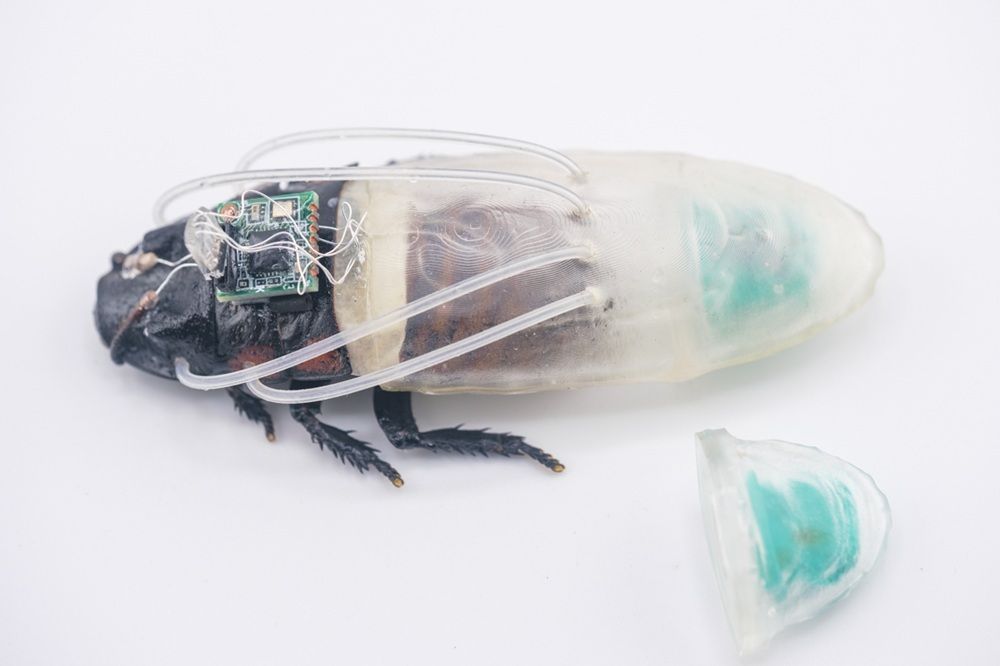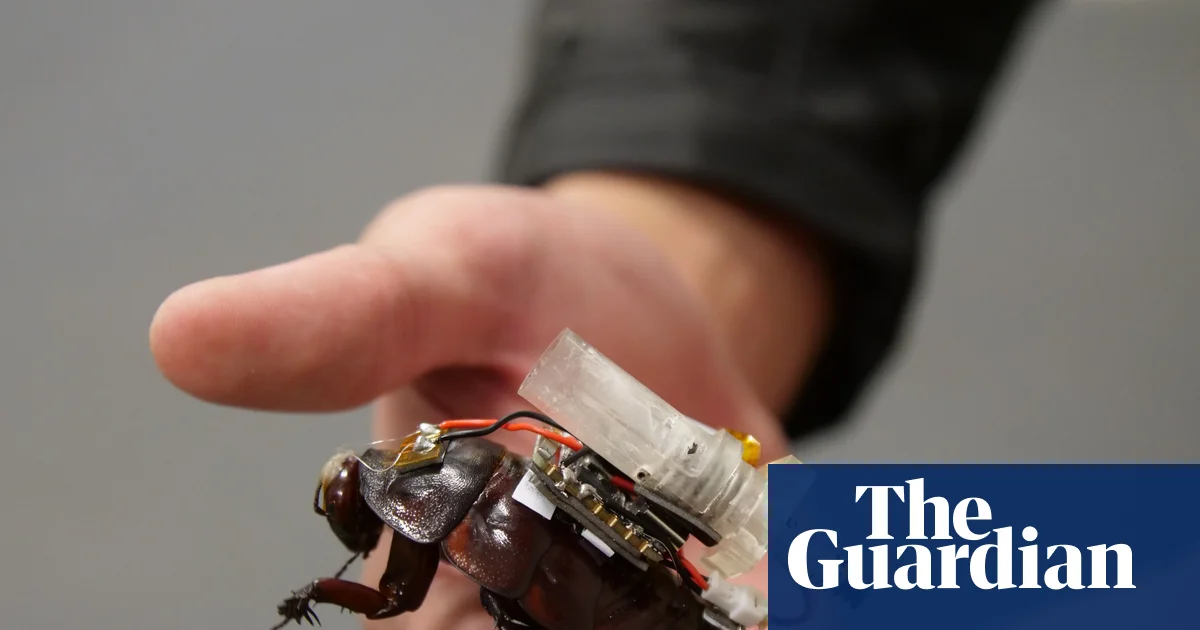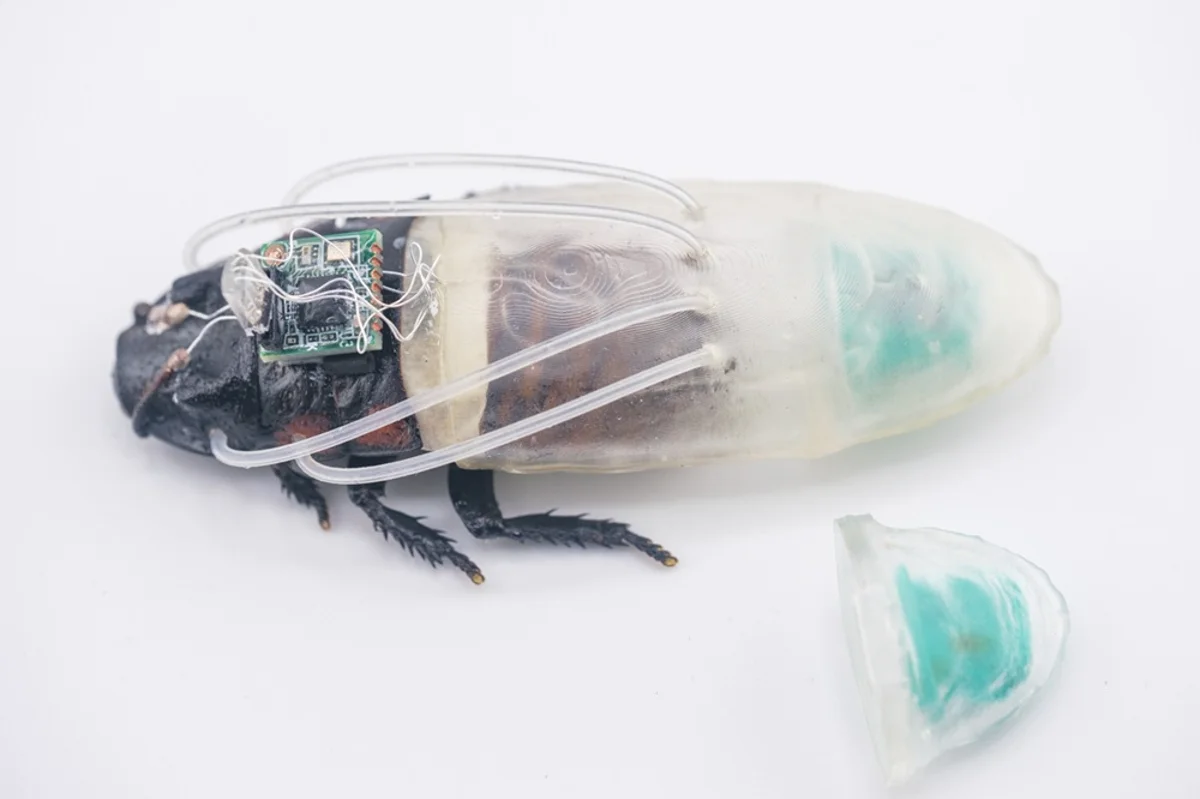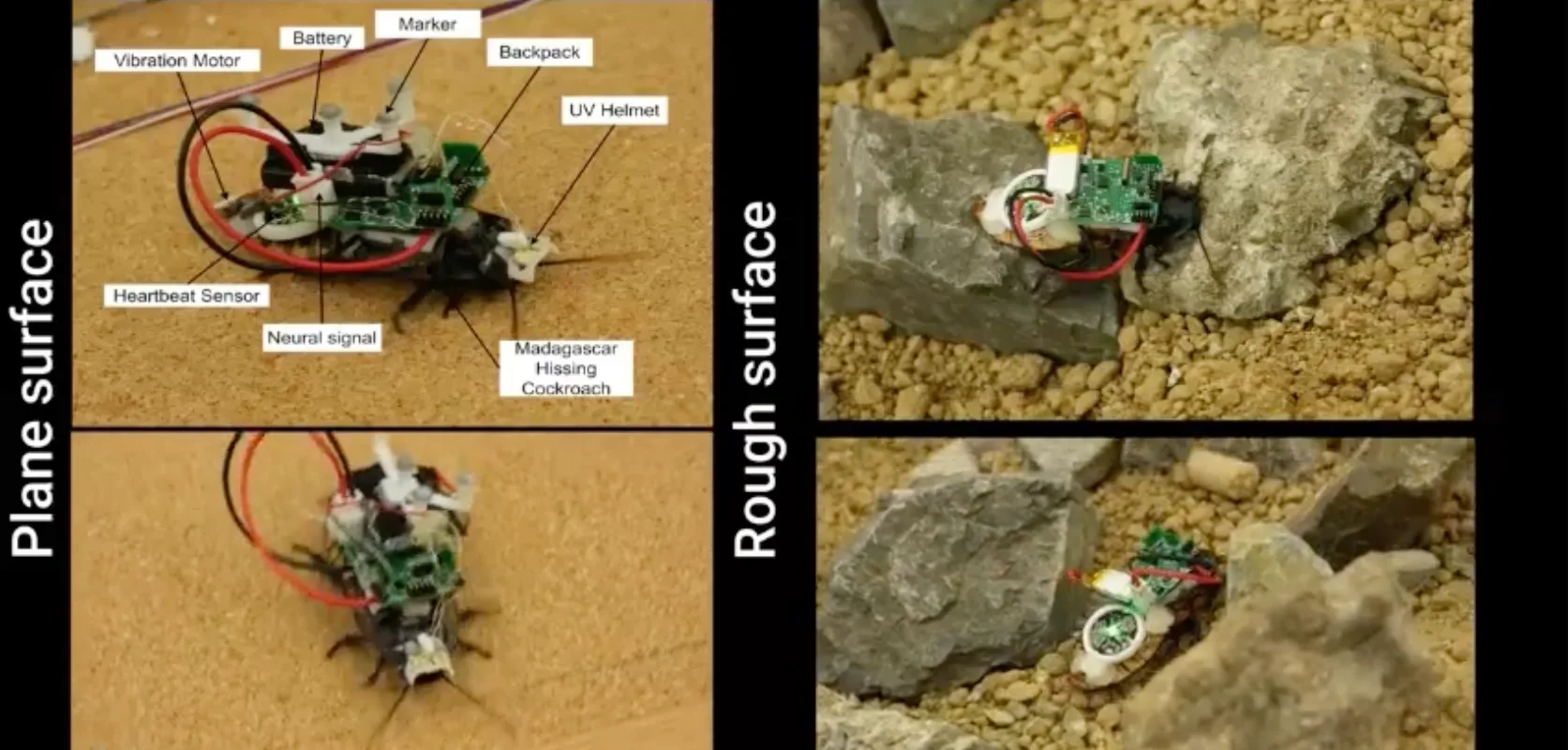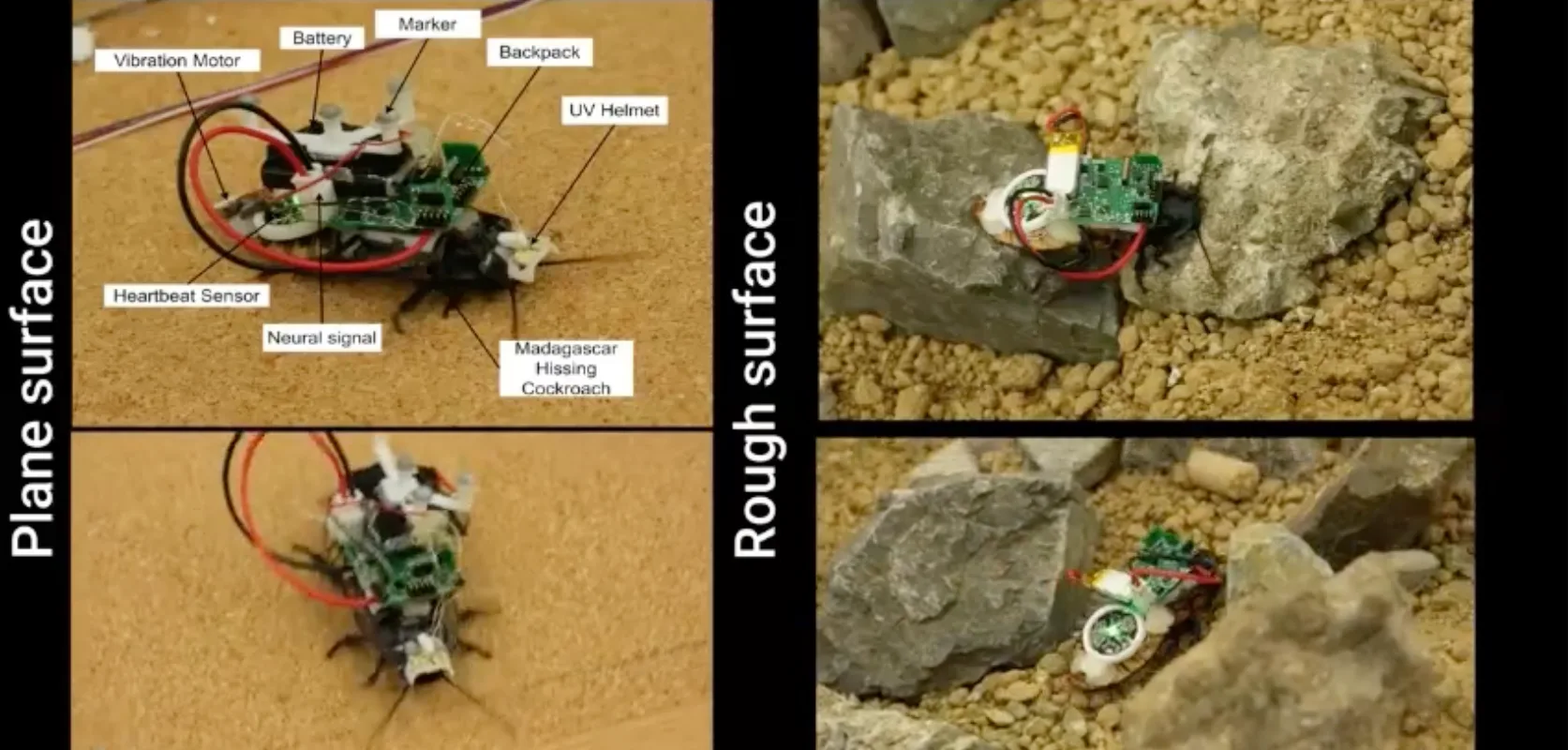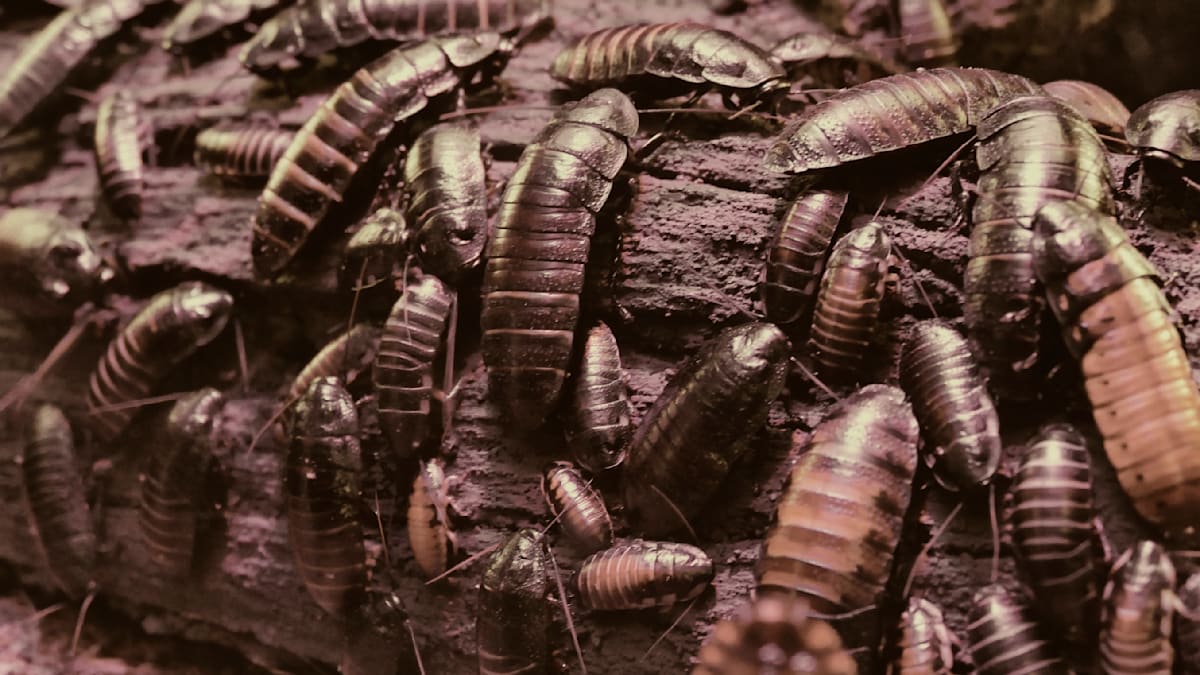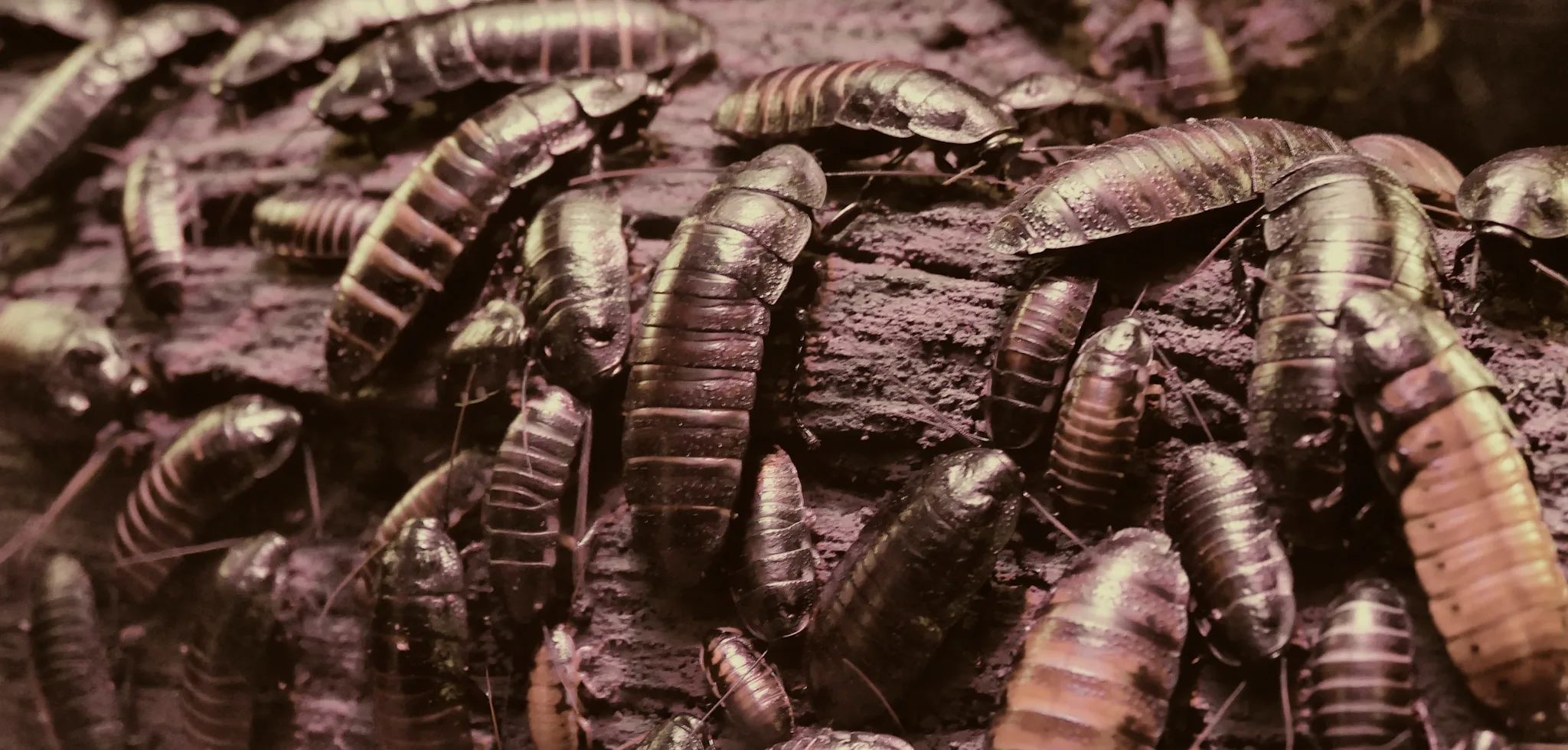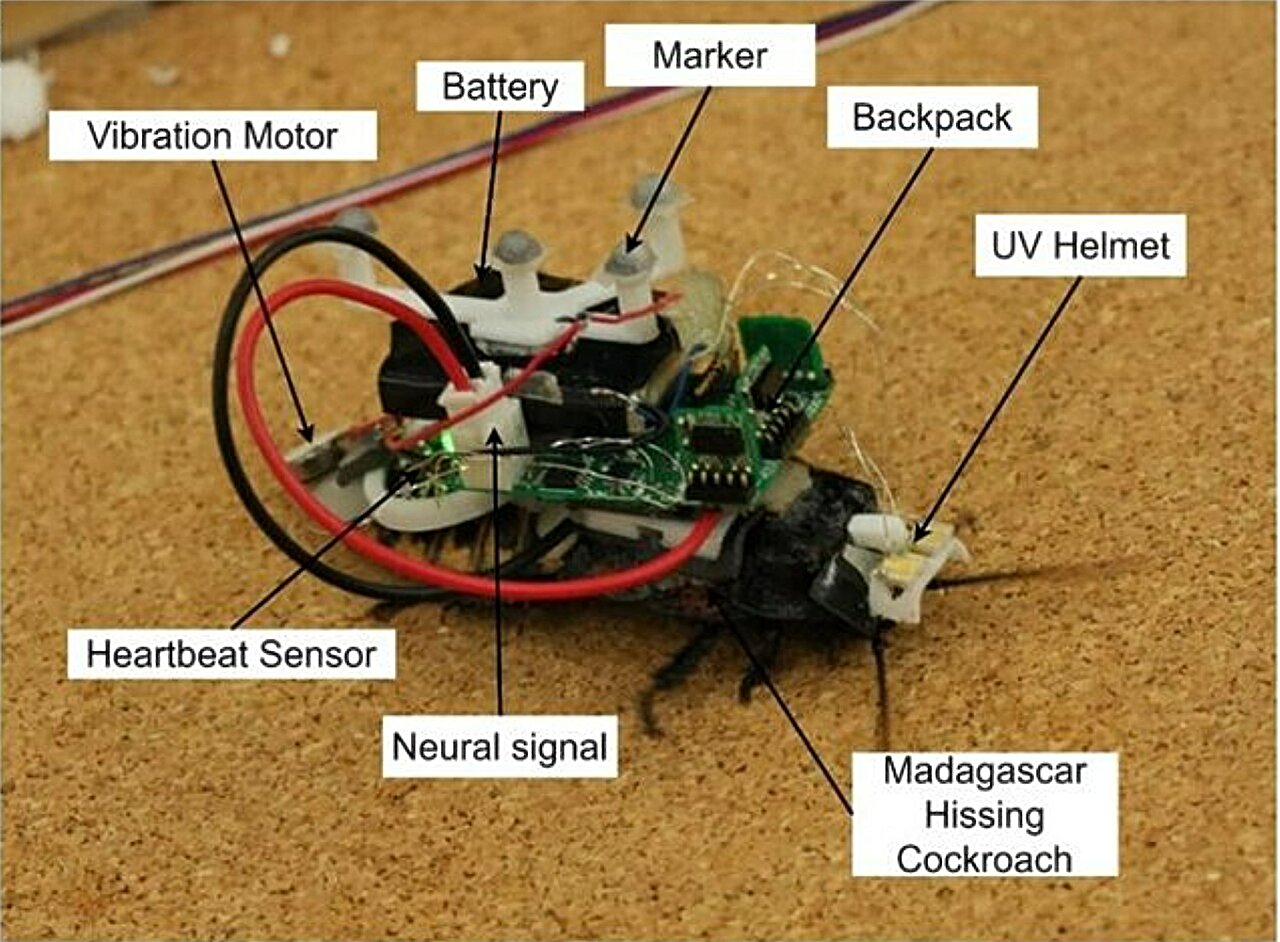
Fully integrated BCI system mounted on a Madagascar hissing cockroach. Credit: ROBOMECH Journal (2026). DOI: 10.1186/s40648-026-00344-7
Cyborg insects have long been studied as bio-hybrid systems that combine living organisms with small electronic devices. These systems may one day support tasks such as disaster search and rescue, environmental monitoring, and sensing in spaces too small or dangerous for conventional robots. However, most existing systems control insects based mainly on externally visible behavior, such as whether the insect is walking or stopping.
A new synergy circuit concept
Now, researchers from the University of Osaka and their collaborators have proposed a new concept called the Insect Synergy Circuit (ISC), in which artificial intelligence works with the insect's own biological signals to support more cooperative control.
The international research team, led by Professor Keisuke Morishima of the Graduate School of Engineering at the University of Osaka, together with collaborators of Diponegoro University, developed and tested a new bio-intelligent cyborg insect system that integrates both body movement and internal physiological information.