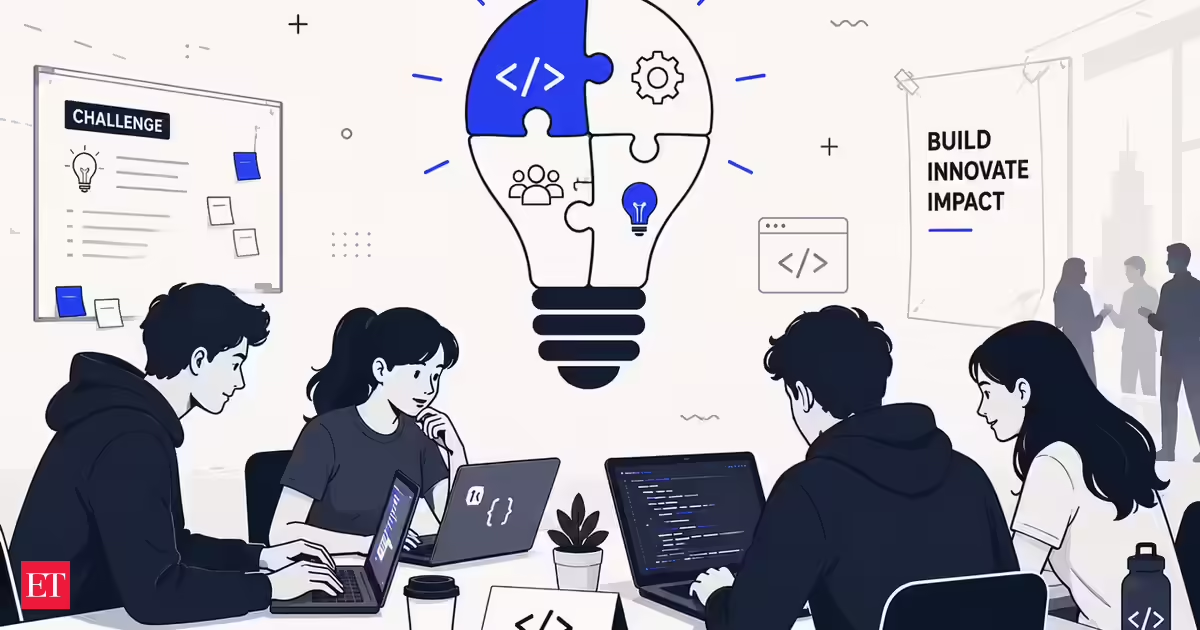
Artificial intelligence is becoming a core economic force, changing how value is created across industries. As companies reorganise around automation, data, and scale, AI capability is emerging as a premium skill. Those who can build with AI are increasingly seen as high-value contributors, reshaping how organisations think about talent, roles, and the future workforce.This shift carries economic weight because it directly affects speed, scale, and efficiency. Businesses today need to move faster and make smarter decisions with fewer resources. AI-skilled professionals help make this possible. They automate repetitive work, analyse large amounts of data, and turn information into clear action. This ability to create impact quickly is why AI skills are increasingly linked to better pay, stronger demand, and long-term relevance.At the same time, a different kind of talent is gaining importance. Earlier, one person’s contribution could only go so far. AI changes that, because now, a single builder can create tools and systems that run at scale, reaching far beyond their own effort. This ability to multiply impact is what makes AI builders such a powerful asset in today’s workforce.As AI becomes central to business outcomes, companies are restructuring around it. AI is no longer limited to technology teams. It is influencing product design, operations, marketing, customer experience, and leadership decisions. Organisations are becoming more data-driven and more automated. In this new setup, people who understand AI are placed closer to strategy and decision-making, rather than being pushed into support roles.This reordering of priorities has also changed where value sits inside organisations. People who build these systems now shape how companies scale, compete, and make decisions over time. Recognising this, businesses are moving early to back AI talent with ownership, responsibility, and long-term roles rather than treating them as short-term hires.As a result, the future workforce will look very different from the one we know today. Job titles will matter less than capability. Teams will be smaller but more effective, with developers, designers, and product thinkers who can work with AI, standing out for the quality and consistency of what they deliver.The organisations adapting fastest are those investing the earliest in capability. Rather than reacting to skill shortages, they are building pathways to identify and nurture AI talent before the gap widens. This is where initiatives likeET AI Hackathon 2.0 fit into the broader shift in how AI capability is identified and valued. By emphasising practical challenges, working prototypes, and evaluation, it reflects how high-value AI talent is increasingly discovered, through what people can build, not what they claim to know.Join ET AI Hackathon 2.0 to engage with the next wave of AI capability.
Why AI capability is becoming the most valuable skill in the economy
Artificial intelligence is reshaping how economic value is created, making AI capability a premium skill across industries. Companies are reorganising around speed, scale, and execution, placing builders closer to core decisions. Talent is increasingly judged by what gets built rather than whats listed on paper, a reality reflected in ET AI Hackathon 2.0, where real problems and working solutions are the benchmark of high-value AI capability.
435 words~2 min read