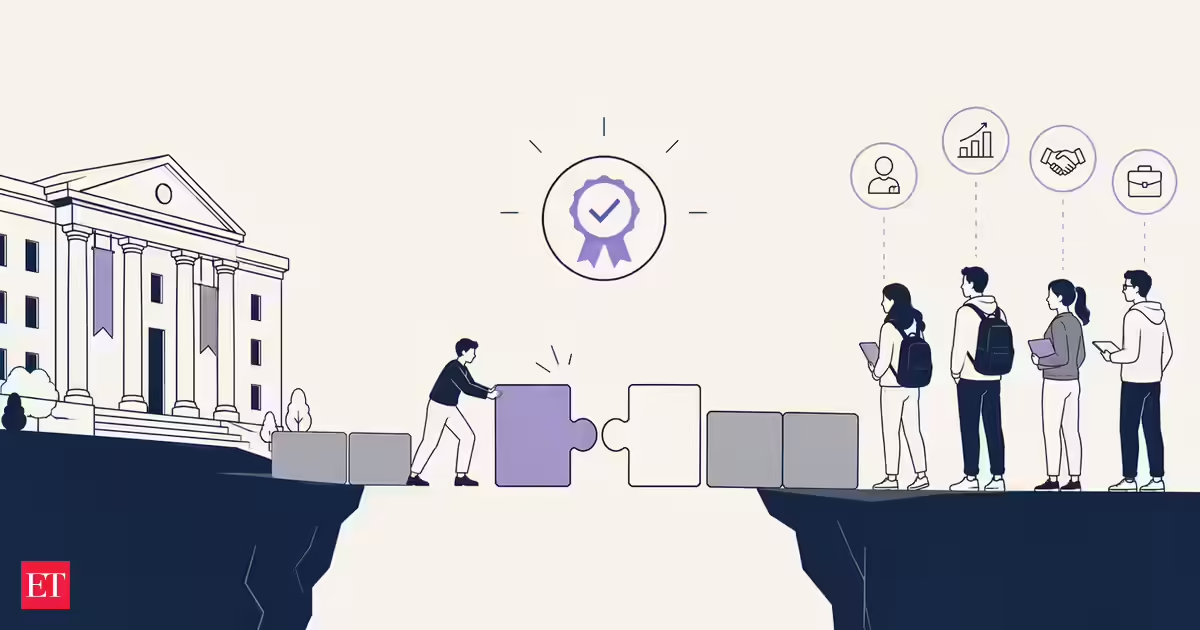
The pace at which learner expectations are evolving is beginning to outgrow the pace at which universities traditionally adapt. Today’s learners evaluate universities differently than they did even a few years ago. Academic reputation and infrastructure continue to matter, but they are no longer the only indicators of institutional value.As institutions rethink readiness for an increasingly technology-driven future, frameworks such as ET AI Ready are bringing greater attention to an important question, how aligned are universities with the expectations shaping the future of learning?Students are increasingly looking for relevance, adaptability, industry exposure, and confidence that their education will prepare them for a changing professional landscape.This shift is being accelerated by technological transformation, changing workforce dynamics, and greater exposure to global learning ecosystems. Learners are entering universities with stronger awareness of emerging industries, evolving career pathways, and the growing influence of AI across sectors.As a result, expectations around curriculum relevance, practical learning, digital preparedness, and future readiness are becoming more prominent in institutional decision-making.For universities, the challenge is not simply responding to change. It is responding at the pace at which expectations are changing. Traditional academic systems were built for longer cycles of transformation. Curriculum revisions, institutional communication, and large-scale implementation often take time.Student expectations, however, are shifting much faster.What learners expect from higher education today may look significantly different just a few years from now. This creates an important expectation gap.In many cases, universities are already investing in modernization, infrastructure, and innovation internally. Yet students may not always see that progress reflected clearly in the academic experience or institutional narrative.The gap between institutional intent and learner perception is becoming increasingly important.Universities are now being evaluated not only on what they offer, but also on how effectively they communicate relevance in a rapidly changing environment.Questions around employability, interdisciplinary learning, industry collaboration, AI integration, and technology readiness are becoming central to how students assess institutions.The conversation is gradually shifting from academic delivery alone to long-term adaptability.As higher education continues to evolve, expectation management is becoming a strategic priority for universities.Institutions that remain closely aligned with changing learner priorities will be better positioned to strengthen student trust, improve engagement, and maintain long-term relevance. In this environment, frameworks such as ET AI Ready are helping universities benchmark their preparedness against evolving educational expectations and emerging industry realities.The challenge for institutions is no longer limited to adapting to change. It is building systems, academic models, and learning environments that can continue evolving alongside the future of education itself.
The expectation gap: Why universities must evolve with changing student priorities
The growing gap between evolving student expectations and traditional university systems is redefining higher education. As learner priorities shift toward relevance, adaptability, and future readiness, universities are being challenged to evolve alongside the future of learning.
413 words~2 min read