New York —
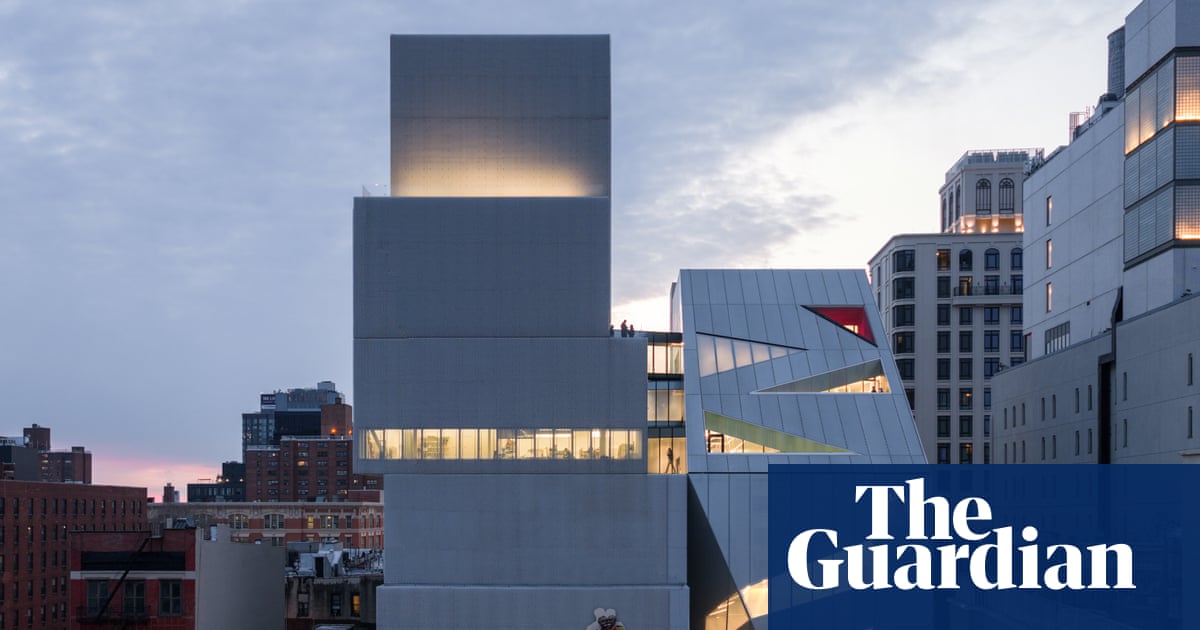
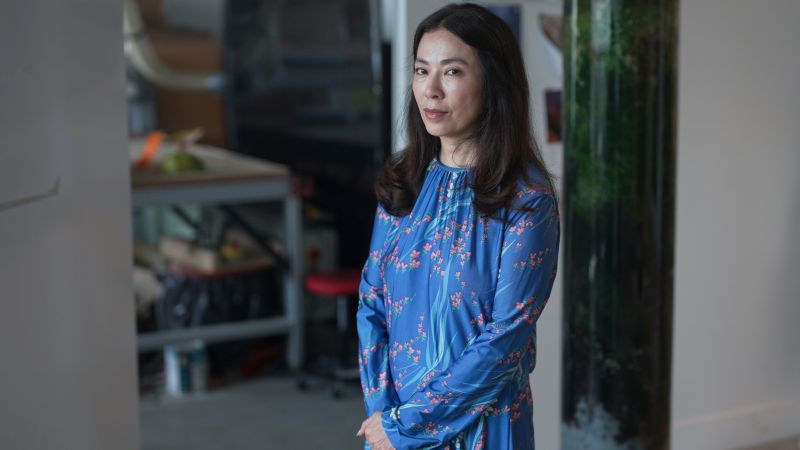
In New York’s Hudson Valley, the artist Anicka Yi has erected columns bursting with mercurial microbial life, in hues of acid green and coffee, arranged like an archaeological dig at Storm King Art Center. Some 60 miles away, on Manhattan’s Lower East Side, two of her jellyfish-like flying machines take to the air on the fourth floor of the recently reopened New Museum, tentacles gently opening and closing as they drift overhead. And, earlier this month, one of her radiolaria-inspired sculptures, an oceanic unicellular organism made large with fiber optic strands and motors, hung suspended at the art fair Frieze New York, hypnotically curling its arms.
For better or worse, we are living in a time when our relationships to both machine and microbe are heightened — and perhaps wondering which might take us out for good first. But Yi has ruminated on these interconnections for more than two decades, making visible (and, sometimes, odorous) the systems around us that are microscopic, impermanent, or technologically abstract, often questioning our discomfort with them. She’s swabbed bacteria from successful women to create perfume, placed thousands of ants in an observable circuit-board-shaped colony, and created ecosystems for machines to learn within.