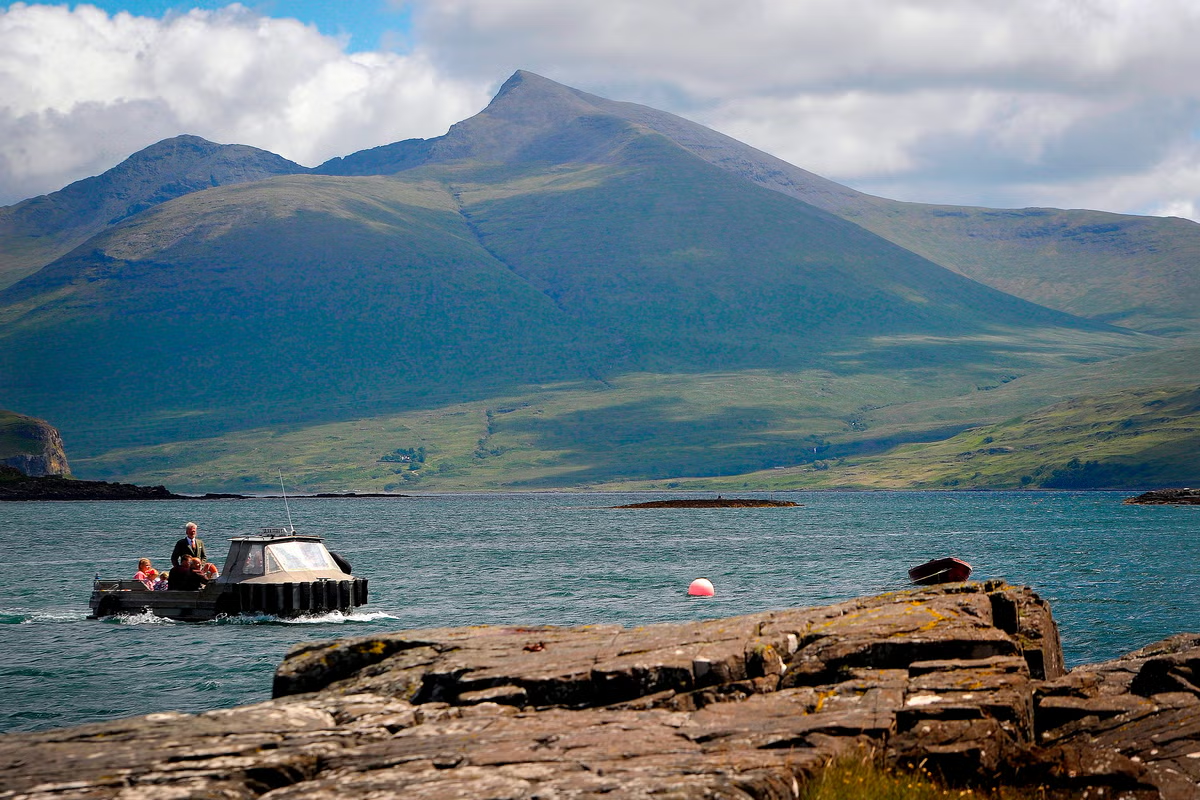
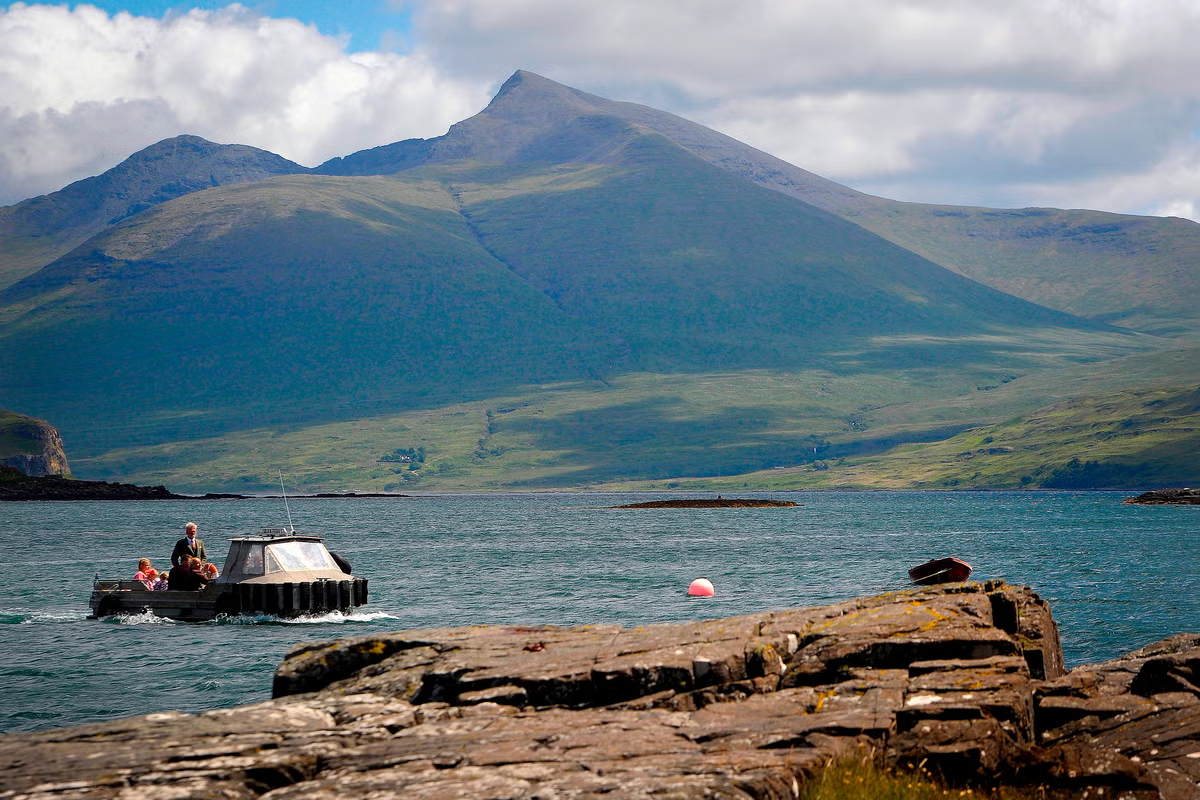
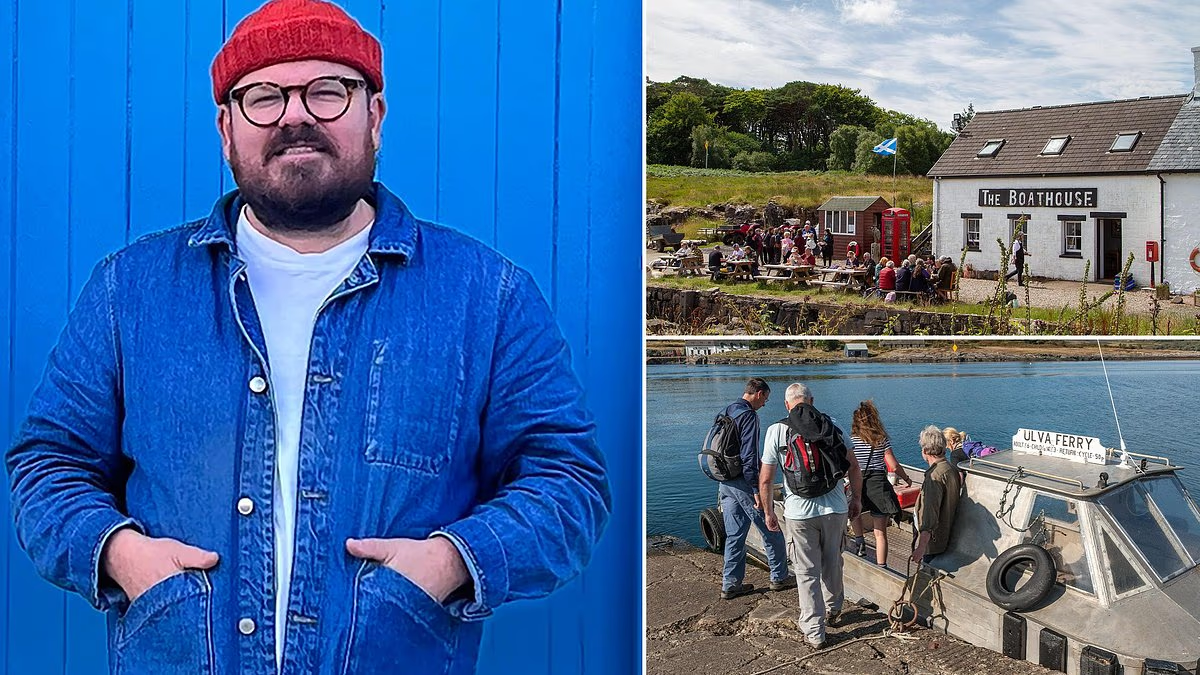
Following the success of a hit TV show earlier this year, the island's small population has found itself overwhelmed by the number of visitors turning up this summerMilo Boyd Deputy Travel Editor & Commercial Writer09:57, 29 May 2026Updated 10:03, 29 May 2026Tourists will not be welcome if they arrive at an island on the wrong day of the week.The people of Ulva have had enough. So much so, they've decided that the Inner Hebridean island will be closed on Sundays so that residents can "recharge".The decision comes amid "unprecedented interest" from tourists. Ulva has seen its visitor numbers surge in recent months, thanks to its starring role in BBC Scotland TV show Banjo and Ro's Grand Island Hotel.Having hit the small screen in January this year, the property show - which brings together a remote Scottish island, a crumbling mansion and two Australian dreamers - quickly enchanted viewers.Do you have a travel story to share? Email webtravel@reachplc.comThe impact of the show on Ulva's tourism would be felt about three months later, when the on-demand foot-passenger ferry connecting the island to Mull started seasonal operations on March 31 this year.Situated 150 meters off the west coast of Mull, the island is a sliver of a thing at just three miles wide and around six miles long. Banjo Beale, who is best known as a head judge on BBC series Scotland's Home of the Year, and husband Ro Christopher, are among the 16 people who live there.The island is not very well equipped to deal with large numbers of tourists.The Grand Island Hotel, which was once the residence of first Governor of Australia, Lachlan MacQuarrie, is not yet taking bookings. Banjo and Ro now run The Boathouse, which specialises in seafood and home baking, and has been serving guests since 2007. The island is also home to a hostel, which opened to its first guests in May 2023, the Herald reports.The decision to effectively close the island on Sundays was made by The Ulva Ferry, which transports visitors from Mull to Ulva.A post on social media read: "If you’ve visited us already this year, you’ll have noticed how much busier things have been. The unprecedented interest in the island has been wonderful and we are delighted that more people are finding out what makes Ulva so special."None of us could have predicted how significant the increase in the numbers of visitors would be, so to give ourselves, the Boathouse and fellow islanders the chance to recharge and prepare for the week ahead, we have made the difficult decision not to open Sundays this summer."Anyone who has already booked accommodation on the island leaving or arriving on a Sunday in June, July or August can liaise with their accommodation provider or email/message me and I’ll make sure you can still get across."The popularity of Ulva has also caused problems on Mull. The Mull and Iona Community Trust has been experiencing "unprecedented demand" for parking at Ulva Ferry, where ferry footpassengers park before hopping onboard. More police officers have been called in to deal with the crowds."We are currently experiencing unprecedented demand for parking at Ulva Ferry, due to the high number of visitors travelling to Ulva and those joining boat trips from the pontoon," a post from the Community Trust read."While there are two designated car parks available, these are filling up quickly. If both car parks are full, please do not park on the roadside verge. Parking on the verge is illegal and creates serious access issues. We kindly ask all visitors to plan ahead, allow extra time, and use designated parking areas only. Your cooperation is essential in helping us keep Ulva Ferry safe and accessible for everyone."Beyond the TV appeal, there are plenty of reasons why Ulva is a lovely place to visit.There are no tracks, roads, or cars on the island. Instead, a number of hiking trails lead past the attractions, into the wilderness, and along the coast.Named "Wolf Island" by the Vikings, Ulva has been inhabited for at least 7,000 years. A turbulent period affected by the Highland Clearances saw the population crash. In 1841, Ulva had a population of 570. By 1851, three-quarters had been cleared, and by 1881, just 53 residents remained. Signs of this rapid change can be found in the ruins of 16 abandoned townships across the island.Article continues belowThe island is home to nesting pairs of white-tailed sea eagles, which can commonly be seen along the coast, as well as golden eagles, hen harriers, otters, seals, and the rare Scotch burnet moth, only found on a few west coast islands in Scotland, according to JustgonewanderingThe south side is considered the most beautiful, with views out to Iona, Staffa, and the Treshnish Isles, as well as the island's only sandy beaches and multiple inlets where you can watch seals, otters, and eagles. Near the ferry landing is Sheila's Cottage — a traditional restored blackhouse that was last lived in by Sheila MacFadyen in the 1950s, which also acts as the island's heritage centre, reports Sand and SnowArchwayPublishing.
Popular UK holiday spot is closing to tourists one day a week
Following the success of a hit TV show earlier this year, the island's small population has found itself overwhelmed by the number of visitors turning up this summer
843 words~4 min read