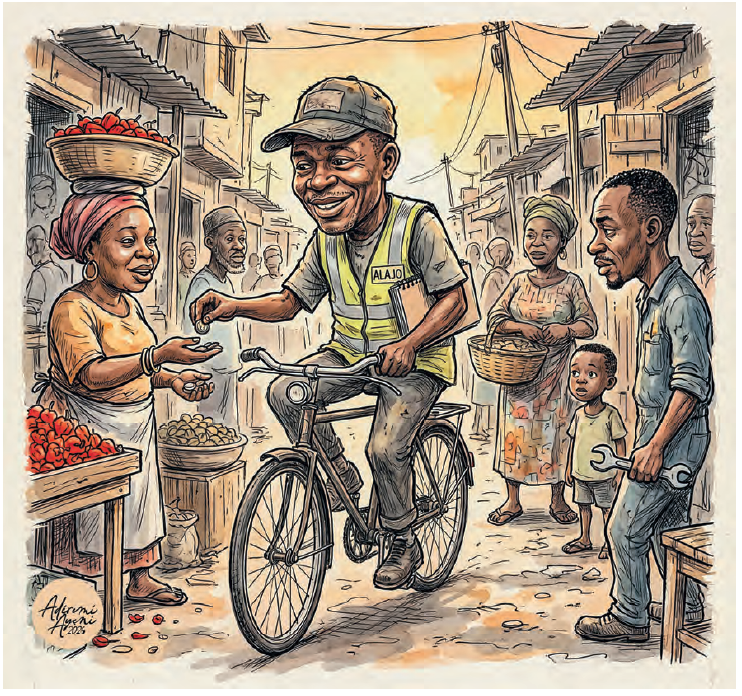
There was a time when financial discipline arrived on two wheels. The Alajo, often with a small notebook tucked under his arm, moved from street to street collecting fixed daily contributions. Names and payments were recorded, and at the end of a cycle, contributors received their lump sum, minus a day’s contribution retained as commission for the collector. The model was largely dependent on trust between contributors and the collector.
Known across South-West Nigeria as esusu or ajo, this model was more than a savings habit. It was a commu
There was a time when financial discipline arrived on two wheels. The Alajo, often with a small notebook tucked under his arm, moved from street to street collecting fixed daily contributions. Names and payments were recorded, and at the end of a cycle, contributors received their lump sum, minus a day’s contribution retained as commission for the collector. The model was largely dependent on trust between contributors and the collector.
Known across South-West Nigeria as esusu or ajo, this model was more than a savings habit. It was a commu