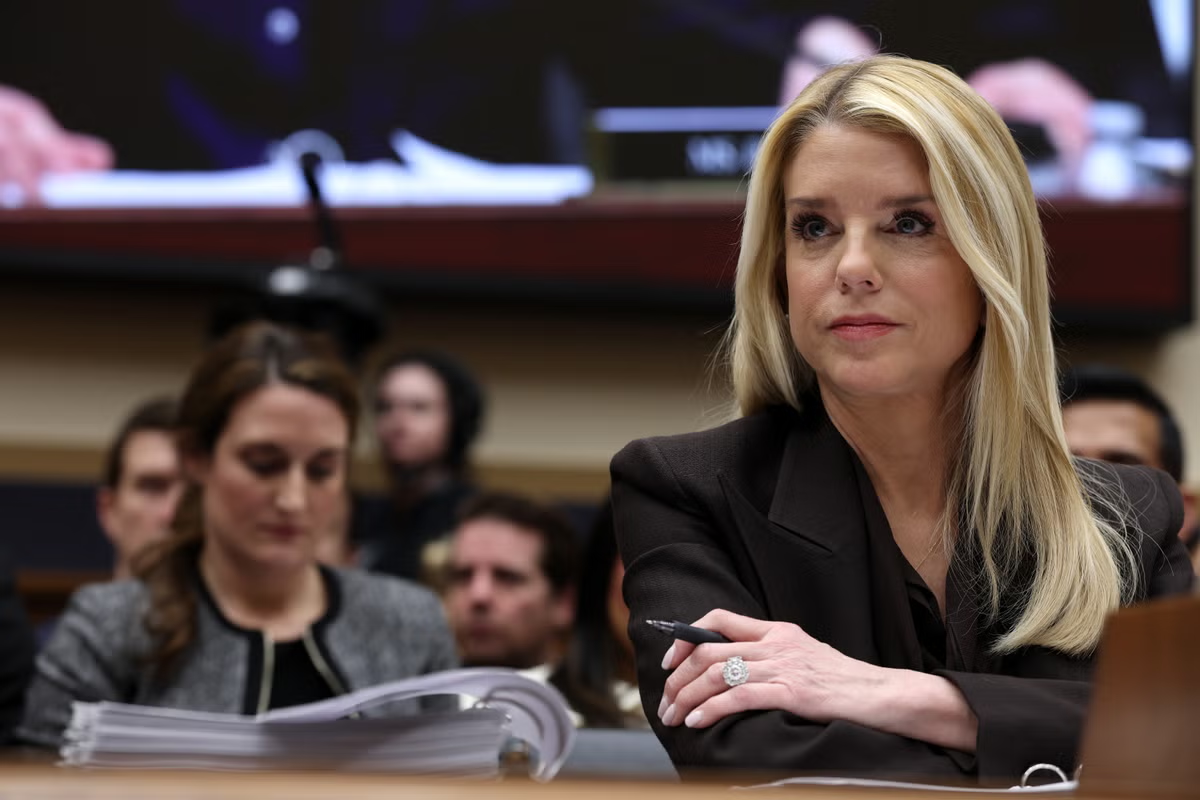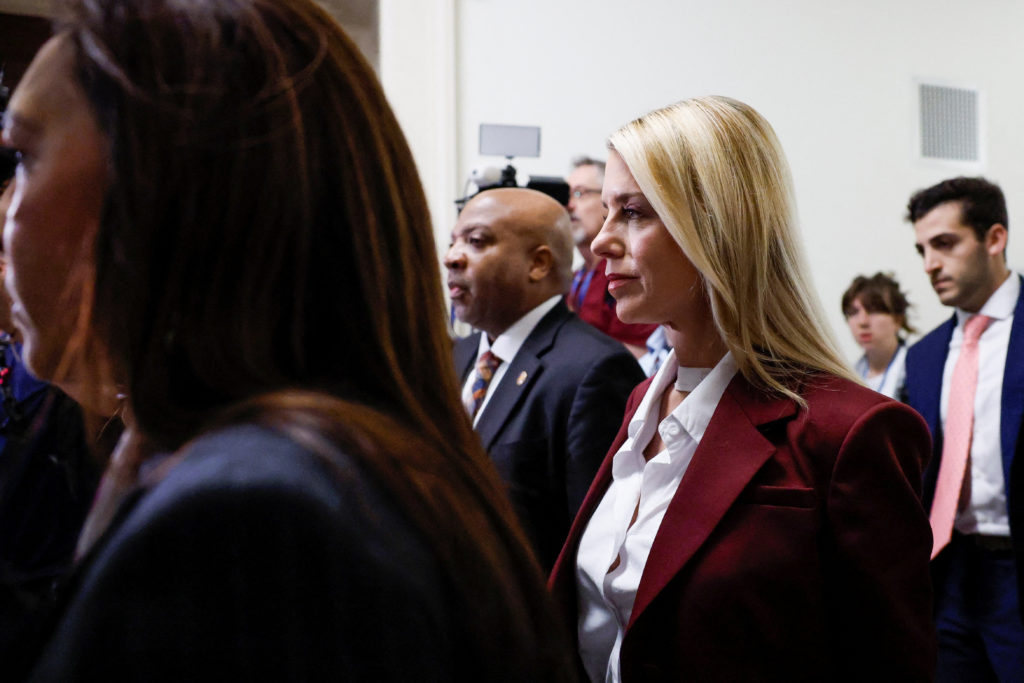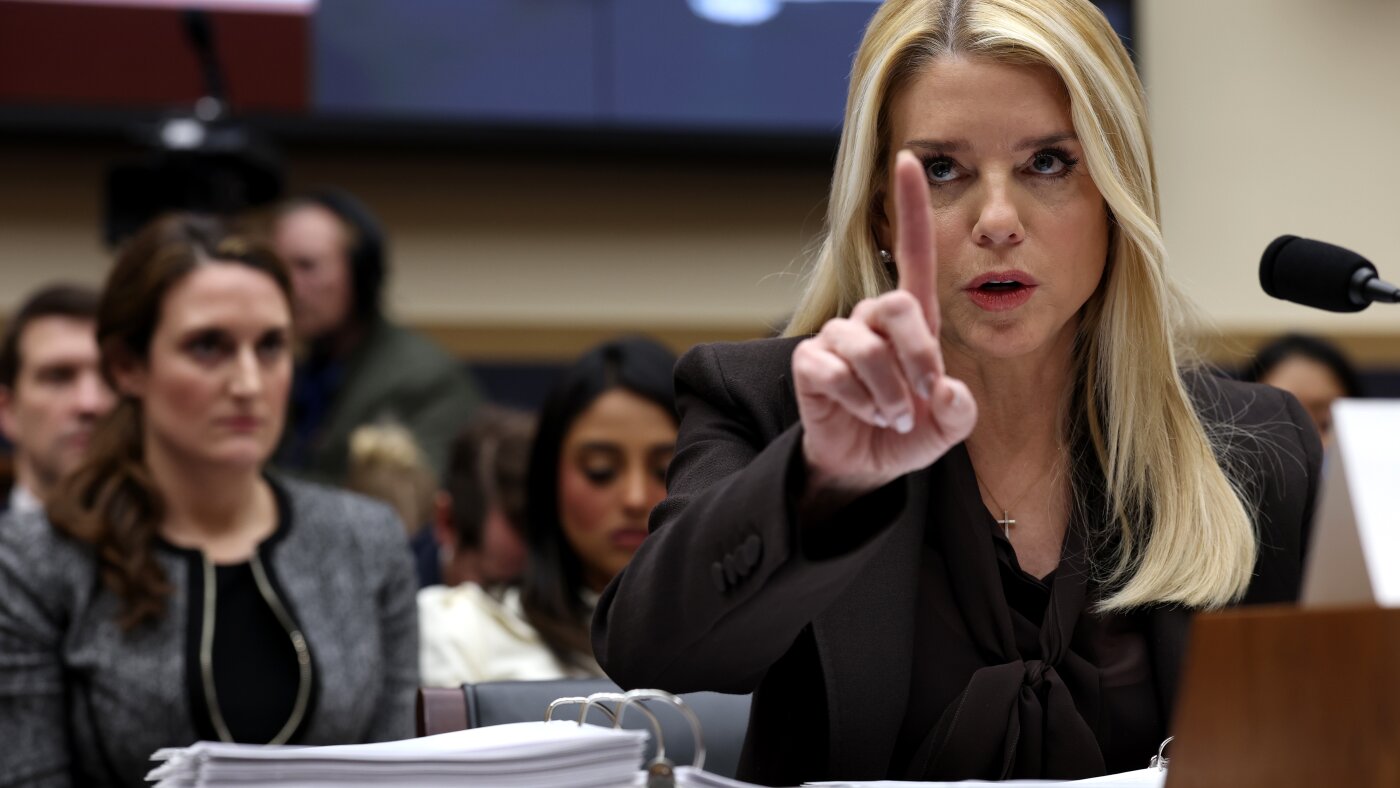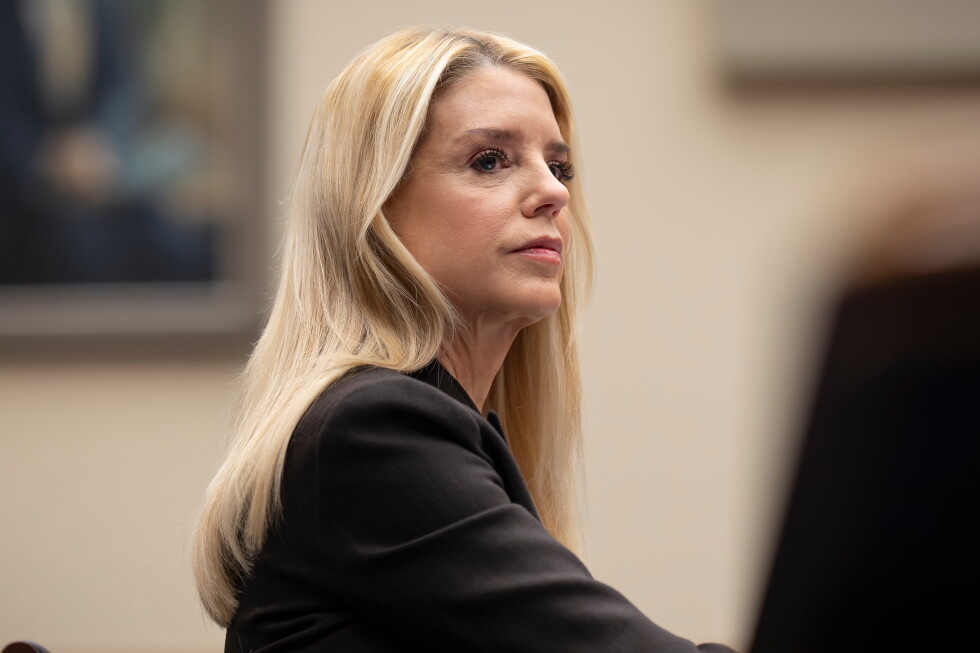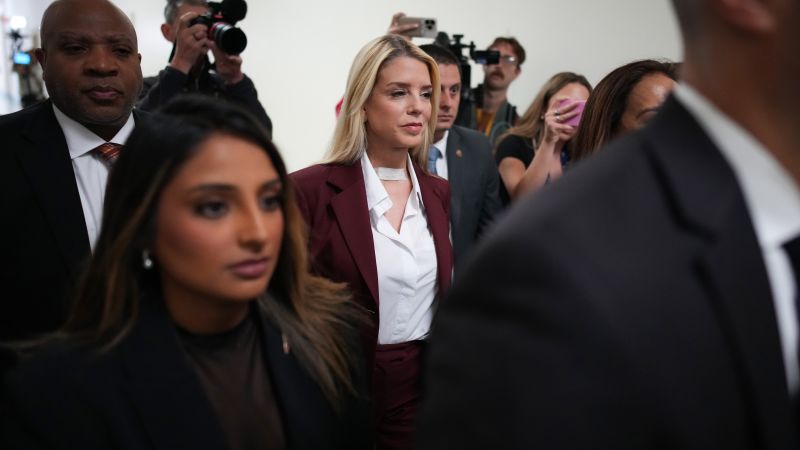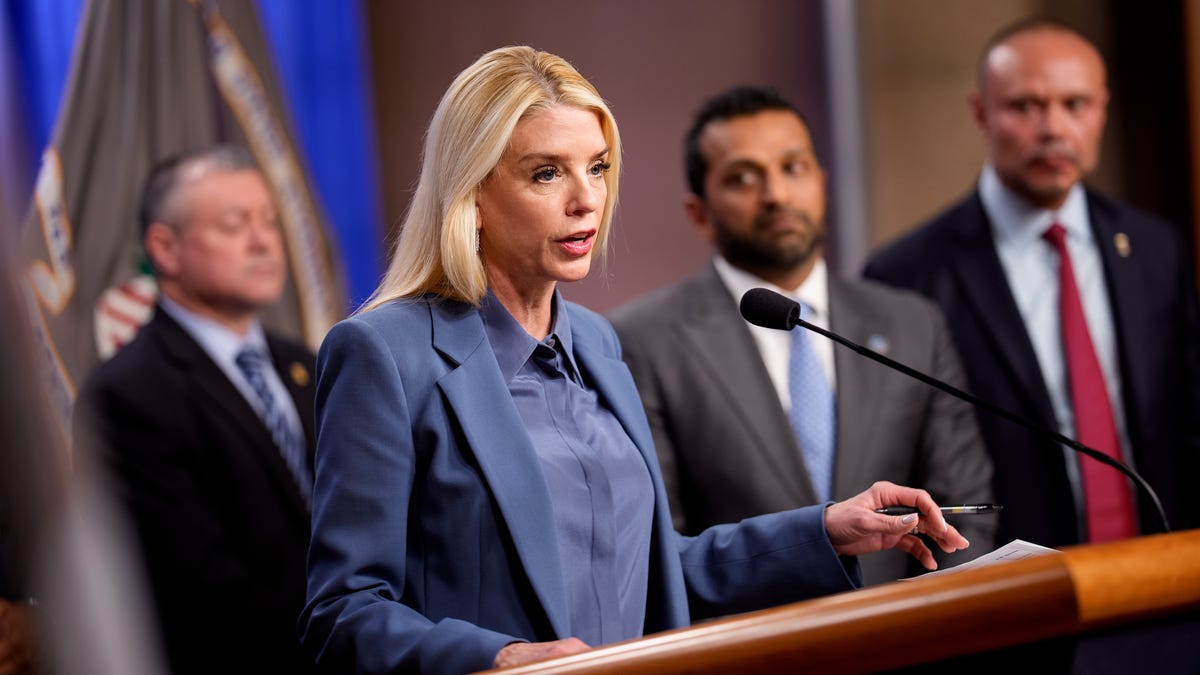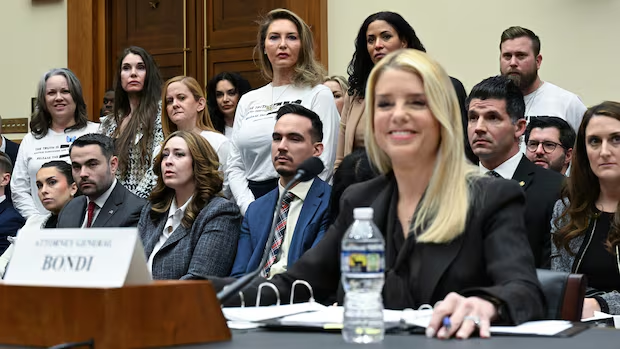
When Donald Trump's former attorney general Pam Bondi appears Friday before the House Oversight Committee she won't be under oath and the hearing about the Justice Department's handling of the Jeffrey Epstein case will be closed to the public. Epstein survivors are hoping for answers and will be there on Capitol Hill, just the same.As Bondi testifies, one of the roughly half dozen Epstein survivors waiting outside the hearing room will be Canadian Sharlene Rochard."We're hoping to get a lot of information from Bondi if she's willing to speak," Rochard said.They're hoping Bondi is asked whether any investigative leads were closed without notifying victims, she said, and whether leads involving powerful or politically connected individuals were not followed because of conflicts of interest or improper influence.Bondi was originally subpoenaed in March to appear before the House Oversight Committee, but Trump dismissed her from her role as Attorney General in April. The Department of Justice argued that because she was subpoenaed in her capacity as Attorney General she did not have to appear before the committee.Pam Bondi angrily defends Justice Department handling of Epstein filesTrump fires U.S. Attorney General Pam Bondi In the end, the Republican-led House Oversight Committee opted to have Bondi appear, instead, for a closed door "transcribed interview."That has not gone over well with some House Democrats on the committee, including Representative Melanie Stansbury from New Mexico, where Epstein was accused of abusing women at his Zorro ranch. "Let's be clear — we subpoenaed Bondi for a deposition, and she should testify under oath. Why isn't she? Well, because the Republican Chairman decided a closed-door interview was enough," Stansbury wrote on X. "But we know it's not. Bondi must testify under oath, on camera, for the public to see."WATCH | This Canadian who survived abuse by Jeffrey Epstein is sharing her story:How a Canadian Epstein survivor found her voiceMay 27|Duration 9:34Sharlene Rochard was a teen when she started travelling to the U.S. to model and ended up in the orbit of convicted sex offender Jeffrey Epstein. Now, the Canadian survivor is transforming her personal trauma into public advocacy, telling CBC’s Katie Nicholson how she reframed her pain and found her voice.Victims to speak before hearingWhile the Epstein victims won't be allowed inside the hearing, they will speak before it begins. They will also have dozens of volumes of the Epstein files on hand, sent in from the Donald J. Trump and Jeffrey Epstein Memorial Reading Room, maintained by the non-profit Institute for Primary Facts. Justice Department releases Epstein files that include uncorroborated Trump allegation, after complaintsTop federal prosecutor in Chicago denies opening investigation into E. Jean CarrollThe public exhibit, which displayed bound copies of the released Epstein files in New York City, is now going on tour, with its first stop in Washington, D.C., where it has sent the volumes with potential investigative leads flagged inside.The volumes are there "so that people can realize how many leads there actually are," Rochard said. "A reminder of what actually needs to be done."She says survivors aren't asking for "a spectacle," but rather, truth, accountability, meaningful action and transparency about the redaction process and investigative decisions. As well as "about whether all credible leads were pursued," she said.Rochard was just 16 when she left Canada to start working as a model in New York, Los Angeles, Chicago, Dallas and Miami. She says she was introduced to Jeffrey Epstein as a young model, but kept silent for decades about the abuse she endured. (Submitted by Sharlene Rochard)'One of the hardest things I've ever done'Rochard came forward last fall after seeing a familiar face on the news from her early modelling days. Lisa Phillips — a fellow Epstein survivor — was speaking out on Capitol Hill at a news conference demanding accountability and transparency from the Department of Justice.That day Rochard called Phillips and told her she, too, had been trafficked by Epstein. "One of the hardest things I've ever done in my whole entire life is start speaking about the parts of my life that were the most difficult," Rochard said.LISTEN | Epstein survivors say their fight continues despite release of files:The Current30:33These Epstein survivors demanded his files be released and won — but their fight isn't over yetJess Michaels and Liz Stein say their sisterhood of women harmed by Jeffrey Epstein are determined to keep up the pressure as the deadline for the Trump administration to produce the documents approaches and beyond.Rochard says she was introduced to Jeffrey Epstein as a young model and was trafficked into her 20s, but kept silent about the abuse for decades. She's unable to go into details because she is involved in ongoing legal action to hold the people she says abused her accountable.One day, while she was grocery shopping, a journalist sent her a photo from Epstein's island and the weight of the memory hit her hard."I got a text, put my groceries in my cart. I sat down and started bawling. Like, I just, I couldn't drive home," she said.Powerful men from politics, business and entertainment mentioned in latest Jeffrey Epstein filesU.S. House committee posts videos of Clintons answering questions about EpsteinPhillips says it was sad learning that Rochard had gone through the same type of abuse she had."I never knew with Sharlene that it had happened to her, or even to the extent, I never even knew that she had been on the island, too," she said."It's one thing to deal with the pain of what happens to you, but when you know it's happened to somebody else, it is not easy."Phillips invited Rochard to come to L.A. to meet other survivors who were about to film a public service announcement with the anti-trafficking group World Without Exploitation that would air during the Super Bowl.WATCH | Some Epstein survivors recorded this PSA that aired during the Super Bowl:"They were so lovely and easy," Rochard said of the other survivors she met that day. "And I felt, like, that connection I never had before. I've been alone for a long time and just living with this knowledge, but I wasn't able to really tell too many people."Rochard recalls breaking down the day they filmed the segment because she wasn't used to speaking about what happened."The words that they wanted us to say in the PSA, they just hit me so hard."Since November, Rochard has drawn on the support of the women she calls her survivor sisters as they call for transparency, change, and an end to human trafficking at the United Nations and the U.S. Congress. She's also in contact with some Canadian advocacy groups hoping to change laws in this country to strengthen protections for victims of intimate partner violence and their children.Rochard, left, and Democratic Representative Pramila Jayapal, attend an April roundtable to combat human trafficking on Capitol Hill in Washington, D.C. (Katie Nicholson/CBC)Survivors say DOJ still hasn't reached outThe last time Rochard and Bondi were in close proximity was in February when Bondi refused to face the survivors standing behind her after Democratic lawmaker Pramila Jayapal asked her to apologize."It felt like I was a little kid again, just asking for somebody to acknowledge me, to be honest," Rochard said, adding that it hurt that Bondi "just couldn't turn around and say, 'You know what, I'm sorry.' "In that session, the nearly dozen survivors raised their hands when asked if they were still waiting for Trump's DOJ to contact them.Democrats investigating whether U.S. DOJ withheld Epstein documents about abuse accusation against TrumpAuthorities were hot on the trail of Epstein's co-conspirators. Why weren't they named in the document dump?Rochard, who gave the names of the men she says abused her to her lawyer, says survivors are willing to meet with DOJ officials, but that they still haven't been contacted by anyone there."I think that's also degrading."Survivors, she says, have also faced accusations that they're part of a Democratic hoax, they have received online threats and had to deal with stalkers. Still, they are undeterred.WATCH | Canadian Epstein survivor speaks with CBC News:CBC's Aarti Pole speaks with a Canadian Epstein survivor Sharlene RochardDecember 18, 2025|Duration 8:46Get the latest on CBCNews.ca, the CBC News App, and CBC News Network for breaking news and analysis.Survivors advocate for Virginia's LawIn addition to pushing for accountability and the full release of the Epstein files, survivors have been knocking on doors on Capitol Hill advocating for Virginia's Law. The bill introduced in February was named in honour of Virginia Giuffre, one of the first women to come forward to expose Epstein, and who took her own life last April. It seeks to remove the statute of limitations on civil claims for adult victims of sexual abuse and sex trafficking so they can sue their abusers.Rochard is also working with advocacy groups and speaking out on Capitol Hill and at the United Nations about human trafficking. She is educating young people — especially in the modelling industry — about potential red flags of human trafficking operations. It's been a major life shift for the mother of four who says she gains courage from her children, ages 11 to 15."I think about them in every single press conference, every single time I speak," she said. "I know that they'll see everything that I do and I want them to be proud of me."Rochard, centre, had to tell her four children — from left, Liam, Bella, Trent and Olivia — that she was an Epstein survivor. They all supported her decision to go public. (Mia Sheldon/CBC)Before coming forward to the public, Rochard had to tell her children what happened to her. They all rallied around their mom with pride."Every time I do hear her speak, I just get blown away by the way she says things," said Bella, 15."She has so much power behind her voice, and I just like, 'Yeah, that's my mom!' "
Former U.S. attorney general to testify about Epstein files in closed hearing. Survivors will be waiting | CBC News
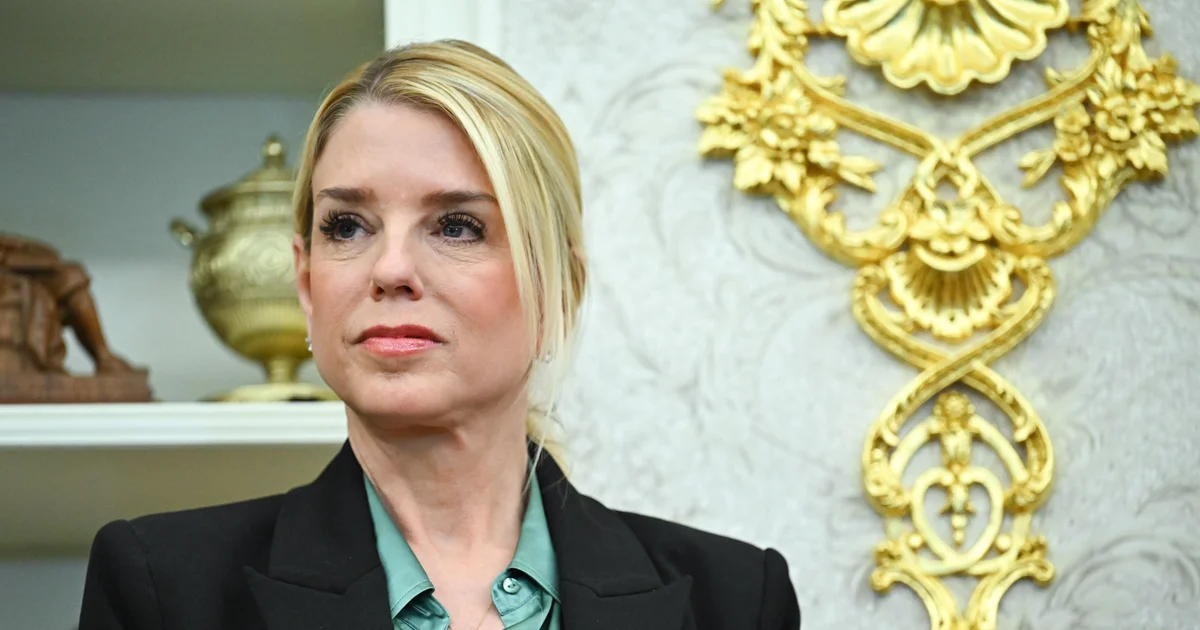
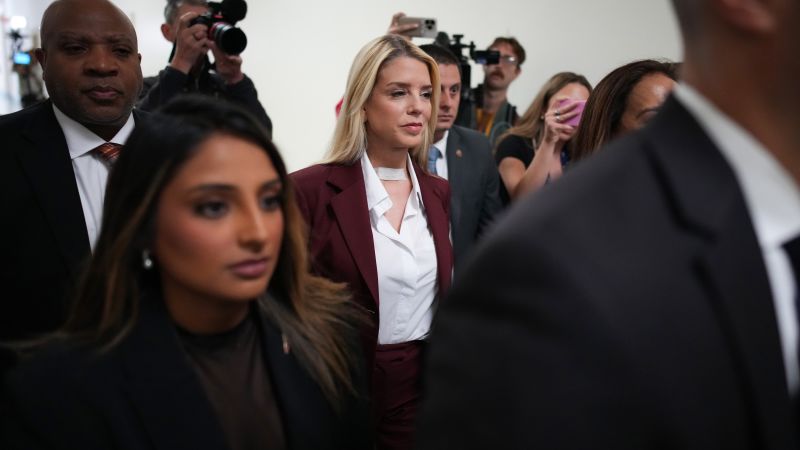
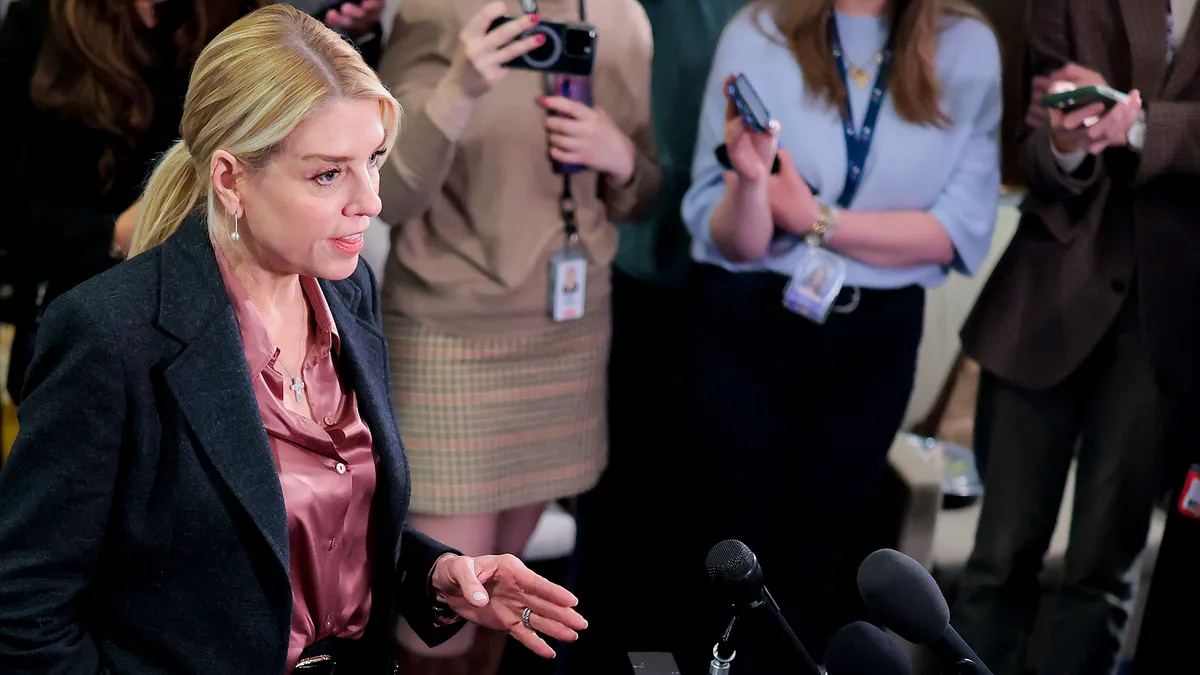
Former U.S. attorney general Pam Bondi will appear in a closed congressional hearing Friday about how the Epstein files have been handled by the Department of Justice. Roughly half a dozen Epstein survivors — including Sharlene Rochard, the lone Canadian to come forward — made the trip to Capitol Hill to wait outside, hoping for more answers about whether there will be any investigation into their cases.
1,645 words~7 min read