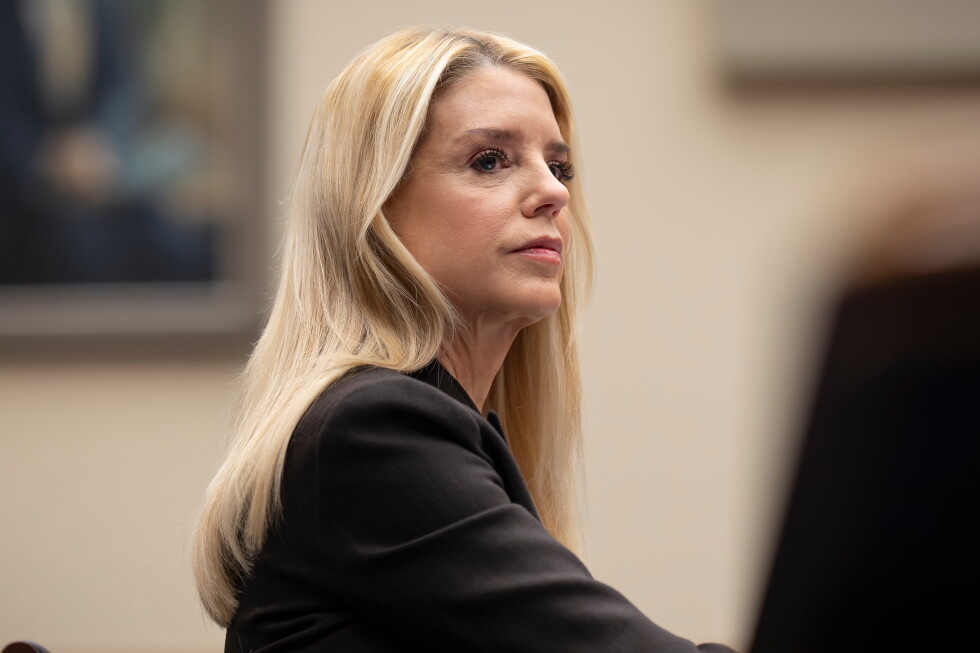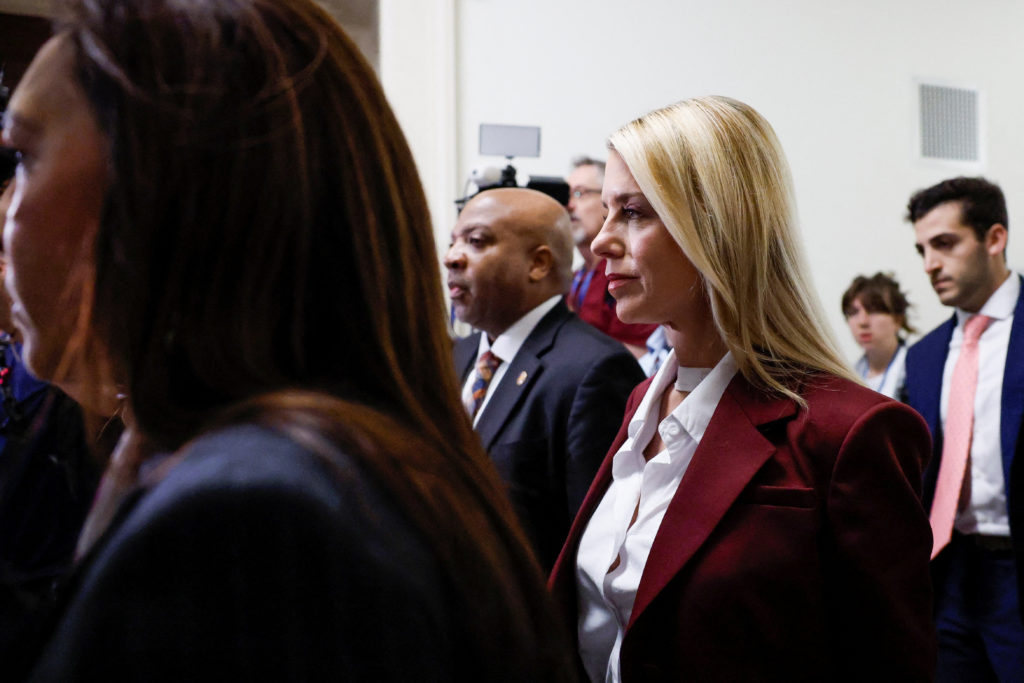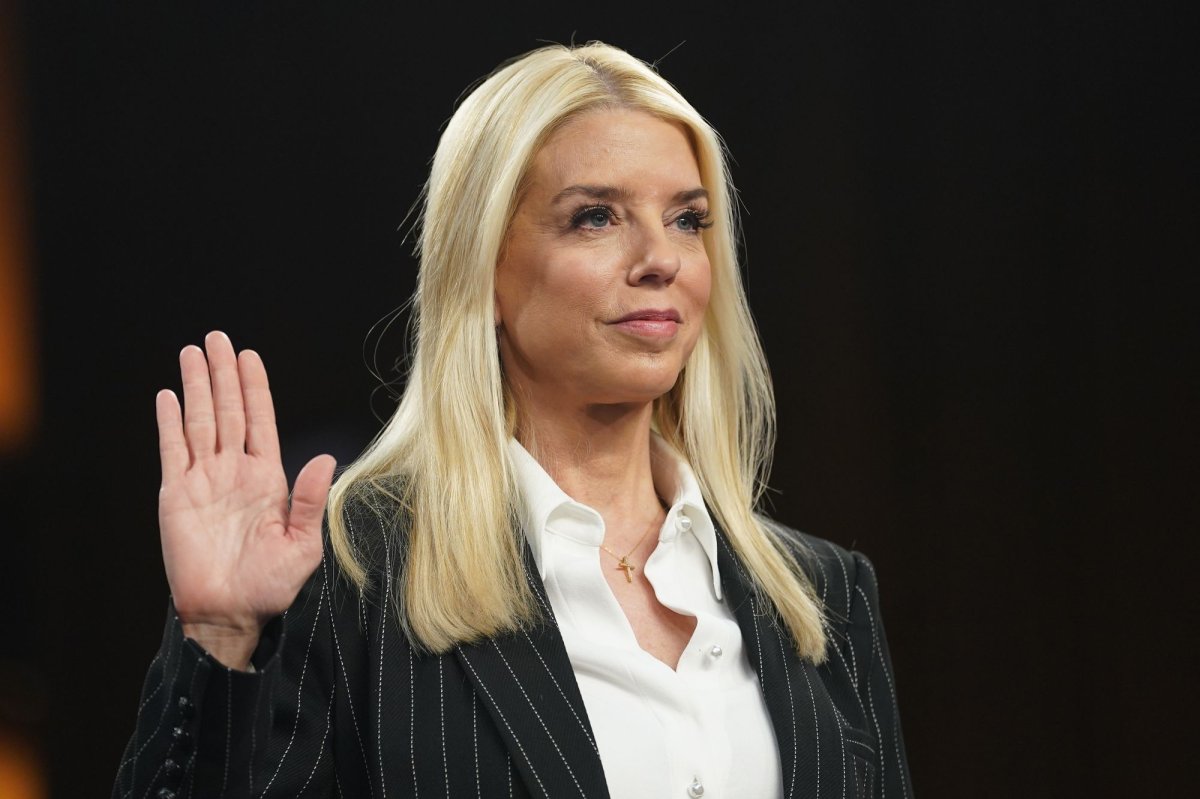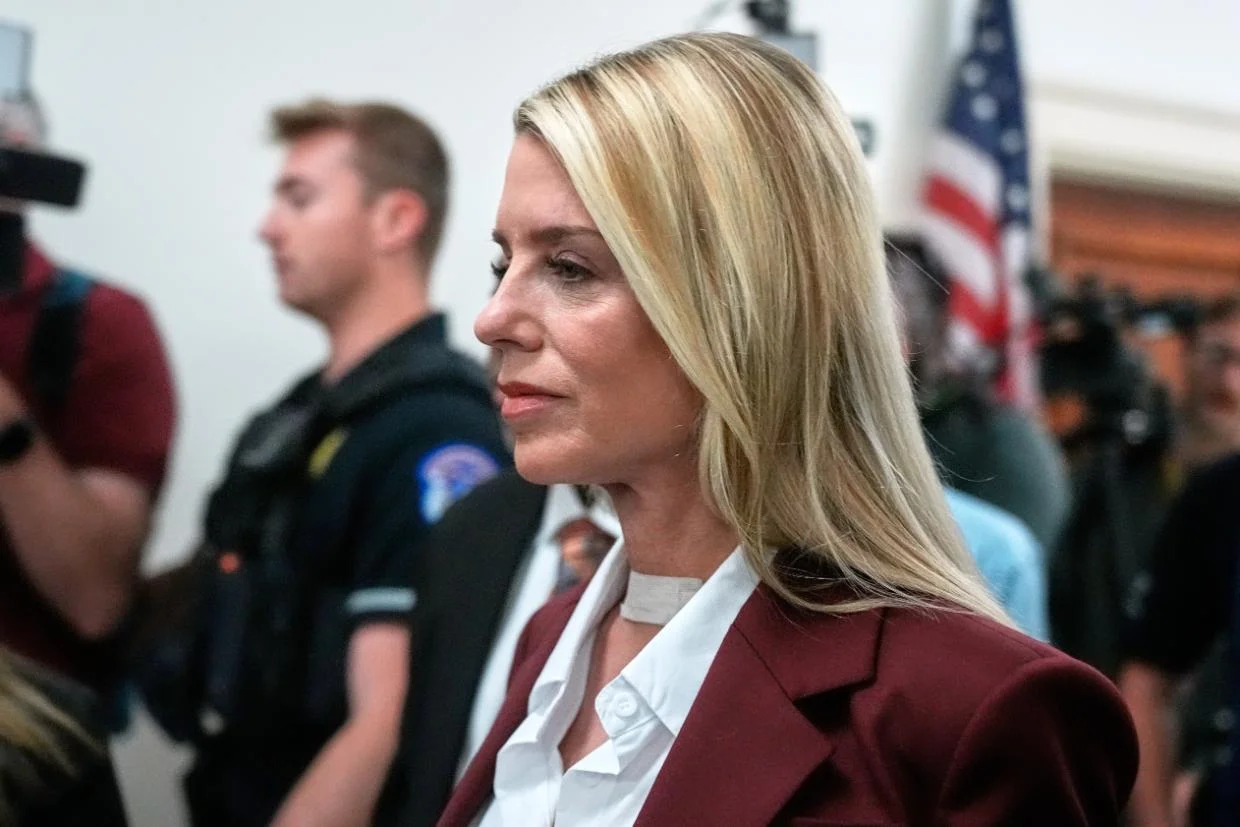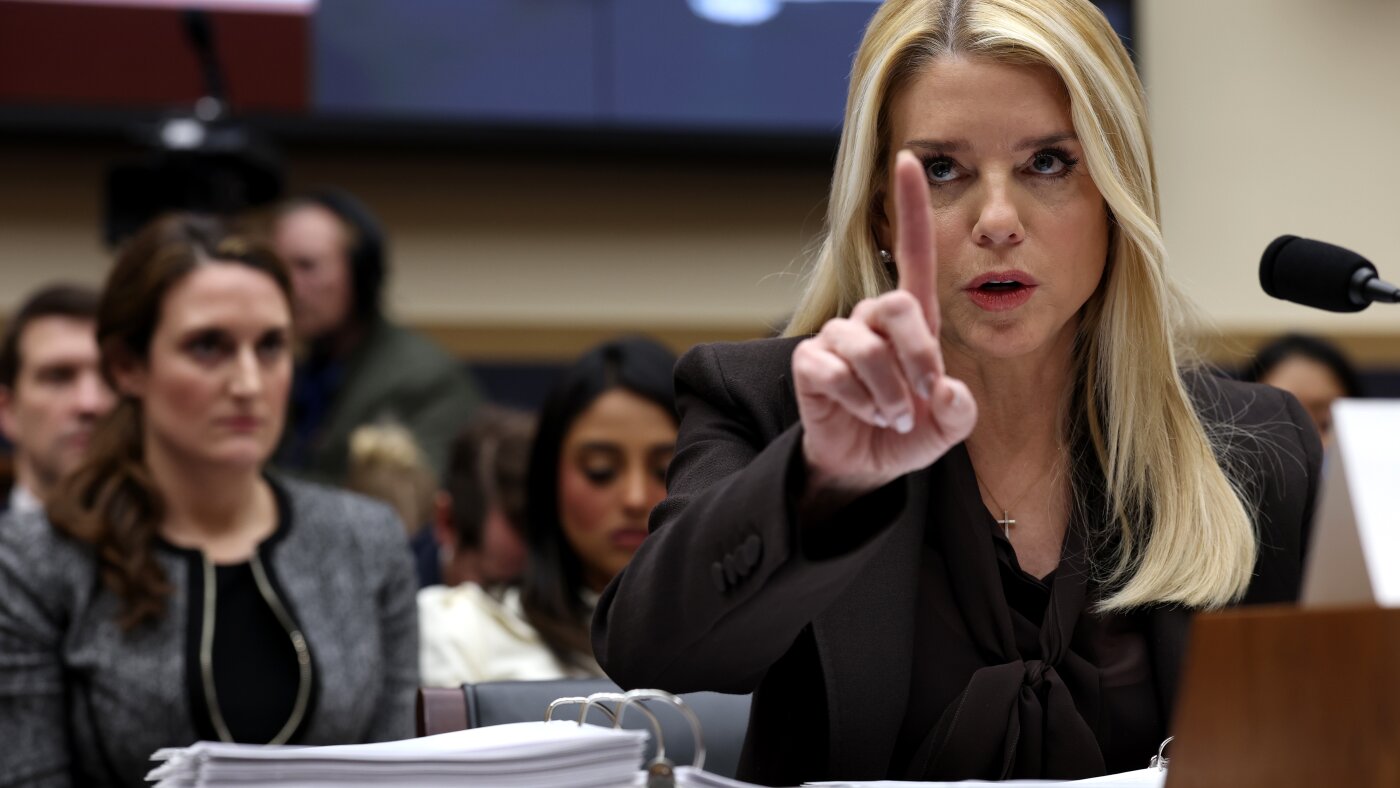
“You’ll know everything that’s been asked,” House Oversight Committee Chairman James Comer said ahead of the interview, which won’t be televised.Show Caption
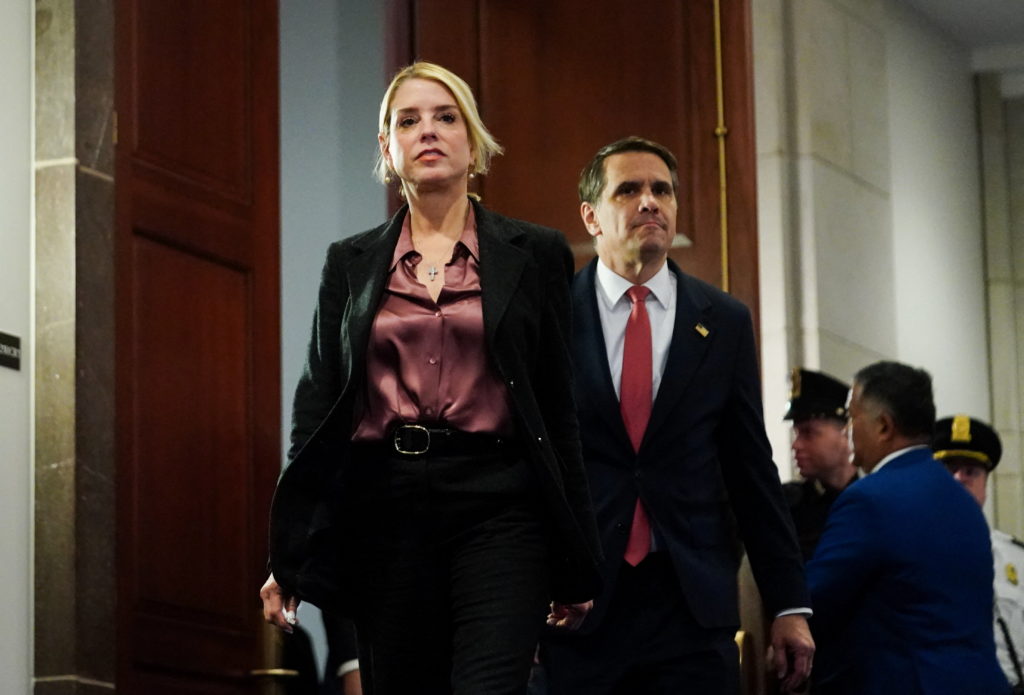
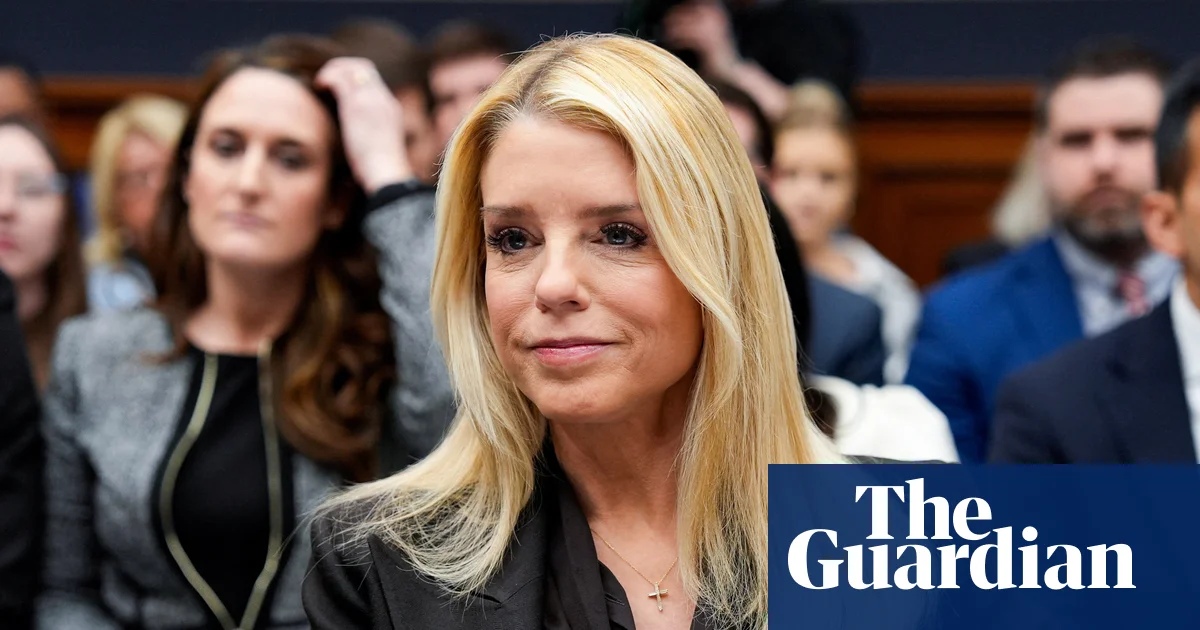
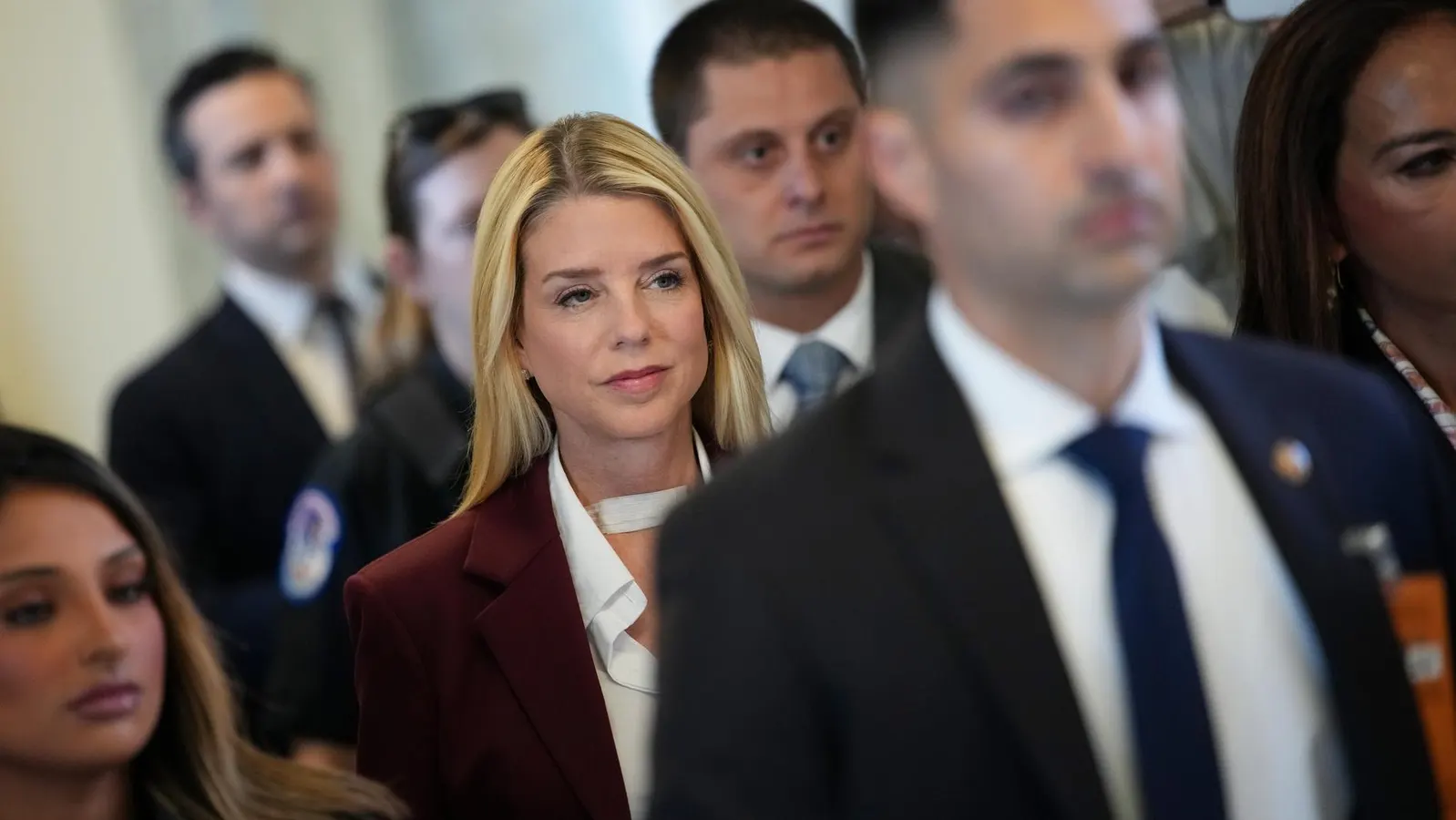
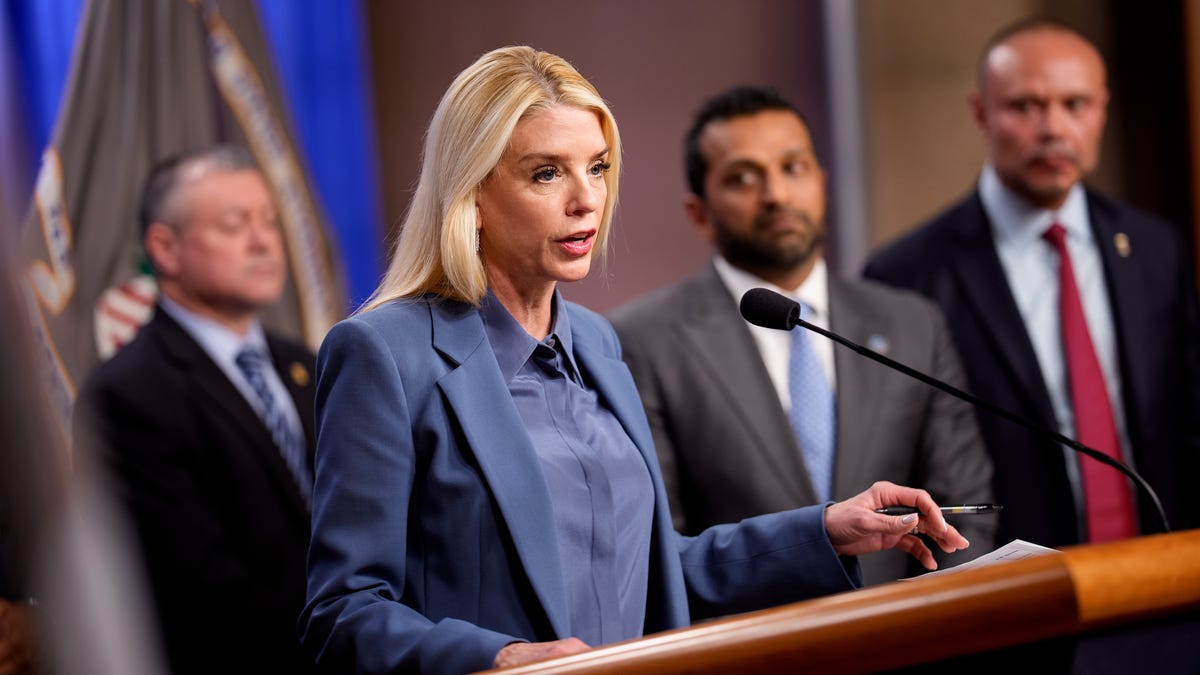
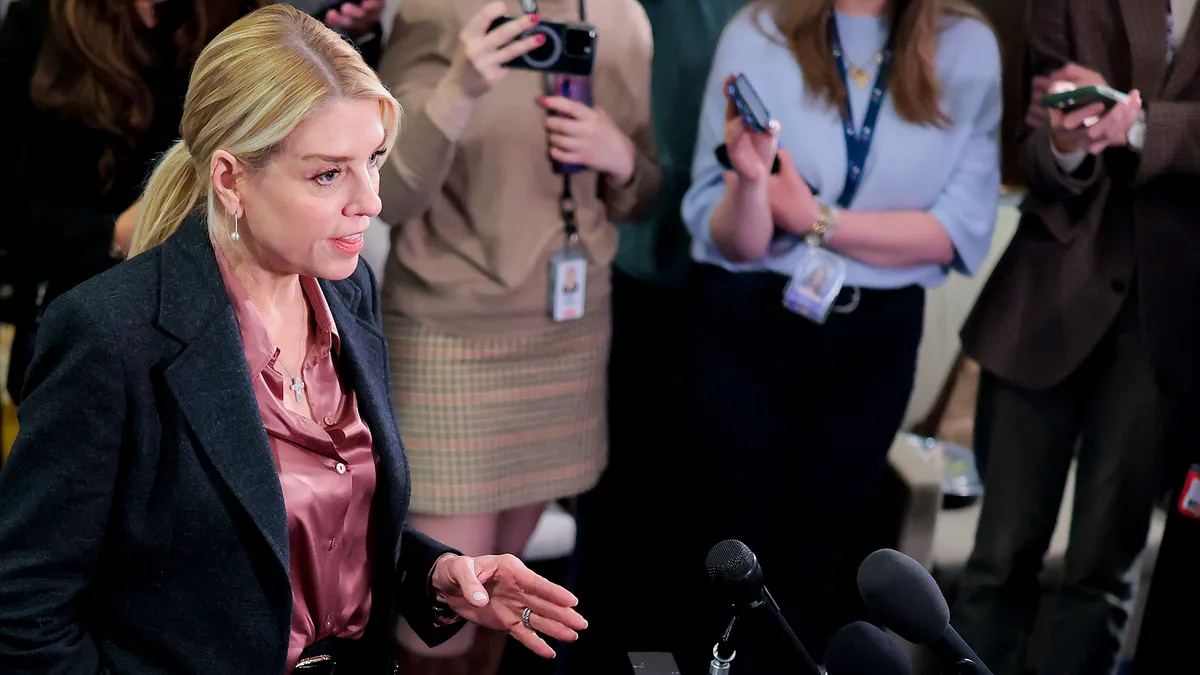
Former Attorney General Pam Bondi sat down for a politically fraught interrogation on Friday by members of Congress over the Justice Department's handling of convicted sex offender Jeffrey Epstein's case.Bondi appeared on Capitol Hill in the morning for a scheduled interview behind closed doors with the House Oversight Committee as it probes alleged DOJ mismanagement of an investigation into Epstein and his convicted accomplice, Ghislaine Maxwell.President Donald Trump fired Bondi on April 2, reportedly in part out of frustration with her handling of the Justice Department's files on Epstein, an issue that has become a political thorn in the president's side.Though the May 29 interview will not be televised, the committee has said it will release a transcript as quickly as possible, and both Bondi and lawmakers may choose to discuss it publicly.”You’ll know everything that’s been asked,” Rep. James Comer, R-Kentucky, the chairman of the panel, told reporters outside the hearing room.Bondi is being allowed to sit for a transcribed interview, rather than a sworn deposition, even though the committee denied a similar request from former President Bill Clinton and former Secretary of State Hillary Clinton, according to California Rep. Robert Garcia, the top Democrat on the committee. A transcribed interview, unlike a deposition, allows Bondi to refuse to answer questions without providing a legal justification, Garcia said in a letter.“We continue to be incredibly disappointed of the decision to not have this interview videotaped and then released to the American public,” Garcia said. “It should be under oath and it should be videotaped.”Epstein survivors who gathered outside Bondi’s interview said though they were happy to see some accountability for the former attorney general, they shared the concern about a need for a videotaped proceeding.“We just wish that more Republicans would get on the same page with us,” said Danielle Bensky. “There’s something called subtext.”Bondi, who was diagnosed with thyroid cancer in the weeks since her firing, was originally scheduled to answer questions in mid-April. But after her departure, the Justice Department said she no longer had to comply with a subpoena for her to be deposed. Democrats have said her failure to appear for that deposition constituted noncompliance with the subpoena.The committee later worked out arrangements for the May 29 interview.The interview is likely to be explosive, even if it's being held in private. Before she was ousted from the Justice Department, multiple impeachment measures introduced by Democratic members of Congress accused her of failing Epstein's victims.Here are key questions Bondi could face in the interview.Shielding Epstein's circle from accountability?Bondi may be asked about whether the DOJ shielded Epstein associates from accountability.So far, only Epstein and his former girlfriend, Ghislaine Maxwell, have faced federal criminal charges in connection with Epstein's alleged sex trafficking scheme. The financier, who was convicted in 2008 of a Florida prostitution offense involving minors, died in a Manhattan jail in 2019 before his scheduled trial on sex trafficking charges.Maxwell was convicted in 2021 of sex trafficking a minor and is now serving a 20-year prison sentence.Bondi's DOJ released a memo in July saying Epstein had more than 1,000 victims, but a systematic internal review of the Epstein files failed to turn up any incriminating list of Epstein clients. Since then, Bondi has been accused by some of engaging in a cover-up to protect wealthy and politically connected individuals."This is bigger than Watergate. This, this goes over four administrations," Thomas Massie, R–Kentucky, told Bondi at a Feb. 11 hearing. "This cover-up spans decades, and you are responsible for this portion of it."Rep. Summer Lee, D–Pennsylvania, who serves on the Oversight Committee, told USA TODAY in March that the Bondi DOJ's failure to take new action against Epstein associates, even as the United Kingdom made arrests based on information in DOJ releases of files, shows U.S. elites enjoy protections that working-class Americans don't get."People in America are tired of seeing that two-tiered system of justice," Lee said."If we had information ... about men who abused women, we would prosecute them," Todd Blanche said Jan. 30 while serving as Bondi's deputy.Stop-and-go on file releaseIn February 2025, Bondi stoked expectations that her Justice Department would be releasing incriminating information about Epstein and his associates, telling Fox News: "You're going to see some Epstein information being released by my office."But Bondi's DOJ released a memo months later saying "no further disclosure would be appropriate or warranted."Since then, several Republicans and Democrats in Congress have accused the Justice Department of illegally withholding documents in the face of a congressional subpoena, and later, a bipartisan transparency law. Bondi previously defended the DOJ's record, saying it missed a legal deadline to release documents because reviewing and redacting the files was a huge task."We had 30 days to redact and release, under the law that was passed, 3 million documents," Bondi told reporters on March 18. "If you stack those up, that's the height of the Eiffel Tower."The Justice Department ultimately released about 3.5 million pages of files by late January, but it withheld another 2.5 million pages and heavily redacted much of what it did release.Blanche, a former personal attorney of Trump who is now acting attorney general, said many documents were withheld to protect victim privacy, which is permitted under the transparency law. But he has also said the Justice Department withheld documents for some reasons the law didn't permit, such as to shield internal department deliberations related to Epstein.White House involvement?Bondi may be asked questions about whether the White House, potentially including Trump personally, influenced the DOJ's decisions on what to release, whom to investigate, and whether any additional Epstein associates should face charges.For years, members of Trump's inner circle have called on federal officials to release their files on Epstein. After Trump returned to office, administration officials propelled that campaign forward, suggesting new names from Epstein's purported client list and new accountability were in store."Absolutely," Alina Habba said when asked by British journalist Piers Morgan in February 2025 if "we are likely to see criminal actions being taken" related to Epstein. Habba served as a counselor to the president at the time. "To hide lists, to protect political friends, all of that, we don't have time for that.""It's a new day, it's a new administration, and everything's going to come out to the public," Bondi told Fox News host Sean Hannity in a March 2025 interview.But in May of that year, Bondi reportedly told Trump that his name appeared multiple times in the files. In July, the Justice Department announced it was essentially closing the case on Epstein after a "systematic review" of the files."We did not uncover evidence that could predicate an investigation against uncharged third parties," the DOJ said in a memo. No "further disclosure would be appropriate or warranted."Trump, who was a personal friend of Epstein's until the 2000s and has always denied wrongdoing, later urged his followers to move on, saying Democrats were pumping out lies."Their new SCAM is what we will forever call the Jeffrey Epstein Hoax," the president posted on Truth Social July 16.Committee members may point to those events to question whether Bondi's decisions on transparency and investigations were improperly influenced by the White House.Releasing names, images of alleged victimsBondi may also be asked about her department's failure to initially redact all the names and images of potential victims when it released files.The transparency law that forced disclosures also empowered the DOJ to protect victims' identities and personal records, as well as shield child sexual abuse material from the public. Bondi personally repeatedly expressed a commitment to protecting victims.But when a trove of files was released in late January, the names of some Epstein accusers were initially disclosed, and even some nude images were released to the public. Bondi told Congress Feb. 11 that department staffers did "our very best in the time frame allotted by the legislation to protect victims.""If you brought us a victim’s name that was inadvertently released, we immediately redacted it," Bondi said.