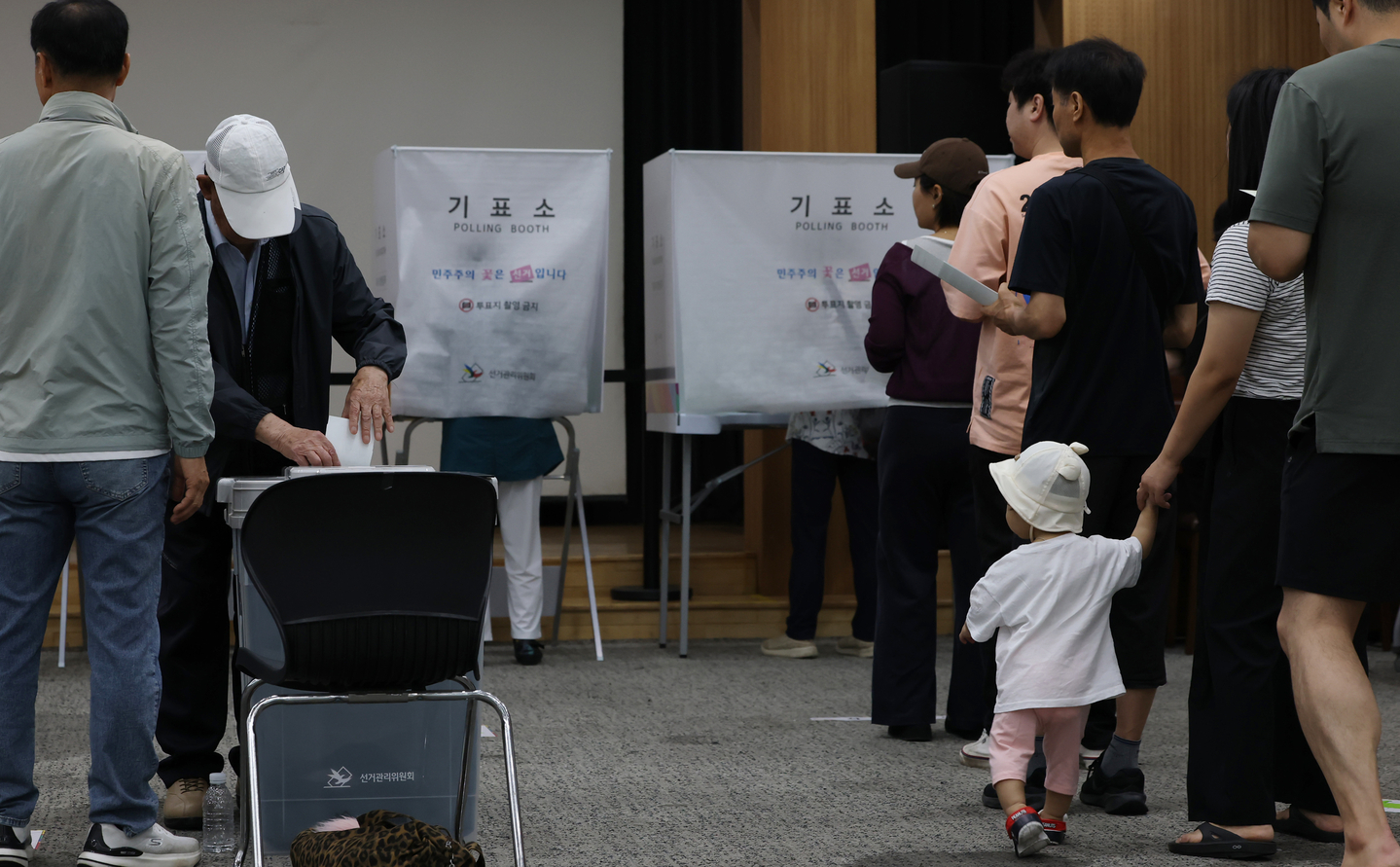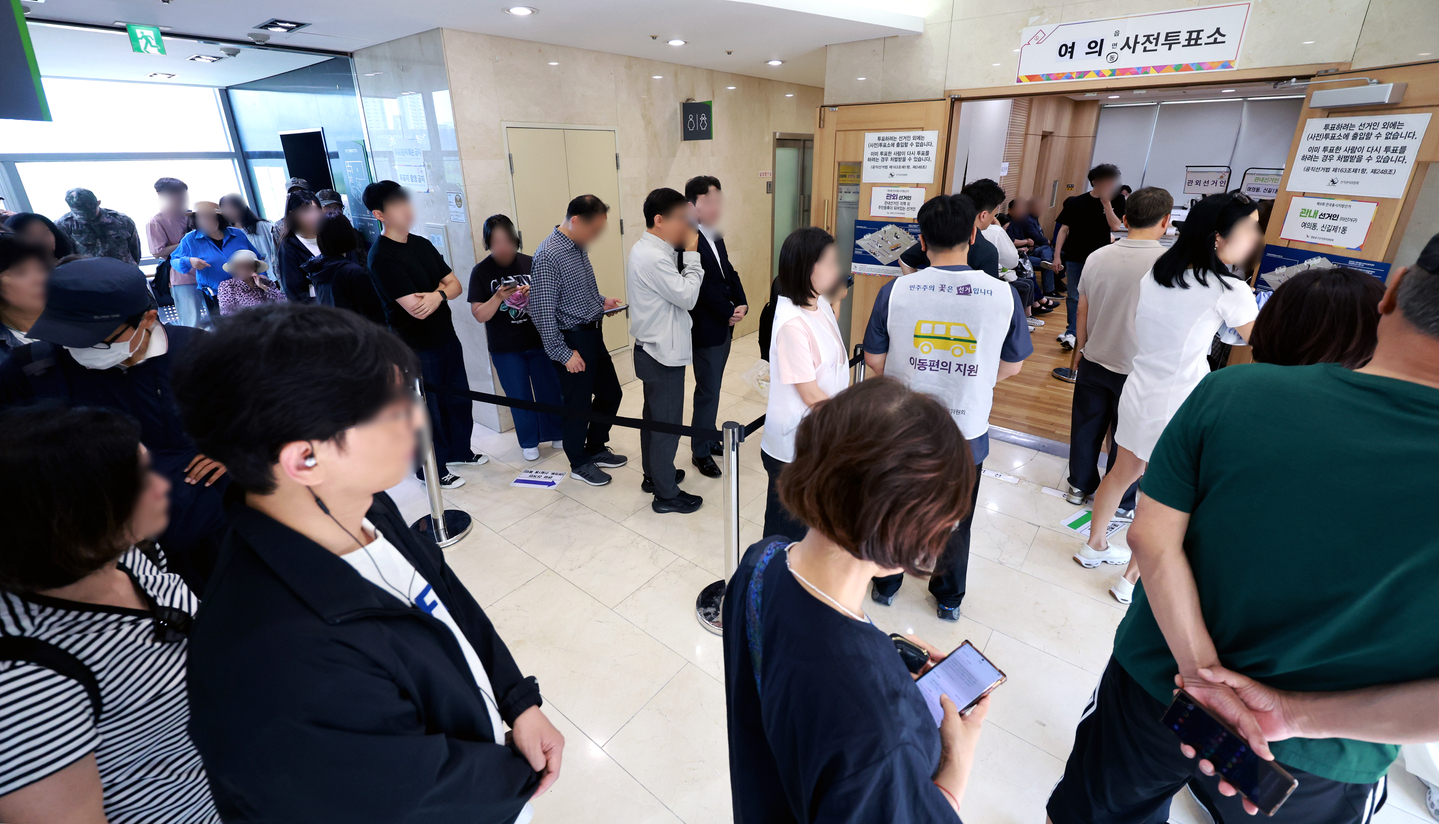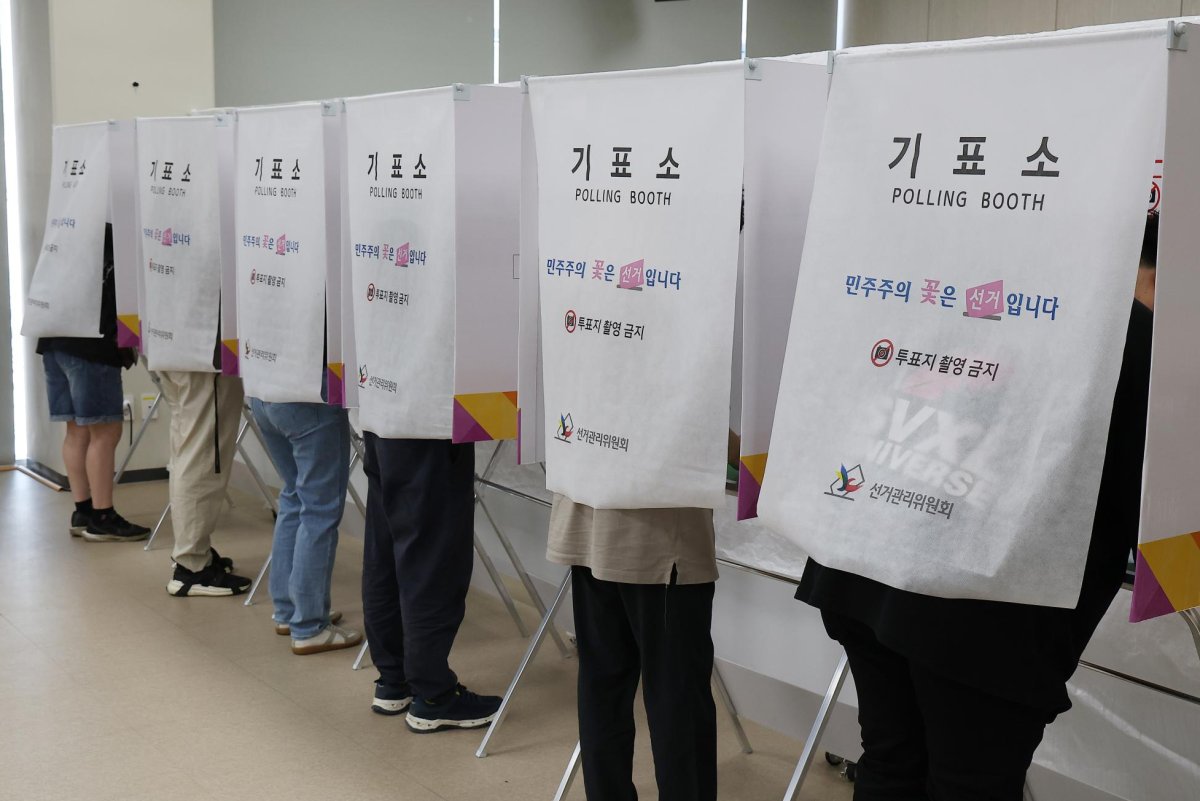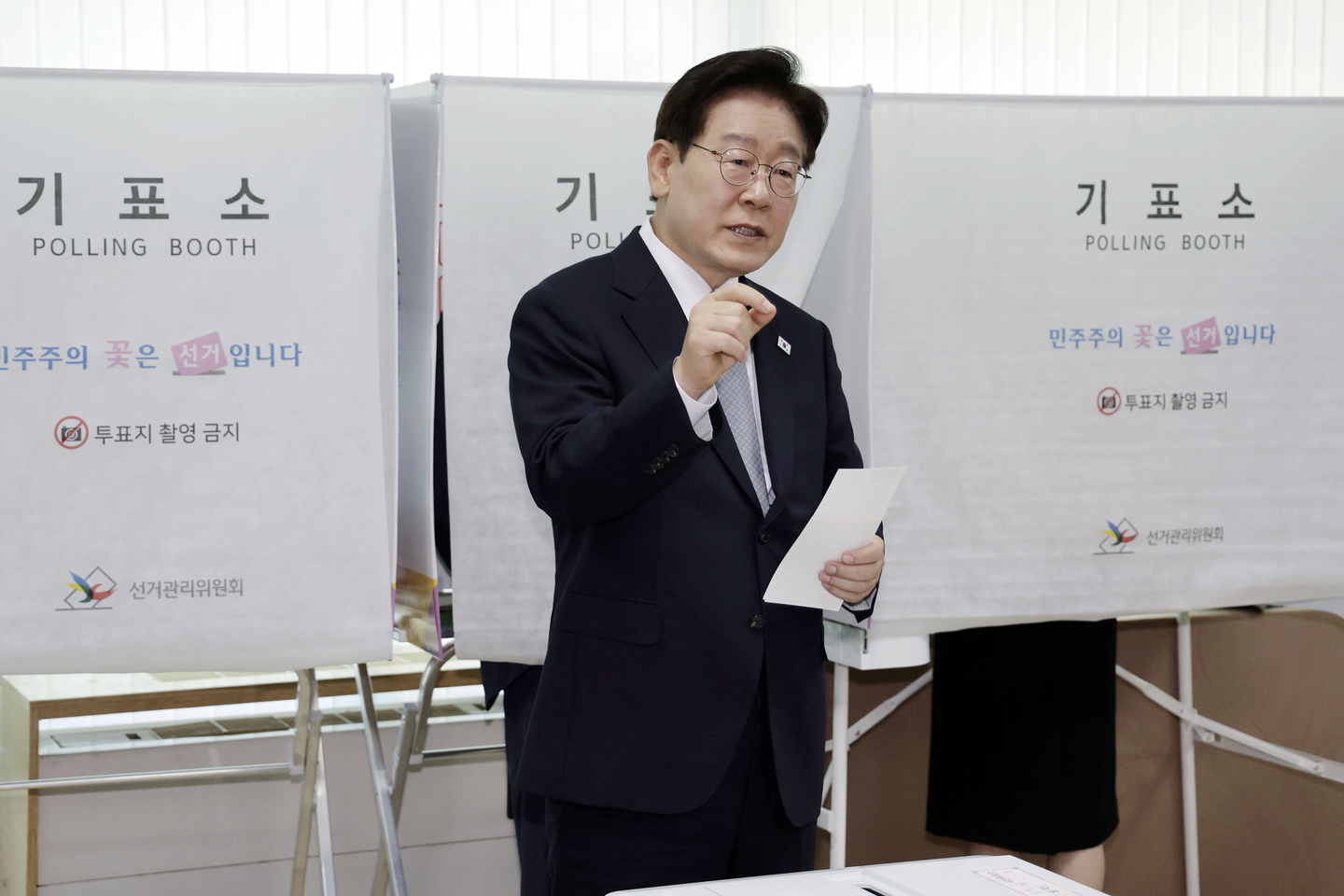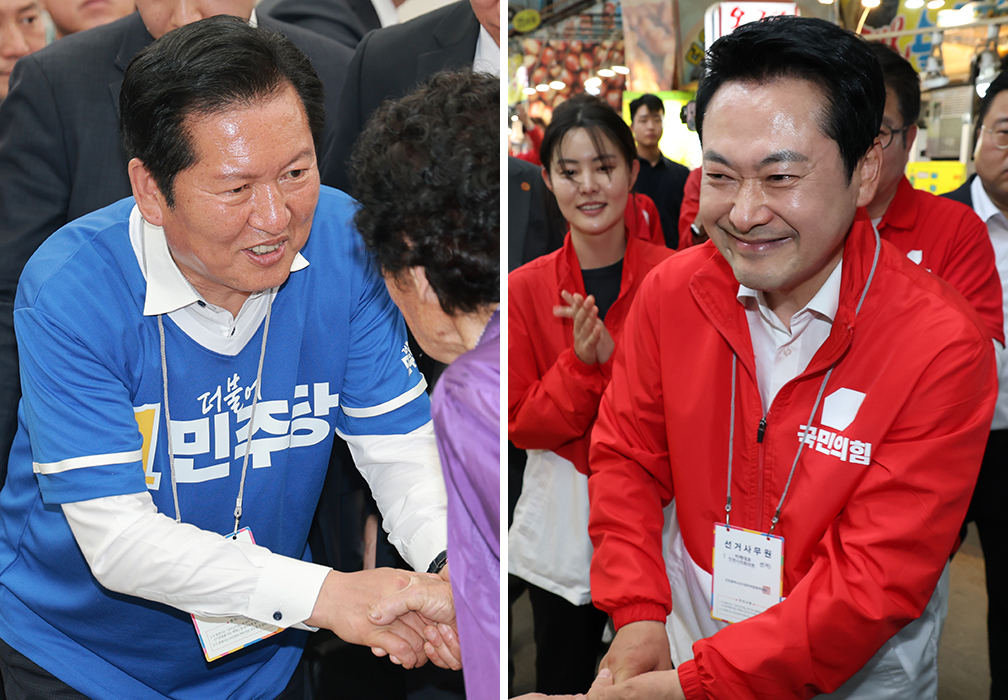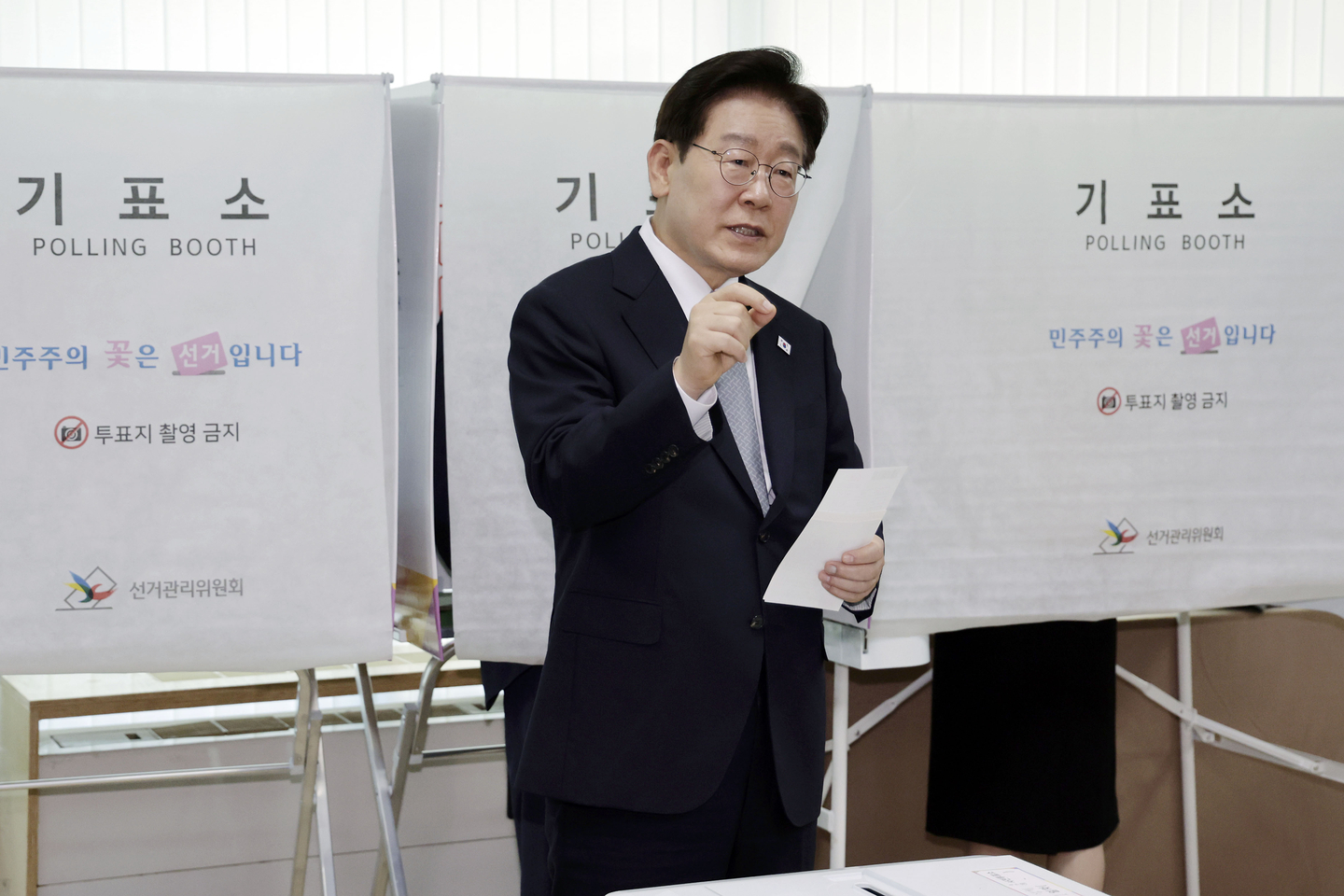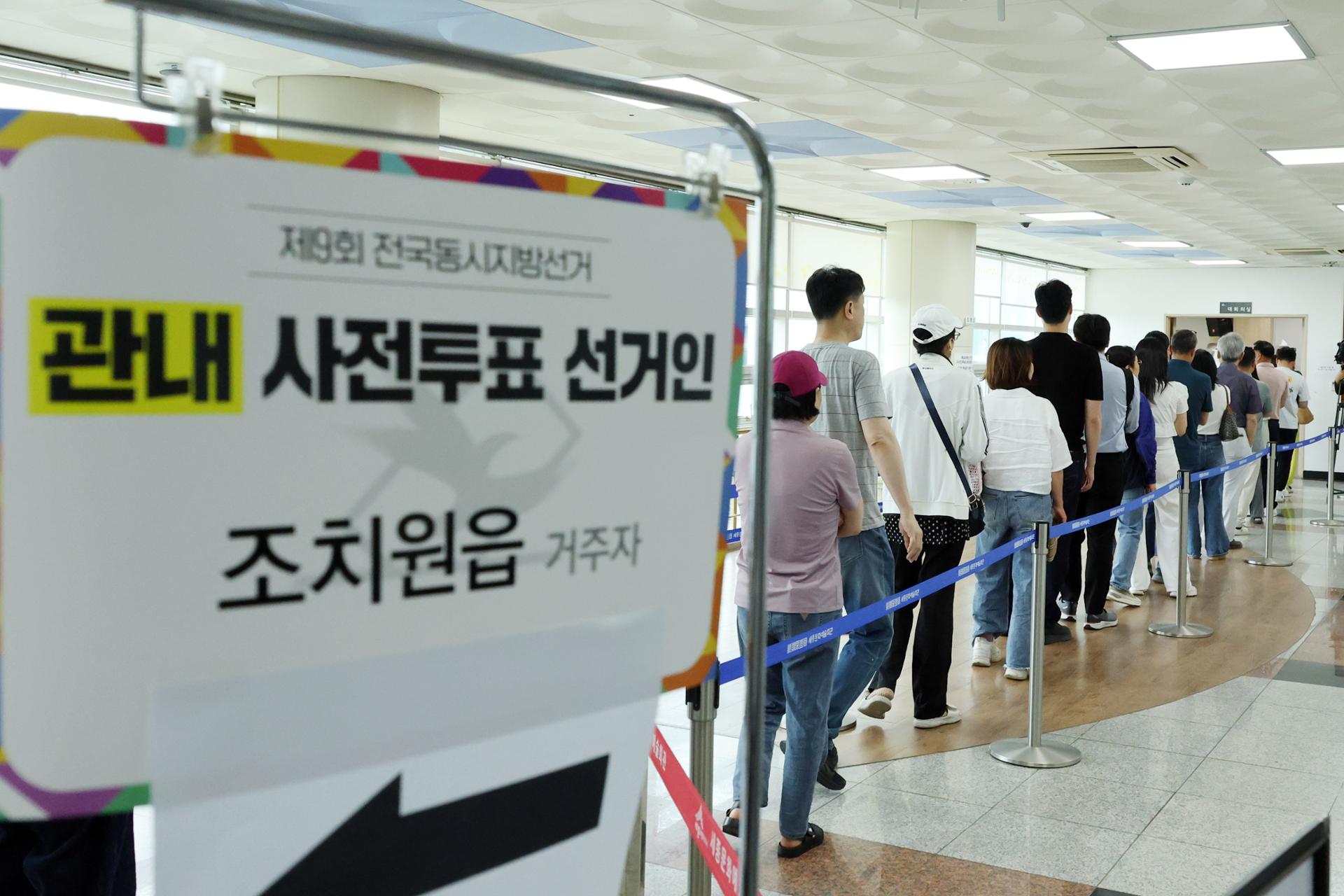
People line up for early voting at an integrated administration and welfare center in Sejong, Friday, the first day of early voting for the June 3 local elections. Yonhap
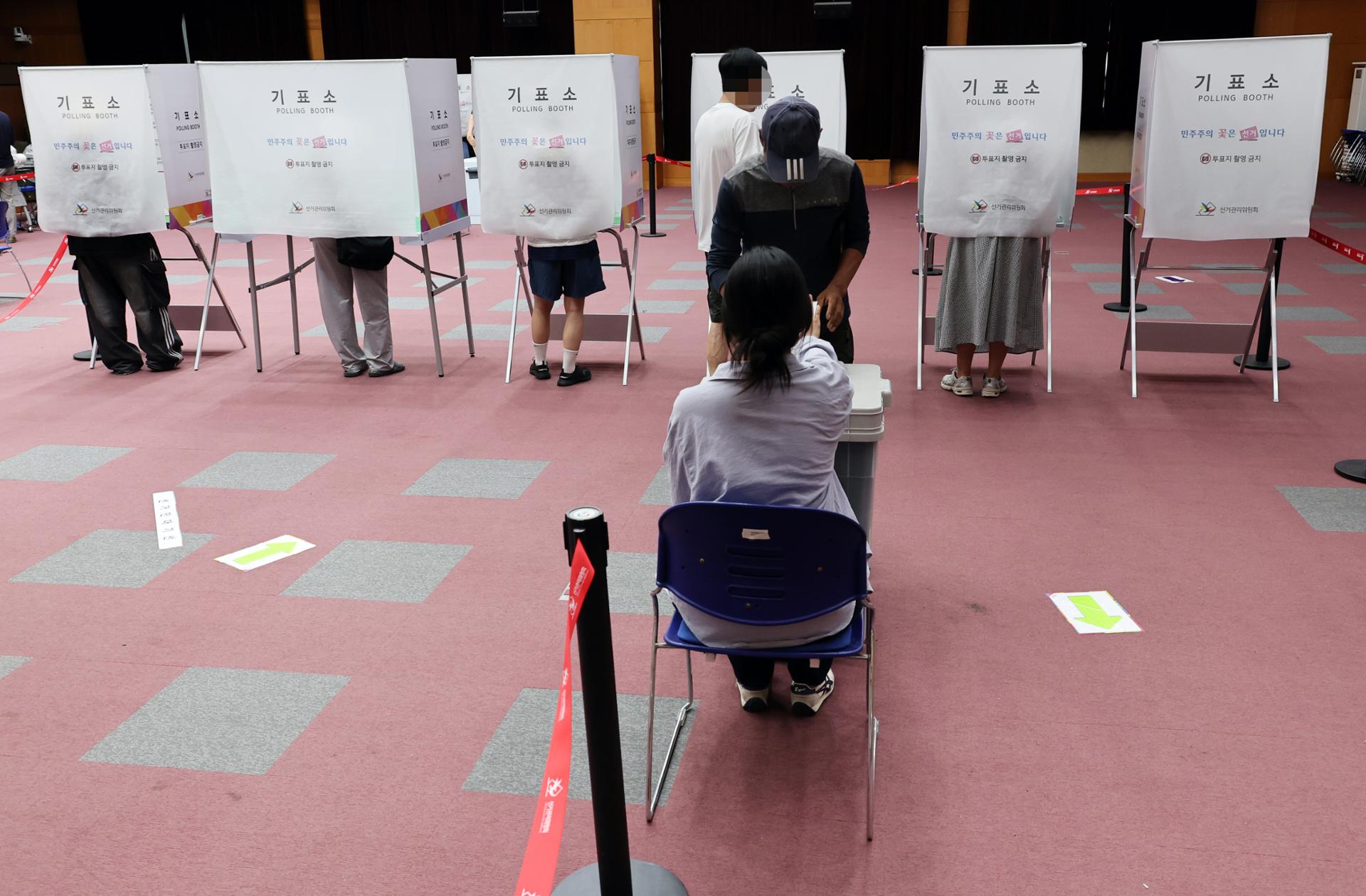
Two days of early voting for the June 3 local elections began Friday.
The early voting rate has been a predictor of voter turnout; in previous local elections, voters have increasingly cast their votes early, from 11.49 percent in 2014 to 20.14 percent in 2018 and 20.62 percent in 2022. According to a poll by the National Election Commission, 73.6 percent of voters said they planned to cast a ballot, reflecting a general sentiment of democratic enthusiasm rather than apathy. That enthusiasm should mean that election outcomes are not defined by ardent or extreme factionalism, or voters aligning blindly with party preference, but rather careful consideration of each candidate's policy pledges.
While high early voting turnout translated into an advantage for the liberal and progressive parties in the previous election, political watchers have cautiously suggested that this dynamic may no longer apply.
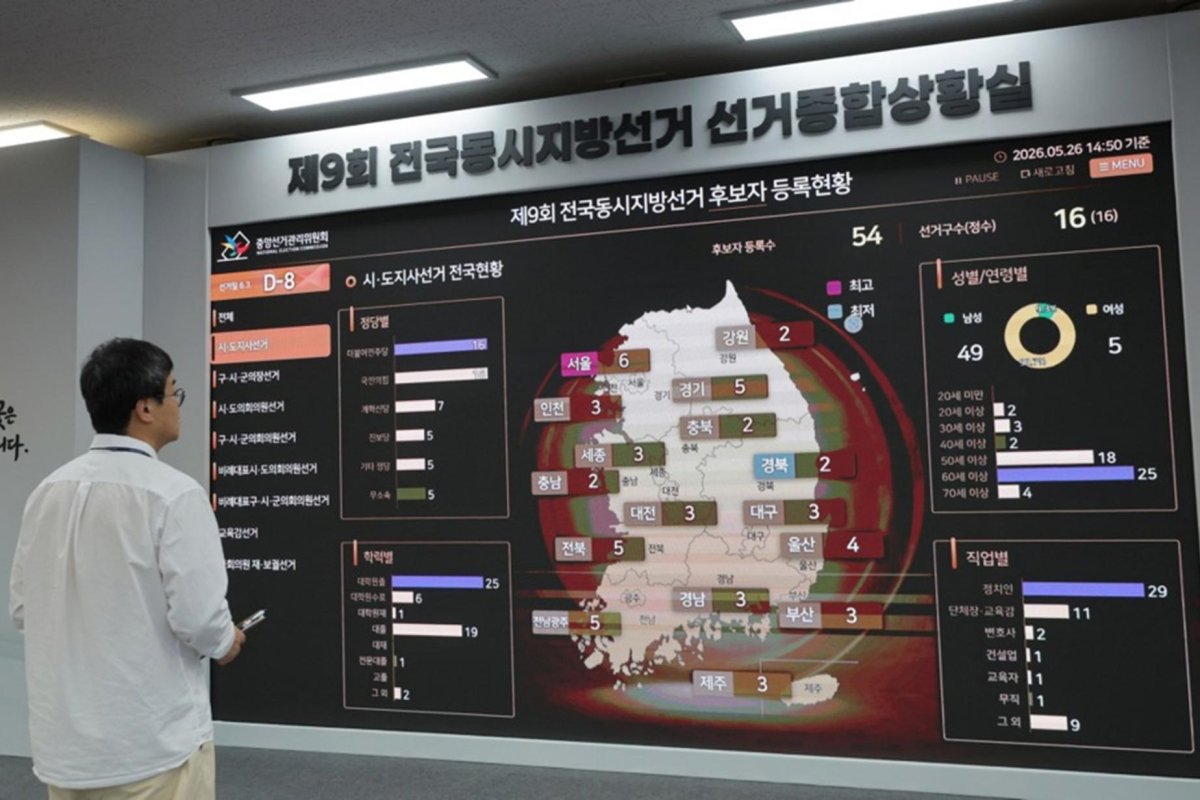
The ruling Democratic Party of Korea (DPK), main opposition People Power Party (PPP) and minor parties have fielded candidates for 16 metropolitan and provincial chiefs, 227 mayors and county heads, 804 metropolitan council members and 2,650 local council members, including 16 superintendents. A total of 14 vacant National Assembly seats will also be filled.