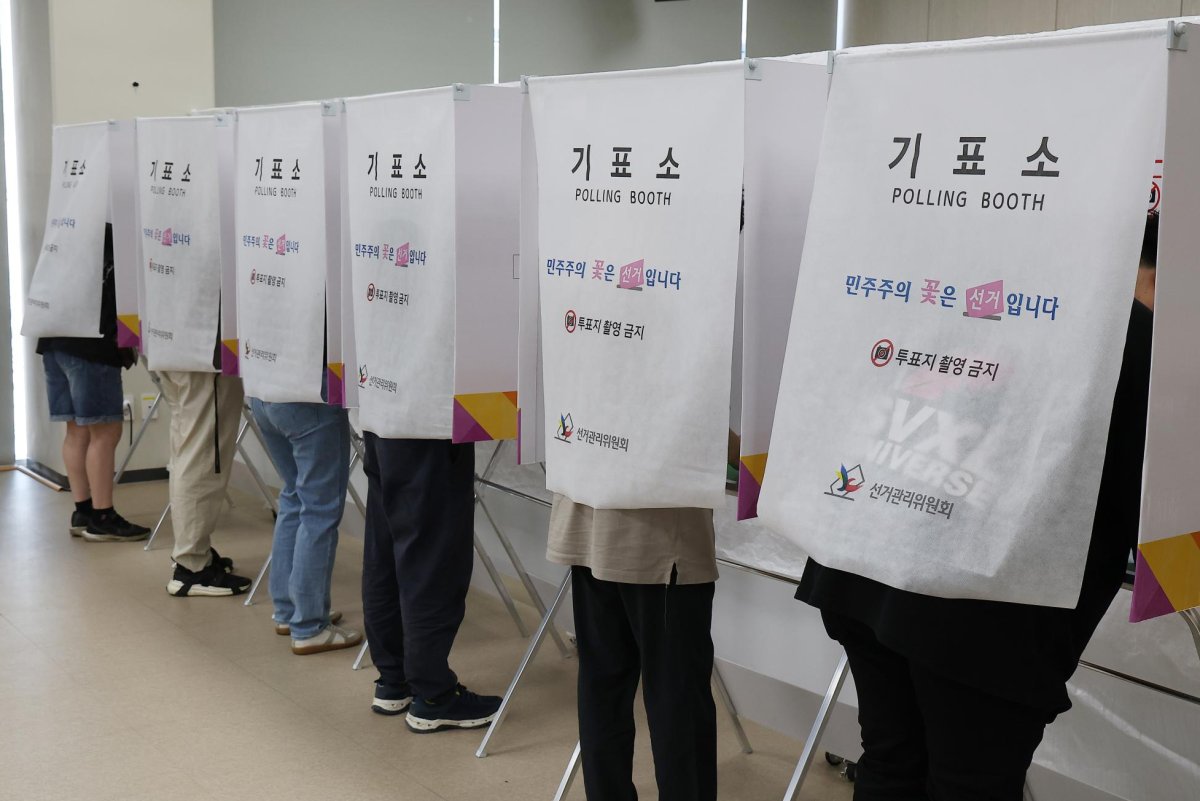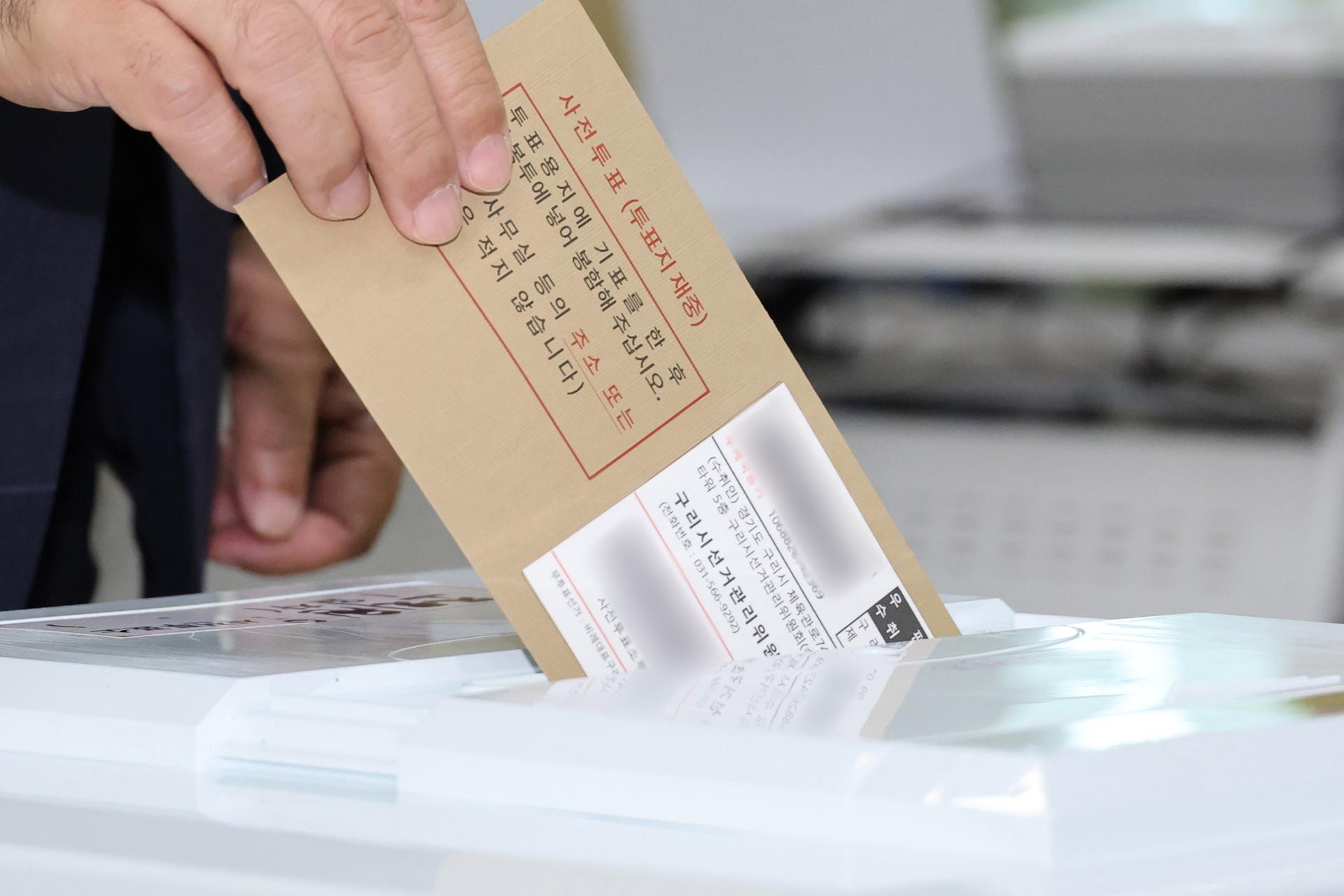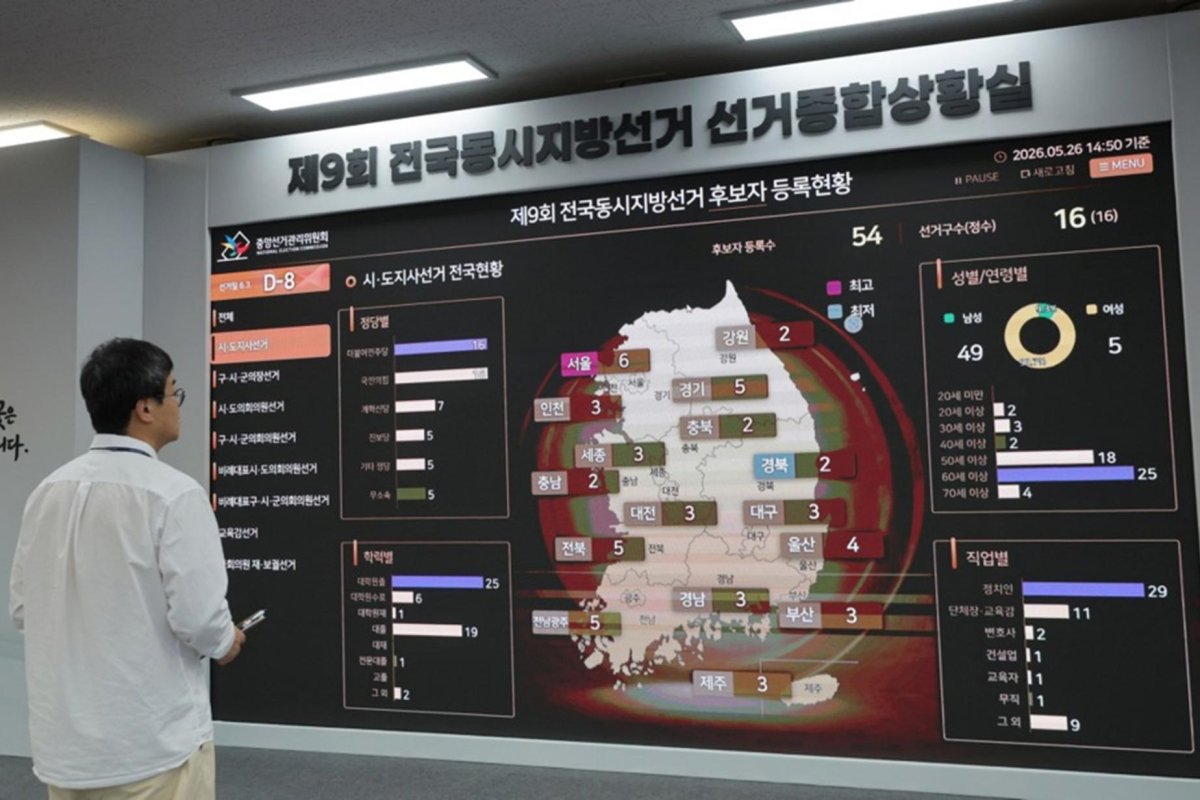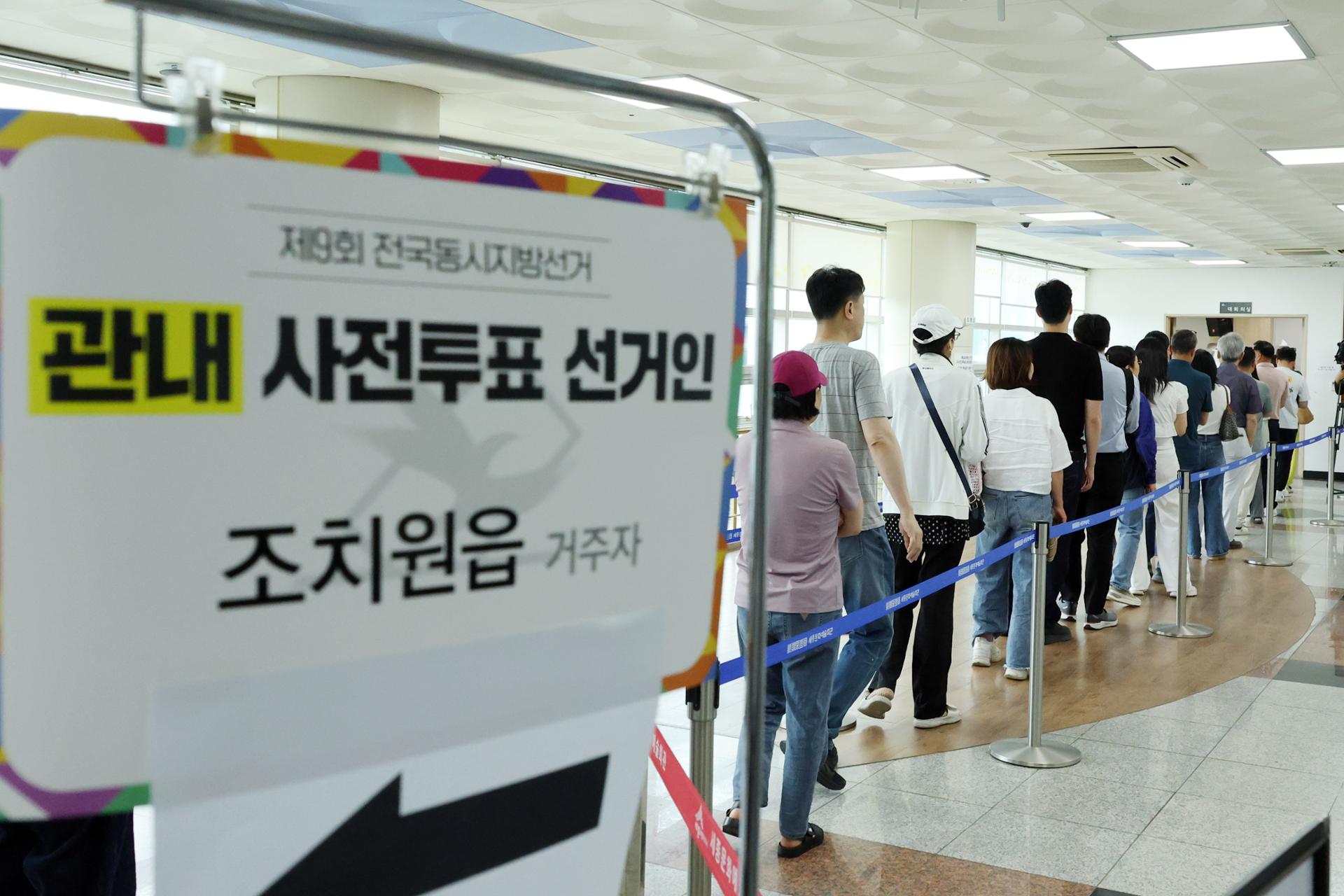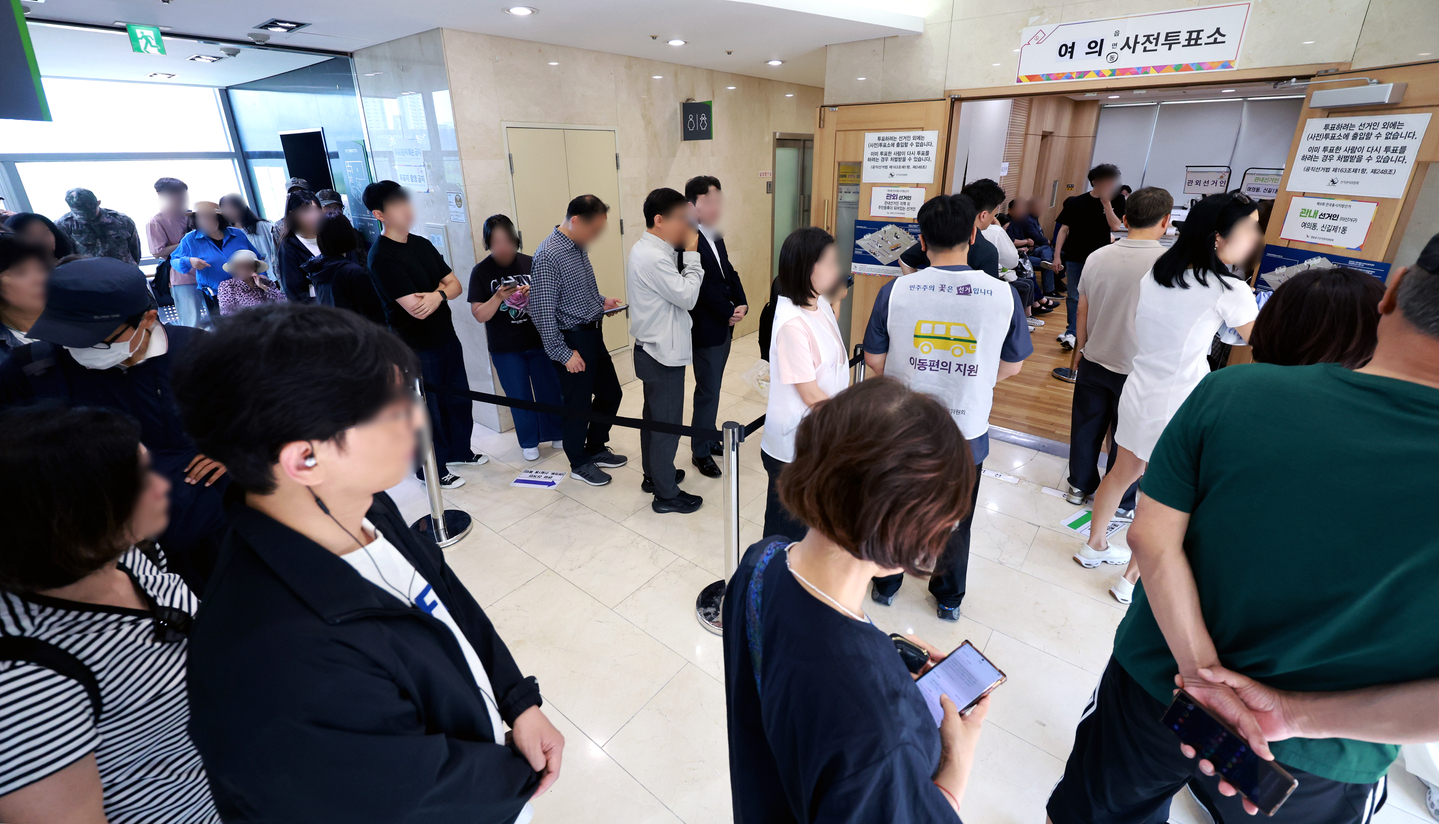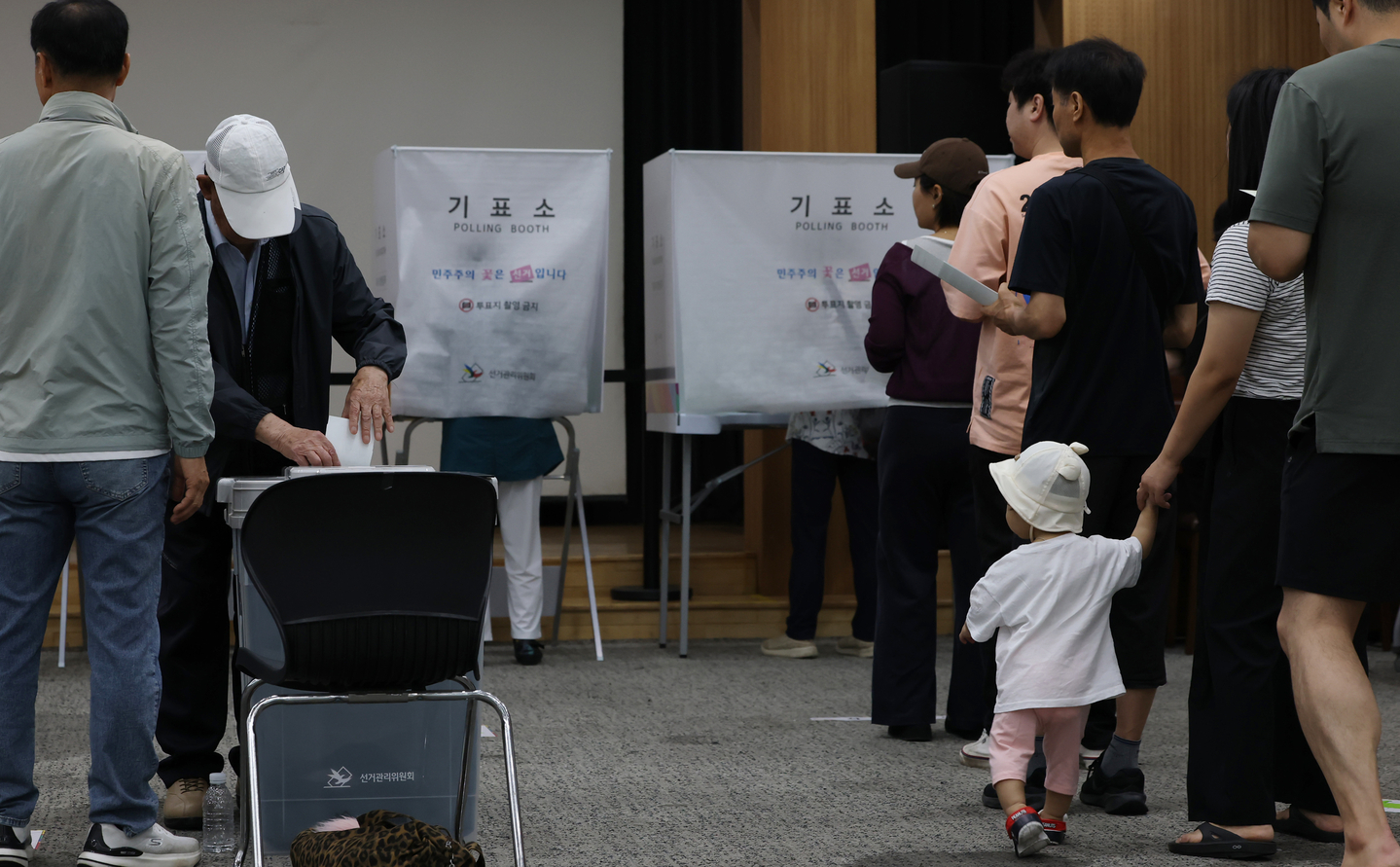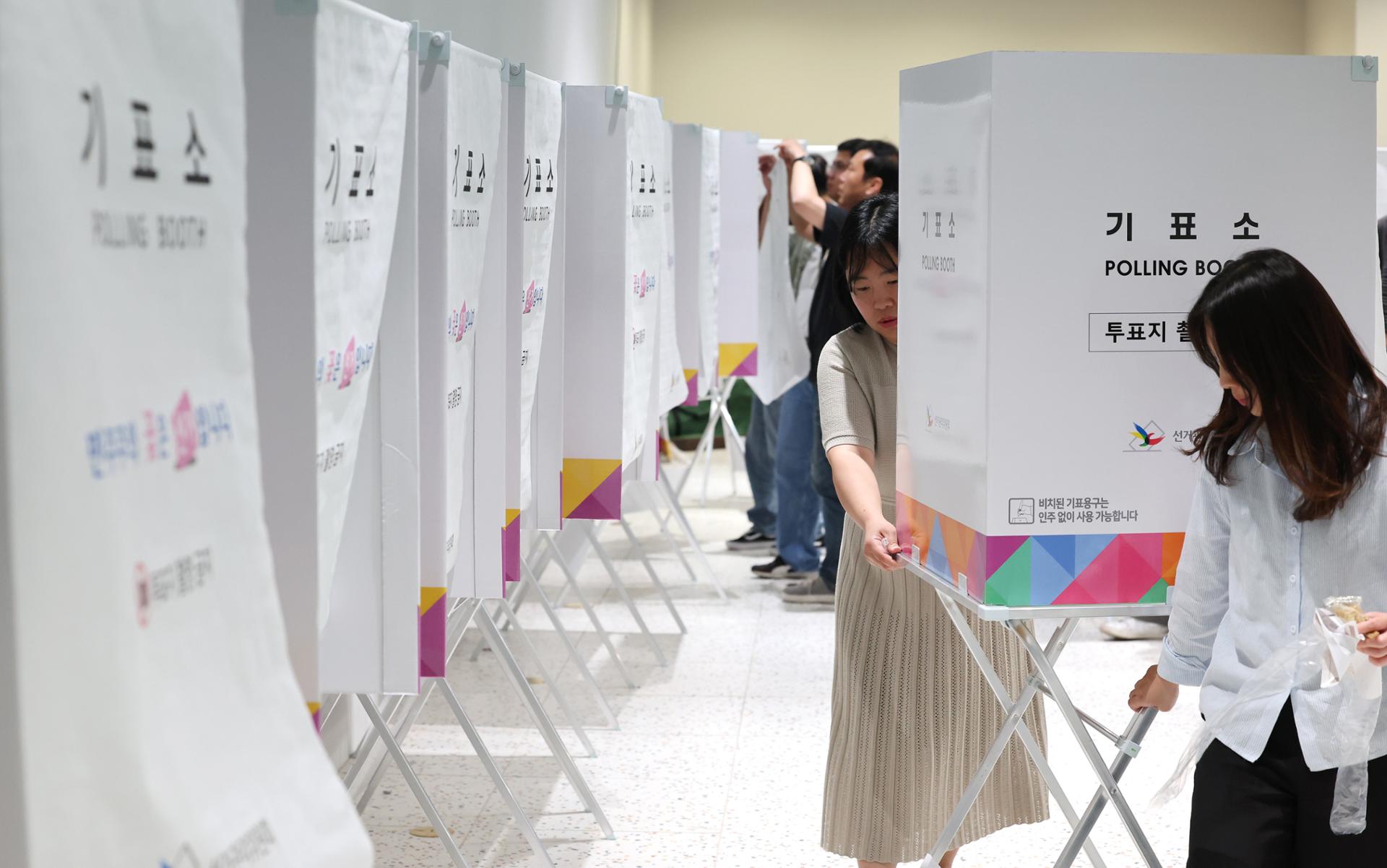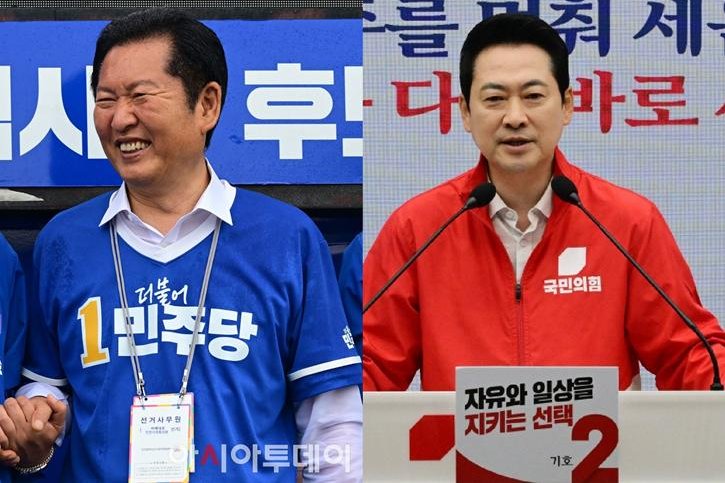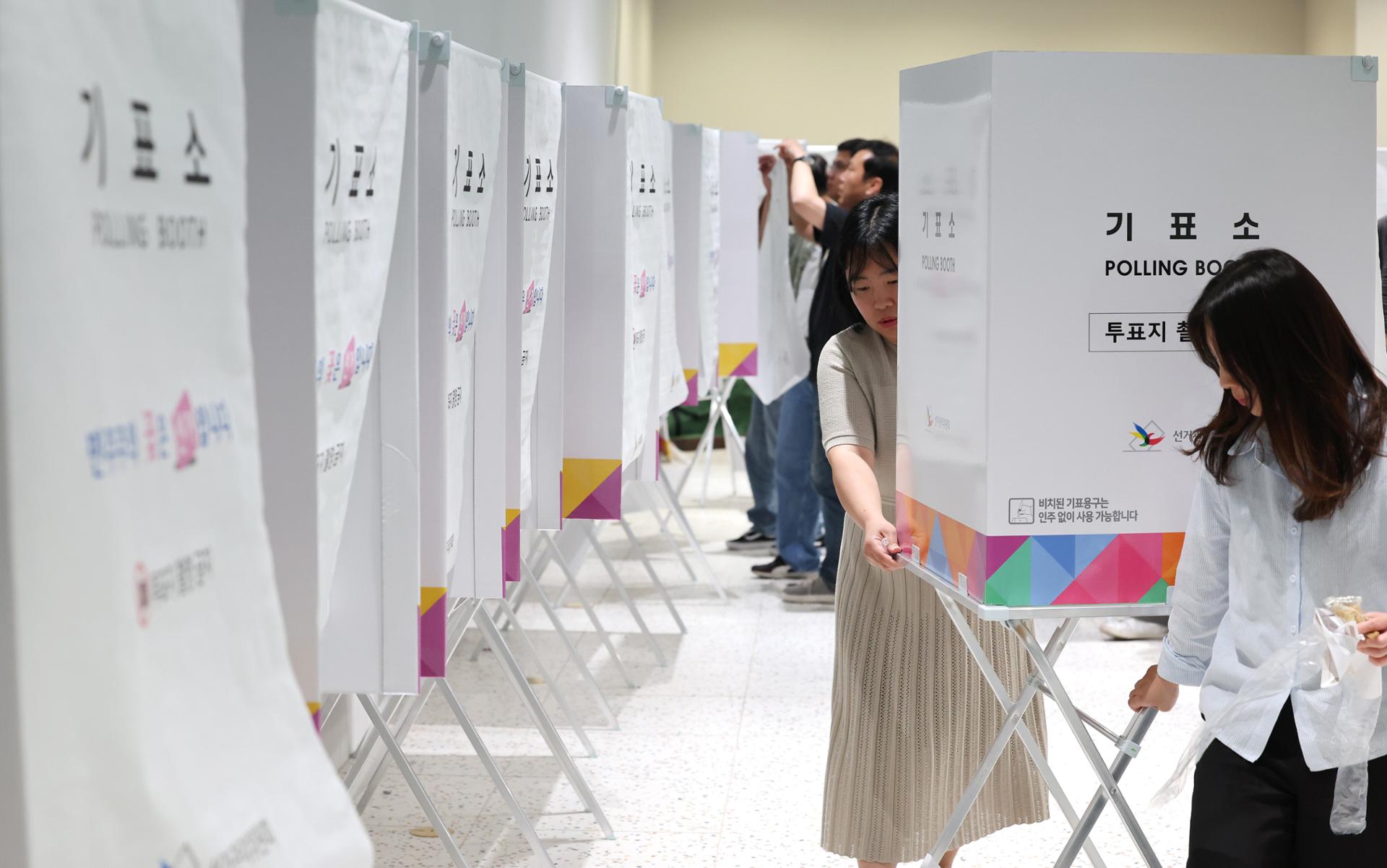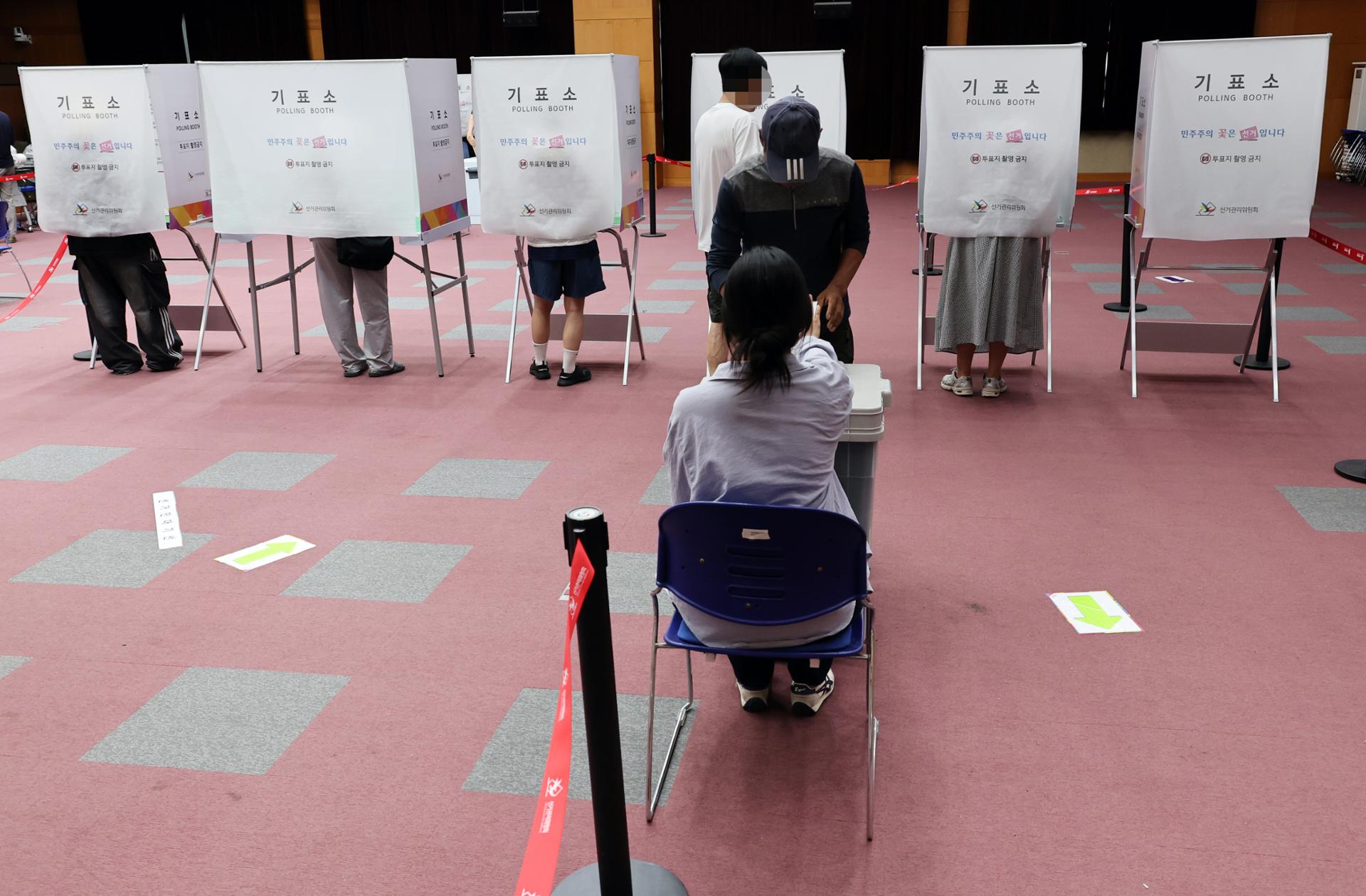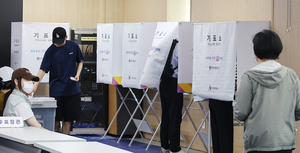
Voters cast ballots at an early voting station set up in Yeonsu-gu, Incheon, on Friday, the first day of early voting for South Korea’s ninth nationwide local elections. (Yonhap) South Koreans began two days of early voting Friday for nationwide local elections, as tightening races pushed rival parties into a final scramble to mobilize supporters and turn turnout into the defining fight of the campaign.Early voting turnout stood at 2.71 percent as of 10 a.m., slightly above the pace recorded in the 2022 local elections, according to the National Election Commission.The commission said 1,211,777 of the country’s 44.64 million eligible voters had cast ballots in the first four hours of voting after polls opened at 6 a.m. nationwide. The figure was 0.15 percentage point higher than the 2.56 percent recorded at the same time during the 2022 local elections.Early voting runs through Saturday, allowing voters to cast ballots at any designated polling station nationwide regardless of their registered residence. Voting is open from 6 a.m. to 6 p.m.South Jeolla Province posted the highest turnout at 6.37 percent as of 10 a.m., followed by North Jeolla Province at 5.04 percent, Gangwon Province at 3.51 percent and Gwangju at 3.34 percent, according to the commission.In contrast, Daegu posted the lowest turnout at 2.04 percent, followed by Gyeonggi Province at 2.18 percent, Incheon at 2.27 percent and Busan at 2.34 percent. Seoul’s turnout stood at 2.49 percent.The elections are widely viewed as the first major nationwide political test for President Lee Jae Myung and the ruling Democratic Party of Korea since the new administration launched on June 4, 2025.Political parties on both sides quickly sought to frame the early turnout battle around sharply contrasting economic narratives.Rep. Jung Chung-rae, the Democratic Party’s leader, on Friday urged voters benefiting from recent stock market gains to back the ruling party’s candidates.“If there are people who are pleased while looking at their stock accounts or seeing profits as the Kospi rises, I ask that they vote for Democratic Party candidate No. 1,” Jung said during a central election committee meeting in Seoul.“If you support President Lee Jae Myung, please vote for Democratic Party candidates.”The main opposition People Power Party countered by portraying the elections as a referendum on the government’s economic policies.“The public must send a stern warning against the government and ruling party’s wrong economic policies and arrogant unilateral rule,” Rep. Song Eon-seog, the People Power Party's floor leader, said during the party's meeting.The increasingly fierce turnout battle reflects growing concern inside the rival parties over a race that has tightened in several key regions in the final days of election campaigning.The Democratic Party had initially projected confidence in many metropolitan mayoral and gubernatorial races, but party officials now acknowledge that several contests have become highly competitive.Democratic Party secretary-general Jo Seoung-lae said Thursday that the party still viewed Seoul, Busan, Ulsan, South Gyeongsang Province, Daegu and North Jeolla Province as battleground regions.“The side that turns out more voters wins,” Cho told reporters, urging party supporters to cast their ballots.The People Power Party, meanwhile, has intensified efforts to consolidate conservative voters in the southeastern Yeongnam region that encompasses the North and South Gyeongsang provinces, Busan, Daegu, and Ulsan.Rep. Jung Hee-yong, the party’s secretary-general, argued that higher turnout would favor conservatives.“If turnout rises, it is absolutely advantageous for the People Power Party,” Jung said during a news conference on Thursday. “We will appeal to voters on the need to properly check the administration.”The election has also drawn attention to the growing number of foreign residents eligible to participate in local races.Under South Korean law, foreign nationals aged 18 or older who have held permanent residency visas for at least three years may vote in local elections, though they are barred from presidential and parliamentary elections.The number of eligible foreign voters reached 151,532 this year, up 18.7 percent from 127,623 in the 2022 local elections, according to data provided by the NEC and the Ministry of the Interior and Safety.
Local election early voting opens, turnout takes center stage
South Koreans began two days of early voting Friday for nationwide local elections, as tightening races pushed rival parties into a final scramble to mobilize s
TL;DRAI
South Korea began early voting Friday for local elections; 2.71% turnout by 10 a.m., slightly above 2022 (2.56%). The race is President Lee Jae Myung's first national test since June 2025; rival parties frame it as a verdict on economic policy direction.
662 words~3 min read