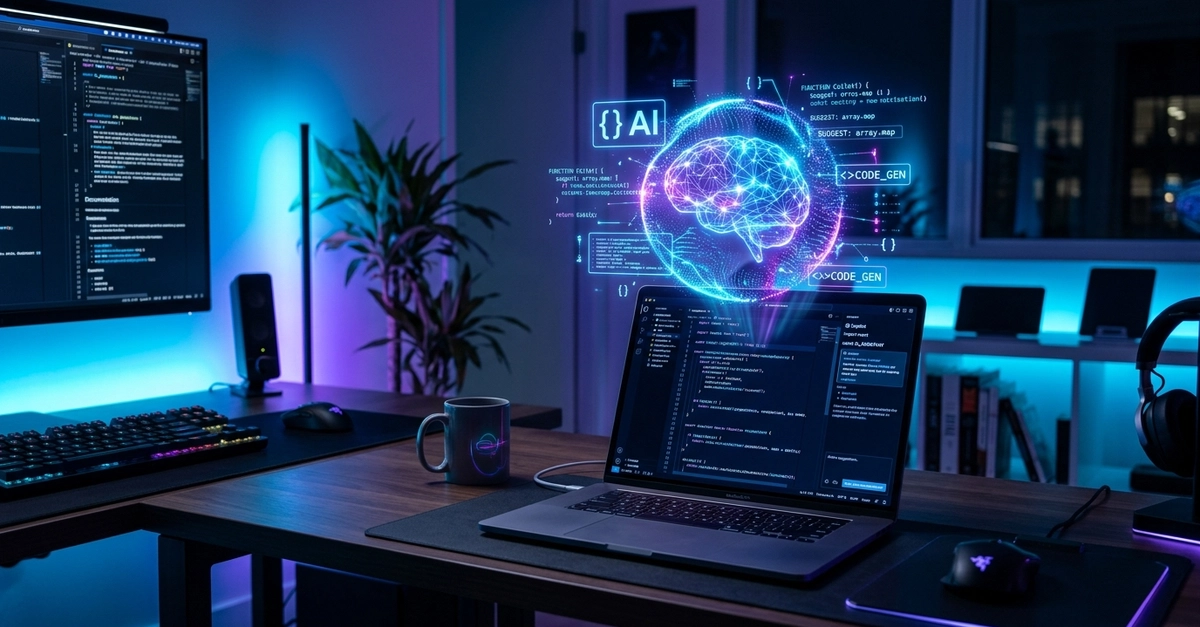
The proliferation of AI-driven development tools like GitHub Copilot and Gemini has fundamentally transformed the speed at which software is written. For experienced engineers, these tools are immense productivity multipliers that handle boilerplate code and automate repetitive tasks seamlessly, allowing them to focus on high-level architecture. However, for engineering students and novice programmers, over-relying on generative AI can quickly turn into a dangerous crutch that halts cognitive development and logical growth.
Copying and pasting code blocks generated by AI without analyzing their structural behavior creates a fragile foundation. Beginners who skip the foundational struggle of debugging simple syntax errors often find themselves completely paralyzed when the AI introduces a subtle, logical bug that requires deep systems knowledge to fix. The industry in 2026 does not need programmers who merely act as a bridge between an AI prompt and a text editor; it needs engineers who understand the mechanics behind the code.
To survive in an AI-augmented industry, the next generation of developers must treat artificial intelligence as a personalized mentor rather than a shortcut to finish assignments. This critical and interactive approach to utilizing modern tools is heavily championed within the technology modules at https://unair.ac.id/. Students are trained to write their own logical algorithms first, then leverage AI to review their work, explain complex error stacks, or suggest optimization strategies, ensuring that human intelligence remains the primary architect of the system.