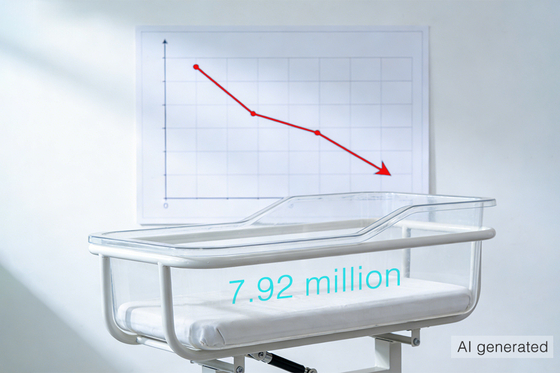
China's accelerating population decline in 2025 has intensified concern about the country's demographic crisis and its implications for economic stability and growth. According to the National Bureau of Statistics, China's population fell by 3.39 million to 1.40489 billion at the end of 2025, the largest annual drop in recent history. The number of births decreased to 7.92 million, the lowest in the modern era, down by 1.62 million from the previous year's total of 9.54 million. This marks the fourth consecutive year of population contraction and the pace of decline has been accelerating since it began in 2022, when the population dropped by 850,000, followed by reductions of 2.08 million in 2023 and 1.39 million in 2024. [para. 1][para. 2][para. 3]Demographers have long warned that China's shrinking workforce and rapidly aging society could severely strain government pensions and social welfare systems while dampening consumer demand, posing significant obstacles to sustained economic growth. The gap between births and deaths has grown wider: in 2025, there were 7.92 million births (a birth rate of 5.63 per 1,000 people) against 11.31 million deaths (a death rate of 8.04 per 1,000), yielding a natural population growth rate of negative 2.41 per 1,000. This widening deficit hints at deepening demographic headwinds despite government attempts to encourage higher birth rates. Additionally, the male population was reported at 716.85 million, while the female population was 688.04 million, leaving a sex ratio of 104.19 men for every 100 women. [para. 4][para. 5][para. 6]The sharp decline in newborns had been forecast by experts, though the actual scale of the drop surpassed even pessimistic expectations. In 2024, births saw a brief revival due to the cultural appeal of the Year of the Dragon and the end of pandemic-era constraints, but the underlying trend remains downward. A record low in marriage registrations in 2024 foreshadowed the ongoing decline in births in 2025. Huang Wenzheng, a leading demographer, observed that China's total fertility rate—average children per woman—plummeted from 1.1 in 2024 to about 0.96 in 2025. This is well below the 2.1 replacement rate necessary for population stability, and even under 1.5, a level often cited as a “warning line” for demographic traps that are hard to reverse. [para. 7][para. 8][para. 9][para. 10][para. 11][para. 12]Efforts to reverse population decline, such as subsidies and incentives, have so far been too weak to stem the negative momentum, according to Huang. Age demographic comparisons show a country getting old before it has become rich: 60.6% of the population is of working age (16-59), while 23% is 60 or older, with those 65 and older making up 15.9%. China surpassed the international threshold for a “moderately aged” society (20% of the population aged 60+) in 2023, with projections suggesting this group could reach about 420 million—over 30% of the population—by 2035, qualifying China as a “heavily aged” society. [para. 13][para. 14][para. 15]Experts argue that China’s demographic issues go beyond numbers, pointing to structural imbalances that will lead to future labor shortages and increased social welfare burdens. Huang warns that unless fertility increases, the birth-to-death ratio could reach 7:1 or 8:1 within decades, potentially spelling “demographic collapse.” He advocates for aggressive action, such as issuing government bonds for substantial fertility subsidies and creating dedicated agencies to address demographic change, since individuals alone cannot counter the broader societal currents. [para. 16][para. 17][para. 18][para. 19][para. 20][para. 21][para. 22][para. 23]AI generated, for reference only
China’s Population Decline Accelerates as Births Hit Modern-Era Low in 2025
The number of newborns fell sharply in 2025 after a temporary rebound the prior year, underscoring the challenge Beijing faces in reversing a four-year trend of contraction
564 words~3 min read