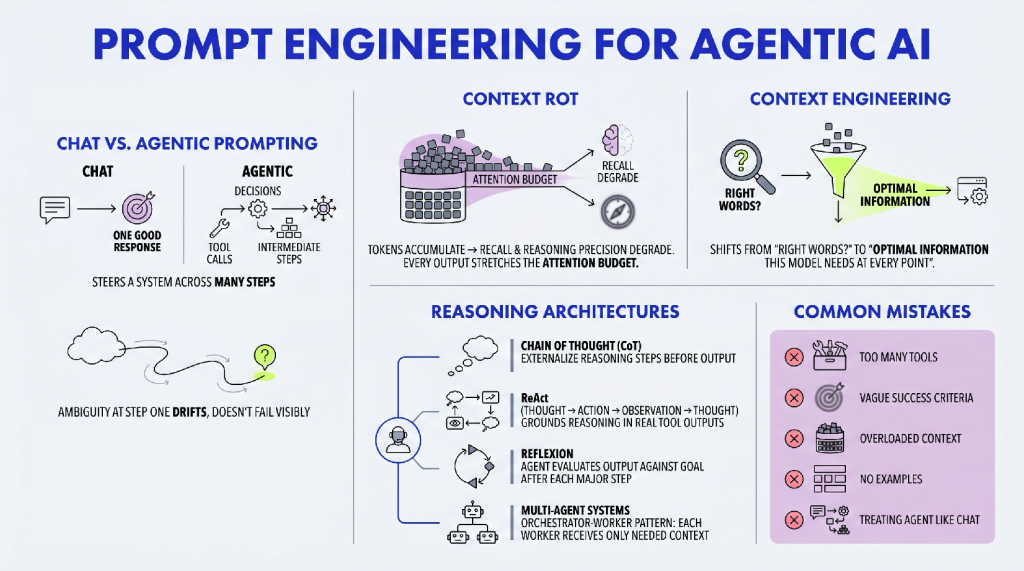
Agentic AI coding tools are transforming how we build software. But they share a fundamental constraint: context windows are finite, and as chat sessions grow, AI performance degrades, a phenomenon Anthropic calls context rot. The model loses its grip on early instructions, leading to a frustrating "fix-it loop" where the agent fixes one thing but breaks another.
Most of us prompt an agent, let it write code, review it, and repeat. This works beautifully for prototypes. But when you need to build a stable, full-featured product with hundreds of mission-critical acceptance criteria (AC), "vibe-coding" breaks down.
The reality is that you get better behavior from agents the same way you get it from humans, by explicitly capturing what good and bad look like, and checking against it.
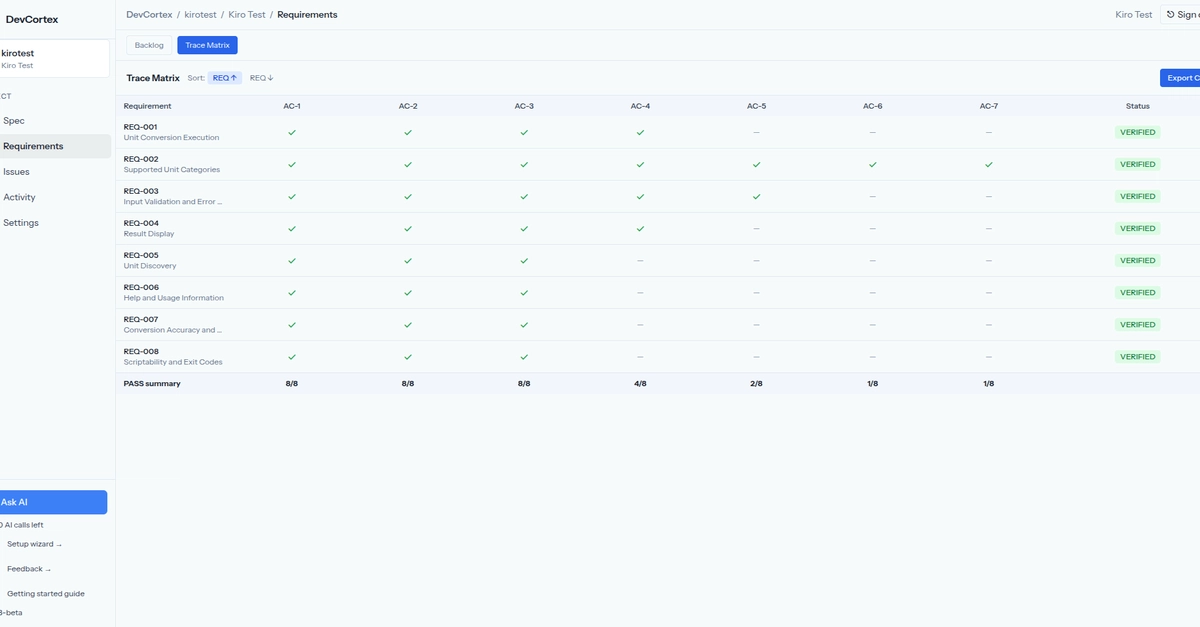
Coming from a systems engineering background in regulated industries, I knew we needed to stop treating agents like conversational chat buddies and start treating them like engineering assets. That's why I built DevCortex: a purpose-built structured intelligence layer that brings systems engineering discipline to agentic workflows.
What is DevCortex?