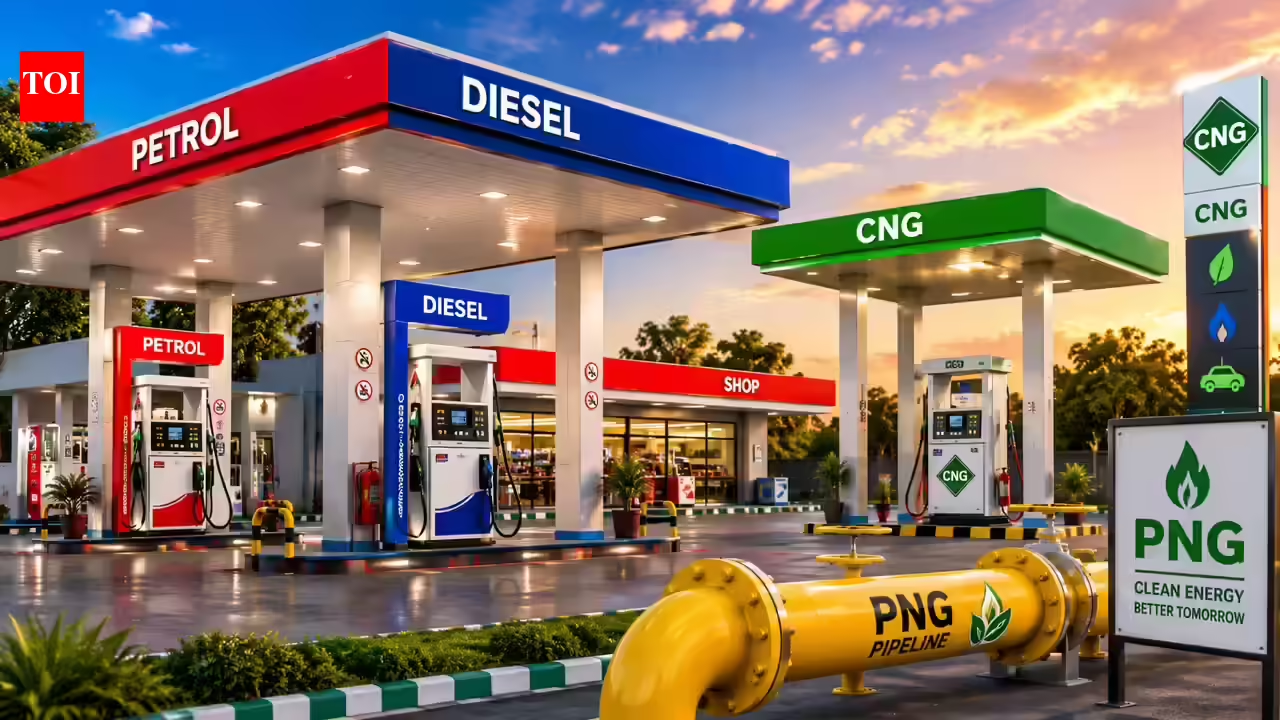
Petrol, diesel, and CNG prices have shot up significantly across India over the last few days, with the oil marketing companies citing reasons like the geopolitical crisis in West Asia impacting the decision. With the petrol prices well above the ₹100 a litre mark and the diesel price too around the century mark, the Indian automobile owners have been burdened further. Tata Motors, a key player in the Indian passenger and commercial vehicle market, is expecting the automobile demand in the country to see an impact due to the fuel price hikes. Shailesh Chandra, MD & CEO of Tata Motors Passenger Vehicles, said that the impact of the fuel price hike on overall consumption needs to be monitored to gauge its effect on the automobile demand in India.Tata Motors MD & CEO Shailesh Chandra believes the rising petrol and diesel prices would impact consumer sentiment and automobile demand in India.Rising prices of petrol, diesel, and CNG remain a key concern for the auto industry, with the motor fuels having increased four times in the last 10 days, making it difficult to assess the eventual impact on consumer sentiment and demand, Chandra said on the sidelines of the launch of the 2026 Tata Tiago and Tiago EV. "Even fuel prices are evolving. Right now, in the last 10 days, there are four increases. So, you do not know where this is going to end. That's the first layer of what can impact and be a headwind to the industry," PTI quoted Chandra saying, while he also added that the effect could vary across segments, being more pronounced in some.Higher diesel prices could hurt consumer sentimentThe diesel prices have increased significantly over the last few days, keeping pace with petrol. Considering diesel is the primary fuel for the logistics and transport sector in India, its price hike is expected to result in the cost increase for various other necessary items required for daily livelihood, shooting up inflation.With the cars being large ticket products, and still considered as luxury products by many, the inflation will impact the consumer sentiment adversely. Speaking on this, Chandra cautioned that higher diesel prices could have a multiplier effect on inflation, which may influence consumer sentiment and spending patterns. This may eventually hurt automobile sales in India in the coming months.Pointing to a slowdown in the used car market as a sign of weakening consumer sentiment, the Tata official noted that people may begin cutting back on spending to save cash amid inflation concerns, a mindset that could deepen if price pressures rise further.Too early to change FY27 outlookEarlier this month, Chandra said that he was confident about the country's passenger vehicle industry clocking more than 10% growth in FY2027, unless there is a significant geopolitical impact on petrol and diesel prices. Now, despite concerns over the rising fuel prices and inflationary pressures, he said that the company continues to remain optimistic about its growth prospects, aided by a strong product pipeline. "Given a very strong product cycle for us in the last six months, which will get a full year this year, and multiple launches that we are going to do this year, there is no doubt that we will have industry-meeting growth. High double-digit growth is definitely on the cards for us," he reportedly said.However, Chandra said that it was too early to assess whether the evolving fuel price situation would materially impact demand. "I can't say anything because today I don't see a significant change in my demand pattern," he added.EVs continue to get tractionResponding to another query, over the demand for electric vehicles, Chandra said the demand for EVs has shown strong momentum, with bookings rising sharply in recent months. According to him, EV demand had already begun gaining traction even before the recent series of fuel price hikes, possibly in anticipation of higher running costs. "If I am seeing for the last two months, I was just comparing the monthly bookings that we get in electric vehicles prior to February. And what we are getting today, it is 2-2.5 times more," he said, while adding, "Already, even before these fuel price increases, it had started gaining traction, possibly in anticipation." Chandra further said that EVs have a very compelling proposition, and they should continue to grow in multiples, not in a few double-digit percentages.Ready for capacity expansionSpeaking about increasing the capacity for electric cars, Chandra said that the company's in-house capacity is fungible between powertrains for the same model. "So if there are power train shifts, then it is easy to manage internally. Because I can shift the capacity of say petrol to EV and so on. But EV, therefore, internally we do not have a problem of enhancing the production," he said.However, he also said the company would need to work with suppliers on agreed supply schedules ranging from three months to a year, depending on requirements. "So broadly speaking, in the next three to four months, we should be able to enhance capacity, say at least 50 per cent more than what we are today. Right now, we are averaging around 10,000 a month for EVs," Chandra said, adding, “10,000 a month is expected to go to 50,000. That is what we would try to target. I think we are working out the details."
Tata Motors sees fuel price hikes possibly impacting India's auto demand
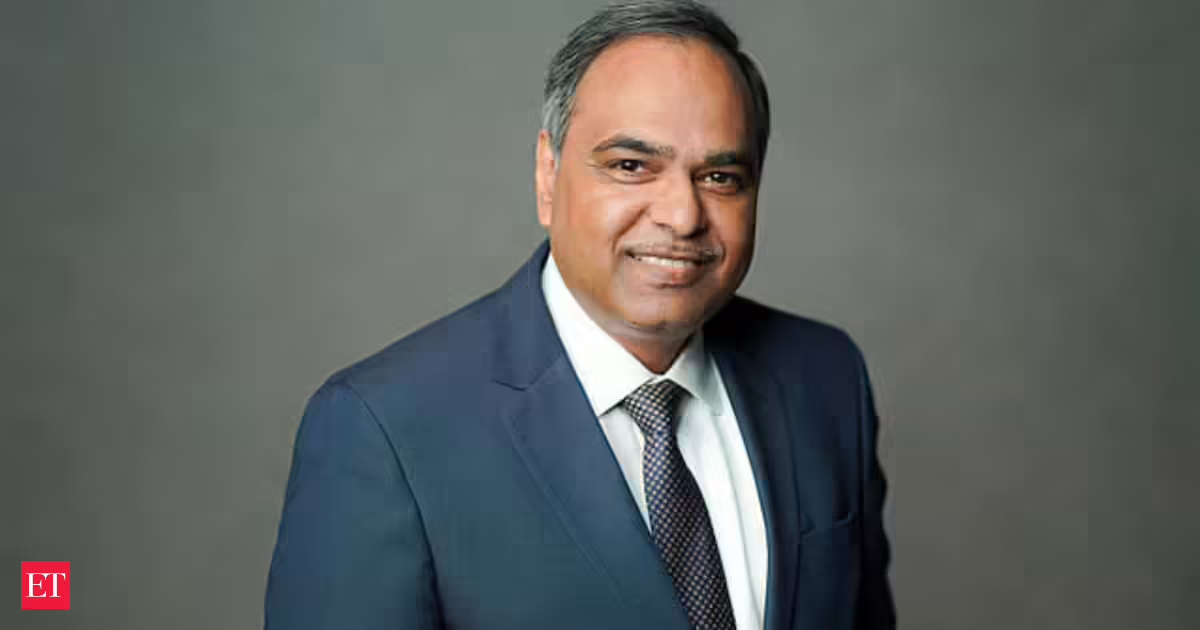
Tata Motors MD & CEO Shailesh Chandra believes the rising petrol and diesel prices would impact consumer sentiment and automobile demand in India.
883 words~4 min read