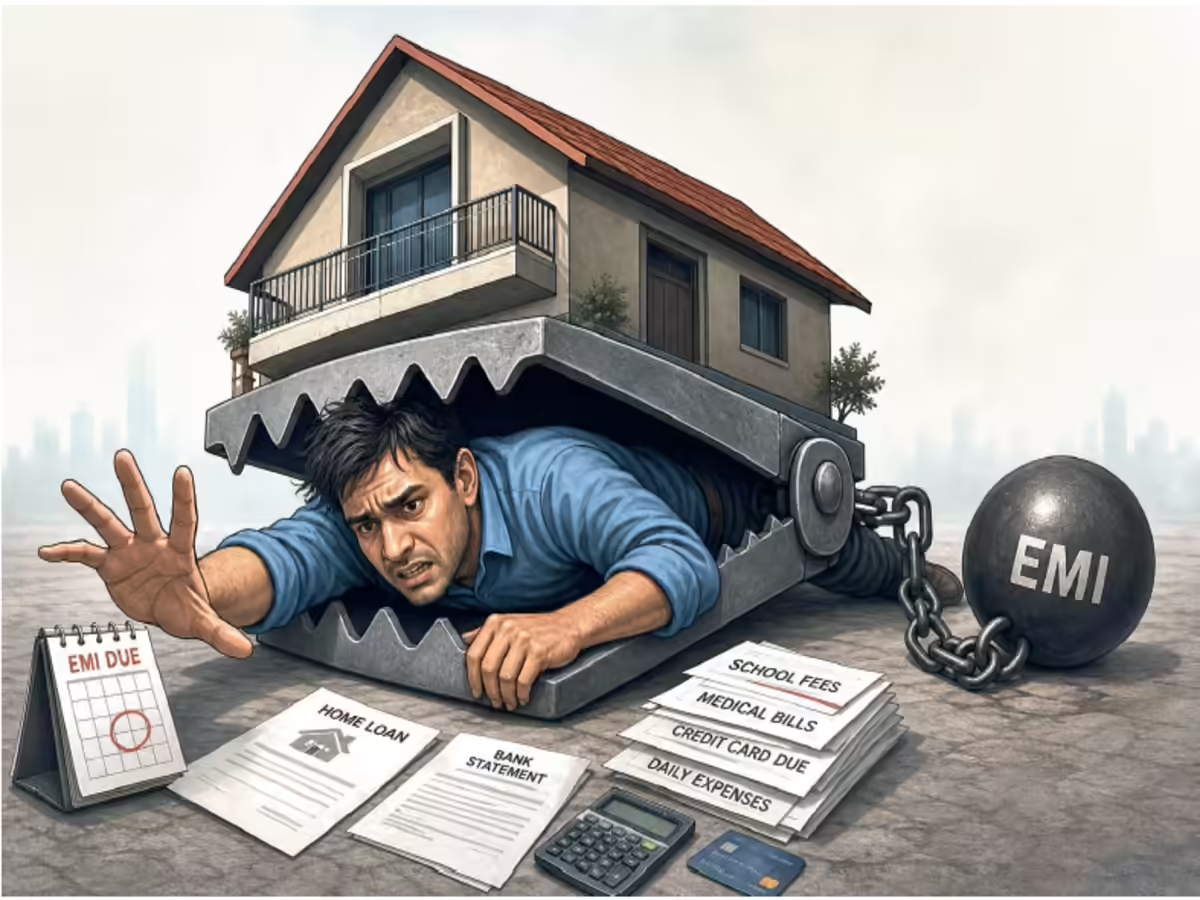
For many middle-class families, buying a home feels like the ultimate financial milestone. But what most borrowers rarely realise is that a 30-year home loan can quietly become one of the most expensive financial commitments of their lives. The monthly EMI may appear manageable, but the real shock lies hidden in the total interest paid over decades. Chartered Accountant Nitin Kaushik recently explained why long-term home loans are structured in a way that heavily benefits banks early on, and why aggressive prepayment may be the only real escape route. CA explains the hidden structure of long-term home loans Nitin Kaushik recently shared a detailed observation about home loans on X, warning borrowers about what he described as the hidden trap behind 30-year mortgages. According to Kaushik, most people focus only on whether they can comfortably afford the monthly EMI. However, they often ignore how the loan repayment structure actually works during the initial years. He explained that in a standard home loan carrying around 9 per cent interest, borrowers spend the early years paying mostly interest rather than reducing the actual loan amount. In many cases, nearly 90 per cent of the EMI during the beginning phase goes toward interest payments, while only a very small portion reduces the principal. That means borrowers may continue paying EMIs for years without significantly lowering their outstanding debt.— Finance_Bareek (@Finance_Bareek) Why the first 15 years matter the most? Kaushik pointed out that this structure heavily favours banks during the first half of the loan tenure. By the time borrowers finally begin reducing a meaningful chunk of the principal amount, banks have already recovered a major share of their earnings through interest collections. This is why many homeowners feel frustrated years into a mortgage despite consistently paying EMIs every month. The total loan outstanding often does not reduce as quickly as expected during the early stages. The CA stressed that borrowers should stop evaluating home loans only through the lens of affordable monthly payments. Instead, they should carefully examine the total interest payable across the full tenure. For long-duration loans extending 25 or 30 years, the total interest paid can sometimes become alarmingly high and may even rival the original property cost itself. The strategy he says can break the cycle According to Kaushik, aggressive prepayment is one of the few effective ways to reduce the long-term financial burden. He explained that even one extra EMI every year can significantly reduce both loan tenure and overall interest payments. Instead of merely reducing a few installments, consistent prepayment directly attacks the principal amount early, which changes how future interest gets calculated. As a result, borrowers can potentially save several lakhs in interest expenses over the life of the loan. Kaushik further claimed that borrowers who manage to double their payments could theoretically finish a 30-year debt in around eight years, dramatically reducing the amount ultimately paid to the bank.Why many borrowers miss the bigger picture One major reason borrowers fall into this trap is psychological. Most people naturally focus on whether the EMI fits into their monthly salary structure. Banks also market loans around affordability and manageable monthly payments rather than highlighting the total long-term cost. A 30-year loan spreads the burden across smaller EMIs, making expensive properties appear financially achievable. But the trade-off is years of compounding interest. This creates the illusion of comfort in the short term while quietly increasing the total repayment burden over decades. Financial experts often advise borrowers to periodically review their home loan statements, track how much principal is actually being reduced, and increase repayments whenever salary hikes, bonuses, or additional income allow it.The larger financial lesson behind the viral post His larger message was simple: the real cost of a loan is not the EMI, but the total amount eventually paid after decades of interest accumulation. For many borrowers, that realisation comes very late.
Paying home loan for 30 years? CA explains the hidden trap behind the home loans and the only way to beat it
Homebuyers often overlook the true cost of 30-year home loans. Early EMIs primarily pay interest, not principal. Chartered Accountant Nitin Kaushik explains this structure benefits banks significantly in the initial years. Aggressive prepayment is highlighted as a key strategy to reduce long-term interest payments and loan tenure. Reviewing loan statements and increasing payments when possible is advised.
TL;DRAI
In a 30-year mortgage at 9%, up to 90% of early EMIs is interest not principal — total cost can rival the property price. Aggressive prepayment is the only real lever: one extra EMI/year cuts tenure sharply; doubling payments compresses 30 years to ~8.
646 words~3 min read