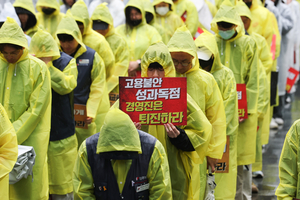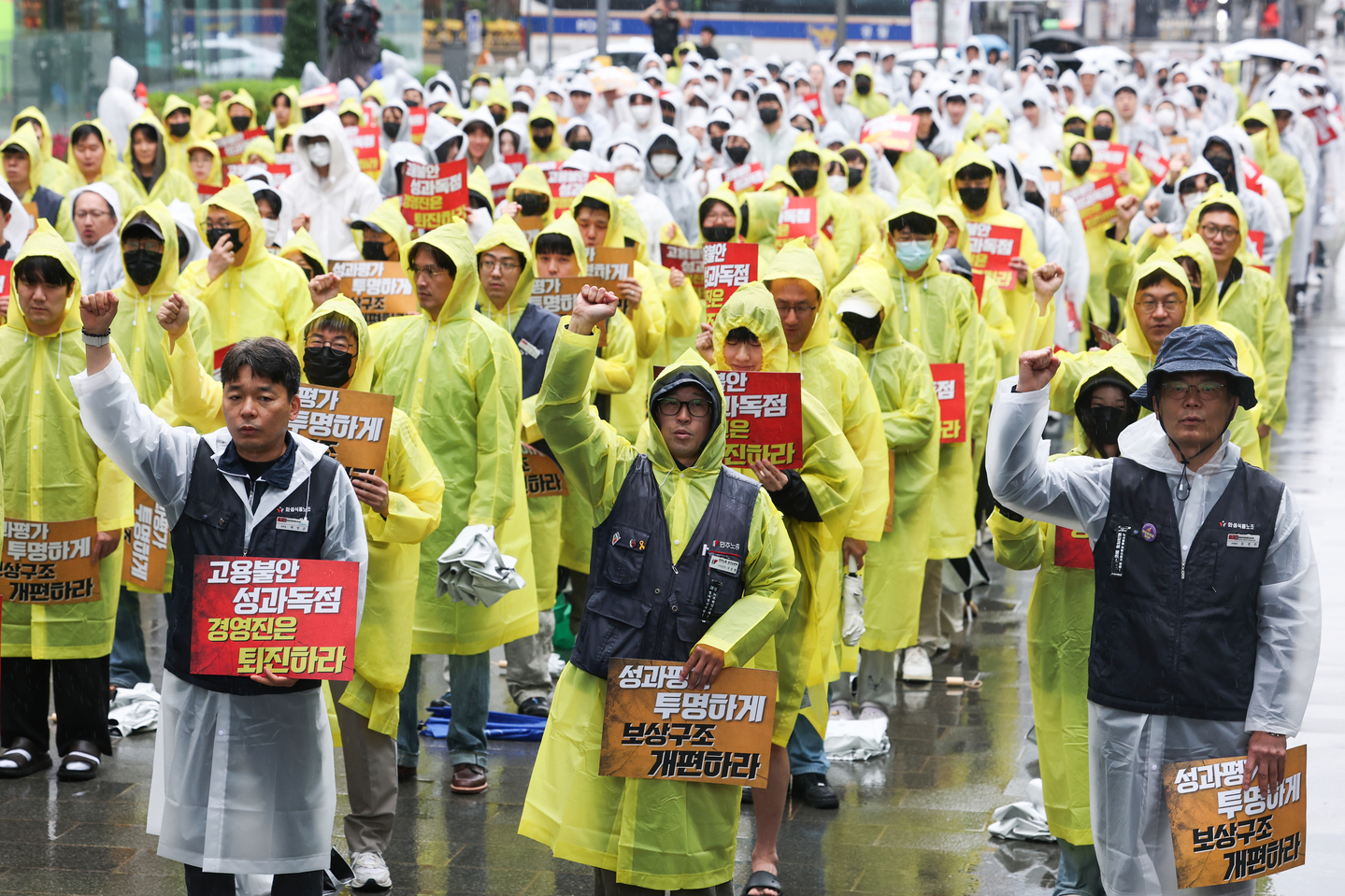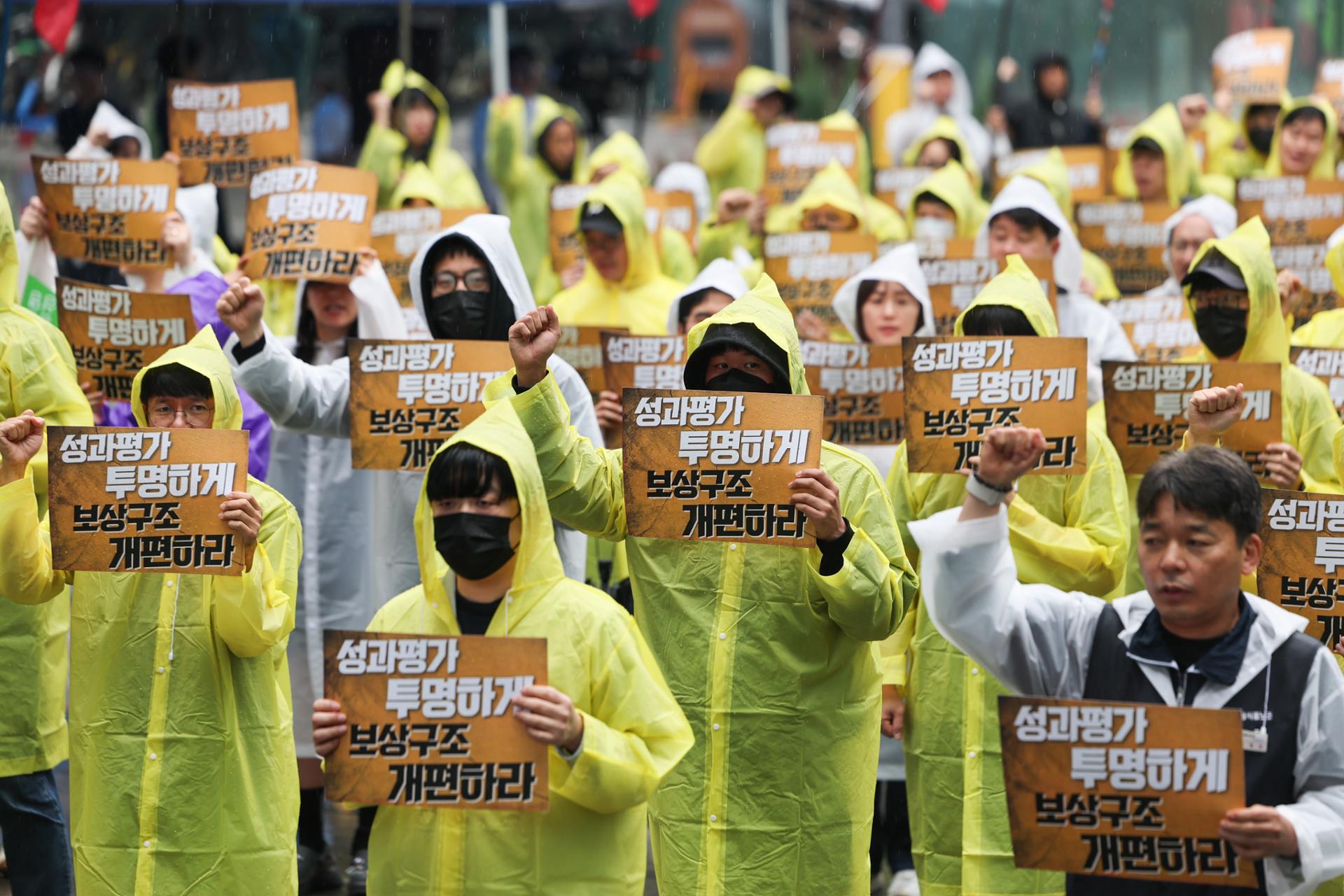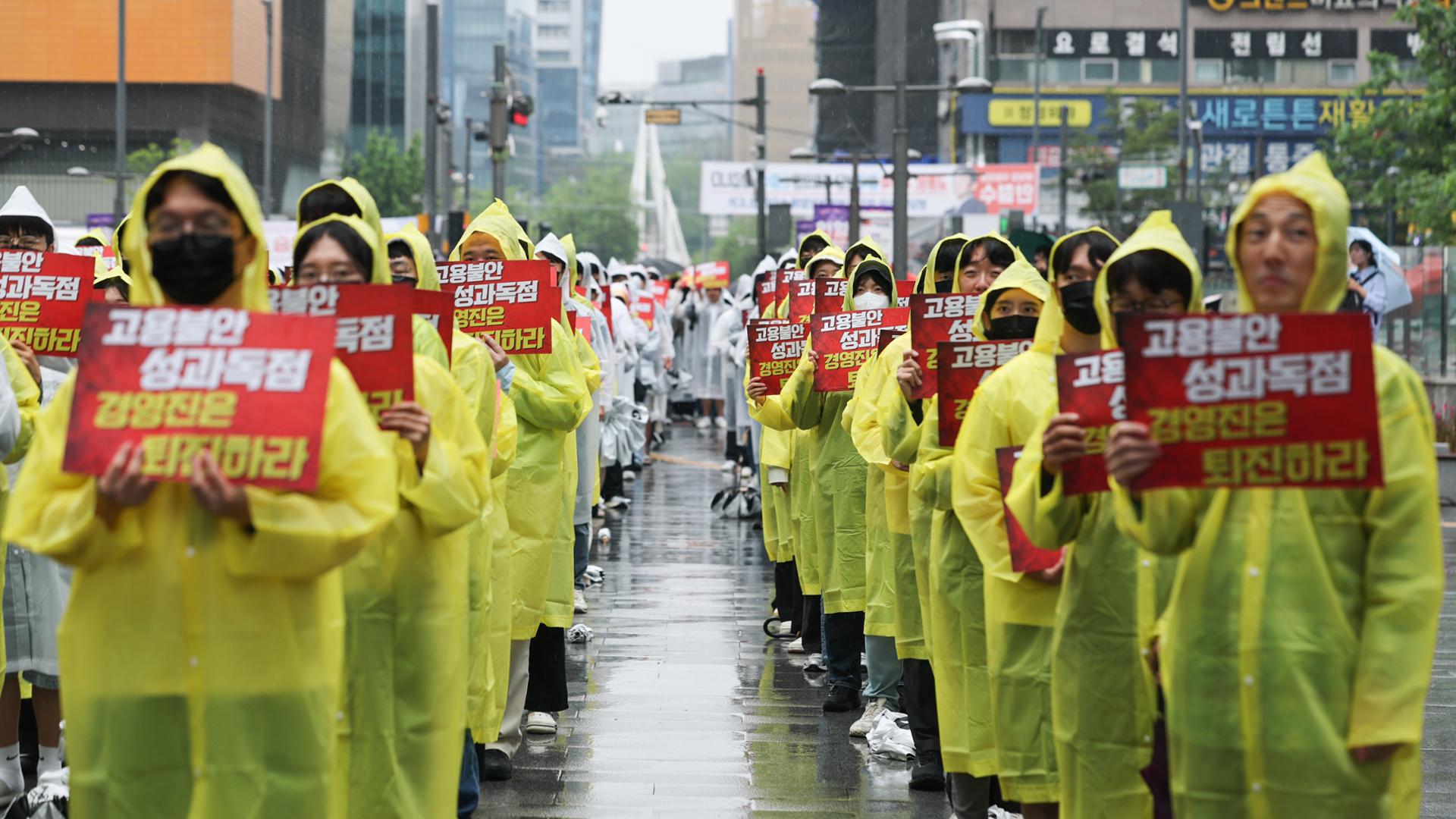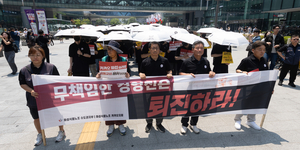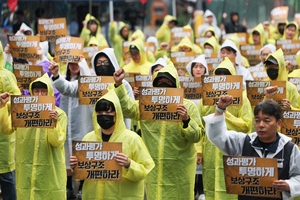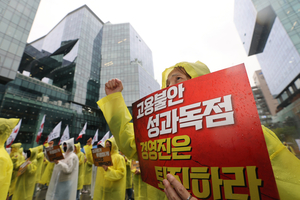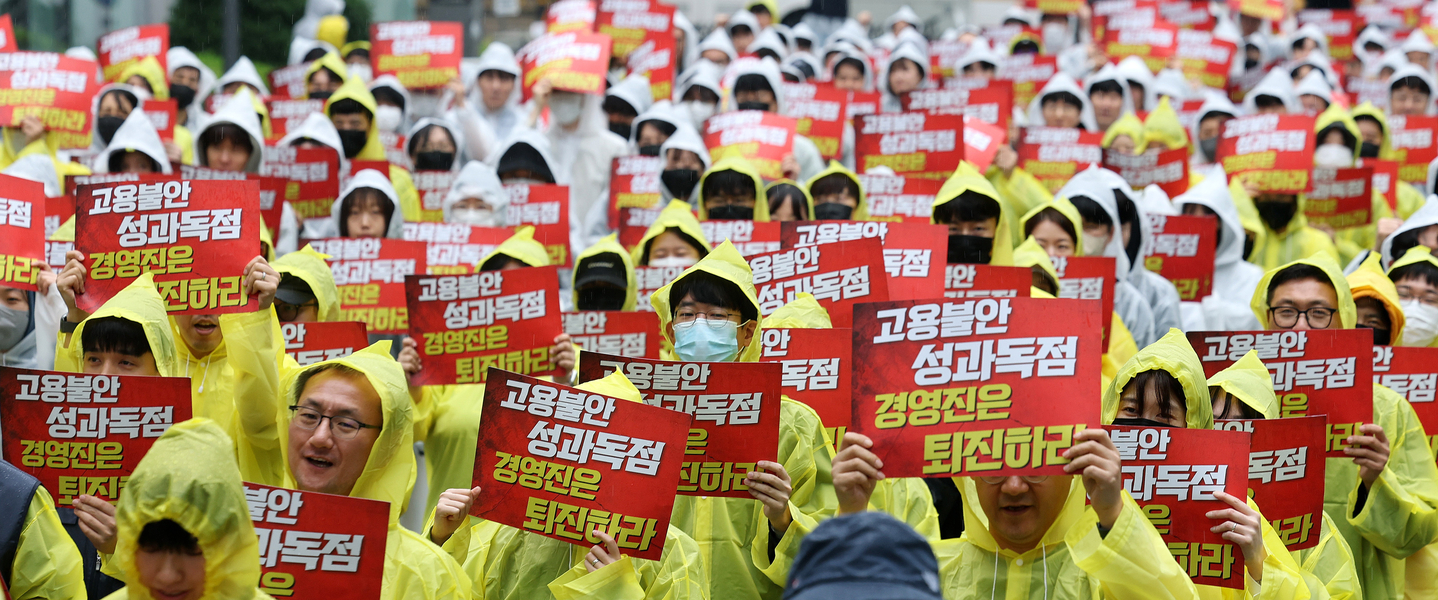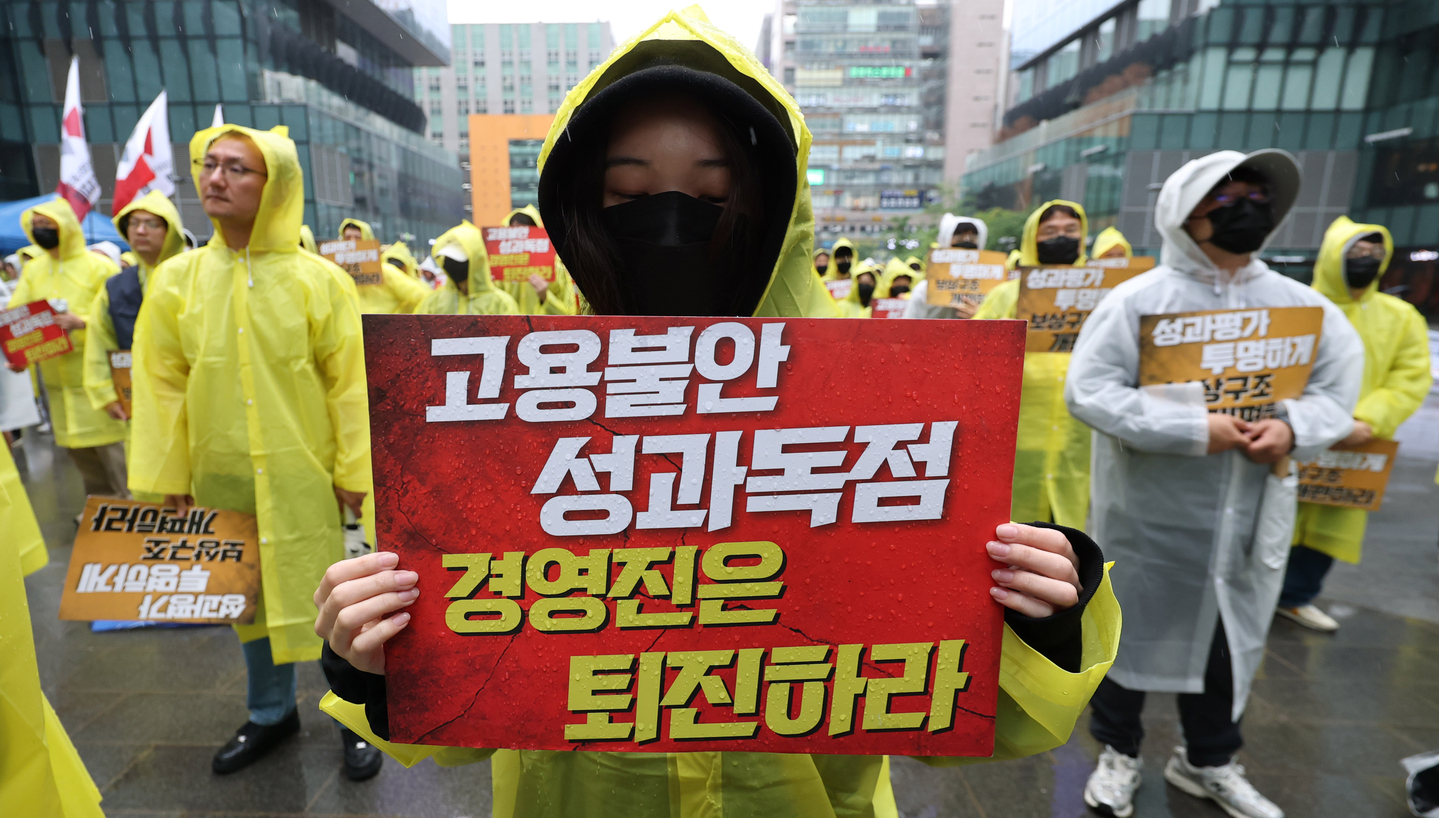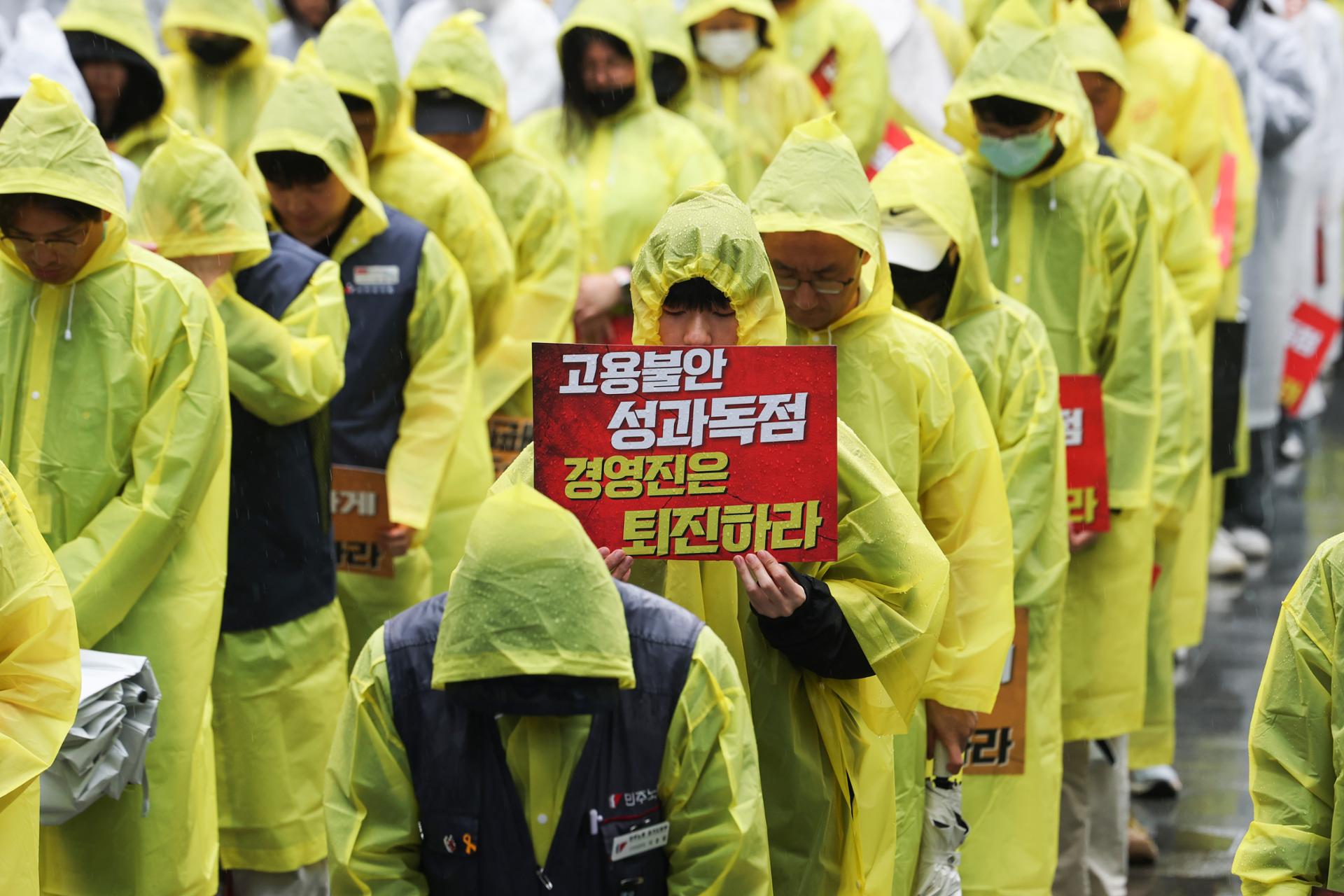
Unionized members from Kakao stage a demonstration near the company's headquarters in Pangyo, Gyeonggi Province, May 20. YonhapKakao said Friday a compensation package demanded by its union could place a huge burden on the company's operations, after workers said they would proceed with a strike next month.The official statement came after Kakao's management and its labor union failed to reach an agreement in the second round of negotiations mediated by the government.Unionized workers at Kakao's five units, including its headquarters, Kakao Pay and Kakao Enterprise, had previously voted in favor of a walkout."The total amount of compensation package demanded by the union is on the level that could place a huge burden on the company's operations," the operator of South Korea's popular messenger app said in an official statement.Early this month, Kakao's union said the company has offered only "limited" compensation to its employees, while compensation for its executives grew, despite the company posting record profits in recent years.The members are seeking to redesign its performance-based incentive structure to include restricted stock units, a form of equity compensation given out by the company.Kakao requested the union to reach a compromise, noting the company is competing with major big tech companies with "substantial financial resources.""We will keep the door open for dialogue until the very end, and do our best to prevent the issue from affecting our shareholders, partners and other stakeholders," the statement read.
Demands from labor union 'huge burden' on company, says Kakao's management - The Korea Times
Kakao said Friday a compensation package demanded by its union could place a huge burden on the company's operations, after workers said they would...
TL;DRAI
Kakao's management rejected its union's compensation demands as an unacceptable operational burden, after negotiations broke down and five business units — including Kakao Pay and Kakao Enterprise — voted to strike in June. The dispute centers on equity compensation (RSUs) and incentive redesign, signaling that Korean tech firms face growing internal pressure on pay structures even as they compete for talent against well-capitalized global big tech players.
234 words~1 min read