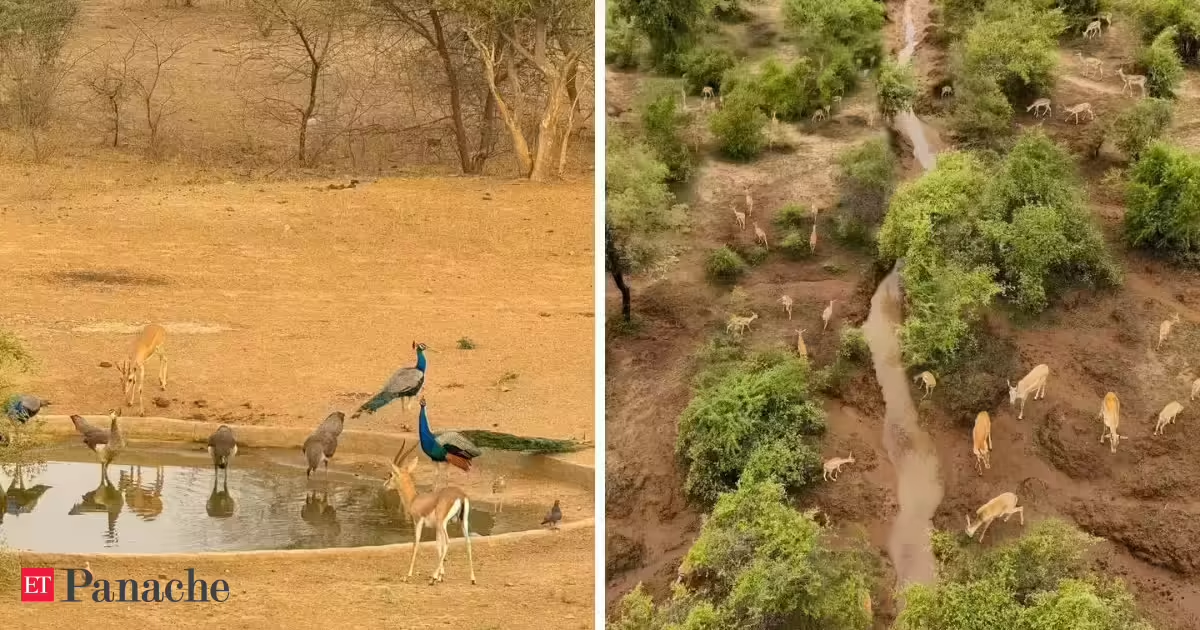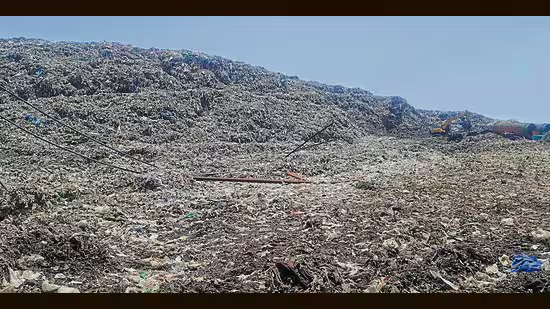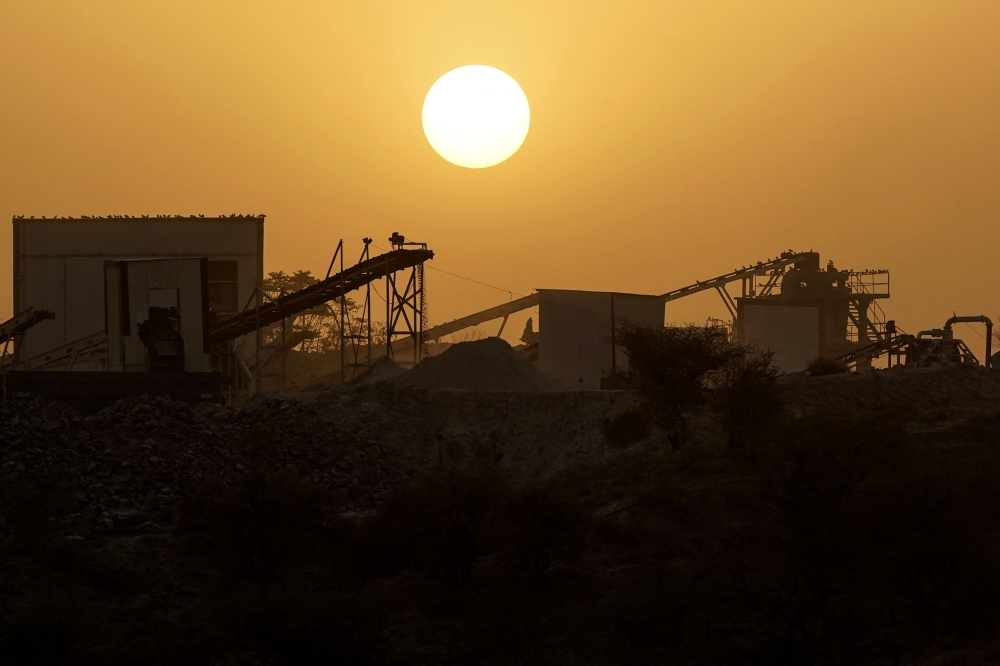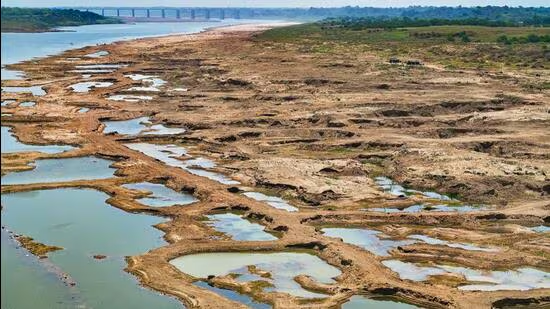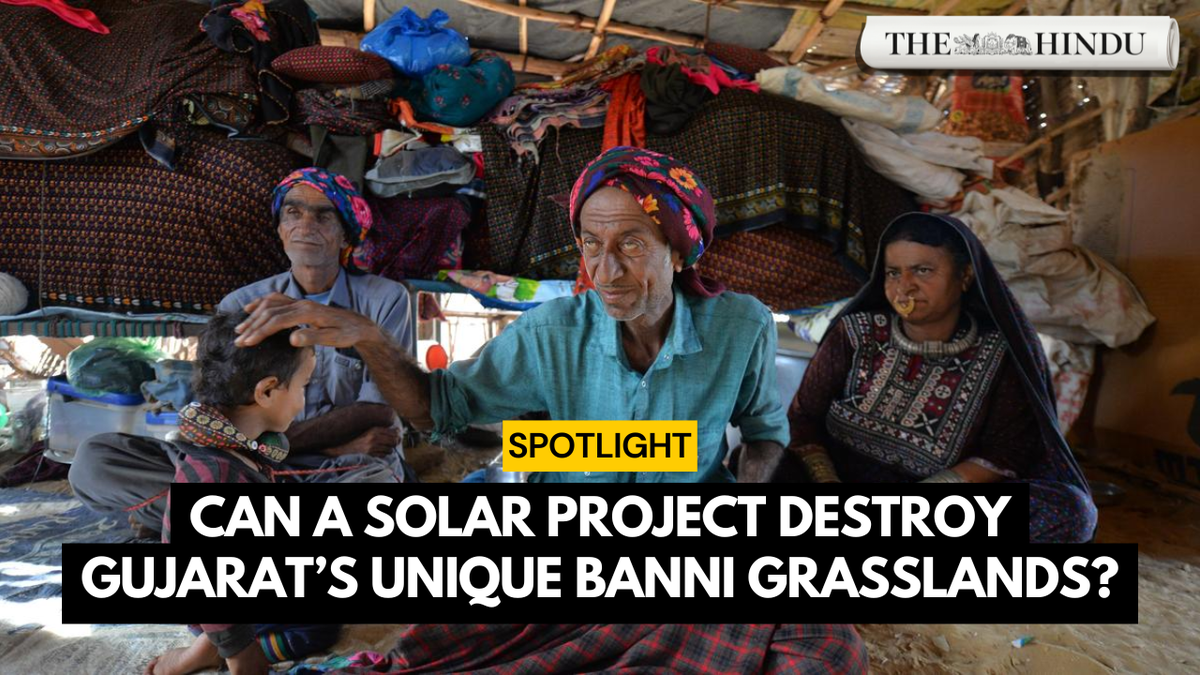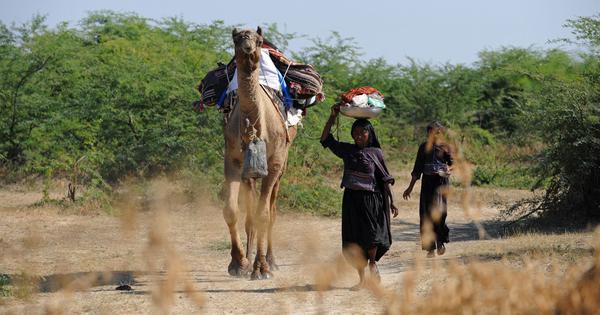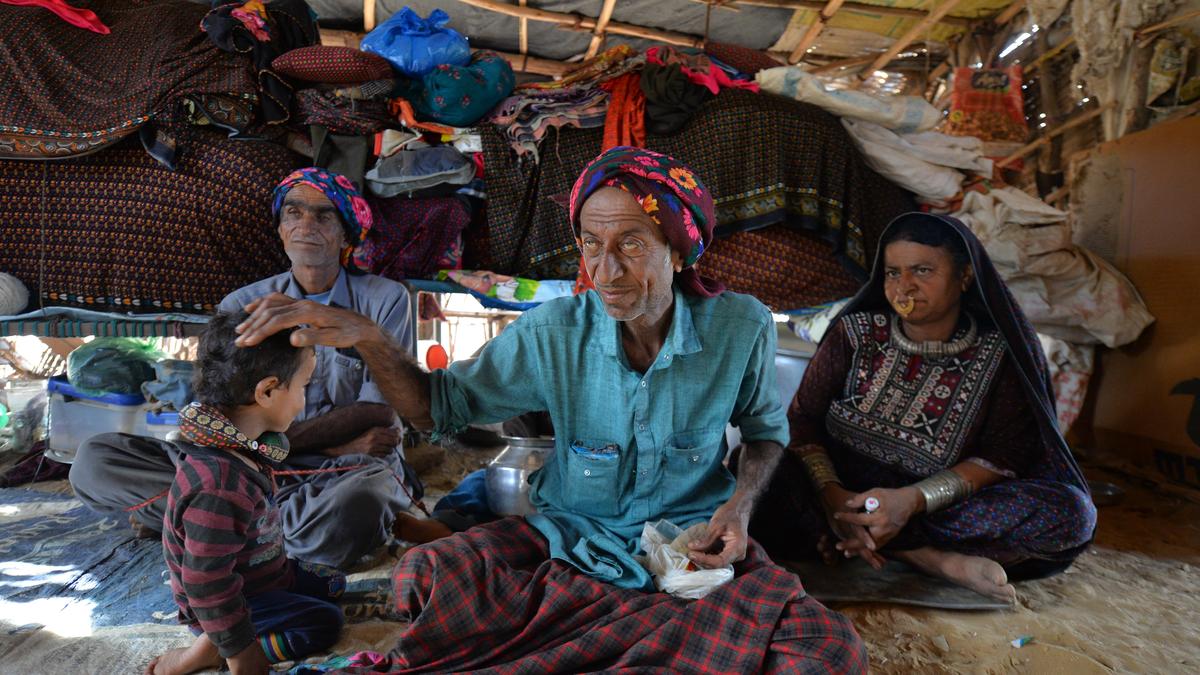
Merubai Husain Jat explains her community’s relationship with the Banni grasslands simply: “Sukh ho ya dukh ho, hamare liye Banni he sab kuch hai,” (Whether there is joy or sorrow, for us, Banni is everything.) Everything around is brown, parched: her hut of thatched straw, the homes of those around, the trees stripped of leaves, and the landscape that stretches for miles around.Looking at her husband Jat Husain Ismail, the mother of seven, who owns 50 camels, says that even through the worst droughts they never left the Banni grassland. They survived by finding ways, one season at a time, to keep themselves and their herd alive. This is home.Sitting inside the straw house in Jatavira village in Gujarat’s Kachchh district, the sun streaming in to light up her heavy silver jewellery, she says, “If the grassland is taken, we will have to sell our herd and move on. We fear they we will become daily wage labourers.”The couple is a part of the Fakirani Jat, a nomadic pastoral community of shepherds and herders locally known as Maldhari, who have chosen to settle only in the last couple of years. Thousands of Maldharis, the majority of them Muslim, live across 16 Banni villages, a part of the 2,600 square kilometres that the entire grassland area covers.An NTPC Renewable Energy Limited is slated to move in to set up a solar project on the grassland. The villagers worry that this may impact their livelihood as pastoralists. They wonder whether to sell off their camels, buffaloes, sheep, and goats, and walk away from a way of life generations old.Conservationists have joined the locals in opposing the project, pointing to what sits at its centre: the Chhari Dhand wetland conservation reserve, a fragile ecological site that shelters indigenous species and draws lakhs of migratory birds from across the world. In January, it was designated a Ramsar-protected site, meaning it is on the list of Wetlands of International Importance. The proposed solar project sits barely 500 metres away.The villagers allege that the government has described the proposed site as unused wasteland belonging to the Revenue Department, a label that has left many furious. “How can they call this a wasteland?” says Mutva Agakhan Alayar, a livestock rearer from the Pulay panchayat. “Our herds graze here, our livelihood is here. This land belongs to no one person; it belongs to all of us. Every migration season rare birds arrive. This is where our camels breed.”
Gujarat’s Banni grasslands: A heap of broken images, where the sun beats
Gujarat's proposed solar project threatens the fragile Banni grasslands and the livelihoods of the Maldhari pastoral community.
2,109 words~10 min read