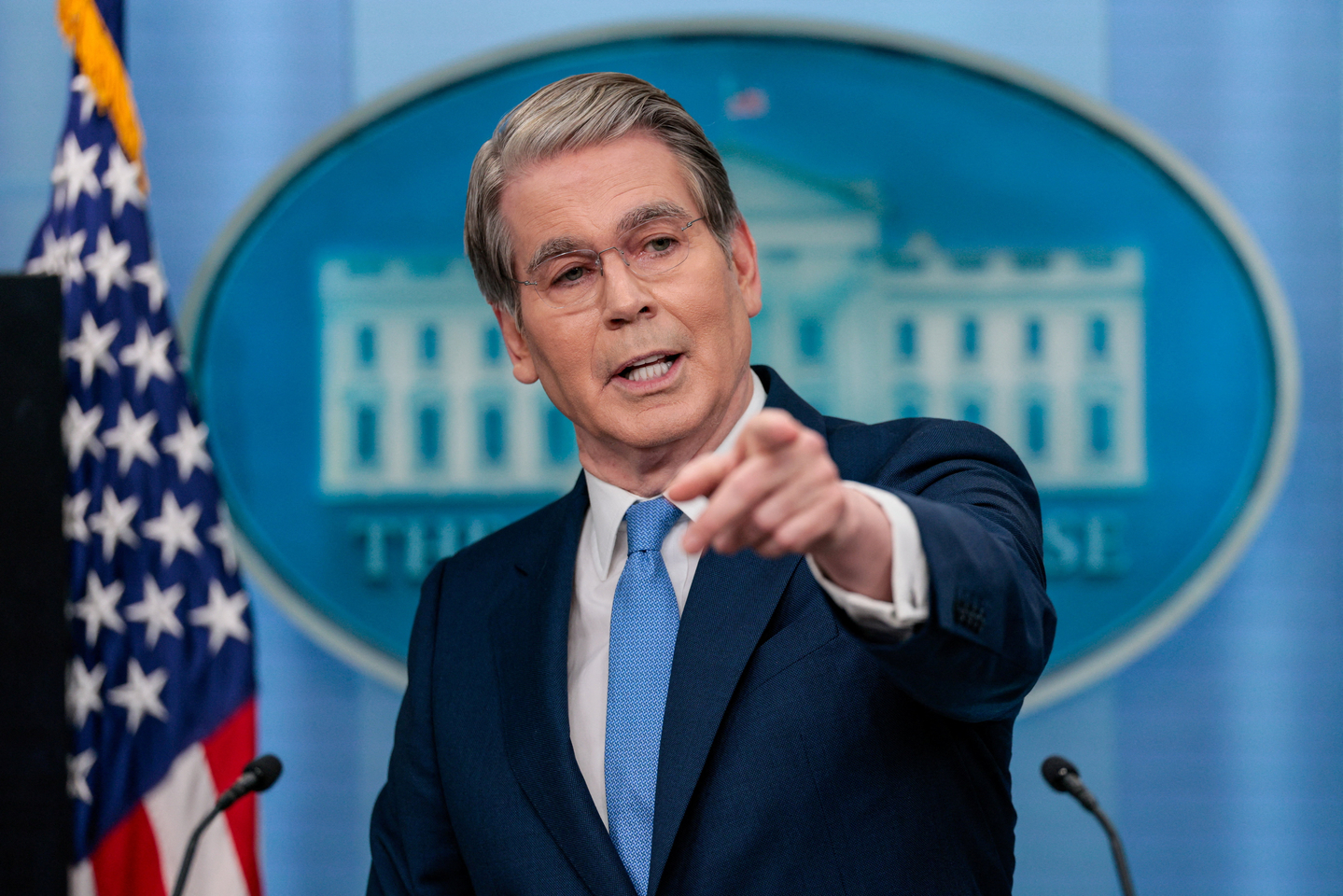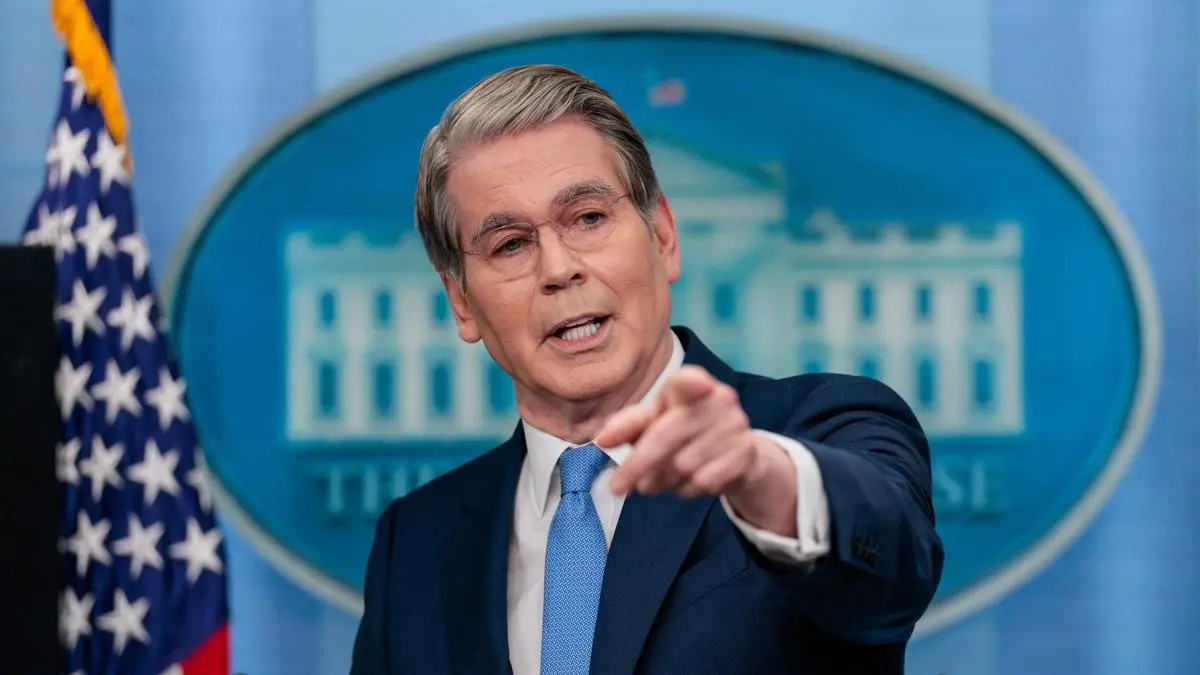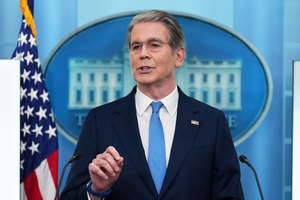
US Treasury Secretary Scott Bessent speaks during a press briefing at the White House in Washington on Thursday. (AP-Yonhap) US Treasury Secretary Scott Bessent on Thursday reiterated President Donald Trump's "redline" demands in negotiations with Iran, including Tehran's commitment not to seek nuclear weapons, amid reports that Washington and Tehran have reached a tentative peace deal awaiting Trump's final approval.Speaking at a White House press briefing, Bessent stressed that Trump will not make a bad deal from the peace talks with the Islamic Republic, pointing out that the United States does not have "unlimited patience" -- a warning that bombing could resume if diplomatic efforts to end the war fail.Earlier in the day, Axios, a US media outlet, reported that US and Iranian negotiators have reached an agreement on a 60-day memorandum of understanding to extend their ceasefire and conduct negotiations on Iran's nuclear program, but Trump has yet to approve it."The (negotiating) teams have been going back and forth, and President Trump has made it very clear. He talked about it at the Cabinet meeting (on Wednesday) that he has several redlines," the secretary said."Iran has to turn over their highly enriched uranium. They cannot pursue a nuclear weapon, and the Strait of Hormuz ... has to free transit ... Navigation of the seas has to be free and open as it was before," he added.Asked to confirm the report on a tentative peace agreement, Bessent said that "everything depends on what the president wants to do," and "it is all going to be the president's decision.""President Trump is not going to make a bad deal for the American people, for the US, and he was very clear at the Cabinet meeting yesterday (about) what he wants," he said.Bessent also said that he had a call with Oman's top envoy to the US in the morning, during which he said the diplomat assured him that there were no plans to charge a toll in the Strait of Hormuz.His remarks followed a report that Iran and Oman have discussed cooperation over a system to collect fees for ships passing through the strait -- a move that the Trump administration opposes.The secretary highlighted that in peace talks with Iran, Washington was being "patient," but its patience is not "unlimited.""President Trump always prefers a peace deal. So everything we have done thus far has been defensive, and at present, that is what we will continue doing," he said. "But if President Trump doesn't think he can get a peace deal, then kinetic (option) is back."Earlier in the day, Axios reported on the tentative peace deal with Iran.The news outlet reported on the agreement, citing two US officials and a regional source, as tensions flared anew with the Islamic Republic firing a ballistic missile toward Kuwait on Thursday in retaliation for earlier US strikes on targets in southern Iran.As of Tuesday, the terms of the deal were mostly agreed to, but both sides still needed approval from their top leaders, Axios said, citing US officials.The officials claimed that Iranian negotiators had said that they had the necessary approvals and were prepared to sign the MOU.Trump was briefed on the deal, but he did not immediately sign off on it, according to the report.The MOU will stipulate that shipping through the Strait of Hormuz will be "unrestricted," Axios said, citing the US officials. The US naval blockade of Iranian ports will be lifted, but the lifting will proceed in proportion to the restoration of commercial traffic through the strait, it said.The MOU will also include Iran's commitment not to seek a nuclear weapon, and will state that the first issues to be negotiated during the 60-day period will concern the disposal of Iran's highly enriched uranium and its enrichment program.Iran's Tasnim news agency reported later that the text of a potential MOU with the US has not yet been finalized or confirmed. (Yonhap)
Bessent stresses Trump's 'redlines' in Iran negotiations amid report of tentative deal
US Treasury Secretary Scott Bessent on Thursday reiterated President Donald Trump's "redline" demands in negotiations with Iran, including Tehran's commitment n
649 words~3 min read