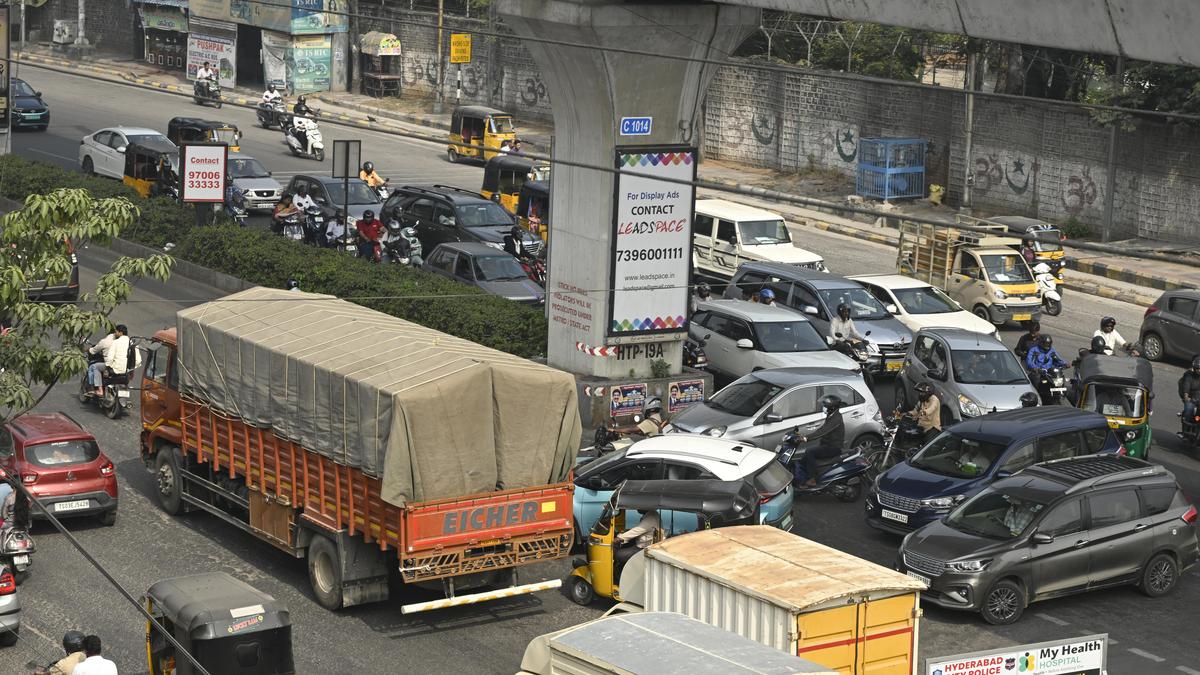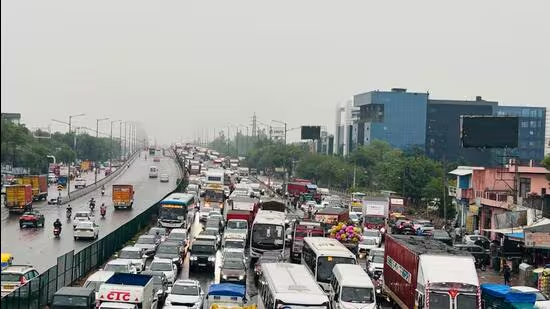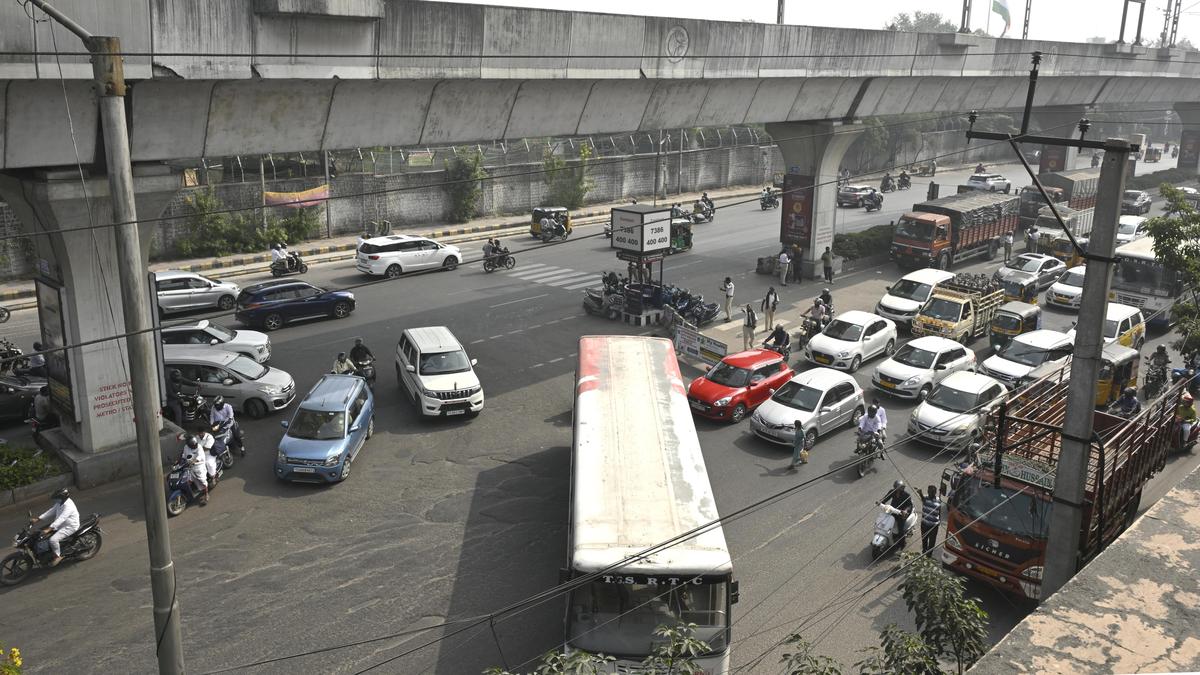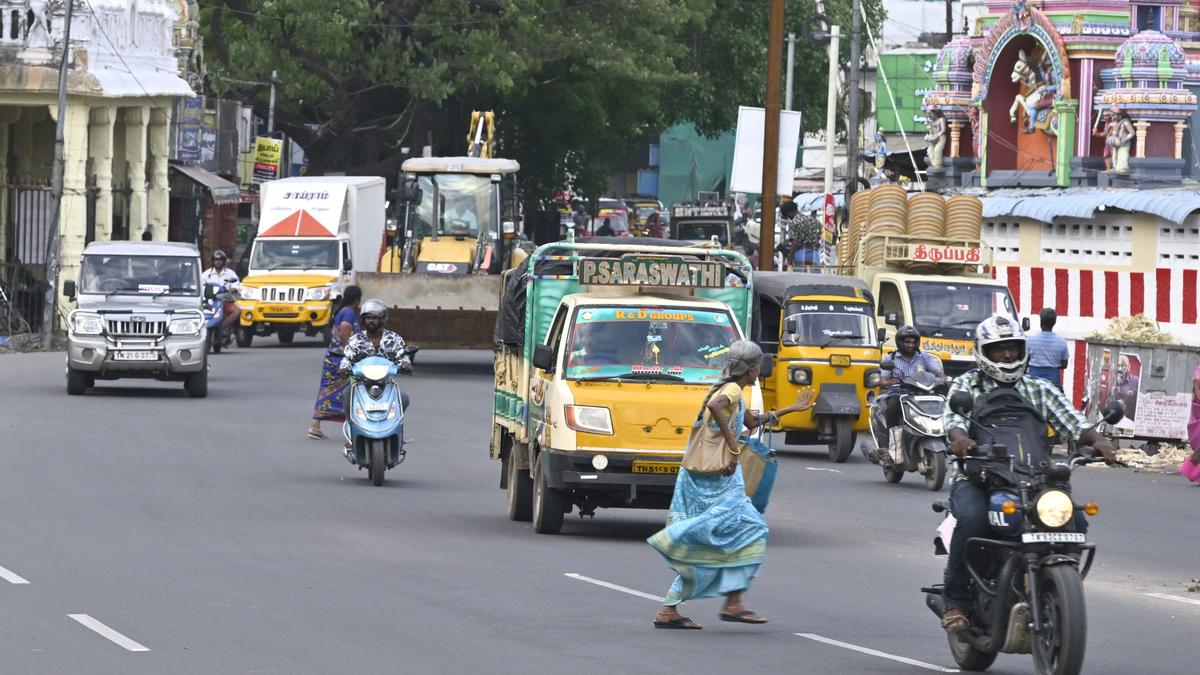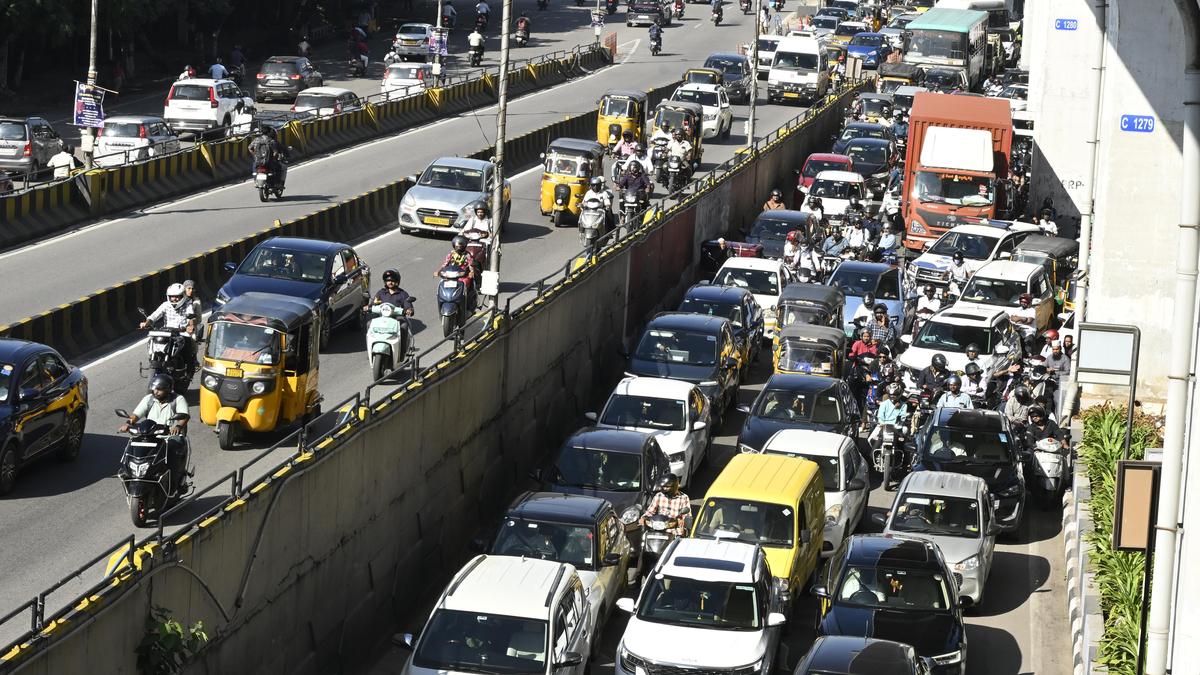
Commuters at Subhash Chowk say they are frequently forced to navigate phantom traffic jams caused by jaywalking and encroachments of the main road by auto rickshaws. According to traffic police estimates, the key junction located on Sohna Road acts as an interchange for nearly one-fourth of daily city traffic transiting from Sohna to Gurugram.A spot check on May 28 found that pedestrians and drivers flouting traffic norms, including wrong-side driving and illegal parking.Phantom jams occur when relatively free-flowing movement of vehicles on a road is disrupted, causing a delayed effect backwards, and creating the impression of traffic congestion. A spot check on May 28 found that pedestrians and drivers flouting traffic norms, includingwrong-side drivingand illegal parking.Pedestrians, meanwhile, could be seen running across the streets in the middle of a green-light, forcing oncoming vehicles to slow down or virtually come to a halt. Although the junction has multiple dedicated crossings to guide pedestrian movement, many continue to take short cuts to avoid longer walkable distances. Many of them complain of visibility issues due to faded zebra crossings.“Several times, we see a long queue of vehicles piling up because encroachment narrows the stretch, and not because the number of cars has increased,” said Ahsas Taluja, who drives through the intersection on his way to the Southern Peripheral Road (SPR).Rohit Verma, another commuter, said he has seen that buses hardly get space to wait for passengers. “Many times, e-rickshaws stop too close to buses, leaving no room for commuters to get off from the buses,” he said. Frequent stoppages by e-rickshaws exacerbate the problem.Gurugram Metropolitan City Bus Limited (GMCBL) said efforts to fix this problem have not yielded results. “Repeated requests to civic bodies through letters have not resolved the traffic conditions. Many drivers are forced to stop at undesignated points, leading to confusion among commuters,” said a senior GMCBL official, requesting anonymity.Meanwhile, enforcement officials present at the intersection told HT that their priority is ensuring smooth traffic movement during the peak hours. “No major congestion has been reported on the stretch, though jaywalking and illegal parking are handled through frequent challaning drives,” said a traffic police official, requesting anonymity.The officials further said that efforts had been made to sensitise auto-rickshaw drivers, however, “a behavioural change is missing”.“Pedestrians,” he said, “break traffic rules to take shortcuts.”Another senior traffic police official, who wished not to be named, said that the carriageway is overburdened, as public transport mostly avoids the underpass for direct connectivity between Old Gurugram and new sectors.“The intersection acts as a key connecting point for vehicular traffic heading towards the nearby HUDA city centre metro station, further driving the auto-rickshaws to queue along service lanes,” said the official, adding that dedicated parking and pick/drop zones should be included in long-term improvement planning.The road comes under the jurisdiction of the National Highway Authority of India (NHAI) with official figures estimating that nearly 20,000 vehiclesdaily use the junction as an interchangeto get on the Delhi-Mumbai Expressway from the city’s other intersections like Hero Honda, Bhaktawar and Rajiv Chowk(s).When asked for comment, a senior NHAI official said several proposals to improve the situation are currently in the pipeline. “Long-term plans include widening the distance between entry and exit points and expanding the service lanes to decongest the intersection.”
‘Illegal parking, jaywalking cause Subhash Chowk snarls’
Phantom jams occur when relatively free-flowing movement of vehicles on a road is disrupted, causing a delayed effect backwards, and creating the impression of traffic congestion.
TL;DRAI
Subhash Chowk in Gurugram handles ~20,000 vehicles daily; phantom jams stem from jaywalking and e-rickshaw encroachments narrowing lanes, not from actual traffic volume. NHAI widening plans remain in pipeline with no timeline; fleet and shuttle operators routing via Sohna Road should factor persistent peak-hour delays into commute planning.
543 words~2 min read