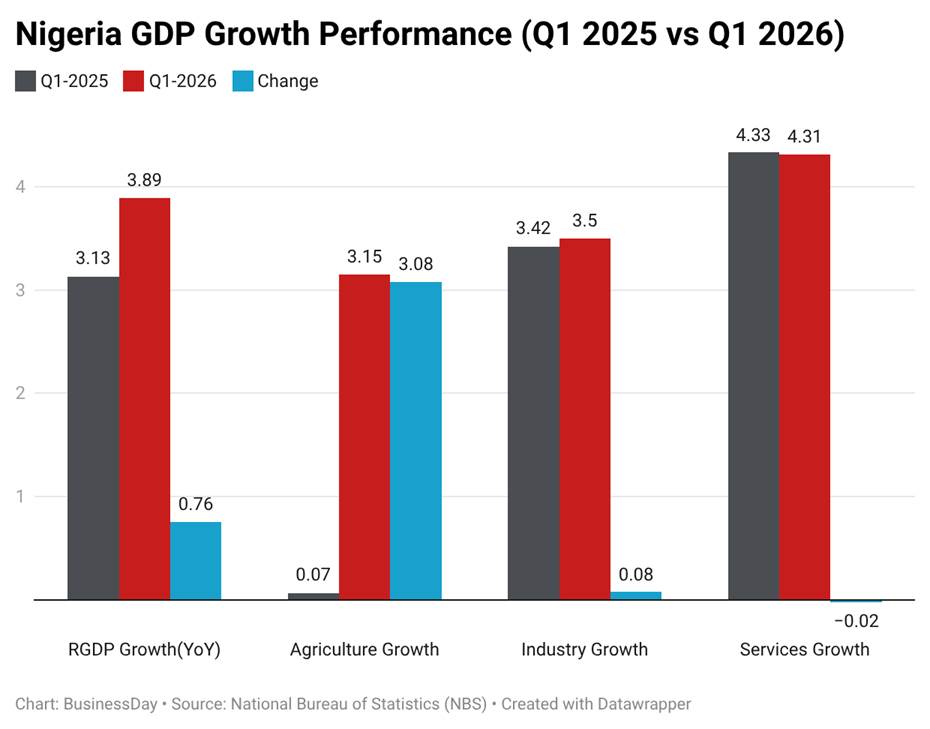
Nigeria’s economy recorded a year-on-year real GDP growth of 3.89 per cent in the first quarter of 2026, reflecting continued macroeconomic stabilization and resilience in key non-oil sectors.
However, economic experts have warned that the encouraging growth figures conceal deep structural weaknesses capable of undermining long-term economic transformation.
This was contained in a policy brief issued by the Centre for the Promotion of Private Enterprise (CPPE) following the release of the Q1 2026 GDP report by the National Bureau of Statistics (NBS).
According to Muda Yusuf, chief executive officer of CPPE, although the GDP performance represents an improvement from the 3.13 per cent growth recorded in Q1 2025, the economy still faces serious structural constraints, particularly in electricity supply, manufacturing productivity and export competitiveness.
“The implications for businesses are severe. At a time when firms are already burdened by high interest rates, logistics costs and weak consumer purchasing power, deteriorating electricity supply further escalates production costs and weakens competitiveness.