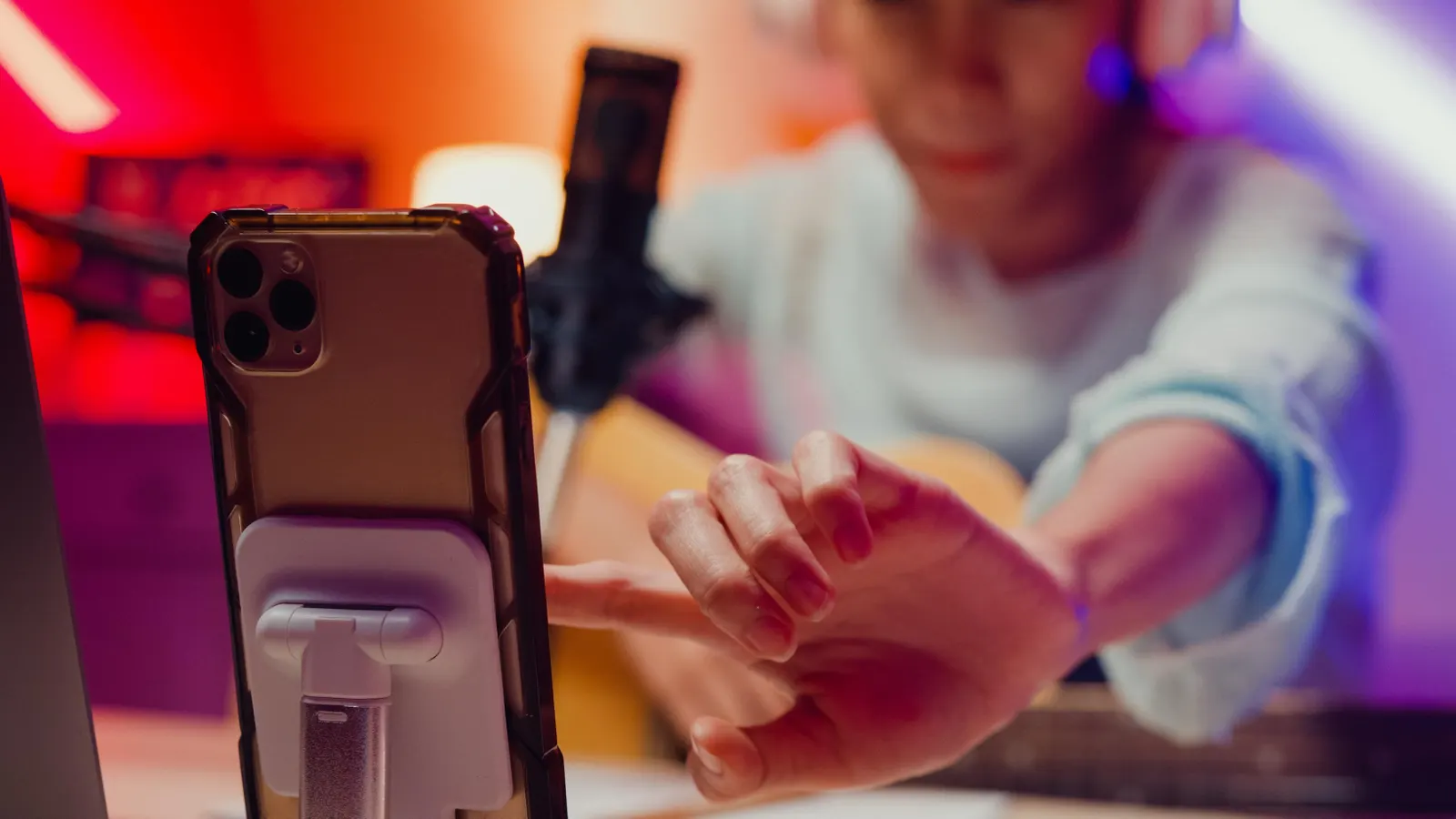
Creator marketing is now a major channel that’s growing faster than the broader advertising market, according to the IAB’s 2025 Internet Advertising Revenue Report. Spending on creator advertising hit $37 billion in 2025 and is projected to reach $44 billion this year, as many brands put creators at the center of their media strategies and product development.But not every brand is moving at the same speed when it comes to working with creators. While small and startup brands have been quick to take advantage of creators, larger companies are much slower to use this channel. The CEO of data firm Gospel Stats told the Wall Street Journal that more than 94% of all brand-sponsored creator videos in 2025 were from small and D2C brands. I talked to Megan Vasquez, director of influencer strategy for creator platform Grin about why it’s taking the big brands so long to utilize this channel and how they can be successful doing so. An excerpt from our conversation is later in this newsletter.Until next time.This is the published version of Forbes’ CMO newsletter, which offers the latest news for chief marketing officers and other messaging-focused leaders. Click here to get it delivered to your inbox every Wednesday. ATTENTION ECONOMYStephen Colbert prepares to turn off the switch for "The Late Show with Stephen Colbert" on CBS last week.Scott Kowalchyk/CBS via Getty ImagesThe curtain may be closing on the network late night comedy/talk show. Last week saw the final episode of “The Late Show with Stephen Colbert,” ending CBS’s 33-year franchise. Colbert’s show had the top ratings in the late-night broadcast spot for years, writes Forbes senior contributor Toni Fitzgerald. And his last show drew 6.7 million viewers, according to preliminary Nielsen data reported in the New York Times—close to three times as many as “The Late Show” drew for the rest of the quarter, and besting all of Colbert’s weeknight shows in his 11-year run in late night.Colbert said in his closing monologue that his job was not to read the news to the audience, but to “feel the news with you.” And though the circumstances of the show’s cancellation were somewhat suspect—CBS said it was “purely a financial decision” last July, right after Colbert skewered the network for making a seemingly political move to gain President Donald Trump’s approval for a business deal—the celebrity-filled finale seemed to be a swan song for a TV format that is falling out of favor with viewers. In decades past, late night TV had millions more average viewers. The May 2015 final show of Colbert’s predecessor David Letterman drew 13.7 million viewers.But the media landscape of today is different—and the other late-night hosts who appeared in a bit about a wormhole swallowing up Colbert’s show acknowledged that fact; Seth Meyers quipped, “Without you, where will Americans turn to see a middle-aged white man make jokes about the news?” Forbes senior contributor Toni Fitzgerald writes networks should see the end of “The Late Show” as an opportunity to reinvent the 11:30 p.m. time slot and bring viewers back to broadcast TV. NOW TRENDINGA major marketing moment is about to kick off: the 2026 FIFA World Cup. Even if ticket sales remain lackluster, millions of people around the world will be tuning in to watch their country’s best play—and see the ads both on the broadcast and around the stadiums. Forbes senior contributor Daphne Ewing-Chow writes beer and beverage companies are spending billions on World Cup marketing, which has traditionally been one of their most lucrative campaigns. But it won’t just be beer and cocktails in this year’s promotions. A recent Gallup poll found that just 54% of Americans drink alcohol—but sales of low- and no-alcohol alternatives are surging. This year’s World Cup is likely to be a proving ground for marketing of these less-intoxicating options, focusing on how beverages contribute to the game-time experience. BRANDS + MESSAGINGTarget is using health and wellness to get its groove back. The retailer, which years ago had a premium “Tar-zhay” halo among consumers, has been building its business in the wellness category, writes Forbes senior contributor Pamela Danziger. Last year, wellness—personal care, over-the-counter medicine, nutrition, vitamins and women’s health—was a $10 billion business, while beauty was a $13 billion business. For some context, just five years ago, the health business was worth $3 billion—while 70% of Target customers made purchases in the category last year.Health and wellness helped Target post better-than-expected revenue growth—with net sales up 6.7%—in its quarterly earnings this month. In the last quarter, Target added close to 1,500 new health and wellness items. And sales in the beauty category were up 9.5% compared to the same period last year. ON MESSAGEHow Big Brands Can Catch Up On Creator MarketingGrin Director of Influencer Strategy Megan Vasquez.GrinIn today’s social media-centered world, creator marketing is a huge force—but smaller brands are taking the most advantage of it. Why aren’t the big players more involved in this space? I talked to Megan Vasquez, director of influencer strategy at creator marketing platform Grin, about this—and how major brands can make better use of this channel. This conversation has been edited for length, clarity and continuity.What is the disconnect with big brands, and why aren’t they doing more formal work with creators?Vasquez: A lot of the time, they have a lot of budget, but they also have a lot of internal friction. There’s a lot of stakeholders. They have these long approval cycles. And I think they see creators specifically as an awareness channel. They have been very slow to adopt it as a true performance channel. Currently, they’re at the place some of these more nimble, smaller D2C brands were five years ago. Now, it’s been completely dialed into this performance machine where people are seeing profit and balance in the MMM, and it’s working. There’s a halo effect into their retail channel. They built systems to measure this. The legacy brands are just so far behind. They started later. And they always tend to be further away from the transaction. That’s a point of difference with these smaller brands. They’re comfortable testing things: links, landing pages, codes, briefs.The bigger brands have these things separated very distinctively in their orgs. It’s very disconnected, which worked before social media. That was okay for that time because things ran on quite a significant lead time. They don’t anymore. These things are so fast. It is the cornerstone. You see it a lot in beauty. That’s where I spent most of my career. I started in luxury skincare. It was very hard to market. I don’t think people cared about it as much as they cared about color cosmetics. Now these categories are massive. They have easily become major players in the industry, mostly because of creators and how fast the social media cycle works.What are some ways that smaller brands have been able to capitalize on creators and improve their position?They are nimble. They are quick. They’re able to meet creators where they are. They’ve got people in the DMs, they’re testing different platforms. They’re less by the book. They feel like they can be a little avant garde in their outreach. They’re doing it that way. A lot of the time, these smaller brands, they’re cool, they’re sexy, they’re new. They’re probably being a little loosey-goosey on social media, so it’s fun. They’re getting a lot of attention. Then the creators notice. The partnerships move a lot more quickly, a lot more seamlessly. Creators like to work with brands that are easy to work with. It’s like, let’s let them be who they are. Let’s let them talk about the product and the way that it matters to them. Obviously, we don’t want anyone going completely off the rails—stay within guidelines, but do it the way you want. Then it’s a very quick revision process. Most of the brands I have worked on, I don’t even ask for an approval. I want you to post it in real time in a way that feels good to you because when your audience is watching it, it will feel organic and it will feel natural. Meeting the creators where they’re at, letting them be who they are, not being beholden to these very strict brand guidelines, it’s ultimately going to help them move quicker, see better results overall and have money to reinvest in the channel—but also have better relationships with creators overall.What do big brands need to do to succeed with creators?Stop treating creators as optional. Make this into a measurable performance channel within your business alongside paid media, PR, events. Learn how to measure it against your business goals. The halo effect is immense from marketing like this, especially if you have a brand that’s in a lot of brick and mortars.Allow the creators to have some creative autonomy over what they create. It is so easy to get stuck in this cycle of: it’s got to be on brand, it’s got to hit every messaging point. That’s what paid media is for. Creator marketing should feel like it is coming from the creator’s POV, because ultimately they reflect your customer. The relatability I think is what makes their content convert so well. Try to streamline the process as much as you can so you can be quicker. The inability to be fast is going to harm everybody in the digital space. If you can get in the habit, you'll be able to be playing in the sandbox of trends and that will ultimately benefit them.[Speeding up the process will] also speed up essentially a feedback loop of the performance of the creator itself. By being slow on that, you’re also slow on understanding what your consumers care about. You’re slow to adapt to your messaging. You can decrease your dependency on [traditional paid media] by measuring your relationships with your influencers and using that to inform all different types of marketing.COMINGS + GOINGSChatGPT maker OpenAI hired Colin Fleming as the chief marketing officer for its business unit. Fleming joins the company from ServiceNow, where he worked in the same role, and he succeeds Kate Rouch.Shared infrastructure provider Crown Castle promoted Kris Hinson as executive vice president and chief commercial officer. Hinson steps into the role after working as the company’s vice president of corporate finance and treasurer.Restaurant chain Church’s Texas Chicken appointed Kevin Nemeth as executive vice president, chief commercial officer. Nemeth previously worked as chief digital and marketing officer for Authentic Restaurant Brands.STRATEGIES + ADVICENorma Kamali has been an important and revered name in fashion since the 1970s. Here are four things she’s done to build a brand that has not only kept up with the times, but is also seen as a cultural touchpoint.It’s spring cleaning season, but not just for your home. Here are eight ways you can “spring clean” your career, getting your mental health decluttered and putting you on the path to avoid burnout.QUIZWhich deceased music legend’s family is bringing him back to life as an AI hologram?A. Jimi HendrixB. The Notorious B.I.G.C. Ozzy OsbourneD. John LennonSee if you got it right here.
Why Big Brands Are Behind In Creator Marketing
Also in the Forbes CMO Newsletter: Nonalcoholic beverage brands set to score at World Cup, Target uses wellness to get its groove back, good night to late night?
1,852 words~8 min read