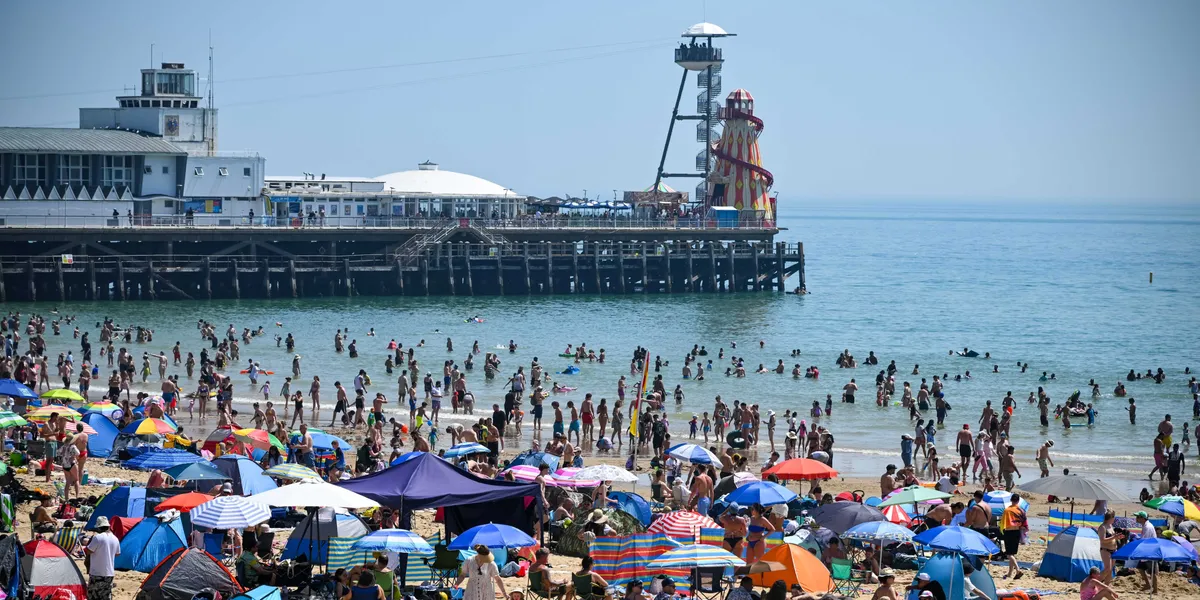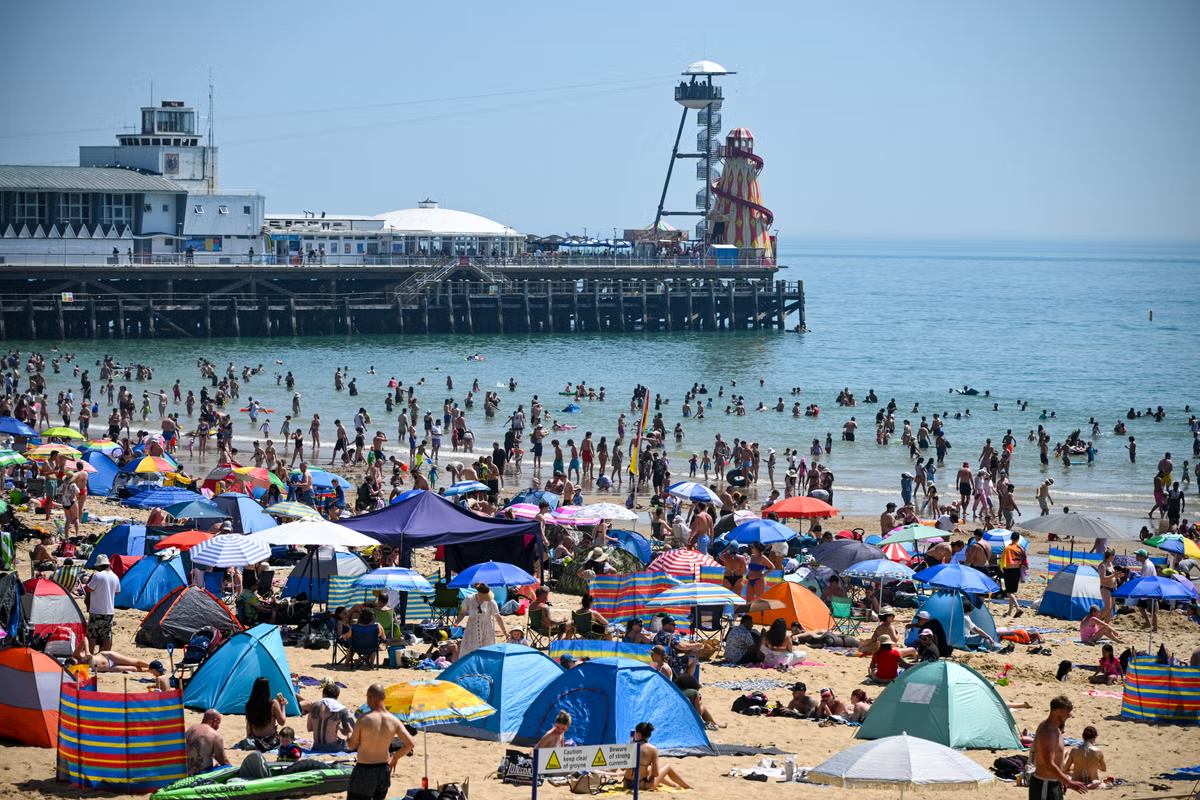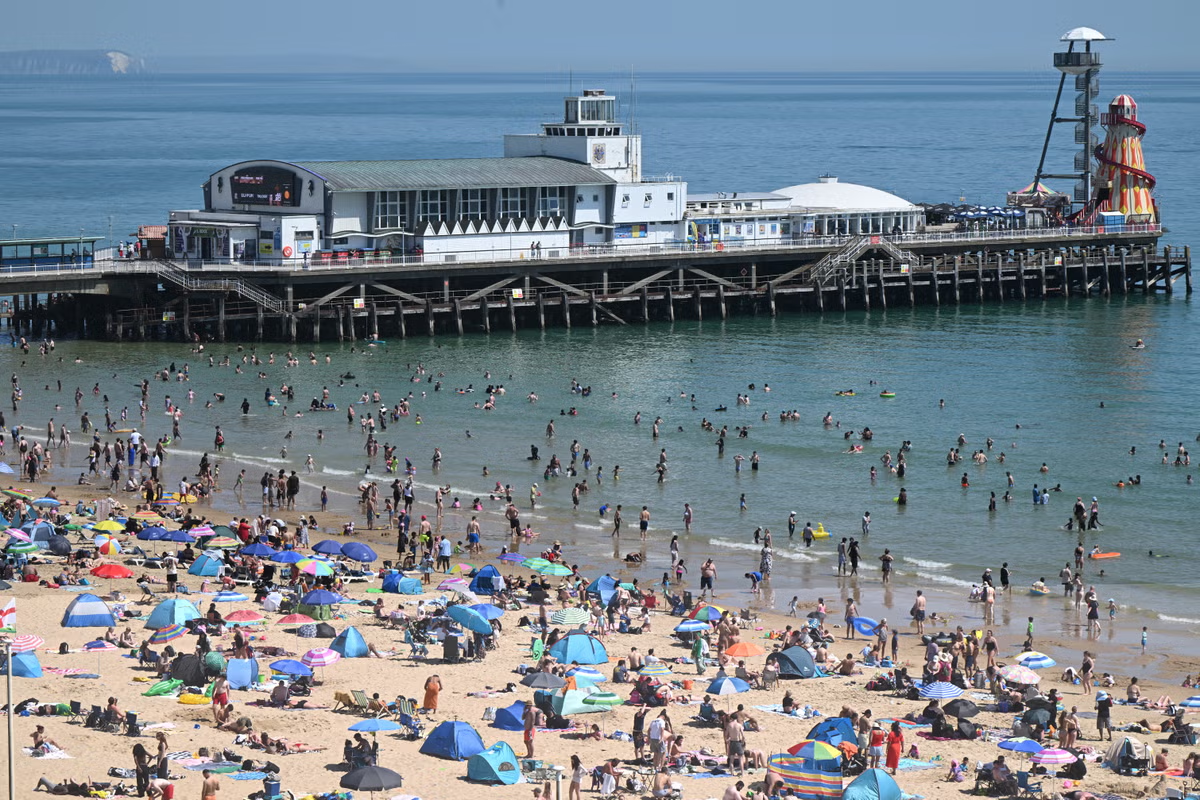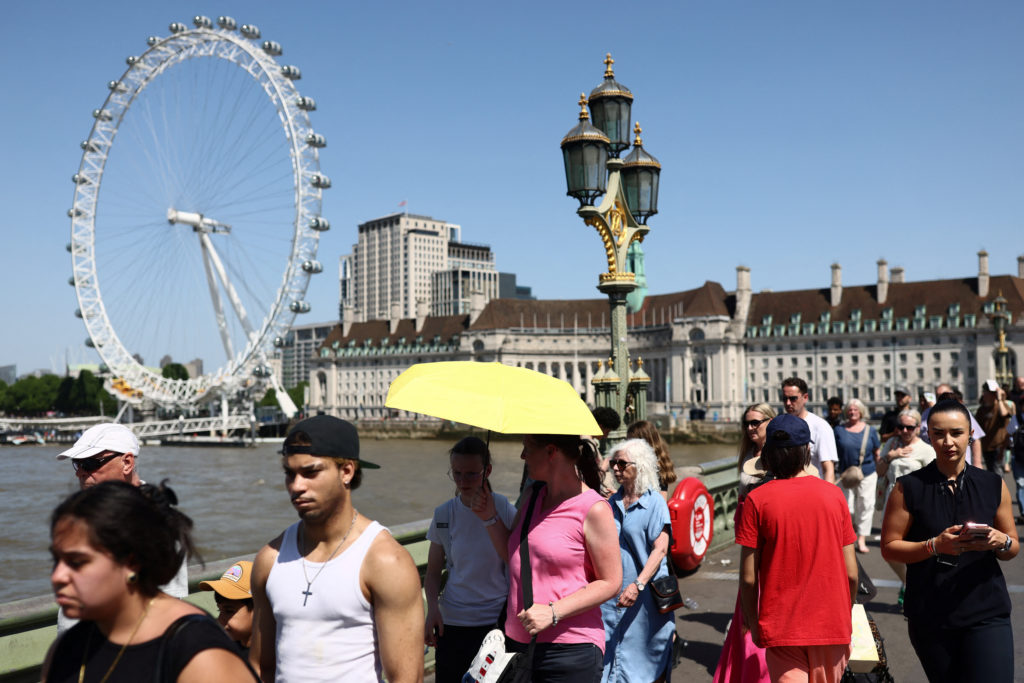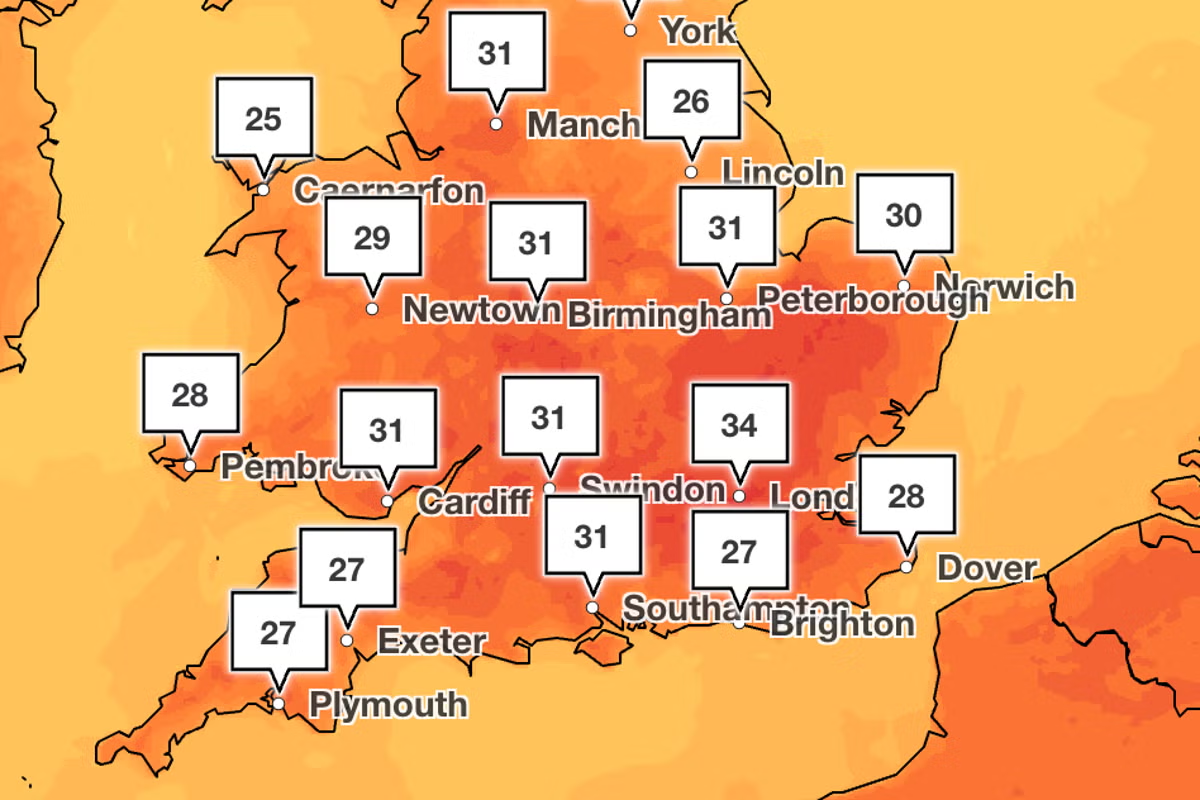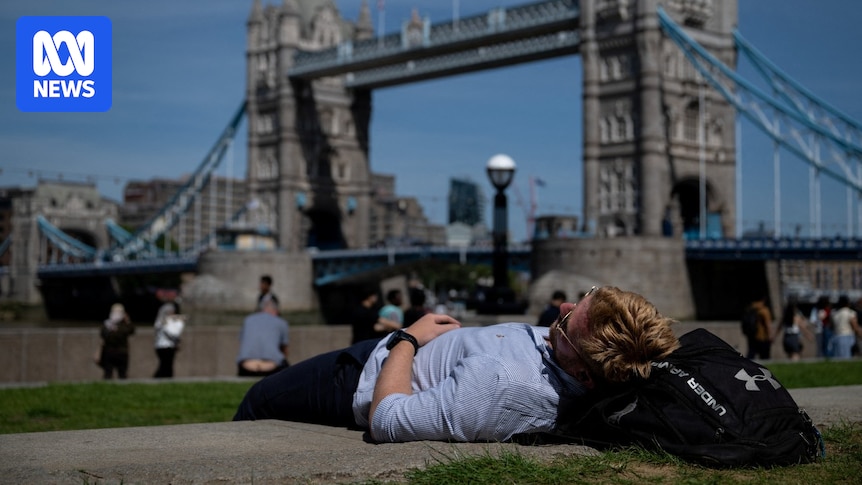
For Brits, talking about the weather is a national obsession. Lately, however, something has changed.Dreary conversations regarding drizzle, be gone! Now, soaring temperatures are dominating the discussion.As the mercury climbed around the United Kingdom this week, and new May maximums were recorded in multiple areas — Kew Gardens in London, for example, reached 35.1 degrees Celsius on Tuesday — once-welcome Spring sunshine is sparking alarm among many people."It's horrible. It just feels like we're melting. It doesn't matter what you do, you can't get comfortable," 48-year-old IT worker Angela Stenning explained on Monday.The mother-of-two has been using a thermometer to track the temperature in her council flat in the capital's south-western suburbs. Some days it's hotter inside than out.When the ABC visited on Monday, it was more than 30C in her living room.That day, the capital recorded its hottest May day on record, with the temperature outside reaching 34.8C, a number that was topped 24 hours later."When you live in one of these kinds of buildings … especially trying to sleep at night, it's horrible because you just literally sweat and there's nothing that you can do," Ms Stenning said.The temperature inside Angela Stenning's flat soared over 30C this week. (ABC News: Alex Parsons)To Australians, temperatures like this are common in the warmer months. But experts say dismissing this trend as something Brits should simply acclimatise to is missing the point.Some estimates say more than 70 per cent of Australian homes now have air-conditioning, but a report published last year claimed only 5 per cent of British households do. Britain's opposition Conservative Party this week pledged to scrap green tape, which it says effectively blocks the inclusion of air conditioners in new residential buildings.Compounding the heat issues is the fact that much of the country's homes were built in a bygone, cooler era.About 20 per cent of the UK's housing stock dates to the Victorian and Edwardian periods (pre-1910). In London, more than half the residential buildings are estimated to predate 1945.Some properties from this era can trap heat indoors when temperatures spike.British houses are often built with retaining heat as a priority. (ABC News: Alex Parsons)Hospitals, nursing homes, and schools are some of the worst hot boxes because, unlike Australia, most of these facilities are not air-conditioned.And it's not just buildings that cannot cope. Public transport can also be unbearable when the mercury rises.The passenger areas of London's iconic, red, double-decker buses are not air-conditioned. Neither is 60 per cent of the capital's famed underground network.In many densely populated parts of the UK, public options to beat the heat are limited.For example, about 15 million people are estimated to call the greater London metropolitan area home, but the nearest beach is almost 70 kilometres from the city centre.People grab a spot on the grass in London during May's heatwave. (Reuters: Yann Tessier)Scientists warn climate change means these temperatures are the new norm in Britain, not something that can be explained away as a freak heatwave people should find a way to temporarily endure.Data from the UK's Met Office revealed the summer of 2025 was the hottest on record, and this year, temperatures are predicted to be warm again.Britain 'built for a climate that no longer exists' In a neighbouring block of flats to Ms Stenning's, the ABC met mother and daughter Yasmin Geddi and Halima Hussain.Ms Hussain, 14, was heading out to buy more pedestal fans."I feel like I'm about to explode, like I'm roasted, genuinely fried, it's so hot and humid," she said.Ms Geddi, a dental nurse who moved to the UK from Somalia before her daughter was born, said the heat felt worse than the heat in Africa."The climate was different when we moved to London, I think it's been getting hotter over time," Ms Geddi said."As a country [the UK] is really good, I love it, I respect it … but this flat is not built for summer, it's built for winter, and it doesn't matter what we do, there's no cool air up here, it is boiling."Halima Hussein and her mother Yasmin Geddi are among those struggling in the heat. (ABC News: Alex Parsons)Emma Howard Boyd chairs the National Heat Risk Commission, an independent body established this year to help the country adapt to "extreme heat".She told the ABC that much of Britain was "built for a climate that no longer exists"."This country is just not ready for the sort of heat that we are beginning to experience," Professor Howard Boyd said."A lot of our planning decisions and our development decisions have been made for a cooler climate."We're not as warm as other parts of the world, but we have to get ready for the temperatures that we know we're going to be experiencing over the decades to come."Some Londoners were happy to soak up the sun during this week's heatwave. (Reuters: Kevin Coombs)The commission, set up by the London School of Economics with philanthropic funding, is investigating how to reduce the threat to lives and livelihoods from rising temperatures due to climate change.It will make recommendations to all levels of government."We're really only in startup mode," Professor Howard Boyd said."We are looking to other cities and other parts of the world for solutions, including some of the heat advisory work that is taking place in different cities in Australia, such as chief heat officers and heat action plans."A Londoner cools off with his dog at Teddington Lock at the weekend. (Reuters: Isabel Infantes)Sophie Vipond, from the UK's Climate Change Committee (CCC), said people in the UK "needed to start thinking of ourselves as a country that gets hot"."Heat is a really big issue in the UK, it's the number one threat to life that we have in terms of climate change," Ms Vipond said.Last summer, more than 1,500 people died from heat-related illnesses."We think that by 2050 we could see up to 10,000 heat-related deaths a year, those will largely be vulnerable people in care homes and hospitals, and we think we could see a threefold [increase] in hospital admittances due to heat," Ms Vipond said."By 2050, we think that 92 per cent of homes in the UK will be overheating in summer ... and we just don't have the building stock ready for what's coming."Sophie Vipond has been keeping a close eye on Britain's rising temperatures. (ABC News: Alex Parsons)She said another vulnerable group was schoolchildren studying in classrooms without air-conditioning."There are children all over the country taking exams in May and June, so what is happening is we are setting them up for failure," Ms Vipond said.She agreed with Professor Howard Boyd that valuable lessons could be learned from Australia."We're behind on being able to prepare for this, but what that means is that we can see lots of examples of how to do things elsewhere and in Australia, and so now it's just a case of getting on and doing it," she said.
'I'm about to explode': UK hits 35C in spring as warning issued
As the mercury climbed around the United Kingdom this week and new May maximums were recorded in multiple areas, the once-welcome sunshine is sparking alarm among many people.
1,152 words~5 min read