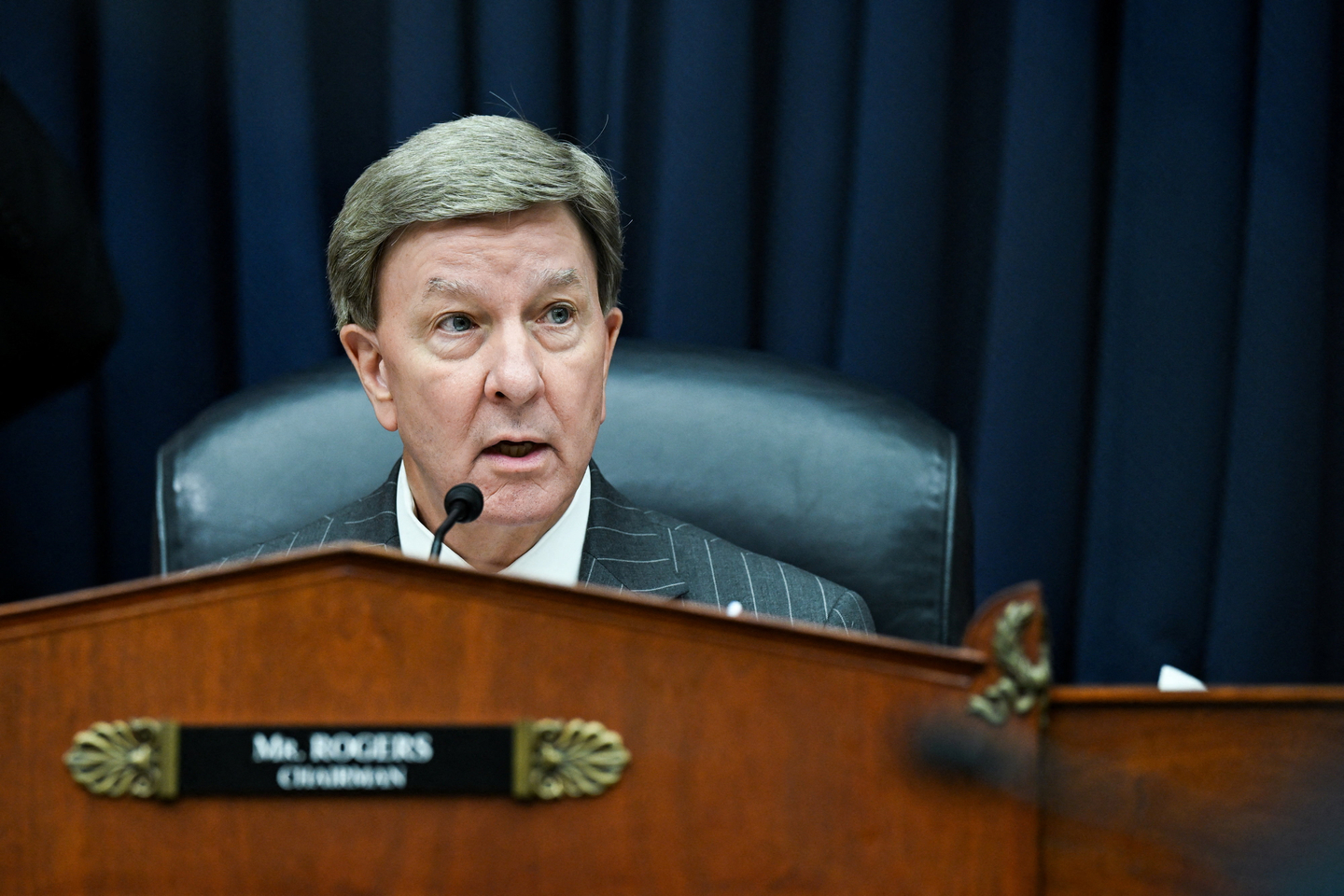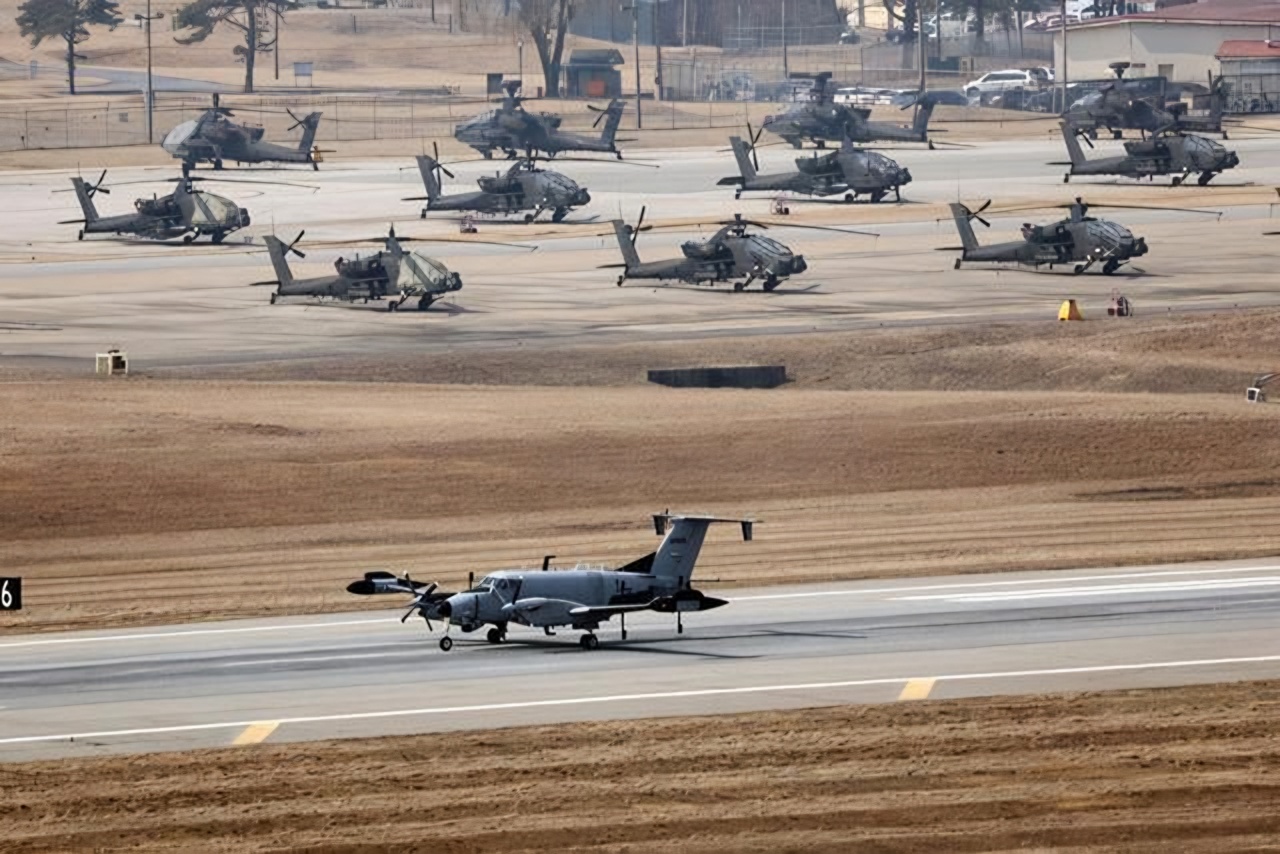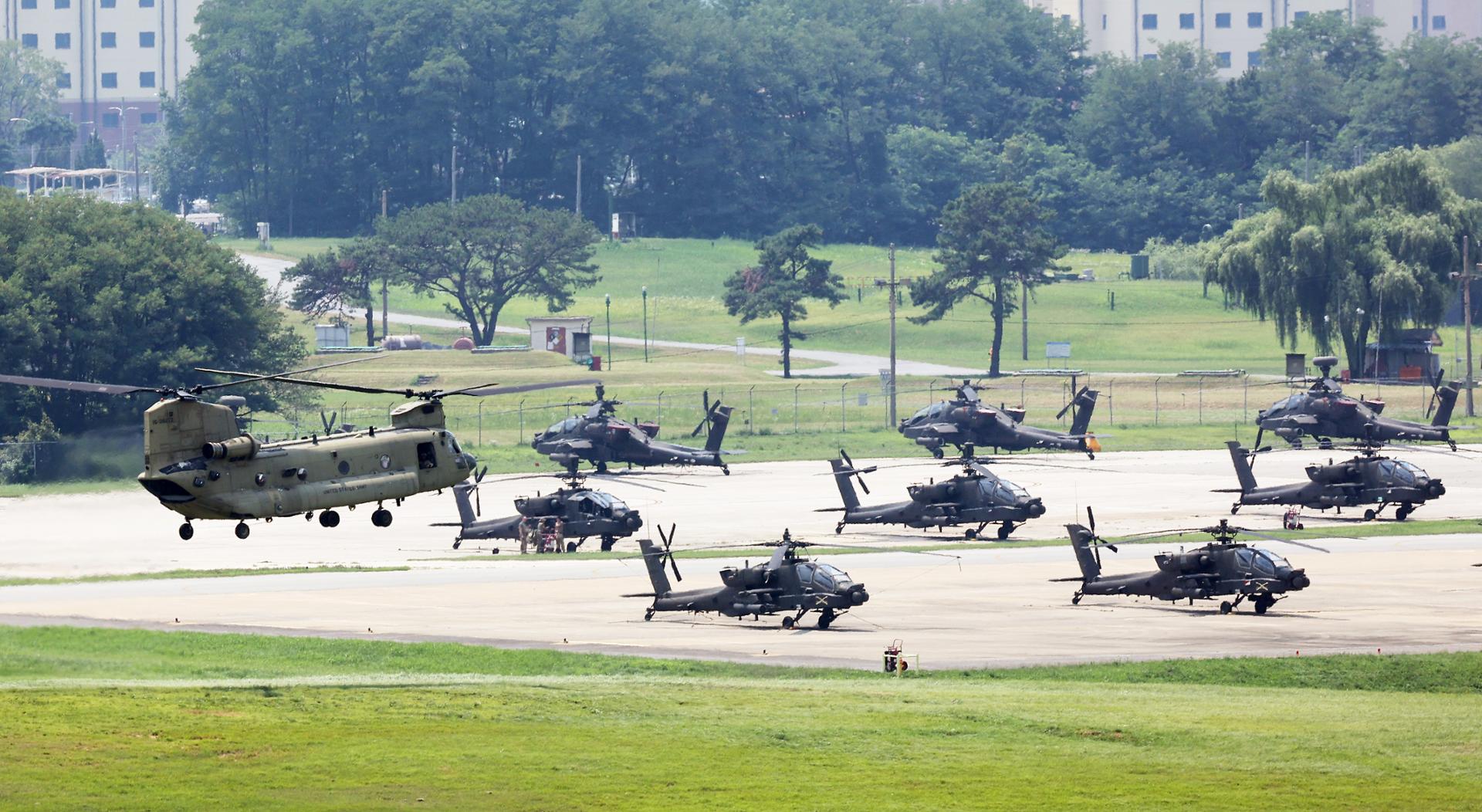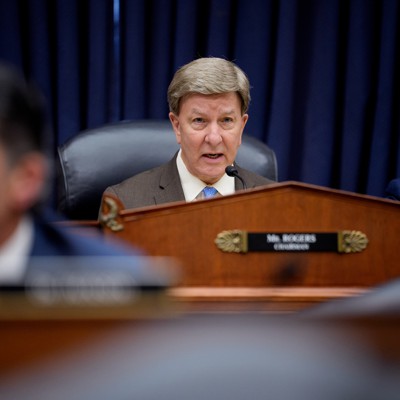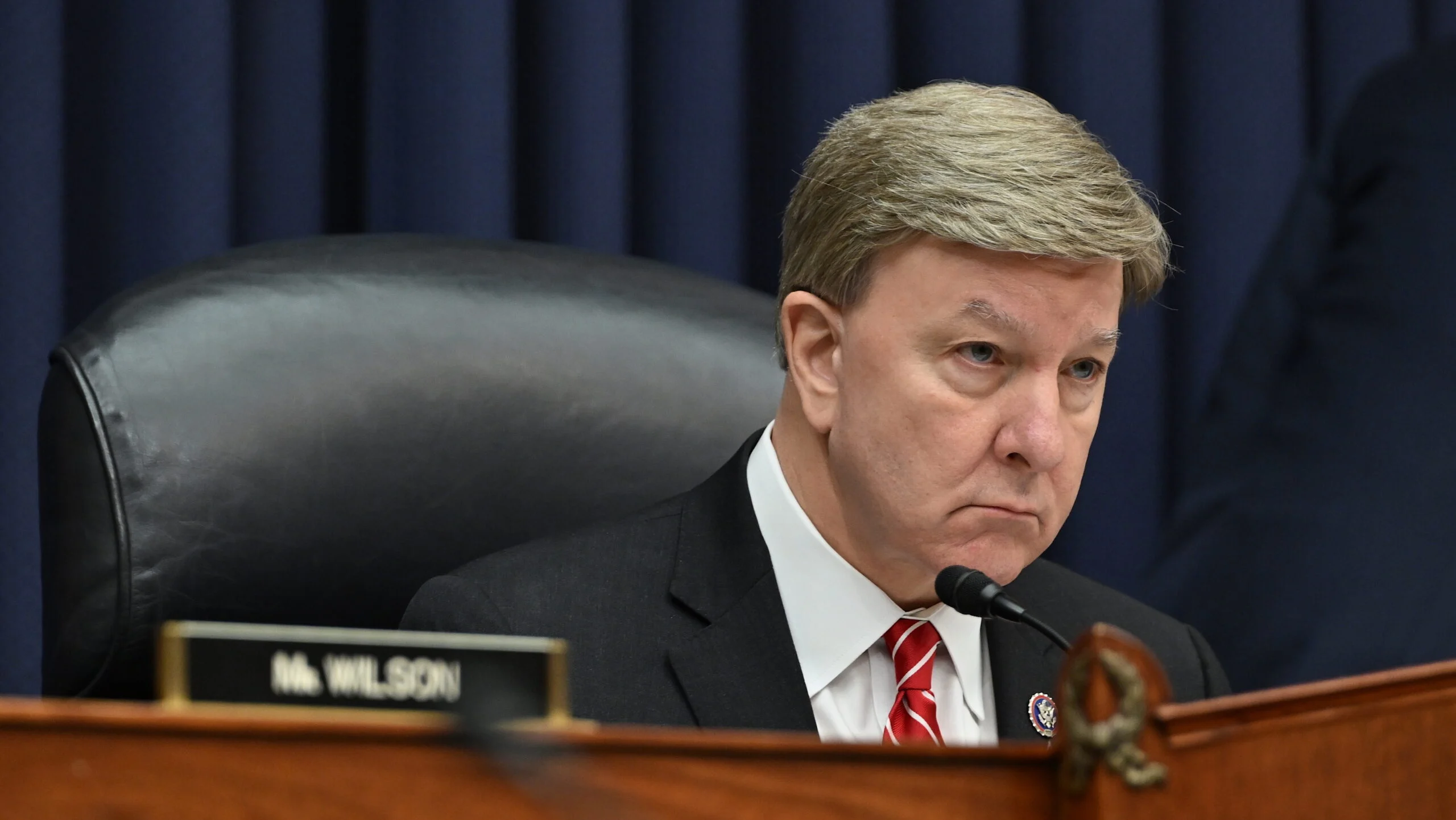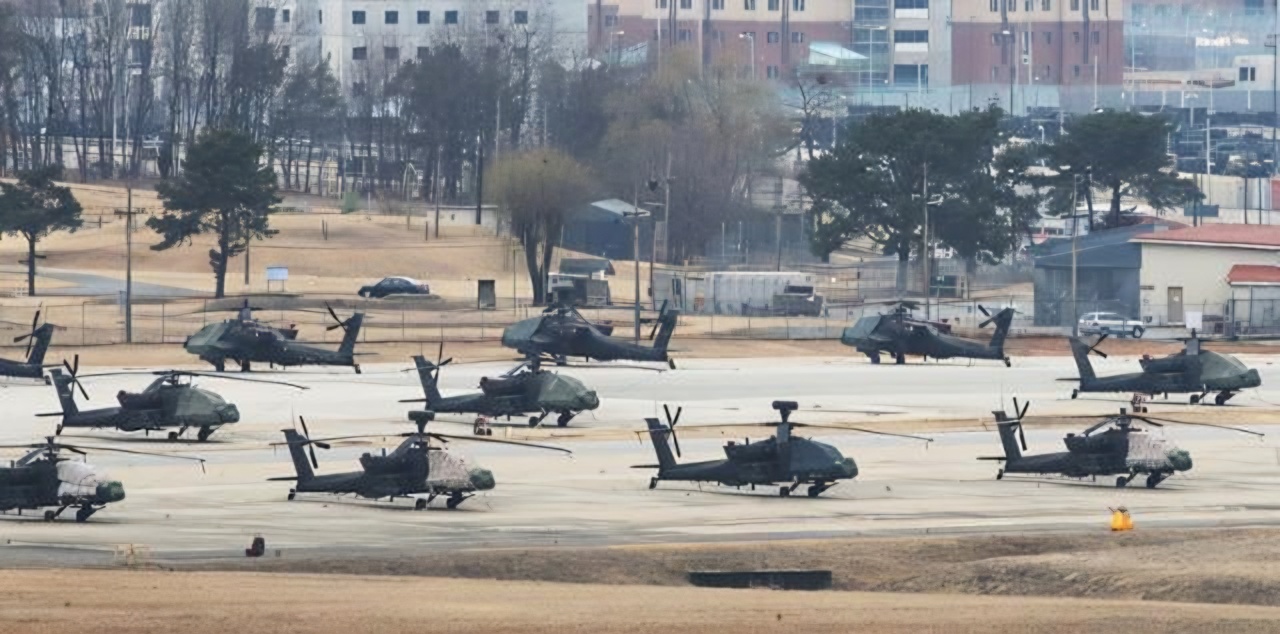
AH-64 Apache attacker helicopters parked at Camp Humphreys in Pyeongtaek, Gyeonggi Province. YonhapWASHINGTON — A House draft of a U.S. defense policy bill for fiscal year 2027 contains language tightening restrictions on the use of funds to reduce the number of American troops stationed in South Korea, its text showed Thursday.Released by House Armed Services Committee Chairman Rep. Mike Rogers (R-AL), the draft of the National Defense Authorization Act (NDAA) for the fiscal year running from October this year to September next year showed revised language related to maintaining 28,500 U.S. troops in South Korea.In the section on the oversight of U.S. military posture on the Korean Peninsula, this year's version says that amounts authorized to be appropriated by the act may not be obligated or expended to reduce the number of U.S. troops in South Korea below 28,500.But the new draft says that none of the amounts, authorized to be appropriated by the act or "otherwise made available for fiscal years 2026 or 2027," may be obligated or expended to curtail the number of American troops in South Korea below the current level.The change, if enforced, would restrict the use of federal funds -- allocated not only by the NDAA but also by other measures -- to reduce the U.S. troop level in Korea.The bill came amid lingering speculation that U.S. President Donald Trump's administration could consider a troop reduction in South Korea as part of a military posture adjustment to better counter an increasingly assertive China or other security challenges beyond the Korean Peninsula.Ahead of the bill's release, concerns rose over the Trump administration's move to reduce American troops in Europe, as the Pentagon recently announced a decision to withdraw about 5,000 American troops from Germany, and reportedly delayed a planned rotation of 4,000 troops to Poland.The draft noted the delay in the troop rotation to Poland with "great concern."Congress passes the defense bill each year to set defense policy and funding priorities and give guidance on a range of key security matters.Before its finalization, the defense bill is set to go through a series of congressional procedures, including the approval procedures at the House and Senate, the process of narrowing gaps between the two chambers, and merging their respective versions of the bill.
House draft of 2027 defense bill backs maintaining USFK troop levels - The Korea Times
WASHINGTON — A House draft of a U.S. defense policy bill for fiscal year 2027 contains language tightening restrictions on the use of funds to redu...
376 words~2 min read