AP, DHARAMSHALA, India
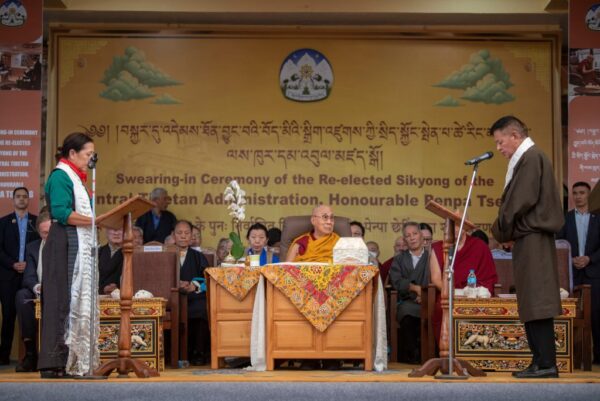
Penpa Tsering on Wednesday was sworn in for a second consecutive term as the president of Tibet’s government-in-exile following his re-election earlier this year.Tsering, 58, has led the exile government based in Dharamshala, India, since 2021. He secured another five-year term in elections in February among Tibetans living in India and overseas.Tsering was first elected to the Tibetan parliament-in-exile in 1996 and served as speaker from 2008 until he rose to the top executive post.
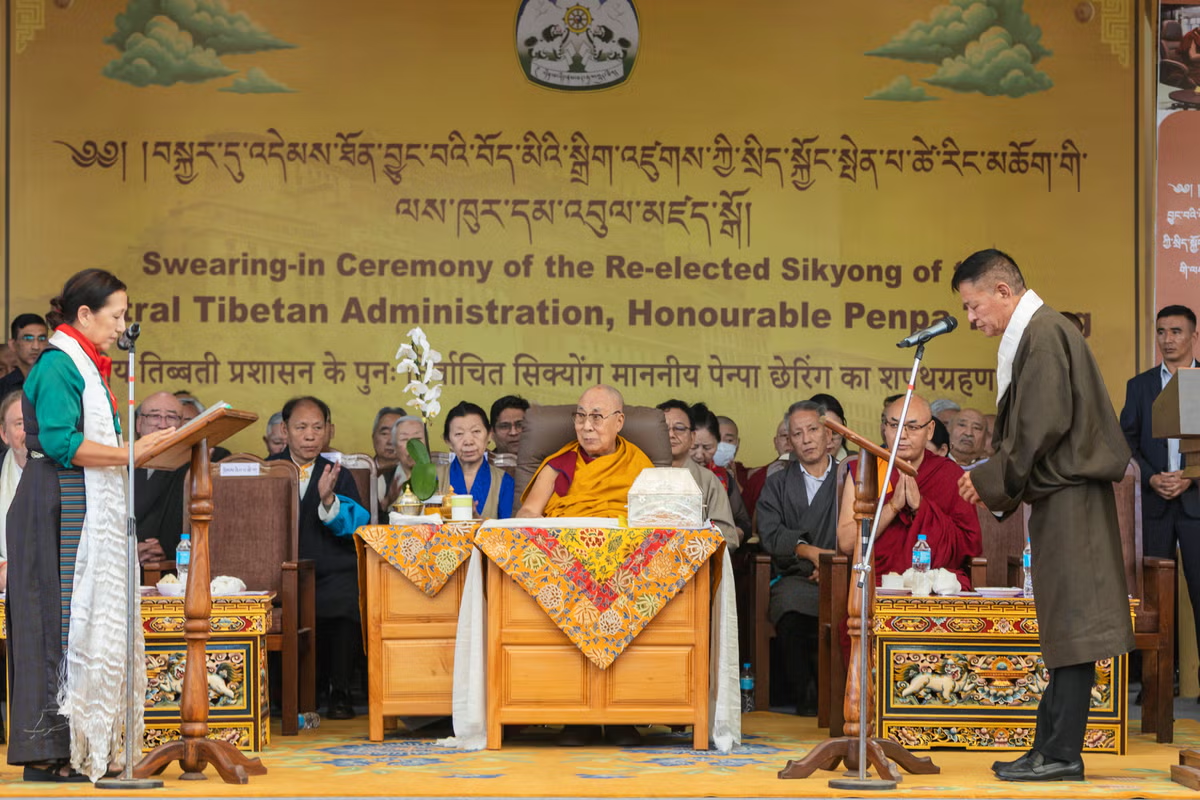
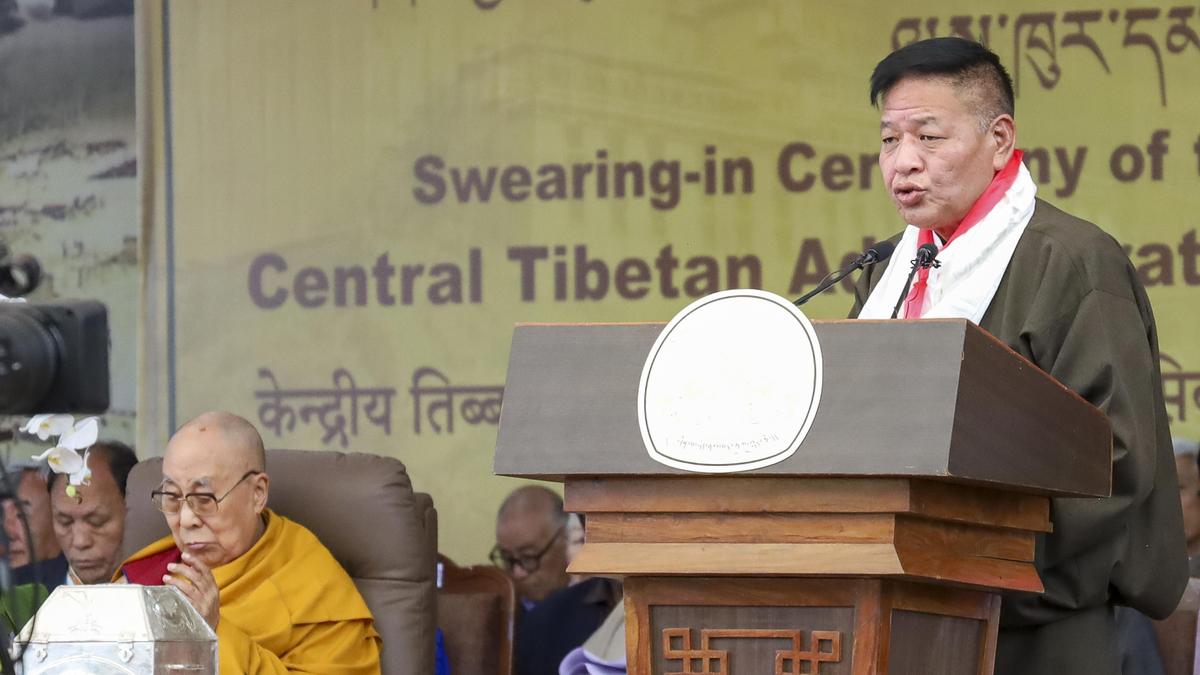
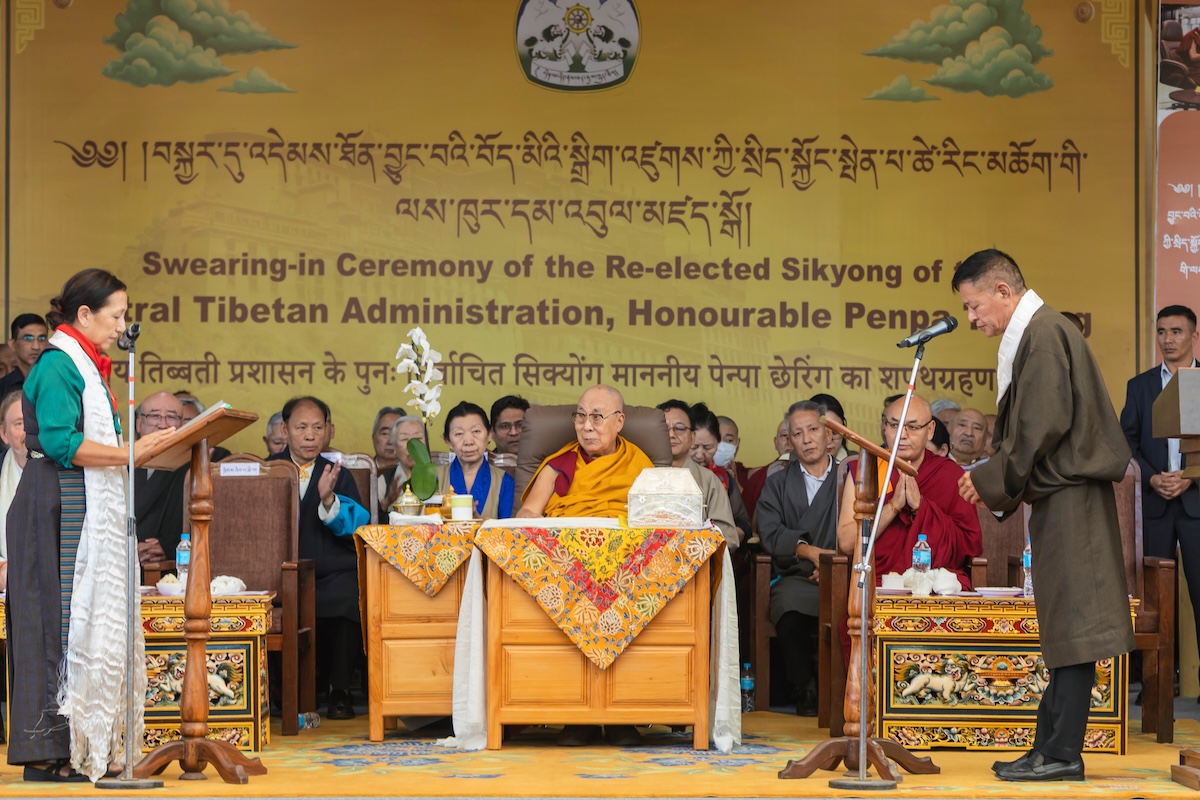
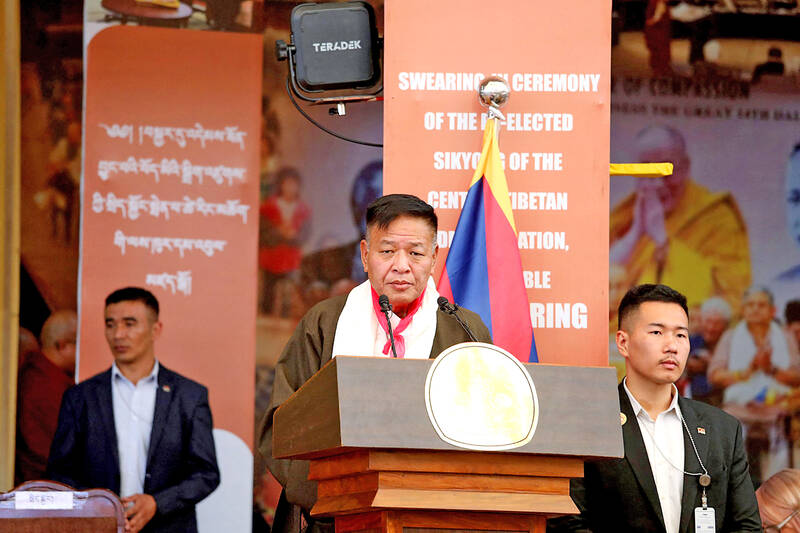
Central Tibetan Administration President Penpa Tsering attends his swearing-in ceremony at Namgyal Monastery in Dharamshala, India, on Wednesday.
Formed in 1959, the Tibetan government-in-exile, now called the Central Tibetan Administration, has executive, judicial and legislative branches.Tsering said that the Central Tibetan Administration “remains firmly committed to the Middle Way Policy envisioned by His Holiness the Dalai Lama,” adding that the policy seeks resolution through nonviolence, dialogue and lasting mutual benefit.
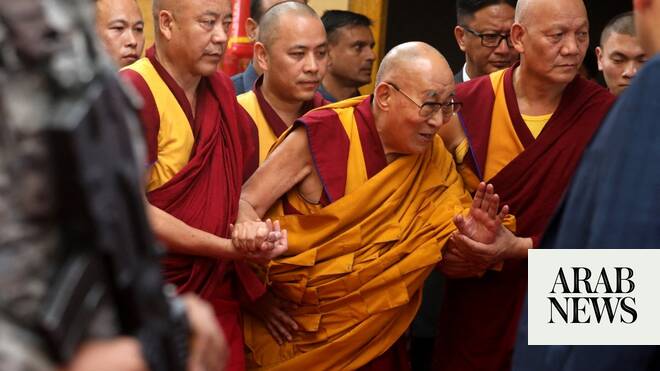
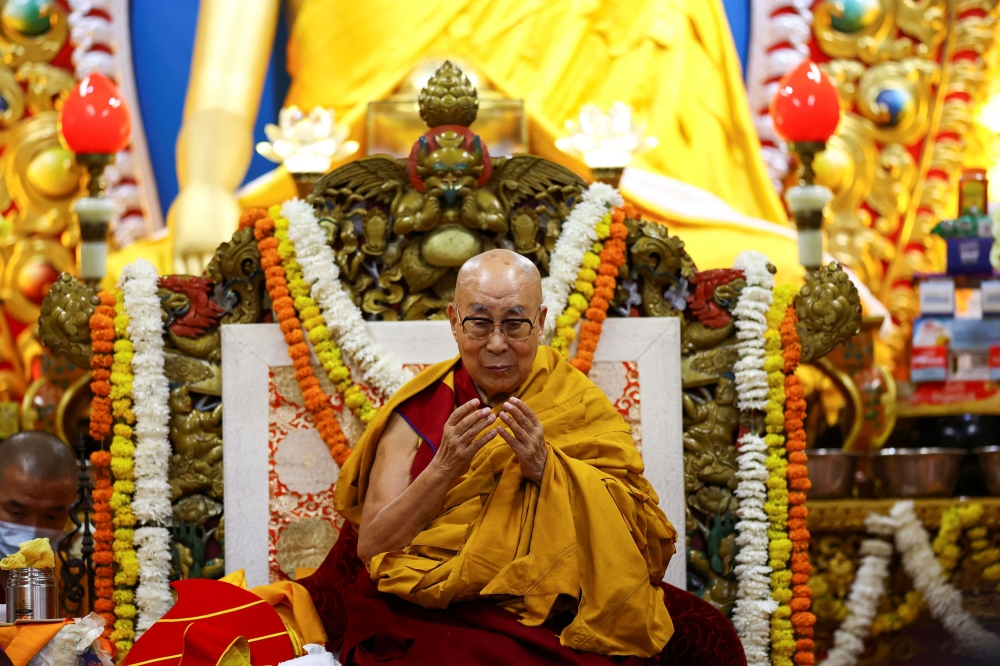
“Until a resolution is achieved, we will continue the back-channel communications with caution and steadiness with the Chinese government,” he said.Tsering’s swearing-in ceremony took place in the presence of the Dalai Lama, who was escorted to the venue by red-robed monks among the sounds of beating drums and chanted prayers. The audience included hundreds of monks and Tibetans who looked on as Tibetan Supreme Justice Commission Chief Justice Yeshi Wangmo administered the oath of office.The February vote marked the fourth direct election of the Tibetan exile leadership since the Dalai Lama, the Tibetan spiritual leader, formally ended his role in the administration’s governance in 2011.China says Tibet has been part of its territory since the mid-13th century and that the Chinese Communist Party has governed the Himalayan region since 1951.Many Tibetans say they were effectively independent for most of their history and the Chinese government wants to exploit the resource-rich region while crushing its cultural identity.China does not recognize the Central Tibetan Administration and has not held dialogue with the Dalai Lama’s representatives since 2010.India considers Tibet as part of China, but hosts the Tibetan exile government.Beijing accuses the Dalai Lama of seeking to separate Tibet from China.He denies the accusation.Yu Jing (宇?), a spokeswoman for the Chinese embassy in India, on Sunday dismissed the legitimacy of the exile administration, saying it was “not recognized by any sovereign country” and had no authority to represent Tibetans or oversee the reincarnation process of the Dalai Lama.